
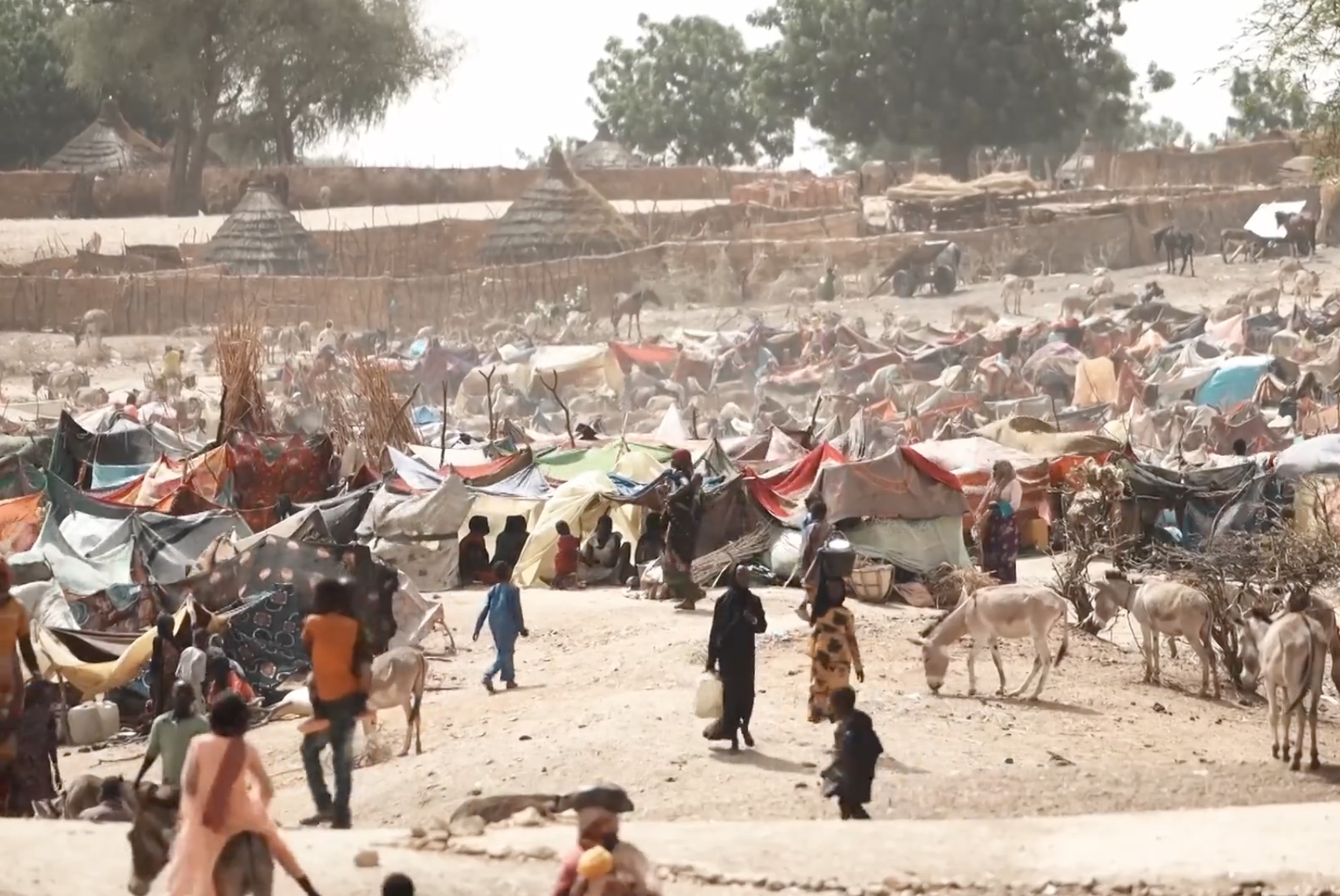
Refugees from Sudan in May 2023 | Photo credit: Henry Wilkins, Voice of America
Across the globe, humanitarian needs continue to rise at an alarming rate. As of April 2026, millions of people are facing the compounded impacts of conflict, climate disasters, and economic instability. For communities already living on the margins, these overlapping crises, often called a “poly-crisis,” are stretching resilience to its limits.
At Lutheran Disaster Response, we are witnessing how these interconnected challenges are reshaping the humanitarian landscape and deepening the urgency of our shared response.
When Climate and Crisis Collide
In many parts of the world, climate-related disasters are no longer isolated events. Instead, they are part of increasingly volatile cycles that leave communities struggling to recover before the next emergency hits.
In East Africa, prolonged drought has been followed by devastating floods, displacing tens of thousands of people and destroying livelihoods. In Somalia alone, repeated failed rainy seasons have forced tens of thousands from their homes, leaving families without reliable food sources or income.
Meanwhile, across the Asia-Pacific region, communities are bracing for more frequent and intense disasters, from cyclones to heatwaves. In early April, Tropical Cyclone Vaianu swept across Fiji, bringing heavy rains, strong winds, and widespread flooding that disrupted already vulnerable communities.
These events are not only immediate emergencies; they are long-term disruptors that weaken food systems, damage infrastructure, and increase the need for sustained humanitarian support.
Conflict Driving Humanitarian Need
While climate disasters are intensifying, ongoing conflicts continue to displace millions and devastate communities.
In Sudan, now entering its fourth year of conflict, the scale of the crisis is staggering. An estimated 34 million people—more than 65% of the population—require humanitarian assistance, with famine conditions emerging in several regions. Violence continues to target civilians, healthcare systems, and critical aid operations, making it even harder to reach those in need.
In Yemen, one of the world’s longest-running humanitarian crises persists, with more than 21 million people in need of assistance. Economic decline and funding shortfalls are worsening hunger and increasing the risk of disease.
In Gaza and the West Bank, ongoing instability, movement restrictions, and damage to essential infrastructure are forcing families from their homes and limiting access to basic services. Similarly, Ukraine continues to face sustained attacks that damage infrastructure and leave millions in need of urgent support.
Across these contexts, and in places like South Sudan, Lebanon, and Haiti, conflict continues to uproot families, disrupt essential services, and erode hope for recovery.
Hunger and Displacement on the Rise
The combined effects of conflict, climate shocks, and economic instability are fueling a global hunger crisis. Today, an estimated 266 million people across 47 countries are experiencing acute food insecurity.
At the same time, displacement is becoming increasingly protracted. Families forced to flee their homes are often unable to return, living for years in uncertainty and vulnerability. Many lack access to consistent food, clean water, healthcare, and protection from violence.
Children are especially at risk, facing interrupted education, trauma, and heightened exposure to exploitation and abuse.
A Growing Gap Between Needs and Resources
Even as needs surge, humanitarian organizations are facing significant funding shortfalls. In 2025, funding for food assistance alone declined by nearly 40 percent, limiting the global community’s ability to respond effectively.
This growing gap means that critical programs, feeding families, rebuilding homes, protecting vulnerable populations—are under strain at a moment when they are needed most.
Our Call to Action
In the face of these complex and overlapping crises, hope lies in collective action.
Lutheran Disaster Response remains committed to walking alongside communities impacted by disaster and conflict, providing immediate relief while supporting long-term recovery. Whether responding to floods in East Africa, supporting families displaced by conflict, or addressing hunger and livelihoods, our work is rooted in compassion, dignity, and collaboration.
But the scale of today’s challenges requires more than any one organization can provide. It calls for sustained global attention, increased funding, and a renewed commitment to addressing both immediate needs and the root causes of vulnerability.
Together, we can respond to today’s crises and help build a more resilient future for communities around the world.
Supporting Communities Through Lutheran Disaster Response
In the face of these compounding emergencies, Lutheran Disaster Response continues to walk alongside communities as they respond to immediate needs and rebuild with dignity and hope. Through trusted international partners, LDR supports emergency relief, recovery, and long-term resilience efforts, addressing food security, shelter, livelihoods, psychosocial support, and disaster preparedness.
Supporting Lutheran Disaster Response enables timely, locally led responses that prioritize the most vulnerable and strengthen communities against future crises. As climate impacts intensify and conflicts persist, sustained solidarity and partnership are essential. Together, we can help ensure affected communities are not only supported in times of crisis, but also empowered to recover, rebuild, and thrive. Learn more about how to support the work of LDR here.
