
Skip to content
ELCA Blogs

Lutheran Disaster Response

Top 5 Tips to Prepare Your Faith Community for a Disaster

Today is the last day of National Preparedness Month. Just because the month is ending, doesn’t mean the work of being prepared for disaster ends. With this in mind, we want to take the time to highlight 5 tips that can be useful to congregations.

Top 5 Tips to Prepare Your Faith Community for a Disaster – By Michael Stadie
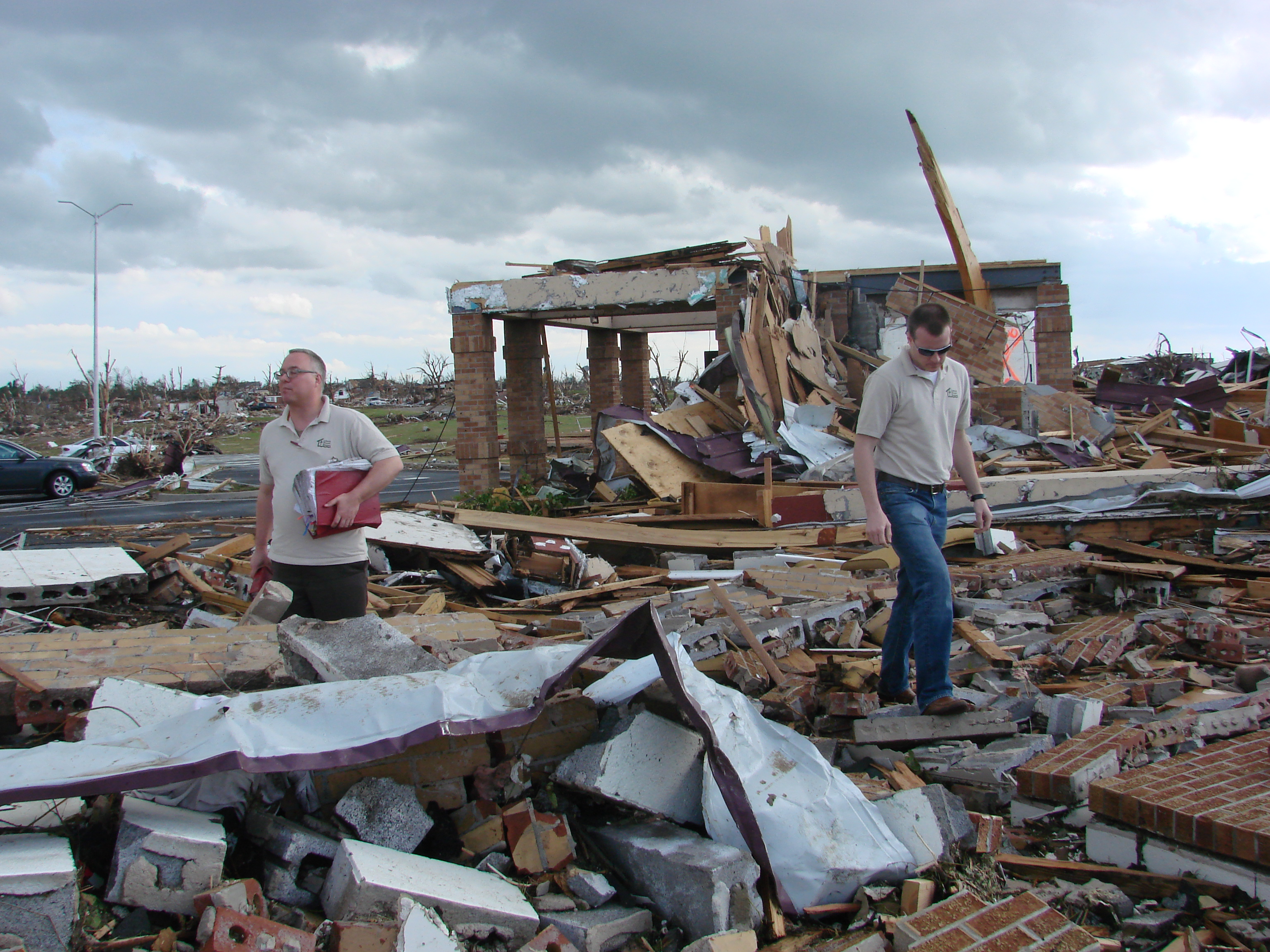
Director Kevin Massey and Associate Director Mike Nevergall stand among what is left of Peace Lutheran Church

A minister once shared with me the story of how he learned the hard way to be prepared for a disaster. He told me that every night the administrative assistant of the congregation would back up the day’s work, financial records, bulletins, newsletter, and anything else that was done that day. She then put the back up next to the computer on her desk. This worked out very well until the night when a fire destroyed the church office, it took out the computer and the backup. After learning the hard way, he told me that once they rebuilt, he made sure there was a weekly computer backup that was kept off site.

Sadly, it is only after a disaster strikes, no matter what the type, that a faith community realizes it should have done something to prepare for a disaster. And often if a leader wants to encourage the faith community to prepare, if they find support in doing so, they are not sure where to look for resources.

Because of this, Lutheran Disaster Response has prepared a Congregational Disaster Preparedness Guidebook that is free to download by anyone. To quote the guidebook, the manual “outlines a step-by-step process for congregations to create their unique preparedness plan.” It also provides information on the long-term recovery process, worship following a disaster, emotional and spiritual care, and links to other resources.

For those looking to start the conversation about preparedness in their faith community, here are five tips Lutheran Disaster Response offers:

Have an evacuation plan.

Communication Strategy
Communication is essential in times of disaster, however, it may not always be as simple as a phone call. Power and telephone lines are often down after a disaster causing disruptions in communication. It is important that your faith community has a plan about how to communicate with one another when a disaster strikes. In the first few days following a disaster, there is a lot of chaos and rumors. Having a communication plan in place will help your faith community be aware of what is really happening. While faith communities often have home phone numbers, a list of cell phone numbers is essential and if the person can receive text message can be a valuable asset following a disaster. It is also helpful to have a “phone tree” where with just a few calls, the faith community leaders can disseminate information quickly. And of course, posting information on the faith community’s website is also a very good way to let folks know the status of the disaster recovery efforts.

Decision-Making Process
Having a written description of how decisions are made is essential to being prepared for a disaster. Having this in place will assist the congregation to move forward in its recovery efforts. On a day-to-day, basis, most decisions are made by the minister, a committee or the governing board. However, in a disaster situation, the minister may not be the most experienced to handle the rebuilding efforts. And they will be needed to provide spiritual and emotional care, especially if members of the faith community were directly impacted by the disaster. Along with the formal structures of decision making, look to your membership. Is there an insurance agent that can help navigate the process of making a claim? Is there a contractor who can help manage the rebuilding process? It is important to use the gifts in your faith community, especially following a disaster.

Inventory and Insurance
It is important to be aware of the church’s assets, important documents and insurance coverage long before a disaster strikes. A faith community needs to regularly review its insurance coverage. All too often, people find when they add the cost of the contents along with the building, they are underinsured. In order to speed up the claims process, it is recommended to take pictures of the worship space as well as other parts of the building. This is especially important if there are unique items such as statues, carvings or stained glass. Making a video of these items may be easier. Most smart phones have this capability, which only makes this process easier.

Emergency Operations
Any number of emergencies or disasters can happen when the building is in use by the faith community or others. Basically, plans need to be in place to do one of two things; shelter in place or evacuate.

If you look the next time you are a hotel or public buildings, notice how they post evacuation routes as well as designated shelter. Basic emergency plans and instructions should be posted prominently near light switches or doorways so that anyone can easily see how to evacuate and where to seek shelter without having to search for someone in charge. Many faith communities also find it helpful to have near entrances a map of the facility showing where the utility shut-offs are located as this will assist the first responders to know how to secure the building after a disaster.gulfcoast_2

Congregational Relationships and Involvement
When a disaster occurs, it is important that a community come together to take care of each other. If the faith community is not directly affected by a disaster, consider joining the community to provide temporary relief and even long term recovery assistance to those impacted by the disaster. Such opportunities may surface as requests from outside organizations, obvious needs of neighbors, awareness of members of the congregation, etc. Building relationships with disaster response agencies in your area and/or other faith-based organizations before a disaster will help your faith community mount efficient and effective responses addressing the actual needs of your community. And having a plan as to how you will respond in coordination with other community partners will allow your faith community to be more efficient in its efforts and insure there is no duplication of services.


An excerpt from Synod Congregations Use Social Media to Rally Response to Floods By: Rev. Dr. Joelle Colville-Hanson

floodingIn late August Decorah, Spillville, Elkader, and surrounding areas were hit with heavy rains that caused flash flooding.

The onslaught was swift and unexpected but Northeastern Iowa Synod congregation leaders and members were just as swift to respond with shelter, food, volunteers as well as working with Lutheran Services in Iowa to develop a relief fund for unmet needs.

A month later more rain caused the Cedar, Shell Rock, and
Wapsipinicon Rivers to flood the areas including Waverly, Janesville, Shell Rock, Clarksville, Plainfield, and Greene as well as the farms and hamlets in between.

Again local congregations sprang into action, providing volunteers to sandbag and clean up, meals to volunteers and donations of cleaning supplies.

Again, Social Media was crucial in getting the word out quickly to gather volunteers to respond.

read more…

These suggestions are by no means exhaustive; but they can help stimulate conversation about what else a faith community can do in order to prepared for a disaster. To learn more about Congregational preparedness, download the Congregational Disaster Preparedness Guide.

Originally Written for the Institute for Congregational Trauma and Growth (ICTG)


Michael Stadie is the Program Director for Lutheran Disaster Response – U.S.


Be a part of the response:

Pray

Continue to pray for all affected by disasters, may God’s healing presence comfort them in their time of need.

Give

Thanks to generous, undesignated donations, Lutheran Disaster response is able to respond quickly and effectively to disasters around the globe. Your gifts to Lutheran Disaster Response will be used where there is the greatest need.

Connect

To learn more about global migration and what Lutheran Disaster Response is doing:

  • Like Lutheran Disaster Response on Facebook.
  • Follow us on Twitter.
  • Visit our website at LDR.org
  • Sign up to receive Lutheran Disaster Response alerts


Remembering 9/11, 15 Years Later

The Reverend Gil Furst was the Director of Lutheran Disaster Response on 9/11. We are very grateful for his enormous contributions to our collective response to this unprecedented disaster on behalf of the church in collaboration with many partners in the years following the attack. Here is his recollection of how we witnessed God’s hope and light in the midst of destruction and darkness in the aftermath of this seminal event.

Dear friends in Christ,

Fifteen years ago, on September 11, 2001, our lives were radically changed. The World Trade Center destruction in New York and the Pentagon attack near Arlington, Virginia, are among the most significant events in our lives. The needs of those directly affected (e.g., those who lost loved ones, traumatized children, people who lost income, persons harmed or terrified), as well as those who felt the ripple effects of the tragedy, were incalculable.

The scope of the needs was unprecedented. Death totals exceeded many town populations in which our congregations are located. Over 3,000 children lost at least one parent, and tens of thousands of children lost a family member. The Lutheran Counseling Center in New York received 100 calls per day for emotional and spiritual help. Seven ELCA Synods and five LCMS Districts were directly impacted. Nine separate Lutheran social ministry organizations were part of the response. A new agency, Lutheran Disaster Response of New York, was established to focus on coordinating the New York response. As in every disaster, new needs continually arose as the recovery progressed.

The response of the Church was extraordinary. By the end of 2001 nearly $8 million came in directly to the ELCA and LCMS. The insurance fraternals, Aid Association for Lutherans and Lutheran Brotherhood, provided an estimated $10.7 million towards a coordinated Lutheran response, with each fraternal contributing $1 million of corporate funds. But the costs were equally extraordinary.

By the end of 2001 $2.7 million was granted by LDR for specific ministries in New York, New Jersey, and Washington D.C. By the end of 2002, LDR granted to the three responding areas a total of $6.8 million. By the end of 2003, LDR granted to the three areas a total of $9.5 million.

The responses in New Jersey and Washington D.C. concluded at the end of 2003. LDR-New York continued to provide services and coordinate multiple organizations to provide assistance for unmet needs until September 2008.

At the height of the New York response, over 137 separate programs were in operation. Working with the addition of interfaith funding, private organizations, even international donations, the total income for our Lutheran response neared $27 million. Long after other agencies and denominations closed their offices, LDR continued its ministries. As is usually true, the Lutherans were among the first to respond and the last to leave.

The initial components of the response included:

• counseling directly-impacted children, adults, and families
• providing for emergency needs of individuals and families
• supporting the 21,000 students in Lutheran schools (47 students lost primary care-givers in the destruction), including counseling and tuition assistance for children whose families lost their livelihood
• direct care for “Ground Zero” rescue workers
• providing case management for unmet needs of the bereaved and unemployed
• individual emergency assistance
• respite care for clergy, rostered Church leaders, and school staff
• long-term training of clergy for trauma response
• preparing “Camp New Ground” day-camp materials for children traumatized by the attacks
• preparing and distributing recovery materials
• supporting interfaith initiatives in New York, New Jersey, and Washington D.C.
• supporting Church World Service multi-denominational programs.
• advocacy for immigrant and undocumented persons

As the response continued into its second year, new components were added:
• Lutherans led in coordinating dozens of organizations to provide assistance to unmet needs
• “Project LIFE”, a case-management program, was developed to help people access available assistance
• “New Ground” day camps were offered to community children through Lutheran congregations and schools, thirty-eight camps held in New York and New Jersey in the summer of 2002
• Individual and group counseling was expanded
• caregivers were trained for their ministries and provided with respite care
• congregational “ministry teams” were trained to provide care in their communities
• case management was provided to distribute non-profit grants to the economically impacted
• care was given to clergy and school teachers providing “on the ground” ministry
• support was given directly the families of victim’s
• counseling was provided for people traumatized by the disaster
• working with undocumented workers and others who lost employment due to the disaster

IN NEW JERSEY
740 New Jersey commuters died when the World Trade Center towers were attacked and collapsed. Support was provided for leaders and individuals, unmet needs (in partnership with 128 individuals and agencies), post-traumatic stress counseling network of 15 behavioral healthcare agencies), 15 congregations provided bereavement support groups, grief support, economic assistance, disaster preparedness, and immigration support.

IN WASHINGTON D.C.
The 9/11 Pentagon attack created a loss of life, a loss of neighbors and colleagues, a loss of jobs and income. Children in Lutheran schools were also affected. One school of 200 children is located near the Pentagon. Children on the playground heard the impact of the plane, saw the fire, heard the sirens. LDR offered extensive long-term trauma counseling to them. LDR also ministered to entry-level workers, immigrants, and new citizens affected by economic issues

Special thanks must be given:
• to our national Church leaders who offered Gospel hope by their presence: the Rev. H. George Anderson (ELCA Presiding Bishop), the Rev. Gerald Kieschnick (President of The Lutheran Church-Missouri Synod), and the Rev. Mark S. Hanson (ELCA Presiding Bishop)

• to the three synod bishops and district presidents who provided incredible leadership for their affected judicatories: President David Benke (Atlantic District) and Bishop Steve Bouman (Metropolitan New York Synod); President William Klettke (New Jersey District) and Bishop E. Roy Riley (New Jersey Synod); Bishop Ted Schneider (Metropolitan Washington D.C. Synod) and President Arthur Scherer (Southeastern District)

• to the three LDR coordinators who provided creativity and passion to the Church’s efforts: the Rev. John DiMatteo (Lutheran Social Ministies of NJ), the Rev. David Pearcy (LSS of the National Capitol Area), and John Scibilia (LDR New York).
• to Elaine Richter Bryant and the Rev. Jerry Rux, who served as associate directors of LDR

September 11, 2001, raises images of dust-covered firefighters climbing stairs to rescue people from the World Trade Center towers, and exhausted emergency workers climbing huge piles of rubble searching for survivors. But there are also images of pastors and chaplains offering words of hope or consolation to stunned and shocked survivors. There are teachers calming upset students. There are congregations gathering for worship, and neighbors praying with neighbors. There are piles of letters, offers of help, and generous donations.

Where was God in all this? God was in the ashes and the dust, in the destruction and the blood, reaching out in sorrow and compassion as our hands were reaching out to help. We who are in Christ are people of hope, changed by a resurrected Lord who is always present with God’s people. Where was God? God was there – and God is still there.

From the moment the first plane struck, the Church responded as the Church. And the Church continued to respond for the long haul. We do not come empty-handed to real life situations, even to situations as terrible and global as 9/11. We, the Church, were blessed to be called to serve at such a challenging time. Through your donations, through your prayers, you were there too, along with the firefighters, the recovery workers, the chaplains, the pastors, the counselors, the families of victims.

As in all disasters, those who suffer are supported by God’s healing grace. Those who respond are God’s enfolding arms and healing hands, providing comfort and renewal by word and deed.

Gilbert B. Furst
Retired Director
Lutheran Disaster Response