
Skip to content
ELCA Blogs

Lutheran Disaster Response

7.8 magnitude earthquake hits Nepal and surrounding countries

Megan Brandsrud

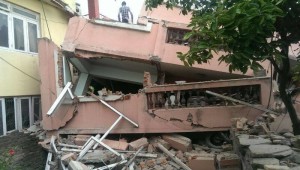
​Around 11:55 a.m. local time, a 7.8-magnitude earthquake shook Nepal, with its epicenter approximately 70 km from its capital city, Kathmandu. The earthquake was felt around the whole country, but the Kathmandu valley and western region of the country were hit hardest.

As of publication time, approximately 1,500 people are reported dead and thousands are injured. Death toll numbers are expected to rise as searches continue because it is feared that many people are trapped beneath rubble. Buildings are leveled, roads are destroyed and many heritage sites and landmarks are collapsed, including the Dharahara Tower, which was built in 1832 for the queen of Nepal.
nepal earthquake 1

Collapsed building and surrounding damage in Nepal following 7.8-magnitude earthquake that hit the country early April 25. Photo courtesy of LWF.

The earthquake also triggered an avalanche on Mount Everest, killing 13 people. More than 25 aftershocks have been recorded in the Kathmandu Valley and neighboring countries, causing people to spend the night outside in the open as a precaution.

Lutheran Disaster Response is working with trusted partners – Lutheran World Federation, ACT Alliance and Lutheran World Relief – who are on the ground and already responding. Immediate response includes supplies and services such as water, food, medication, shelter and psychosocial support. We continue to connect with other partners and our companion church, the Nepal Evangelical Lutheran Church, for updates and response plans.

“ELCA partners were in contact as soon as the news flashed,” says Chandran Paul Martin, consulting regional representative for South Asia, ELCA Global Mission. “Dr. Bijaya Bajracharayna, program coordinator for Lutheran World Federation in Nepal, described the situation of people on the street and open ground as after tremors were felt.”

Lutheran Disaster Response is committed to long-term response, and we will accompany our brothers and sisters who were affected by the earthquake as they navigate every process of the disaster relief and recovery process.

If you would like to support Lutheran Disaster Response’s work with the Nepal Area Earthquake, please visit the giving page. Your gifts allow us be the church in times of disaster, and we thank you for your generosity. Please continue to remember the people of Nepal and surrounding countries who were affected by the earthquake in your thoughts and prayers.

Merciful God,

Hear our cry for mercy in the wake of the earthquake. Reveal your presence in the midst of our suffering. Help us to trust in your promises of hope and life so that desperation and grief will not overtake us. Come quickly to our aid that we may know peace and joy again. Strengthen us in this time of trial with the assurance of hope we know in the death and resurrection of our Savior and Lord, Jesus Christ. Amen.
International Roma Day 2015

Megan Brandsrud

The Romani, or Roma, population has an extensive history in Europe, dating back to the 13th century. Today, with more than 10 million people, the Roma population is recognized as one of the European Union’s largest minority groups. Roma people often face discrimination and poverty, and Roma settlements typically lack important infrastructures such as healthcare, education and transportation.

Today, April 8, is International Roma Day. It is a day to celebrate the rich culture of the Roma people, to raise awareness about the difficulties facing Roma people and to fight for justice.

Lutheran Disaster Response, in partnership with Ecumenical Humanitarian Organization (EHO), has been working hand-in-hand with Roma people since May 2014, when a cyclone hit Serbia and many Roma villages were severely affected by landslides and flooding. We initially helped provide immediate relief resources, and we are now working in the communities on home rehabilitation and livelihood development.

While several Roma settlements were impacted by the cyclone in 2014 in Serbia, Roma people are often marginalized and live in areas that are difficult to travel around, so they received little assistance. Lutheran Disaster Response is committed to working with people who are most vulnerable to disasters, and we are pleased to be working with Roma people in Serbia to rebuild villages and increase capacity and resiliency.

In honor of International Roma Day, here is a story from EHO of a family we have worked with following the 2014 cyclone and flooding in Serbia.

Husband and wife S.J. (60) and N.J. (59), both disabled, lived in an apartment without electricity for 10 years. After that, they were given accommodation in shelters composed of a single room and bathroom, but they now had electricity and so were happy with the move. The shelters were in the village of Veliki Crljeni, 12km from the town of Lazarevac, and functioned as accommodation for socially vulnerable families, provided by the town authorities and the Kolubara power company.

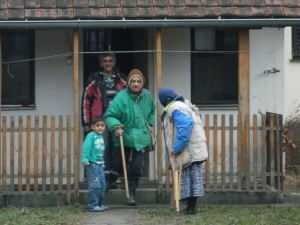
That May morning, when the waters began to advance, N.J. was woken by neighbours. Her husband S.J. is hard of hearing and she needs crutches to get around, so they barely had time to take a bag with their documents and medicines and get out. The water was already coming into the apartment.  They managed to get out with the neighbours at the last minute and flee to a nearby hill in the direction of the school, where they were accommodated temporarily.

roma family

Pictured: S.J. and N.J. stand in front of their temporary shelter where they now live after flooding in May 2014 damaged their home.

After a couple of days, the police and fire service transferred them to the sports centre, and they lived in a sports hall for almost six months. Now they are in temporary accommodation again, in different shelters, awaiting a more permanent solution. 

With Ecumenical Humanitarian Organization, we provided the family a stove so that they could cook and have means to warm their home while they stay in the temporary shelter. The cyclone and flooding in Serbia occurred almost one year ago, but there is still a lot of recovery and rebuilding that is needed. We will continue to work alongside the Roma population as they navigate this process.

We ask that you hold the Roma people in your prayers today and every day – pray that their culture is shared through stories and actions of reconciliation and justice.