Skip to content
ELCA Blogs

Lutheran Disaster Response

Storm Shelter Pilot Project: Providing physical and emotional security in Tornado Alley

Megan Brandsrud

​The sky turns green, then black. Heavy rains subside and there is calm before the sudden shift in wind. The severe weather sirens start sounding as an approaching tornado is spotted. People quickly move to their basements or windowless rooms as they wait for the tornado to pass.

This scene is not out of the ordinary for people living in Tornado Alley, a term coined in 1952 that is used to describe the region of the U.S. where tornadoes are most frequent. However, sometimes basements and windowless rooms do not provide the peace of mind and safety desired against tornadoes, especially those ranking high on the Enhanced Fujita (EF) Scale.

In an effort to provide the security that people who live in Tornado Alley need, Lutheran Disaster Response has partnered with the Federal Alliance for Safe Homes (FLASH) and our affiliate, Lutheran Social Services of the South (LSS/S), to provide storm shelters for people in the Oklahoma City area.
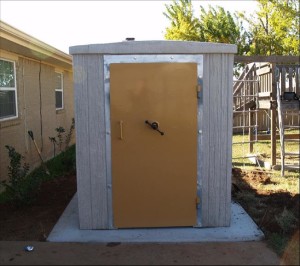
Safe room 2

Pictured: A storm shelter is installed on a slab in a family’s backyard.

One community that knows the effects of tornadoes too well is Moore, Okla. On May 20, 2013, an EF5 tornado hit Moore, killing 24 people and injuring more than 300. The storm caused severe damage, and clean-up and rebuilding are still continuing today. Over the years, the area around Oklahoma City, including Moore, has been hit with numerous tornadoes. The emotional toll tornadoes have on people in this area leave many fearful this time of year.

To date, 145 storm shelters have been installed in the Lutheran Disaster Response and FLASH joint-Pilot Program. Coordinators in the region have been working with long-term recovery groups in the Oklahoma City area to connect with the most vulnerable families who need a storm shelter.

The storm shelters are installed on families’ properties so they can have peace of mind and safety from tornadoes right at home. For the pilot program, the selected storm shelters have either been made of concrete or steel and have been installed in garages, under garage floors with an access panel, outside in the yard, or as fixtures in new homes that are currently being constructed.

There are many factors that come into play when families select which storm shelter is right for them. Tim Smail, senior vice president of engineering and technical programs for FLASH, explains that a flowchart is used to help families choose their storm shelter. The flowchart includes considerations such as the number of people the storm shelter will need to hold, if the storm shelter has to be handicap accessible and what kind of space is available in potential install locations.

Lutheran Disaster Response and FLASH have partnered with the National Storm Shelter Association (NSSA) to make certain that the safe rooms being installed in the pilot program are of the highest quality and have passed standard testing.

“The association works hand-in-hand with our point of contacts on the ground to ensure client needs are met and that the shelters are installed properly,” Smail says.

While people who live in tornado-prone areas know the importance of having a safe place to go in times of severe weather, knowing who to work with and having the resources to install a storm shelter can be daunting. The average cost to install a safe room is approximately $4,700, but can range from $4,000 to $10,000, depending on the size and accommodations needed for the family.

“Whatever the situation, most of the people we have worked with are not in a position to afford a storm shelter,” says Grant Gatschet, program director with LSS/S for the Storm Shelter Pilot Program. “Across the board, they have all expressed sincere thanks for the program for helping them feel safe and secure in their homes.”

As the pilot program wraps up, Lutheran Disaster Response and FLASH are working to make storm shelter installation an embedded part of tornado disaster recovery.  With guaranteed safety and peace of mind, storm shelters are life-saving and life-changing.
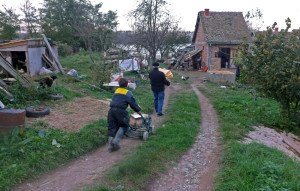
Serbia: Post-flood rehabilitation

Megan Brandsrud

Roma population

On May 13, 2014, a cyclone hit Serbia and Bosnia and Herzegovina, resulting in widespread, record flooding and landslides. Overall, approximately 1.6 million people were impacted by the cyclone and the flooding and landslides that followed. Last spring, Lutheran Disaster Response worked with Ecumenical Humanitarian Organization to provide immediate relief resources, which included food, personal health and hygiene supplies, disinfection equipment and tools.

The emergency phase of the disaster has passed, but there is still a lot of work to be done, especially with housing. Serbia was hit hardest by the severe weather, with 200 collapsed homes, more than 18,000 damaged homes and approximately 32,000 people who had to evacuate.

The Roma settlement in Mišar, City of Šabac, in western Serbia was greatly affected by the floods. There are approximately 500,000 people who make up the Roma population in Serbia, and they generally live in worse conditions than the rest of the population due to discrimination, employment exclusion and poverty. The poor living conditions mean that these people are more vulnerable to larger damages caused by disasters.

Lutheran Disaster Response is again working with Ecumenical Humanitarian Organization to assist in rehabilitating homes and improving livelihoods for Roma families in Mišar that were affected by the floods.

Home rehabilitation assistance will be owner-driven, so primary resources provided will be technical support and tools and construction materials. Assistance to revive and increase livelihood opportunities will consist of assessing the current situation, identifying self-employment opportunities, creating documentation for start-up grants and building capacity through business plans for income-generating projects.

Special attention will also be given to mobilizing resources and raising awareness around disaster-risk reduction and resiliency.

We will continue to accompany our brothers and sisters in Serbia who are still dealing with the after-math of last year’s flooding. If you would like to support Lutheran Disaster Response’s work in Serbia, please visit the giving page.

Honduras: Support for returning child migrants

Megan Brandsrud

​The Honduran government declared a national state of emergency upon the recent mass return of Hondurans, specifically children, who are being sent back from Mexico and the United States. The assistance of several civil society and humanitarian organizations has been requested to provide accompaniment during the reception of the returning children.

Lutheran Disaster Response is working with Mennonite Social Action Commission (CASM) to help provide humanitarian assistance to 1,000 returning child migrants. Immediate attention will be given to helping the children reunite with their families and to accompany them through the legal process of filing complaints in cases that involve human trafficking, sex trafficking and physical and psychological violence. Food and hygiene kits will be distributed to children as they are received and while they stay in temporary shelters waiting to be reunited with family. Psychosocial support will also be provided, and special accompaniment will occur for cases that merit extra attention.

Each child’s well-being is the primary concern, and necessary support will be provided to ensure a safe reunion for the children and their families.

Madagascar: Tropical Cyclone Chedza and severe flooding

Megan Brandsrud

On Jan. 16, Tropical Cyclone Chedza hit the southwestern part of Madagascar in the Menabe and Melaky regions. Heavy rainfalls followed, which caused severe flooding in most parts of the country. Approximately 174,000 people were affected by the disaster, and 80 people died.

Lutheran Disaster Response has committed an initial $35,000 and is working with the Malagasy Lutheran Church to assist 1,000 families in Morondava and Mahabo communities who were affected by the cyclone and flooding. Assistance will be for urgent food and non-food items, as well as psychosocial support. Food being distributed consists of rice, oil and beans, and non-food materials include blankets and hygiene items. Attention for distribution will be toward those who are most vulnerable, specifically families who are displaced, people with disabilities, elderly parents and female heads of households. The church will be working with people to provide support and disaster-risk training to help increase the resiliency of the communities.

Please join us in praying for the people in Madagascar who have been affected by the severe weather. We also pray for continued safety and preparedness as the cyclone season continues in the region. If you would like to support Lutheran Disaster Response’s work in Madagascar, please visit the Lutheran Disaster Response giving page.