
Skip to content
ELCA Blogs

Lutheran Disaster Response

Angola: Providing assistance as the drought continues

Megan Brandsrud

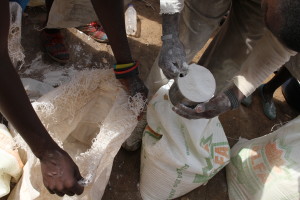
Food distribution in a village in Cunene district.

Food distribution in a village in Cunene district.

Angola has been experiencing a prolonged dry spell since 2012, resulting in a food and water crisis. Agriculture is the primary source of income in Angola, and the drought has decreased the country’s agricultural production by more than 400,000 tons. Because of this, more than 365,000 households have faced a loss of income, food shortage and water shortage. During the past year, Lutheran Disaster Response has been working with Lutheran World Federation as we accompany people in Angola who have been impacted by the drought.

Even though the region has experienced some rains as the farming season comes to an end, food shortage is still a major issue.  More than 12.5 tons of food items and non-food items are being transported for distribution in Cunene province.

Sanitation and hygiene conditions in the region have also been impacted by the drought. Hygiene kits have been distributed and spare parts are being used to rehabilitate 16 broken hand water pumps. In addition, 24 people, including health workers, local government representatives and church leaders, have been trained on hygiene and sanitation programs. The education that these people will be able to provide in the villages will help decrease health risks. Water and sanitation activities will also help curb and eliminate the risk of cholera, a waterborne illness.

Although rehabilitation work is being done, there is still much more to be done to help restore livelihoods and create sustainability. We as the church will continue to advocate for these vulnerable populations, and we ask you to join us in prayer for our brothers and sisters in Angola who are being impacted by this extended drought.

If you would like to support Lutheran Disaster Response’s work in Angola, please visit the Lutheran Disaster Response giving page.
Nicaragua: Providing support and recovery materials after the earthquakes

Megan Brandsrud

​From April 10-14, Nicaragua experienced three earthquakes, with magnitudes ranging from 6.2-6.6 on the Richter scale. More than 3,700 homes suffered damage, of which 1,035 collapsed, and more than 1,600 people had to evacuate their homes and reside in temporary shelters. The most impacted communities are the municipalities of Nagarote, Mateare and Managua.


While the government has responded to needs within the city, there is an urgent need for assistance among rural populations. Lutheran Disaster Response, working with the Nicaraguan Lutheran Church of Faith and Hope, is providing assistance to the most vulnerable populations through food distributions, psychosocial support, hygiene kits and roof replacement materials.


Psychosocial Support

The magnitude of the tremors and the many aftershocks that occurred over the following days had an adverse effect on people’s health, causing anxiety and emotional stress. We will be providing psychosocial support to accompany people who were impacted and who could benefit from spiritual and emotional care.


Hygiene Kits

Hygiene kits will be distributed to families who have had to leave their homes and are residing in the temporary shelter centers. Mattresses will also be provided.


Roof Repair

Part of the recovery activities will include assisting with the improvement of 40 homes by providing zinc sheets to be used for roofs. The roofing sheets will provide protection from the rainy season that the region is now experiencing.


We will continue to work with the Nicaraguan Lutheran Church of Faith and Hope to help those who were impacted by the earthquake recover and rebuild, and we will hold our brothers and sisters in Nicaragua in our prayers.


Lutheran Disaster Response’s activities in Nicaragua were made possible thanks to your generosity. We are church together and your support allows us to provide hope and healing when people around the world are impacted by disaster. If you would like to support our work in Nicaragua, please visit the Lutheran Disaster Response giving page.
Serbia and Bosnia and Herzegovina: Cyclone Results in Record Flooding

Megan Brandsrud

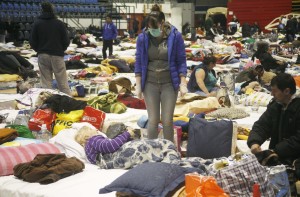
​On May 13, 2014, a cyclone hit the areas of Serbia and Bosnia and Herzegovina. During the next few days, the region received more than three months’ worth of rainfall, which resulted in record flooding. More than 80,000 people had to be evacuated, tens of thousands of homes were destroyed or severely damaged, and 53 people were reported dead. Overall, an estimate from the United Nations says that 3.1 million people were impacted by this domino-effect disaster.

Serbia and Bosnia and Herzegovina have been affected by the cyclone Tamara on May 13. Later on came extremely heavy rain, strong wind and low temperatures. Waters continue to rise rapidly. Severe damages have occured, peole died and many had to be evacuated. ACT members focus on immediate life-saving actions.

Serbia and Bosnia and Herzegovina have been affected by the cyclone Tamara on May 13. Later on came extremely heavy rain, strong wind and low temperatures. Waters continue to rise rapidly. Severe damages have occured, peole died and many had to be evacuated. ACT members focus on immediate life-saving actions.

Lutheran Disaster Response is providing immediate and long-term assistance with our partners, Church World Service and Ecumenical Humanitarian Organization.


As part of the emergency response, Lutheran Disaster Response is providing food, personal health and hygiene supplies, disinfection equipment and tools. These elements are essential since water supplies, and therefore food supplies, have been contaminated as a result of the damage to power and drainage systems caused by the disaster.


Once the emergency response phase is over, there is still work to be done to restore housing and agricultural livelihoods. Lutheran Disaster Response will assist in the reconstruction of buildings and homes, as well as in the rehabilitation of agricultural land and livestock.


Many bridges and roads have been severely damaged or collapsed as a result of the disaster, making it difficult for resources to be delivered. We are committed to providing for those who are most vulnerable in this post-disaster situation, and we will target our resources to those living in the semi-rural locations who are less likely to receive the most immediate attention from other response organizations. During distributions, particular attention will also be focused on people over the age of 60, people with disabilities, female heads-of-households and children.


Flood waters are slowly receding, but the need for assistance is long from over. Lutheran Disaster Response is committed to a long-term response to help impacted families move out of evacuation centers and back into their homes.


If you would like to contribute to Lutheran Disaster Response’s assistance in Serbia and Bosnia and Herzegovina, please visit the Lutheran Disaster Response giving page.

Pictured: An evacuation center in Serbia for people who had to leave their homes as a result of the flooding.

Philippines: A second contribution of $1 million to respond to Typhoon Haiyan

Megan Brandsrud

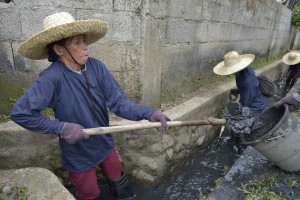
Ida Yabigail, 52, helps to clean up her community following Typhoon Haiyan, removing refuse from blocked drainage ditches as part of a cash for work program sponsored by Lutheran World Relief, a member of the ACT Alliance. Her neighborhood in Ormoc, a city in the Philippines province of Leyte, was hit hard by the typhoon, known locally as Yolanda, in November 2013. LWR and other ACT Alliance members have been providing a variety of forms of assistance to survivors here.

Ida Yabigail, 52, helps to clean up her community following Typhoon Haiyan, removing refuse from blocked drainage ditches as part of a cash for work program sponsored by Lutheran World Relief, a member of the ACT Alliance. Her neighborhood in Ormoc, a city in the Philippines province of Leyte, was hit hard by the typhoon, known locally as Yolanda, in November 2013. LWR and other ACT Alliance members have been providing a variety of forms of assistance to survivors here.

Lutheran Disaster Response has provided a second installment of $1 million to Lutheran World Relief to continue Typhoon Haiyan recovery work in the Philippines.

Typhoon Haiyan, one of the strongest recorded storms in history, struck the Philippines in November, impacting more than 14 million people and destroying more than 1 million homes. Lutheran Disaster Response, working with our partner, Lutheran World Relief, responded immediately with an initial $1 million. Early recovery projects have included cash-for-work debris removal, shelter kit distribution and food distribution.

This second contribution will be used for long-term work of restoring livelihoods. Many industries suffered in the wake of Typhoon Haiyan, and the livelihood rehabilitation projects will help offer opportunities in the fields of fishing, seaweed farming, boat repair, and coffee and cacao production.

A disaster risk reduction and climate change adaptation component will be integrated into all of the livelihood rehabilitation activities to help build capacity and agriculture and food security among the participants.

Lutheran Disaster Response’s work in the Philippines is done in coordination with Lutheran World Relief, along with the National Council of Churches in the Philippines and other ecumenical partners. Working with our partners allows Lutheran Disaster Response to extend the help of the people of the ELCA.

Thanks to your outpouring of generosity, Lutheran Disaster Response was able to assist in the immediate recovery after Typhoon Haiyan, and now in the later phase of rebuilding. We as a church are committed to sustainable recovery, and we will continue to work with our brothers and sisters in the Philippines until the work is done. We stay until the very end.

If you would like to support Lutheran Disaster Response’s work in the Philippines, please visit the typhoon giving page.

We give thanks for the outpouring of love and support for the people of the Philippines. Protect and support them. Lord, in your mercy, hear our prayer.

Afghanistan: Providing Immediate and Long-Term Assistance After Floods and Landslide

Megan Brandsrud

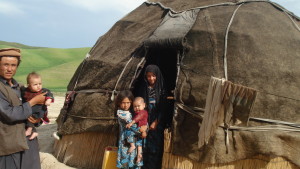
Following the series of rains, floods, and landslides, the affected population scattered across the north of Afghanistan face challenges in accessing shelter, water, food, and health services. Children pose for the camera in front of their home.

Following the series of rains, floods, and landslides, the affected population scattered across the north of Afghanistan face challenges in accessing shelter, water, food, and health services.
Children pose for the camera in front of their home.

During the last week in April and the early part of May, monsoon rains drenched northern Afghanistan, causing flash floods. On May 2, the continued heavy rains triggered a landslide and buried a village in Abi Barik, causing significant damage to homes and agriculture and the loss of many lives. Overall, more than 120,000 people have been impacted and more than 675 people have been reported dead.

Lutheran Disaster Response, with our partner, Church World Service, is providing immediate needs, such as food, shelter kits and hygiene kits. We are also assisting in mid- to long-term projects of rehabilitating livelihoods, restoring irrigation systems and providing disaster risk reduction.

Livelihood Rehabilitation

Cash-for-work programs will be made available to 570 families who will be able to assist in cleaning up and rebuilding their villages while receiving cash grants to be used for their own disaster-related expenses. The disaster impacted everyone in different ways, and the cash grants allow families to prioritize and take care of their own individual immediate needs.

Irrigation Restoration

Restoring irrigation systems will provide an opportunity for cash-for-work projects and will restore crop production on agricultural land.
Disaster Risk Reduction

1,200 people will participate in disaster risk reduction services, which will provide education on disaster risks and how to be prepared. Disaster risk reduction will help increase the resilience of the flood-impacted communities.

Thanks to your gifts, Lutheran Disaster Response is able to provide hope and healing to our brothers and sisters in Afghanistan who were impacted by the floods and landslide. We will continue to walk with them on their journey of rebuilding and renewal. If you would like to help support Lutheran Disaster Response’s work around the world, please visit the Lutheran Disaster Response giving page.