Skip to content
ELCA Blogs

Lutheran Disaster Response

Field Report from the Red River Valley

Dear sisters and brothers,

My name is Mike Nevergall, and I serve as Associate Program Director of Lutheran Disaster Response.  My colleague, Kevin Massey, and I are in North Dakota and Minnesota this week for what has become an all too regular event – the annual cresting of the Red River of the North.  I wanted to share with you some of what we have seen and heard this week and ask you to continue praying for the people here.

Washed out road, just west of Harwood, N.D.

A washed out road, just west of Harwood, N.D.

Similar to large hurricanes, which are given names, each flood is different, as if it has its own personality.  The story of this flood is overland flooding – farm fields and rural roads, small towns and isolated areas.  The crest in the Fargo/Moorhead area, which happened over this past weekend, came in at 38.75 feet, about two feet shy of the record from 2009.  The overland flooding, however, appears to be the worst in recent history.

On Monday evening, we had the chance to ride along with Pastor Jeff Sandgren, of Olivet Lutheran Church in Fargo, as he drove to Harwood to deliver hot meals to the National Guard troops stationed there.  Near Harwood, a small town about eight miles north of Fargo, the water from the Red River, and from the nearby Sheyenne River, is nearly four miles out of its banks, and about 20 miles of the interstate have been closed all week.

Outside of Harwood, I met a farmer as he left to walk his dog.  His home was completely surrounded by water, with some of his outbuildings already under, and the road was completely washed out less than 100 yards from his driveway.  He described to me that the hardest part of the flood fight is the exhaustion from lack of sleep.  “The sump pump kicks on every three minutes,” he told me, “and you don’t dare fall asleep at night for fear that you won’t hear if it stops working.”  You can imagine how that exhaustion compounds – this is the third major flood here in as many years, and this year’s flood fight started on Valentine’s Day.

Chicken dinners at Olivet Lutheran

LDR staff help put together chicken dinners for first responders at Olivet Lutheran Church (Fargo, N.D.)

I am so proud of the Lutheran churches and people we have met here in the valley.  As I already mentioned, the people of Olivet Lutheran have been serving hot meals to first responders – police, fire, highway patrol, National Guard – as they work tirelessly to keep people safe.  The people of First Lutheran, also in Fargo, have partnered again with the Salvation Army to make sandwiches by the thousands to deliver.  Bonnie Turner, with Lutheran Social Services of North Dakota, is playing a key leadership role with community groups in coordinating the response on both sides of the Red River.

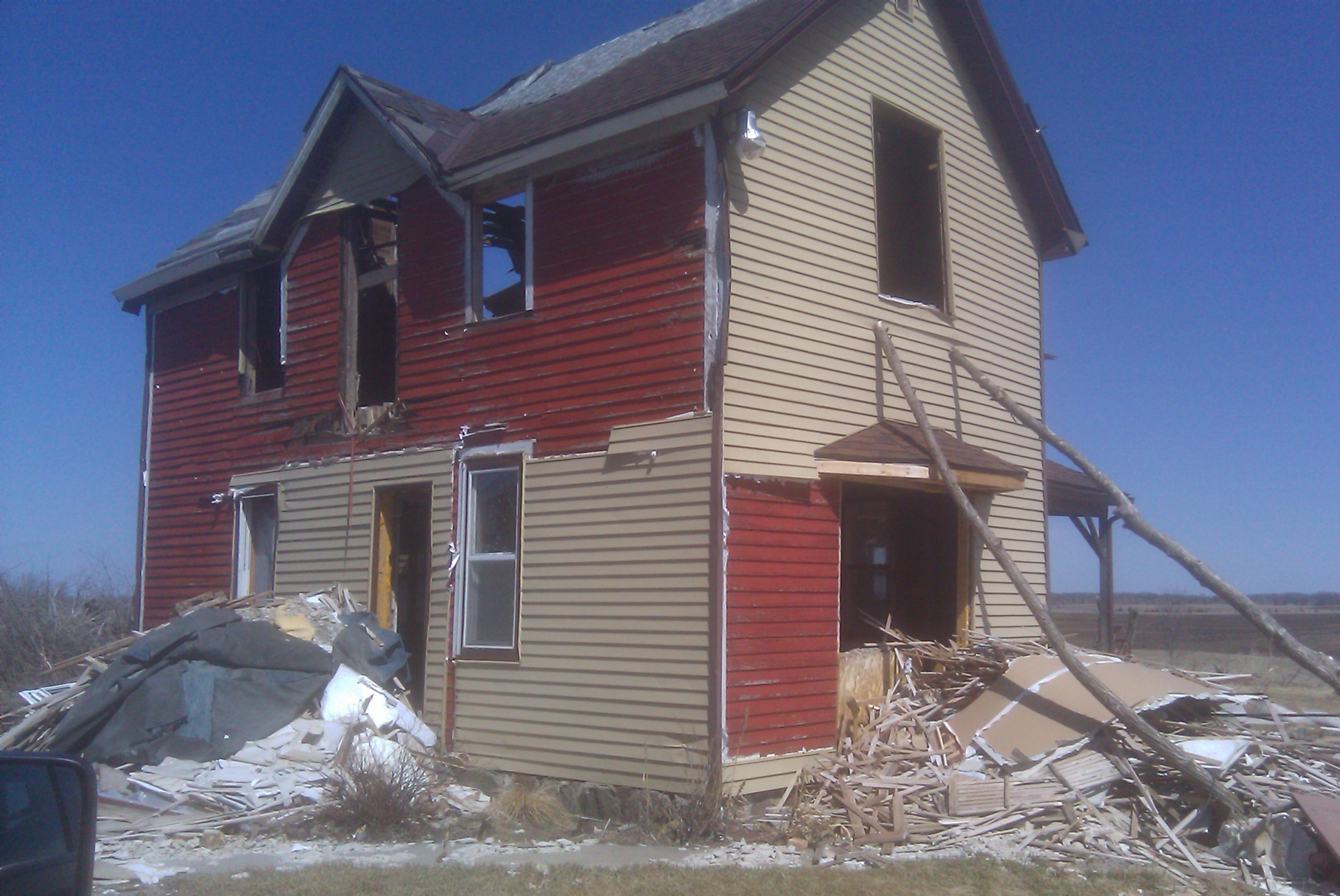
Even as new disasters happen, we recognize that disasters take months or years, and not weeks, to clean up and be recovered.  Yesterday, we visited with Pastor Del Moen and the members of the Wadena Otter Tail Long-Term Recovery group.  Last June, a tornado tore through Wadena and the surrounding communities, leaving more than 100 damaged homes in its path.  Pastor Moen has been a key leader in the ongoing recovery process, and I am truly proud of his service.
Wadena tornado

A home outside of Wadena, MN, which was destroyed by last summer's F4 tornado.

So what can you do today to help?  First, I cannot say enough about the power of prayer and what it means to these courageous survivors. Please pray for the people here, for their patience and strength, for their emotional and spiritual health.  Second, the national media has given very little attention to this flood, especially after the larger towns appeared to be safe.  Help us tell this story. Whether by e-mail or on Facebook, send this along to a friend, tell them about what is happening here and encourage them to pray as well.  Finally, I ask you to consider making a gift to the U.S. Floods fund, and we will make sure that it gets to those who need it most.

Thank you for your ongoing support of this important ministry of our church!

In service,
Mike
Libya: Tunisians Lend a Helping Hand…and Car…and Bottle of Water

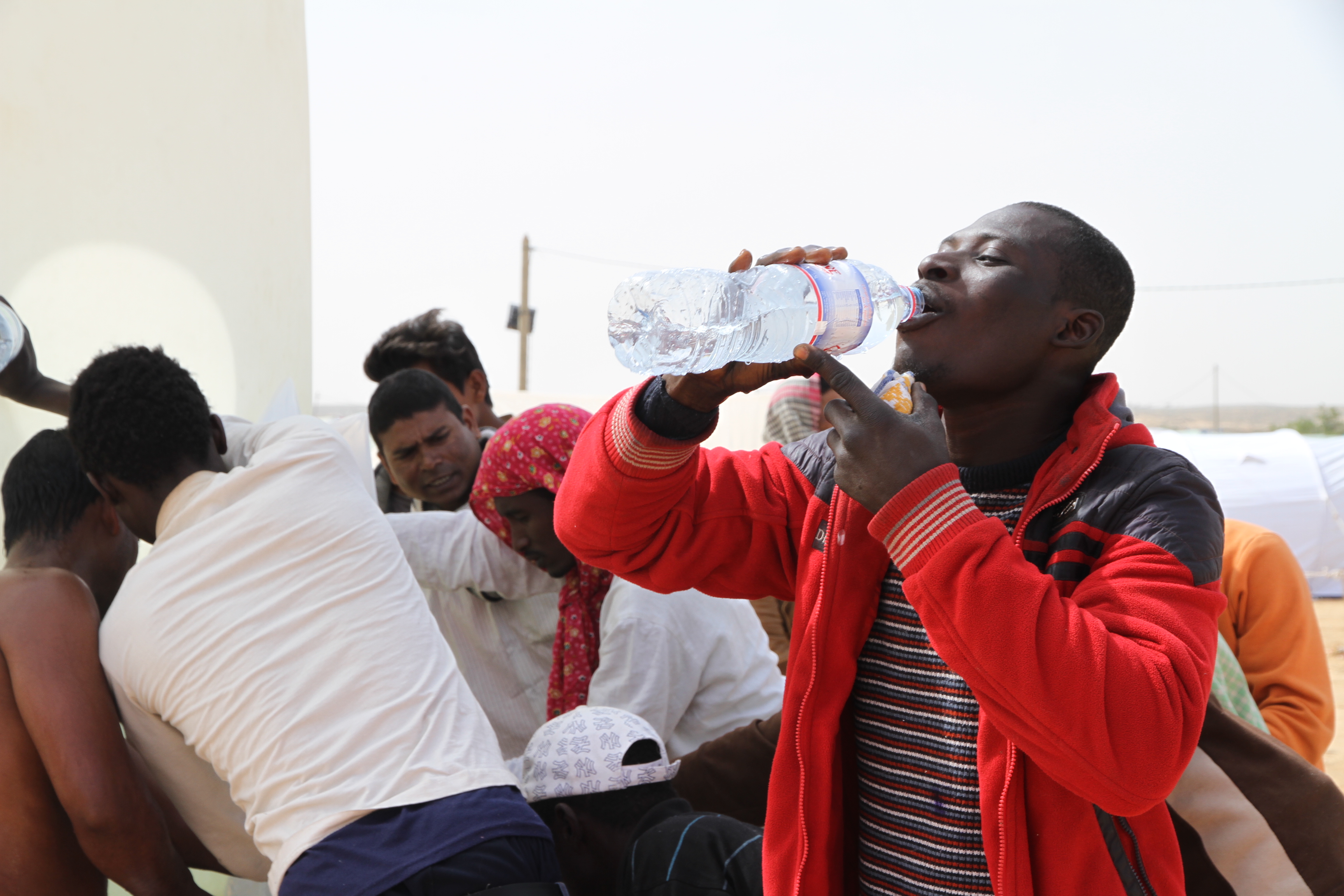
Refugees at Sousha refugee camp getting water.

Who is paying [for all these supplies].

“We’re paying, of course. And our friends and family back home.”

“How long will you continue?”

“For as long as the money lasts.”

This is an exceprt from a conversation with Aomed Aowel, an ordinary Tunisian who left his home in the capital city of Tunis to drive (if my estimates are correct) around 7 hours to bring food and water to refugees crossing the border from Libya. And as the days have progressed he, his friends and others Tunisians they have recruited, have been bringing supplies of food and water to help meet the basic needs of people coming into Sousha camp.

“We’re not heroes. We’re just helping our brothers.” This is the response he gives to what they are doing. Heroes or not they are helping to do God’s work and for that we give thanks.

To read more about Aomed’s story as well as the work being done by the ACT Alliance read their update Solidarity without borders.

————-
Gifts to ELCA International Disaster Response allow the church to respond globally in times of need. Donate now.

Relief Efforts Expand in Japan

Franklin Ishida, Area Program Director for Asia/Pacific, ELCA Global Mission, was with the leadership of the Japan Evangelical Lutheran Church (JELC) in Malaysia during the March’s devastating earthquake.  Franklin arrived to Japan one week ago and has been accompanying the leadership of the JELC in their relief efforts.  

The following post is from Franklin, and captures a quick glimpse of the efforts underway to restore lives and livelihoods in the wake of disaster.

————-

Relief efforts, initiated within days after the earthquake and tsunami, have now been expanded with additional plans for entering a recovery stage. As in any disaster, on-the-ground assessment is important.  Earlier this week, a 6-person team from the JELC headed to the disaster area taking with them supplies including food, a motorcycle and a couple bicycles. These latter means of local transportation were important as gasoline is virtually impossible to obtain even three weeks after the disaster. The team visited several cities and towns, many devastated by the tsunami. They talked with local municipal officials and representative of non-profits still sifting through the massive destruction, determining needs, and addressing some of the most critical needs in their communities.

Trying to clean up from the destruction is still going slow as bodies are still thought to be in the rubble. But meeting the daily needs of those who survived, most of whom are in evacuation centers, is still critical.  Food and other daily items have been rushed in from all over Japan but are piling up due to challenges faced with the distribution network. While roads are being cleared, lack of gasoline prevents vehicles from hauling these much-needed items beyond central evacuation centers and storage depots. In some instances, people have been encouraged to come and get what they need; but they, too, don’t have the means to move around.

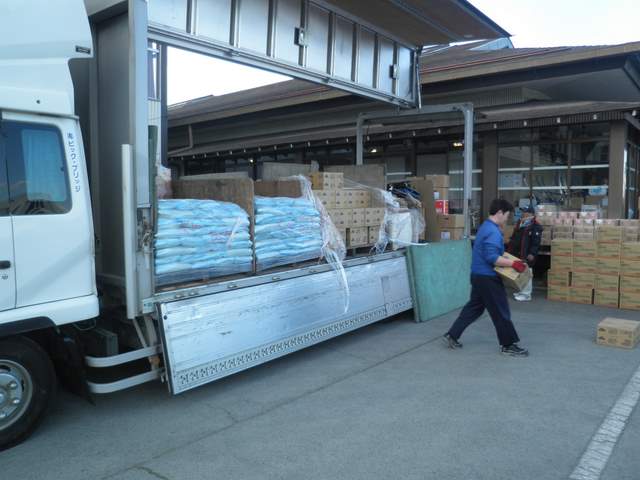
Relief supplies distributed in Japan.

These gaps in the distribution of supplies are causing some hardships, in addition to unmet needs in some areas. Now constituted as Japan Lutheran Emergency Relief (JLER) — a cooperative effort of the Japan Evangelical Lutheran Church, Japan Lutheran Church, Kinki Evangelical Lutheran Church, and West Japan Evangelical Lutheran Church — the churches chartered three trucks to transport both purchased food items and in-kind donations from congregations around the country. These trucks departed from a warehouse in Tokyo on March 28 and headed to three different areas of the affected region. Coordinating with local municipalities and non-profit organizations, food items such as rice, miso soup, water, juice, and non-perishable food were dropped off at local distribution sites. To expedite and streamline the distribution network, JLER is now going to rent warehouse space in the disaster area, and will utilize a small truck and vans to reach communities with the greatest needs in coordination with other actors.

Meeting food, clothing, and other daily needs are just part of an initial response stage. As people start to rebuild their lives, even if by living in temporary housing, further emotional and livelihood questions will surface.  JLER is preparing to meet these needs as well. Counseling centers will be established, with both professional and trained volunteers prepared to engage people’s emotional trauma. The Japan Lutheran College in Tokyo has social welfare and counseling departments, and the college will take the lead in mobilizing necessary people and resources.

While the government will certainly provide much assistance to rebuild people’s livelihoods, there will certainly be gaps. JLER is preparing to provide grants to help selected individuals and families rebuild their lives. This will come after careful analysis of unmet needs as they emerge. Japan is a developed country, and much is happening quickly to address this catastrophic disaster. The scope of this disaster is presenting the greatest challenges. JLER, with assistance from all over the world, including the ELCA, is attempting to do its part in addressing the many emerging and changing needs, coordinating along the way with other actors to promote an effective response.

————-
Gifts to ELCA International Disaster Response allow the church to respond globally in times of need. Donate now.

Haiti: Bishop Hanson Speaks about Work in Haiti with Orion Samuelson

During an interview with Orion Samuelson for “This Week in Agribusiness” (video), Bishop Hanson took time to speak about his experiences visiting Haiti in February. He told stories of seeing a people “defined not by the rubble, but by restoration,” a quote he got from the president of the Lutheran Church in Haiti, Rev. Joseph Livenson Lauvanus. He shared of the forest restoration project funded by the ELCA and partners like Lutheran World Federation and the Lutheran Church in Haiti to replace trees cut down for survival after the earthquake, of a coffee cooperative that was funded in part by the ELCA prior to the earthquake that still thrives after, and of other farming, vocational and housing projects underway.

To learn more read the ELCA News Release.

————-
Gifts to ELCA International Disaster Response allow the church to respond globally in times of need. Donate now.