Skip to content
ELCA Blogs

Disability Ministries

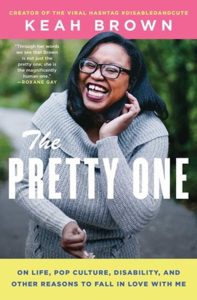
Book Review: The Pretty One by Keah Brown

Keah BrownA book review by Rev. Peter Heide on “The Pretty One: On Life, Pop Culture, and Other Reasons to Fall in Love with Me” by Keah Brown

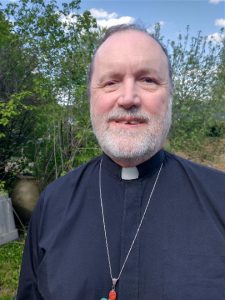
Rev. Peter Heide

Rev. Peter Heide

At first, the title of this book seems presumptive, but I have come to realize that this is the courtship of one person learning to love herself amid a world that does not want to love her.

Keah Brown, a journalist, has filled this book with her essays. In each standalone essay, Ms. Brown addresses a particular issue of life as a black woman living with Cerebral Palsy in a mostly able-bodied white America. She discusses the depression that comes from internalizing the “idealized body” of the able-bodied world we live in. She explores the self-loathing that can kill when one allows the able-bodied world to dictate one’s image upon oneself when our bodies can never “measure up”. She considers the challenges of dating, of feeling loved and accepted.

In “You Can’t cure me. I Promise it’s Fine.”, the reader is challenged by how prayer can be an abusive tool that makes claims on the faithfulness of the disabled and that person’s willingness to trust in the power of God to heal. As Ms. Brown illustrates the difference between the able-bodied and the dis-abled, she also spotlights how this kind of faith/prayer isolates, demeans, and dehumanizes the person living with a disability.

Some issues are addressed multiple times which was a little exasperating until I was reminded of the similarity to reading Biblical stories: the more space given to any story raises the importance of the subject. Consider the amount of space that Nebuchadnezzar receives in an encyclopedia and then look at the space he gets in Scripture. Or maybe the story of Peter and Cornelius might be helpful. Outside the Bible no space is given it, but Scripture reports the story of the vision of the sheet coming down from heaven with unclean foods upon it three times. Such is the importance of these repeated themes.

The essay format of this book lends itself to congregation discussion.

Reinterpreting John 9 

A reflection on John 9 through the lens of disability, by Rev. Brian Krause
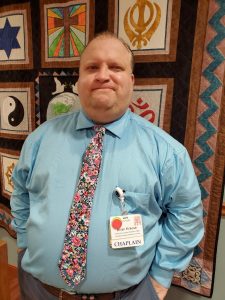
Rev. Brian Krause

Rev. Brian Krause

 The healing of the blind man in John chapter 9 is one of my favorite healing stories in the whole Bible.  I love this story because in this story Jesus confronts and rejects the common belief that disabilities are somehow caused by sin.  Jesus and his disciples are going along when they find a man who has been blind from birth.  The disciples ask Jesus, “Who sinned, this man or his parents, that he was born blind.”  Jesus answered, “Neither this man nor his parents sinned; he was born blind so that God’s works might be revealed in him.”  (John 9:1-3)   

I myself have encountered the idea that my Cerebral Palsy is punishment from God for some sin in my life.  I have had some people pray for my healing.  Most of the time it was forced upon me.  I was told that first I needed to confess the sin(s) for which I was being punished.  People have prayed for me to be healed and nothing has changed in me physically.  I was once told that God wouldn’t heal me because I had a selfish need to be pitied.  Unfortunately, some in the church today continue to teach the idea that disabilities are punishment for sin through the way they talk about healing passages. 

When we preach, lead worship, and sing hymns we need to be careful how we speak about healing and disabilities.  We especially should be aware of the pervasive narrative of the church regarding blindness.  Too often blindness has been associated with a lack of faith.  We see this in the infamous hymn, Amazing Grace; “I once was blind, but now I see.”  Equating blindness to a lack of faith is harmful to people who are blind or have low vision. 

This year during Lent we will be reading the story of the blind man in John chapter 9.  As we think about this text and craft our sermons, we need to be careful how we speak about blindness to not cause greater harm to persons who are blind.  We need to rethink the common ways that this text has been interpreted and find new ways to speak about this passage that are uplifting to all. 
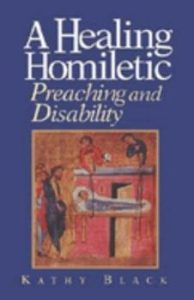
A Healing HomileticI commend to you the book A Healing Homiletic: Preaching and Disability by Kathy Black.  Kathy Black is an ordained Methodist minister who has served as the chaplain at Gallaudet University and pastored two churches for deaf persons.  Black has also taught classes in deaf ministry and ministry with persons with disabilities as Wesley Theological Seminary, Pacific School of Religion, and the School of Theology Claremont.  

In chapter one of the book Black gives a broad overview of how disabilities are often interpreted.  Chapter two addresses hermeneutical hazards of preaching on healing narratives.  In the subsequent chapters Black dives into the healing passages that appear in the Revised Common Lectionary where she offers common interpretations and then a new “healing homiletic” that looks at each story in a different way that is inclusive.  Black looks at the various stories of Jesus healing people who are blind in chapter three.   

Black raises some important issues in her reading of John chapter 9.  Black speaks about the fact that people who are blind are often not believed and are not seen as credible witnesses.  This appears multiple places in the narrative, first when the neighbors of the blind man refuse to believe in his healing.  It appears again when the religious leaders don’t believe and call on the man’s parents.  Black speaks about how the blind are often ignored and the tendency of people to speak only with a blind person’s companion instead of directly to the person themselves.  Black says that when this happens, “the person with the disability becomes invisible-nonexistent.”1   Speaking only to the companion instead of the person with the disability is a common problem for people with various disabilities and may not be picked up by people who do not have experience with disabilities. 

Black also speaks about what sometimes happens when people with disabilities speak up for themselves as the man who had been blind does in the text.  Black says, “And like the man in this text, when they are bold and speak up for themselves they are seen as being too pushy or aggressive rather than as the passive receivers they are expected to be.  They too experience rejection by faith communities.”2   Once again Black picks up on an issue that may not be recognized by those without experience with a disability.   

How does Black suggest that we proceed in preaching about this passage?  Black gives several options in her section on a “healing homiletic”.  Black suggests we could look more at Jesus seeking out the man who had been born blind at the end of the narrative.  Black says, “Certainly Jesus seeking us in our times of loneliness and rejection could be explored further.”3   Black also rightly notes the major change that happens in the former blind man’s life.  Black suggests that a preacher could explore how major life events lead to changes like loss of community and identity and the long road to developing a new community and identity.  Finally Black notes that this man did not have faith when he was healed and suggests that a preacher could challenge the idea that confession is needed before healing can occur. 

There is so much good material in the third chapter, and I do not have enough space to relay it all here.  I highly recommend that every pastor pick up a copy of this book and read it before preaching on healing passages.  The way we talk about healing is important and getting it wrong can cause a lot of grief as I have experienced in my own life.  We as a church need to do better when preaching on healing.  With Kathy Black’s book I believe we can. 

 1 Black, Kathy. A Healing Homiletic: Preaching and Disability. 71.   

 2 ibid. 73 

3 Ibid, 77. 

Grants and tAble

Dear Friends in Christ,

We had an AMAZING response to our most recent opportunity to receive a grant from ELCA Disability Ministries! Soon you will be notified of your application status. Unfortunately, we could not take all requests or applications. Please be patient as we get messages out to everyone who registered or applied.

After that, our review team will soon begin the process of narrowing down the first 30 applications we received to the top 5 that will receive grants of up to $10,000. This process takes time, so again we ask that you be patient as this is a pretty big (and very important!) task.

In other awesome news, we wanted to share that the Youth Gathering will waive fees for the first 200 registrants who attend the tAble! Check out updates with the Youth Gathering team for more information. This is a great opportunity for ELCA youth with disabilities!


Peace,

Rev. Lisa Heffernan, coordinator, ELCA Disability Ministries


Grant Update

Hello Friends!

I want to say a HUGE thank you to every person, congregation, and camp that has registered onto GrantMaker and started, even completed, their applications! With just a few weeks left, we currently have 20 applications that have been completed and submitted for review. Overall, the response has been great, and I am so encouraged by your excitement and dreams for your ministries.

If you’re still working on your application– don’t be discouraged– there is still time to complete and submit them. When we hit that benchmark of 30 completed and submitted applications, we will put out another update/notice.

Please do not hesitate to contact me if you have any questions.

In Christ,

Rev. Lisa Heffernan

ELCA Disability Ministries coordinator

New Grant Opportunities

Dear friends in Christ,

One of the great joys in my vocation as coordinator for ELCA Disability Ministry is being able to grant some of our funding, donations and other financial resources to congregations and ministries that are committed to inclusion and accessibility. As an advisory member, I thought it was awesome to hear the creative ways that grant applicants have used this funding in the past, and I can’t wait to find out what your needs, dreams and plans are now! I am excited to see how God is at work as you seek to make accessibility, inclusion, participation and leadership of people with disabilities a priority — a matter of justice.

At this time, here are the important pieces to have in mind. We will begin accepting grant applications on Dec. 12 and will officially close the application process on Feb. 15, 2023. We hope that this time frame will give congregations a chance to start dreaming over the holidays and begin to have plans take shape as we move into the new year.

Secondly, we will accept for consideration the first 30 grant applications we receive through the application process in GrantMaker. Once that number is met, correspondence will be sent out through our newsletter and blog. Please note that this may happen before the Feb. 15 deadline. Of those 30 received, our review team will approve up to five grants of up to $10,000 for projects.

Applicants for this grant can be congregations, synods or other ELCA organizations. We leave this intentionally open because we know that great things are happening all across the wider church! As grantees begin thinking through projects, we would also like them to take note of the following:

To be eligible for a grant, your project and proposal must reflect at least two of the three commitments of ELCA Disability Ministry:

  • Preparing leaders for serving people with disabilities, raising up people with disabilities for leadership positions, and encouraging the participation of those with disabilities in the wider church.
  • Equipping our synods, congregations and members with relevant and practical information that enables them to welcome and support individuals with disabilities so that they might participate fully in the life of the congregation and that, together, all might experience being the body of Christ.
  • Gathering and connecting those with disabilities and various groups within the church so that they might help us become an inclusive, supportive and whole community of faith.

A successful grant proposal must supply the following pieces of information, which will be put together in the application on the ELCA GrantMaker system:

  • Project leader information.
  • A detailed summary plan that includes your project’s name, location, timeline, targeted audience, etc.
  • Goals and objectives.
  • Budget and budget narrative detailing how the grant funding will be spent.
  • Synod support (letter and/or financial).
  • Proof of other funding sources outside the grant.

The ELCA Grants Management Team has made a tool to help grantees with the registration process on GrantMaker. You can find it here. The team has also included a document to help you navigate the tool: Managing the Grantee Tool.

Please do not hesitate to contact Disability Ministry as questions arise in your grant proposal writing and application processes. You can email Disability.Ministry@elca.org or myself directly at lisa.heffernan@elca.org.

God’s peace and blessings be with you in this Advent season. On behalf of myself and the ELCA Disability Ministry advisory team, I want to thank you for your renewed or continued commitment to accessibility and the inclusion of people with disabilities across the life of the whole Church.

In Christ,

Rev. Lisa Heffernan

“Who Are You!”

Today’s blog post comes from DeAnna Quietwater Noriega.

A picture of DeAnna Quietwater Noriega and her guide dog from her book "Fifty Years of Walking With Friends"


DeAnna Quietwater Noriega is half Apache and a quarter Chippewa. She is the mother of three, two daughters and an adopted blind son. She was the eldest of five children in a close–knit American Indian family. As a result of congenital glaucoma, she became totally blind at the age of eight.

DeAnna was mainstreamed in public schools in Texas, Michigan, and California. She completed a bachelor’s degree in social science and did a year toward a master’s in social work at California State University Stanislaus. While attending college, she taught independent living skills to the blind for the California Department of Vocational Rehabilitation. She worked as a caseworker in Santa Clara County, California, before joining the United States Peace Corps. DeAnna and her sighted husband met while attending college, and Curtis joined her in the Peace Corps. They worked together to establish a school for blind children in the independent nation of Western Samoa.

Upon her return to the U.S., DeAnna spent the next seven years at home, raising children. During this time, she became active in the American Council of the Blind and in Guide Dog Users, Inc. She taught braille, instructed breastfeeding mothers as a La Leche leader, was a friendly visitor at nursing homes, and worked as a volunteer intake clerk at the welfare office.

DeAnna and her husband opened two Papa Murphy’s pizza franchise stores. She served as operations manager, doing inventory, ordering, supervising staff, and handling the cash register and phone during late afternoons and evenings.

After 14 successful years, they sold the restaurants to move to Colorado, where their two daughters were enrolled in college. DeAnna kept busy working as an instructor of braille and independent living skills with an adult education program in Colorado Springs. She remained active in many organizations of the visually impaired, serving as an officer at local state and national levels. She served as a founding board member of a nonprofit organization that opened a blind center in Colorado Springs. She established The Braille Books to Keep project for blind children in both Oregon and Colorado.

DeAnna has been a guide dog user for over 50 years and has taken an active part in passing legislation protecting service animals.


Who Are You!

By DeAnna Quietwater Noriega, an excerpt from Fifty Years of Walking with Friends

My uncle always described us as assimilated traditionalists. Men in our family went in to construction or the military. These were acceptable choices for warriors. Those who worked in construction usually left their families during the months when the building trades had work. They returned home in winter. Military families went with their men when possible and returned to the reservation when they weren’t allowed to go to posts in war zones.

My father was a master sergeant in the army and a full blooded Apache. My mother was born on the Isabella Reservation in Mount Pleasant Michigan. She is Ojibwa. My grand father was a six-foot 8-inch Full blooded Ojibwa who left the reservation to find work. He and my grandmother lost two of their 8 children to malnutrition and disease as toddlers. My mother was their first surviving child. She married my father at age fifteen and followed him to California where I was born when she was seventeen.

When I was four, I was living in Louisiana and had a black baby sitter. I asked her why her skin was such a pretty dark color. She said that god had made her with chocolate. White people were made with vanilla. I asked what flavor I was and she said a ginger snap.

When I was in the first grade living in San Antonio Texas, my teacher went around the room using last names to illustrate emigration. When she came to me, she said “Your ancestors probably came from Mexico.”

I shook my head and replied, “No, I don’t think so, I think we didn’t come from some other country but were always here.” I told her we were native Americans. My classmates asked if my parents wore paint and feathers. In all innocence I answered “Only on Sundays.” My mother wore a hat to Church with feathers on it. She used makeup then too.

When we were away from the reservation, people assumed my mother was Hispanic and tried to speak Spanish to her. My Apache grandparents spoke Spanish. I learned a little as a preschooler. I was lighter skinned than my brothers, favoring my maternal grandmother.  I often confused people who weren’t familiar with my Apache face. I have been mistaken for someone from the Philippines, or asked if I were Caribbean, Samoan, or even Eurasian. Until the flower children began viewing all things Native American as mystical, it wasn’t popular to be thought an Indian. People living near reservations held negative opinions of us, believing we were all alcoholics, came from broken families and obstinately held to beliefs that were little better than ignorant superstitions. Children were placed in schools where they were forbidden to speak their native languages. They were shipped far from home and forced to conform to mainstream religion and cultural beliefs. If we wanted to learn more of our culture, we had to make an effort to seek out elders who would teach us.

This has led to a gradual decline in the numbers of native people who remember who they are. Somethings I have learned by watching the adults in the family are:

Babies and young children are people too. They should receive the love and attention of the family. Native American babies aren’t left to cry but move from loving lap to lap. Small children are encouraged to master tasks to add to the well being of the family because all hands can make contributions.

Elders are to be respected and listened too. They have survived many things and can offer much wisdom.

If you have something and another doesn’t, then share. Gifting your little extra will come back to you someday when you may need it.

You are as the great mystery has made you. Value the gift of life and make the world a better place for having been born in to it.

Don’t fear death, it is just another change like birth. Just because we don’t know what to expect doesn’t mean it won’t be good.

We aren’t superior to our brothers and sisters who walk on four legs or swim in the streams or fly. All living things are equally the children of the maker. That is why we owe them respect if we take their lives to live.

These are the gifts I carry in my heart as I walk the world and they define who I am as much as my dark hair and high cheekbones or the fact that I became totally blind at age eight.