Skip to content

ELCA Blogs

February 15, 2026 – It is Good to Be Here

Prepare

To begin, let’s admit that the Transfiguration is a weird story. We’ve got heroes from the Bible’s past. There are voices from heaven. People faint from fear. Jesus transfigures, whatever that actually means. This story is just weird.

There are a few things to keep in mind about Moses and Elijah that might be helpful for understanding this story. First, no one saw Moses and Elijah die. When Moses dies, God grants him, alone, a glimpse of the promised land and then God buries Moses, but no one knows where (Deuteronomy 34). Elijah ascends into heaven by means of a chariot, fire, and whirlwind (2 Kings 2). But here is more: both Moses and Elijah, in their time, meet God on mountaintops, in fact, it’s the same mountain – Mount Horeb. God calls Moses through the burning bush and later, on the same mountain, gives him the Torah, the law. Elijah meets God in the sound of sheer silence and receives instructions to anoint new kings and name a successor. 

Before and after this story, Jesus predicts his death several times, and he confronts his disciples with the truth about how hard it is to follow him: it is like taking up a cross. And, when Jesus, Peter, James, and John come down from the mountain, they’ll learn the other disciples have been trying, and failing, to help a little boy with epilepsy.

Transfigured means changed—not like a costume change, but a change in form. Yes, Jesus’ appearance changes, but there seems to be something more. Whatever it is, the disciples see him both more clearly and less so. Peter lacks the words to express the depth of this moment, but he knows what is true: it is good to be here.

Opening Exercise

  • You’re hosting a dinner party for yourself and five other people—some you know now, some from history you wish you could’ve met. Who do you invite? Why? How do you introduce them to one another? What kinds of conversations would you hope to have?

Text Read Aloud

Matthew 17:1-9 

It is Good to Be Here

Winter is never mild in Ukraine, but it has been particularly harsh this year. Many people are without power for all or part of the day. A lot of people don’t have water in their homes anymore because of the war with Russi
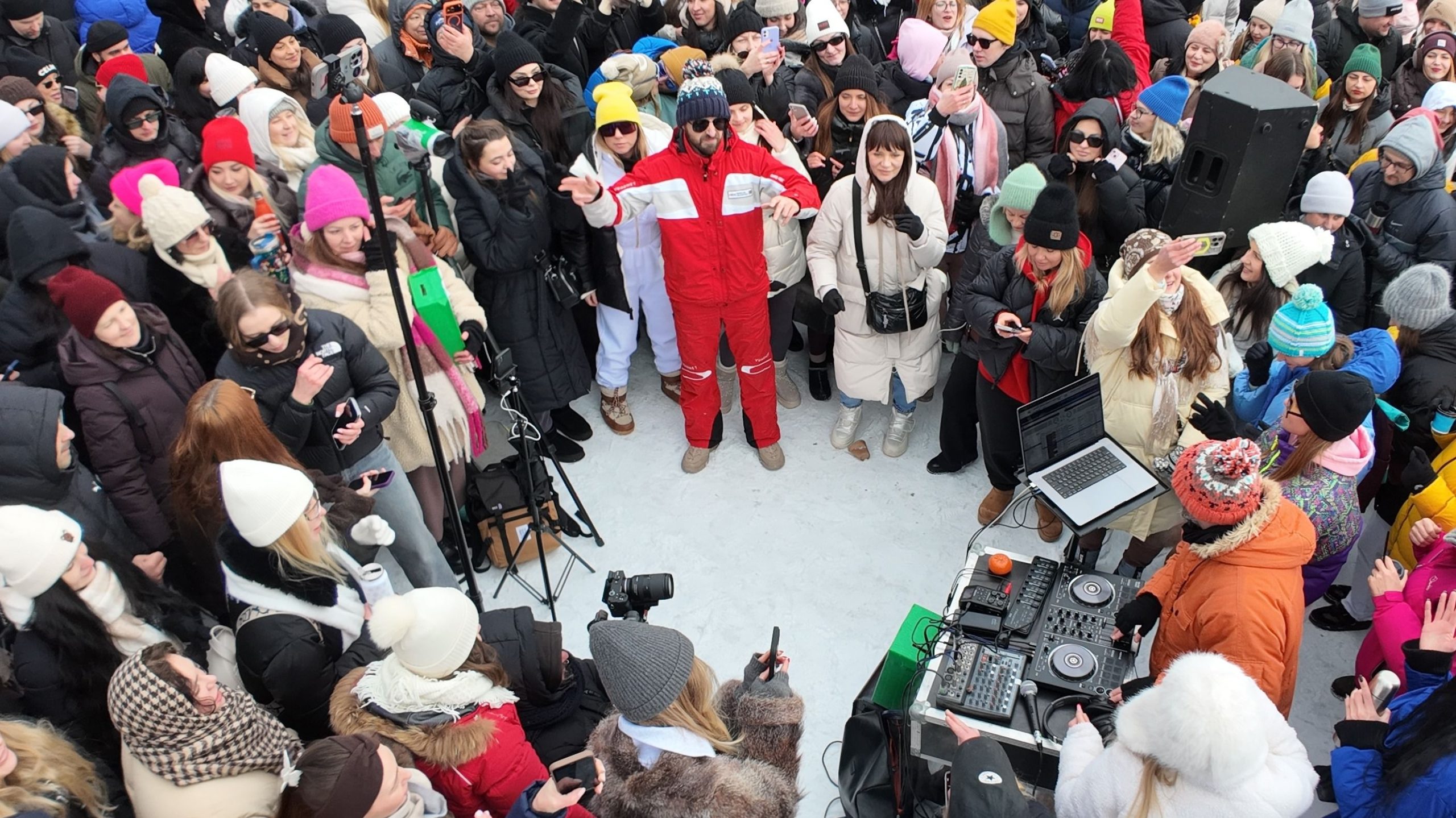
BBC News. Watch: Frozen river hosts dance party in Kyiv.

a. It is easy for things to feel helpless. But the people have started to throw dance parties on frozen rivers and lakes. They’ve got little racing buggies that they run on the ice, and DJs set up full rigs in the middle of frozen lakes. In an interview, one person said, “It’s gotten so much harder to be happy, but we have the small flame of hope in our hearts that we try to keep burning.” When the way looks helpless, God kindles hope in our hearts within communities where we know it is good for us to be.

Peter sounds pretty ridiculous when he starts babbling about tents, but it has been a harsh journey to this point. He and his fellow disciples have been stretched and challenged in countless ways. They have seen incomprehensible things: Jesus walking on water, feeding thousands, curing all sorts of diseases. The disciples who followed Jesus had been criticized and scolded by Pharisees. And, while they had left home, left their jobs, and left their families to follow Jesus, he recently told them that that wouldn’t be enough. Jesus told them that disciples carry crosses, instruments of torture and death. 

And it wasn’t like things were easy before they followed Jesus, either. The Sea of Galilee was being overfished, the treasures of their lake exported to Rome. They had been taxed, tolled, and fined by the Romans, who occupied every inch of their homeland. 

So when Jesus takes Peter, James, and John up a mountain, and they see the heroes of their bedtime stories—Moses and Elijah—we can understand why Peter says, “It is good for us to be here.” Things were hard, and Jesus drew together this extraordinary community, renewing his disciples’ sense of hope.

Recently, I was at a reunion of sorts, an opportunity to bring together people who work in the same field. We get together once a year or so, and we look forward to it. But it seems like things have been especially hard for people recently: there’s a lot of bad news, and people are lonelier and more disconnected than they used to be. We were all feeling disconnected and discouraged. So, we were all in agreement when one of my colleagues walked into the room and proclaimed loudly, “It is good to be here.”

At its best, this is what church can be for us: that when we’re discouraged and disconnected, Jesus gathers together an extraordinary community, renewing our sense of hope. And this is what other communities—times of fellowship and time with our friends and family—can also be for us: gathered together, Jesus with us, hope renewed.

Reflection Questions

  • Who can give the best impression of Peter on the mountain?
  • What would you have said if you were Peter? 
  • Where do you go when you’re feeling disconnected or discouraged?
  • What are some things you do to help you feel more hopeful? What is something someone else has done for you?

Closing Activity

  • Take a few minutes to draw or write about a place where you’ve been a part of a gathering that renewed you. Maybe it was a team meeting in a locker room before a big game, or during worship, or just getting together with friends. Invite participants to share their responses, if they’d like.

Final Prayer/Blessing

  • Light a candle and place it on your drawing or writing, or carefully hold your work while you pray.
    • Encouraging God, you gathered Moses, Elijah, Peter, James, and John with Jesus on the mountain when they were feeling challenged, stretched, and even frustrated. When we’re uncertain about the future, disconnected from one another, or discouraged, put your hope within us. Fan it from a spark into a flame, that we may be sustained in community with one another, through Christ our Lord. Amen.

Bio

Adrianne Meier is an ELCA pastor who serves among the people at St. Thomas Lutheran Church in Bloomington, Indiana. When she’s not working—and even when she is working—you can find her furiously knitting.


Share

A Therapeutic Camp for Ukrainian Children in Slovakia

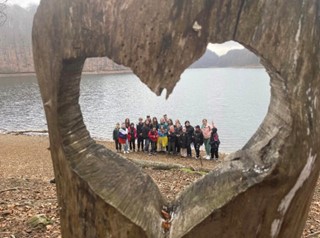
When the war in Ukraine started, and thousands of refugees were crossing the border, Lucia Martonová and Jana Tabačková from the Ecumenical Pastoral Service Centre and Evangelical Church of Augsburg Confession in Slovakia, and Marika Géciová from the Reformed Mission and Diakonia met at the Slovak-Ukrainian border. They decided to help the most vulnerable people affected by the war and created the project “You Are In My Heart.” They organized a children’s therapeutic camp for 16 children from Ukraine aged 8 to 14 years who lost one or both of their parents in the war. The camp took place in Zemplínska Šírava, a lake close to the border of Ukraine.


Trust in God

Camp leaders, with psychologists and interpreters, prepared introductory games for the children on the first day. On the second day, the campers went on a short trip to Michalovce, where they visited an observatory and attended a police horse demonstration. In the afternoon, the campers enjoyed their time together at the swimming pool in the hotel. Mrs. Masha Rudincová, a Slovak artist and designer, showed the children how to work with the technique of wet felting. Children, with her help, created various colorful and unique pictures.

In the evening, children listened to a Bible story about the healing of the paralyzed. “Don’t be afraid; just believe.” Jesus’s words from the story about the storm at sea were the ones the leaders tried to instill into the hearts of the children. They encouraged the children to trust these particular words of Jesus through all circumstances.

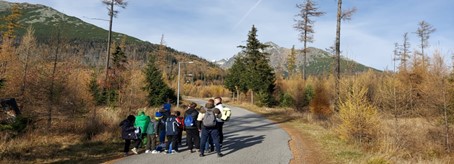
Even though there was a fog in eastern Slovakia, the group trusted in God and, without fear, set out on a trip to the Tatra Mountains. They were amazed and encouraged when the sun and perfect hiking weather welcomed them. The group explored the highest waterfall in Slovakia and visited Tricklandia, the Museum of Illusions.

The love of Jesus

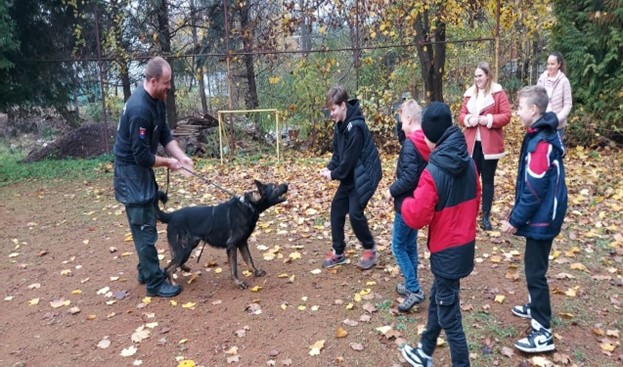
The next day, the campers stayed near Chemes Wellness Hotel. They met with police dog trainers, took rides on the quad bikes with border policemen, and took a trip to the lake. The children crafted cherubs and Christmas ceramic decorations in the afternoon with Mrs. Rudincová.

During the evening program, children listened to a story of the healing of a man at the lake in Bethesda. They learned that even if everyone left them and forgot about them, the Lord Jesus is always with them.

The children went to the city of Košice on Friday. They saw the police officers and firefighters, toured the city center, visited the St. Elizabeth Cathedral and explored the Technical Museum. The evening program continued with the storytelling of Zacchaeus. Leaders emphasized that the children, although they are all unique and have their own sorrows and mistakes, are accepted by Jesus Christ and he loves them just as they are.


“You are in my heart”

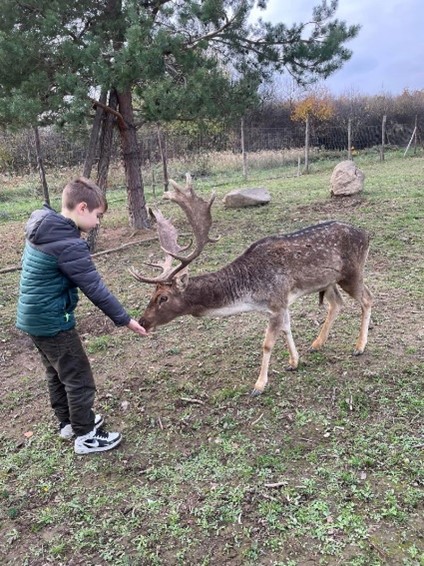
On the last day of camp, the children visited Morské oko – the largest lake in the Vihorlat Mountains. They visited a small family farm where they had the opportunity to see and feed spotted fallow deer. The contact with nature was a great experience for the children. A typical swim followed the afternoon in the hotel pool. The evening program was a big farewell party with the entire camp, and included a great cake at the end. The children received little presents as a memory of the camp, like t-shirts with the program logo and a magnet with a group photo.

All the shared experiences and photos highlight that the timid little children with great sadness and pain in their eyes become CHILDREN again! Children to whom the organizers wanted to return joy and childhood to their lives, at least for a while.


“Do not fear, for I am with you”

On Sunday morning, they went to chapel at the nearby Vinian Castle. Together, they thanked God for the whole week and summarized everything they had experienced and learned.

Police chaplain Janka Tabačková sent them on their way home with these words of a blessing:

We have come here to this place to give thanks for the whole week that we were spent together, that we were able to survive it in good health, and you know that it is not easy to survive. During our week together, we learned more about what the Lord God is doing for us. We opened our arms all week and said  “Stay with us, don‘t be afraid because you are safe here. We said the Lord God is taking care of us, just as he multiplied the fish and the loaves; God will take care of you so that you will have everything you need. Trust Him.” He cares for you. The Lord God puts people in our lives who will care for us, protect us, bring us closer to Jesus. You have friends in Ukraine, and also here in Slovakia. It is good that we know each other, that we are your friends and will do everything you need. Earlier, when we released the balloons into the sky, we wrote our names on them and the names of those we cared about. We could release the balloons with our names because the Lord sacrificed himself for us. He hears and understands. We are in his heart. He died for us, and He laid down His life for everyone. And no one else in the world has done that. We also want to send you home with God’s word from Isaiah 41: “Do not fear, for I am with you, do not be afraid, for I am you God; I will strengthen you, I will help you, I will uphold you with my victorious right hand. Yes, all who are incensed against you shall be ashamed and disgraced; those who strive against you shall be as nothing and shall perish. You shall seek those who contend with you, but you shall not find them; those who war against you shall be as nothing at all. For I, the Lord your God, hold your right hand; it is I who say to you. Do not fear, I will help you.”

After the blessing and singing of songs, the group returned to the hotel. Then, already packed with many gifts and memories, they started their return journey home to their families, but to a country still in war, chaos, and turmoil. They all hope that they have not seen the last of each other and will be able to continue to meet.


Andrej Kuruc is the ELCA Emergency Response Coordinator for Central and Eastern Europe.

Share

European fuel shortage: Refugees and hosts face a challenging winter

“Energy blackmail”

The European Union is a world leader when it comes to replacing fossil fuels with renewable energy. The World Economic Forum reported early in 2022 that the EU had “passed another milestone in the race towards a zero-carbon future,” sourcing 22 percent of its energy from renewables in 2020 – ahead of the 20% target the bloc had set in 2009.

But that won’t be enough to keep Europe warm this winter, as a fuel crisis the likes of which hasn’t been seen since World War II grips the continent.

Officials have warned of potential rolling blackouts, manufacturing disruptions and economic fallout from the natural gas shortage, a direct consequence of the war in Ukraine. Prior to the war, Russia supplied around 40 percent of the natural gas used to heat European homes, businesses and houses of worship. In response to Western sanctions, Russia has severely slowed delivery of natural gas to the continent in a move some have called “energy blackmail.”

The Russian supply of natural gas to Europe has fallen nearly 90 percent since this time last year. The shortage, coupled with inflation, rising costs for electricity, and a shortage of hydroelectric power due to drought, creates something of a perfect storm as temperatures fall and demand rises. There have even been reports of people hoarding wood to burn for warmth.


The church prays for warmth

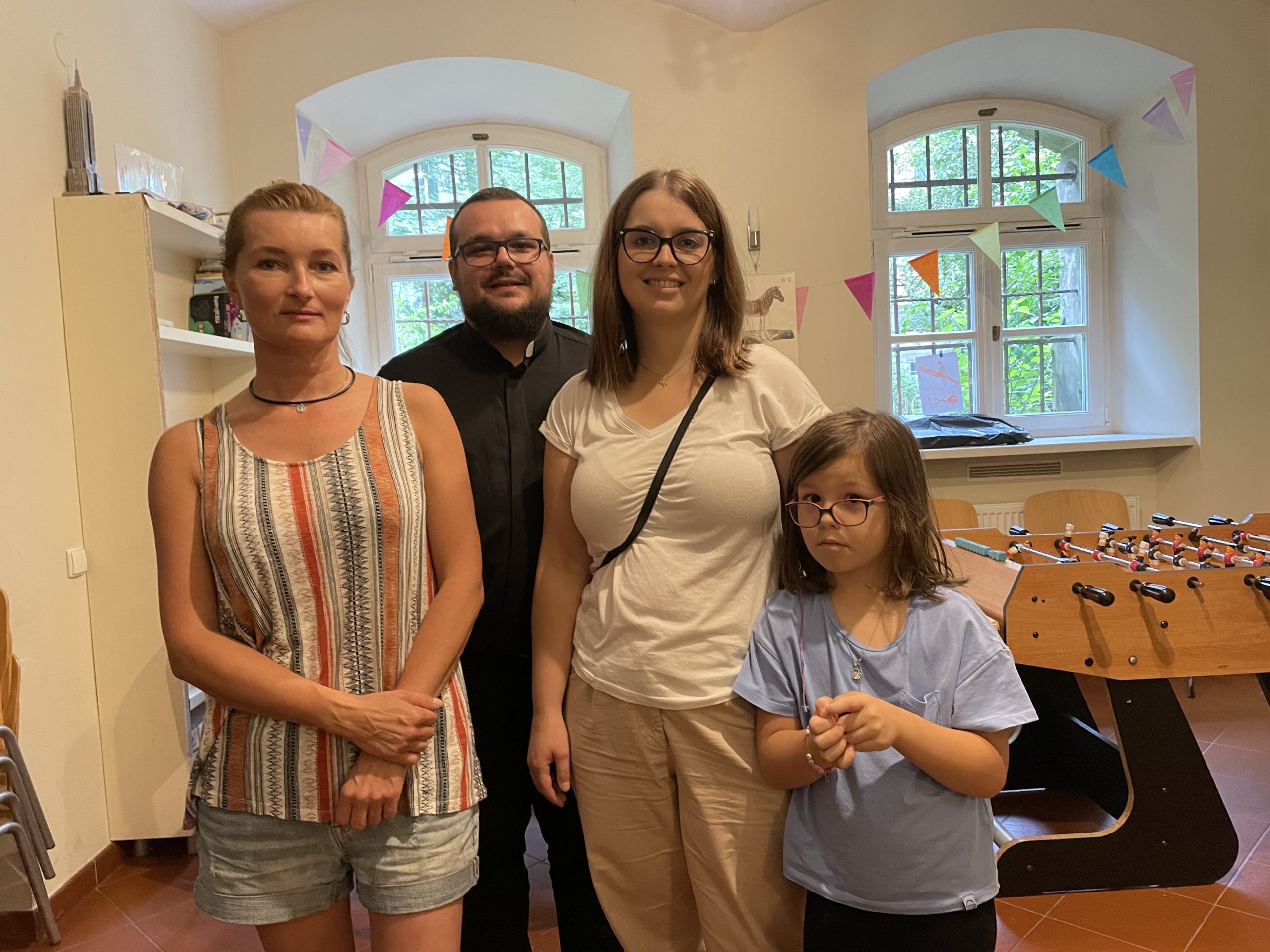
Pastor Lukasz Ostruszka and his family with Svetlana (left), one of the refugees from Ukraine who is staying in the Lutheran parish in Krakow.

For churches and others hosting refugees from Ukraine – some 7 million have left the country to find safety elsewhere in Europe – the impact will be compounded. In Krakow, Poland, for example, a Lutheran congregation has had a dozen families living in its parish hall for more than six months. Their utilities costs had already increased significantly due to the additional use of water, electricity and natural gas. Pastor Lukasz Ostruszka says he’s praying for a warm winter.

“Our government says everything will be okay, we will have gas, we have a plan,” he says. He laughs a bit. “They don’t have gas. They don’t have a plan. Warm winter, that’s the only hope.” Pr. Lukasz says he tries not to worry about it, though, since he has so many other things to worry about. “I hope God will help us,” he says.

“It will be a big problem,” says the Rev. Marta Bolba, pastor of Mandak House, a Lutheran congregation in Budapest, Hungary. “They’re saying the bills for heating will be seven times higher than normal. It’s not a poor people’s problem, it’s really the whole society; how can we pay our own bills?”


A sustainable future

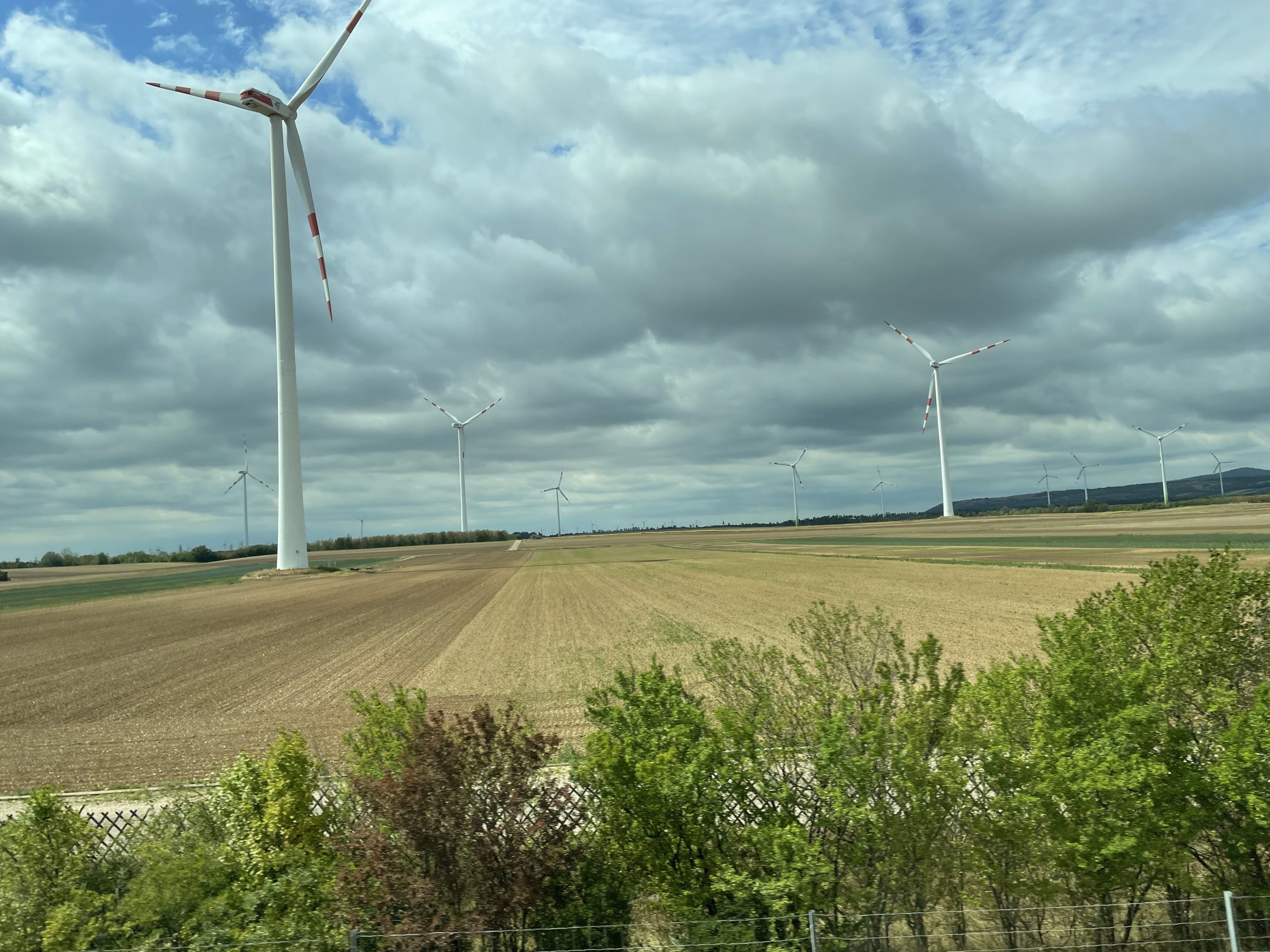
Wind turbines in a field

Wind turbines in Slovakia.

European leaders met in early October to begin discussing possible mitigation strategies and will meet again later this month.

The crisis, says the United Nations, “underscores the urgency of transitioning away from fossil fuels.”

“As long as energy security is tied to oil and gas, it will remain susceptible to market volatility and price shocks,” says a recent report from UN Women. “And the role of fossil fuels in agricultural production and distribution—for example, natural gas’s role in the production of nitrogen-based fertilizers—means that oil price shocks also drive increased volatility in food prices.” This means it’s not just the Europeans trying to stay warm through the winter months who are suffering the consequences of the shortage. Its effects are being felt around the world, most acutely in the poorest nations.

While this church would welcome an increased sense of urgency globally to break our collective reliance on fossil fuels, we also recognize that such a change won’t come quickly. As we pray for, and work toward, a more sustainable future, we walk alongside our partners in Europe as they face a difficult winter.


Emily Sollie is a freelance writer, editor and communications consultant. She lives in Washington, D.C. with her husband and 4-year old son, and is a member of Lutheran Church of the Reformation. 

Share

Situation Report: Ukraine and Eastern Europe (July 7, 2022)

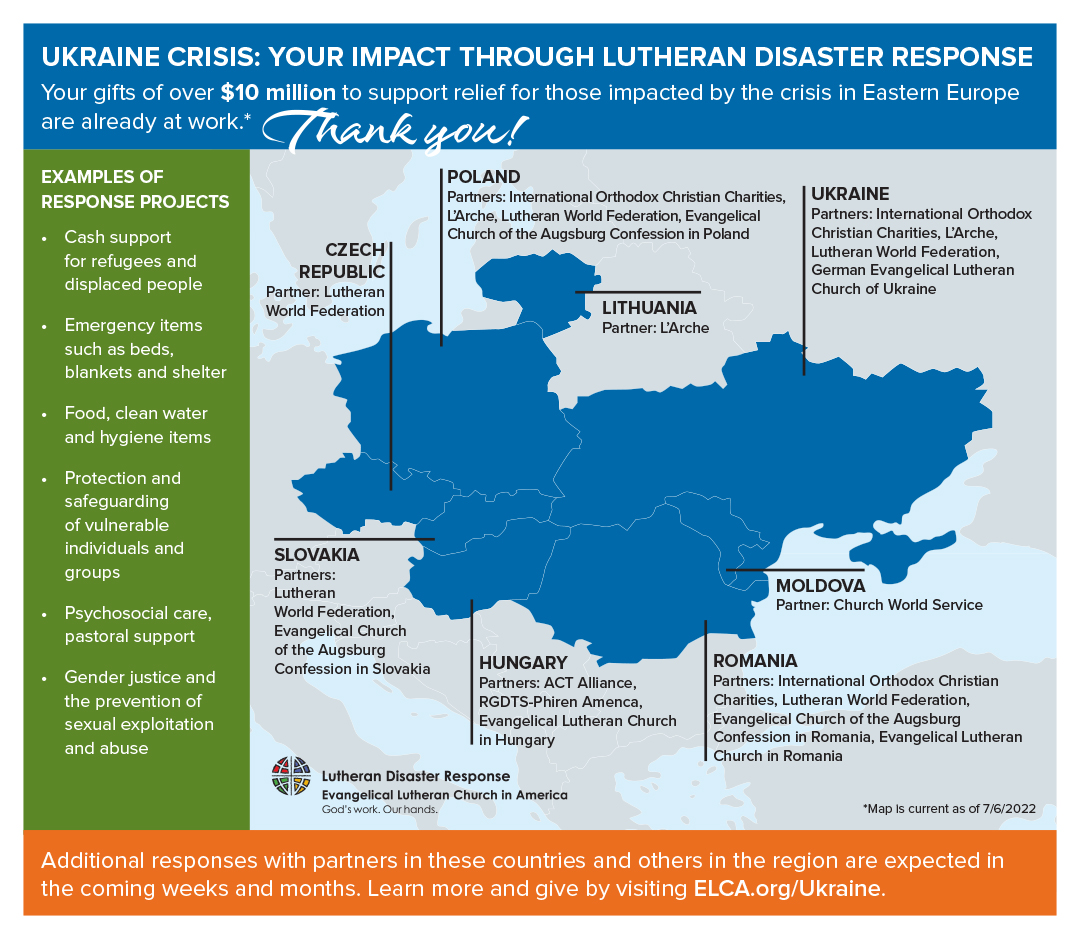
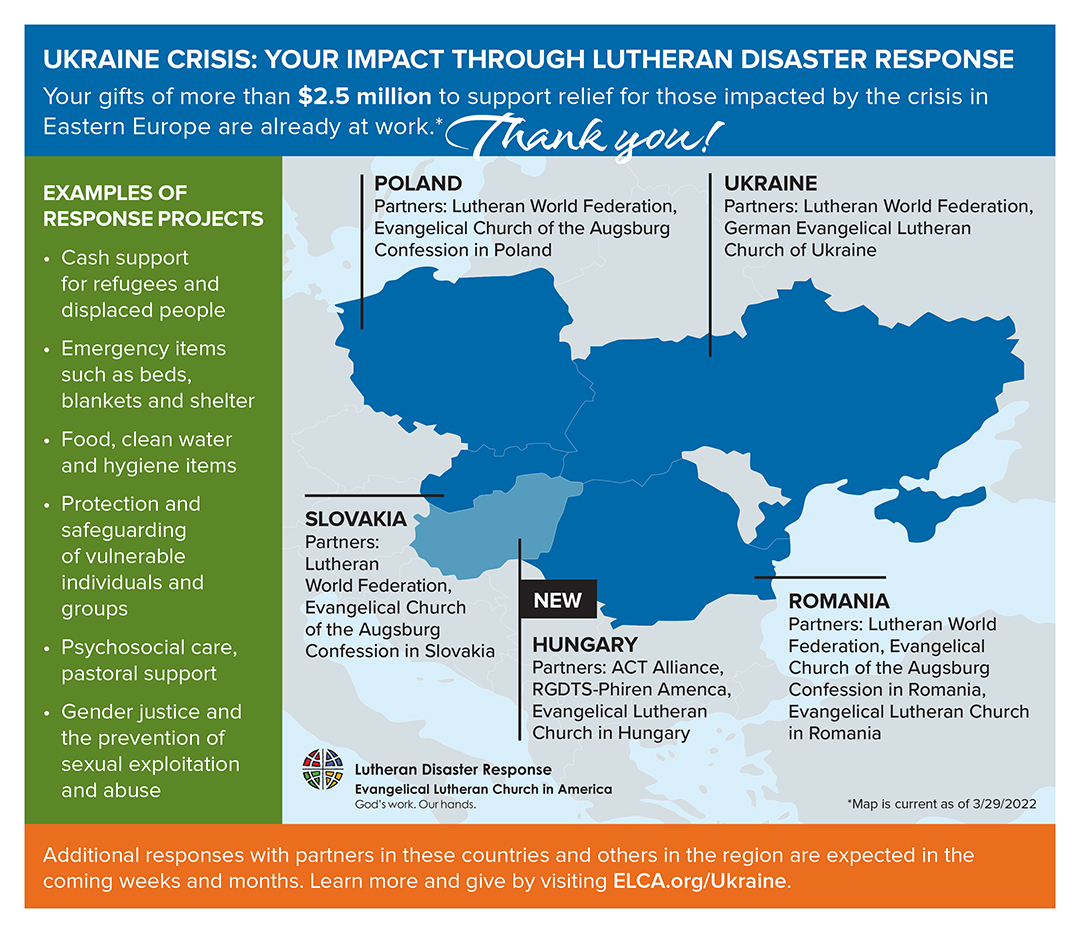
Lutheran Disaster Response has raised over $10 million in support of refugees and internally displaced people in Ukraine and surrounding countries. New partnerships in Eastern Europe include:

  • L’Arche has nearly 60 years of experience supporting people living with intellectual and developmental disabilities and knows they are among those most at risk in times of crisis. It is providing immediate relief to refugees with disabilities in Ukraine, Lithuania and Poland. Activities will include purchasing accessible vans to transport people with disabilities within Ukraine and along the border, building the capacity of local disability service providers and adaptations for people with disabilities who evacuated under duress without the necessary support for life with disabilities. This project allows L’Arche to live out their mission on behalf of those with disabilities and their surrounding communities as they work to survive and to help others to their greatest ability, even while under the threat and impact of the current war.
  • International Orthodox Christian Charities (IOCC) is the international humanitarian aid and development agency of the Assembly of Canonical Orthodox Bishops of the United States of America. IOCC is providing humanitarian assistance to refugees and internally displaced peopele in Ukraine, Romania and Poland. This humanitarian assistance includes distributing essential items, securing temporary accommodations, training volunteers and helping students continue remote education.
  • Lutheran World Federation has expanded its programming to the Czech Republic, where it is working with local partners and churches to retrofit multipurpose spaces to accommodate refugees from Ukraine.


Partner Update: Evangelical Church of the Augsburg Confession in Slovakia (ECACS)

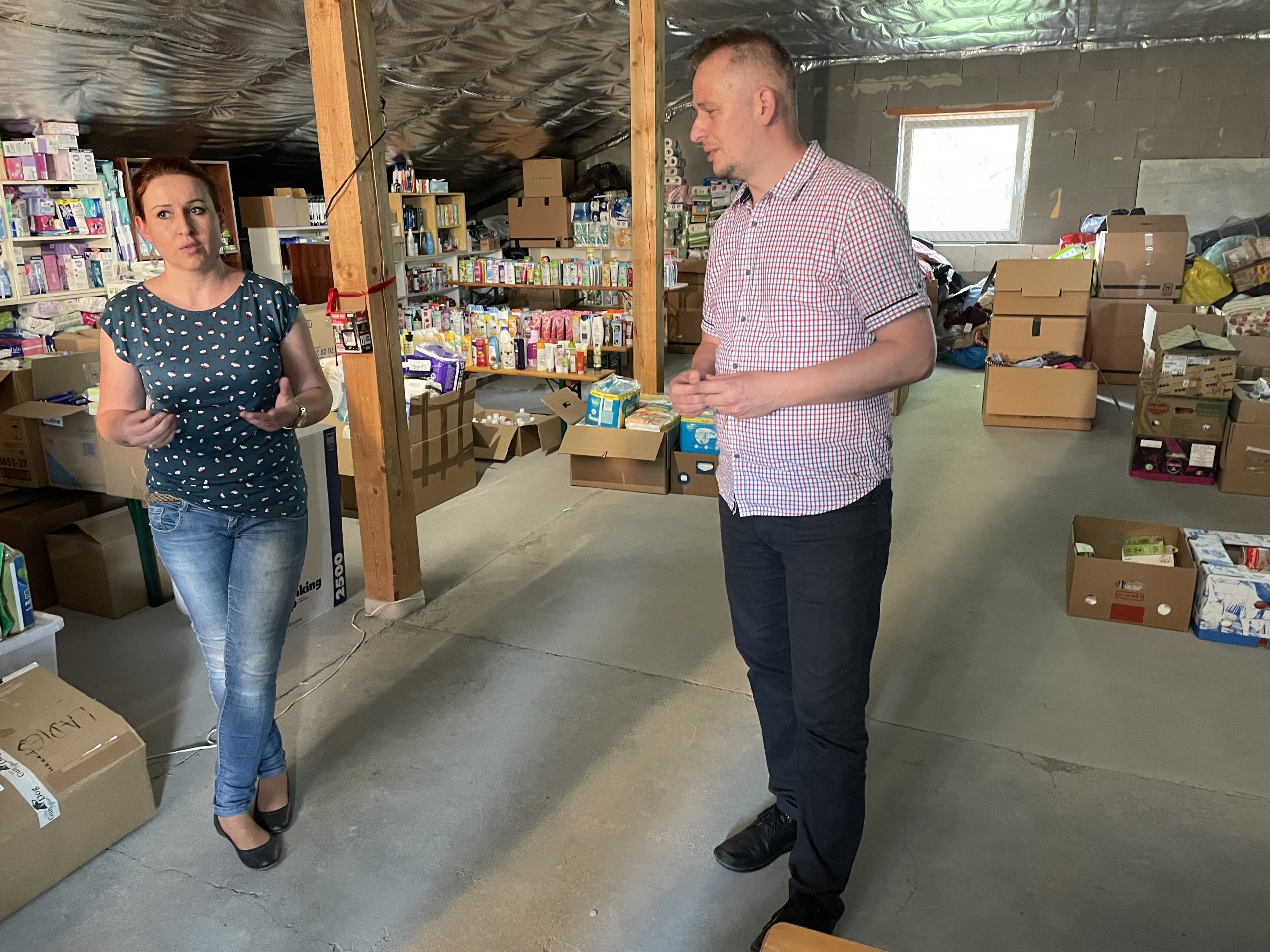
An image of two people, a man and a woman, in a stocked warehouse in Slovakia.

Warehouse in Pozdišovce, Slovakia, where the congregation stocked supplies to shuttle to the hospitality tent. Rev. Denisa Kuruc Vargova, pastor of the church, is pictured with her husband, Andrej Kurue.

Now four months since war began in Ukraine, the ELCA’s partners in Slovakia are assessing their response to date and planning for the medium and long term.

During the initial acute phase of the emergency, the Evangelical Diaconate coordinated a humanitarian tent at the Vyšné Nemecké border crossing, where volunteers from all over the region came to help. Working in 12-hour shifts, volunteers were available 24 hours a day, seven days a week to offer food, drinks, information and logistical assistance. The ECACS congregation in Pozdišovce, about a half hour drive from the border, stocked a warehouse with supplies that they shuttled to the border, and offered lodging for both refugees and volunteers.

“Some of these people have lost everything,” said Lucka Martonova, volunteer coordinator for the border ministry. “We are here for them, to provide some food, some water … accommodation, transport.”

As the situation evolves, needs are changing. A joint meeting of representatives of the Evangelical Diaconate ECAV in Slovakia and the Protestant Agency for Diaconia and Development – Diakonie Katastrophenhilfe took place in June to evaluate the use of existing assistance, monitor current accommodation needs and prepare for future cooperation. As the needs of the refugees change, so must the response of the church.


Be a part of the response:

Pray
Please pray for people who have been impacted by the war in Ukraine. May God’s healing presence give them peace and hope in their time of need.

Give
Thanks to generous donations, Lutheran Disaster Response is able to respond quickly and effectively to disasters around the globe. Your gifts to Lutheran Disaster Response (Eastern Europe Crisis Response) will be used in full (100%) to assist those impacted by the war in Ukraine.

To learn more about the situation and the ELCA’s response:

  • Sign up to receive Lutheran Disaster Response alerts.
  • Check the Lutheran Disaster Response blog.
  • Like Lutheran Disaster Response on Facebook, follow @ELCALDR on Twitter, and follow @ELCA_LDR on Instagram.
Share

A History of Welcome

When war came to Ukraine and desperate people began streaming across the international borders in the frigid days of late winter and early spring, the Rev. Miroslav Mató knew he and the members of his parish would be called upon to help. 

Located in Gerlachov, a small village in Slovakia about 200 miles from the Ukrainian border, Rev. Mató and his wife, Rev. Jana Matóva, prepared to offer refuge.

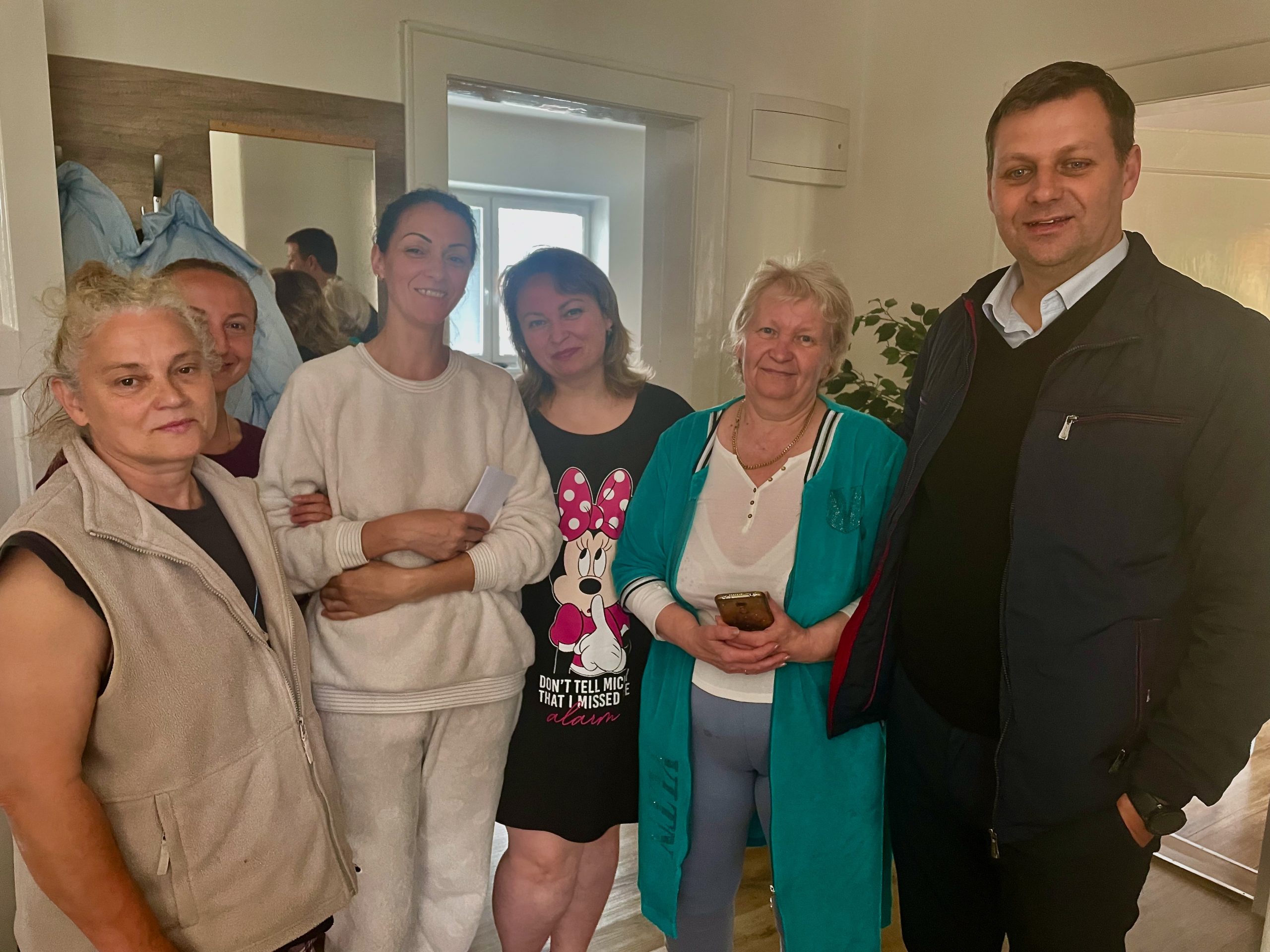
Rev. Miroslav Mató with some of the refugees from Ukraine that his congregation in Slovakia is hosting.

“Our congregation has three buildings that were used for summer camps for youth,” he explained. “We decided to provide these as houses for refugees … We had almost 100 refugees traveling through our congregation in a few days, and 41 of them are staying for a longer term, saying they are wanting to stay here until the war is over.”

The outpouring of generosity from parishioners has been nothing short of miraculous, Rev. Mató said, with people helping refugees from Ukraine find jobs, enroll children in school and access medical care. 

“In these two months, I could see more miracles than in all my life,” he said. “People were helping, they opened their hearts to help, and I could see more and more love than I ever have before.” 

The chance to offer refuge to neighbors in need, he told his parishioners, was an opportunity to put their faith into practice. 

“I can see a lot of God’s love in this situation,” he said.  “As I preached in my sermon [at the beginning of the war], we can now in practice show what we have studied and learned theoretically, we have an opportunity to show it in real life. God is helping us and when we are at the end of our strength, He has always answered our prayers.”

Another Lutheran pastor in Slovakia, the Rev. Michal Belanji, recalls immigrating from Serbia with his parents as a teen, to escape the war that tore apart his home country in the 1990s. The church was there for his family in their time of need, he said. Today, his church in Janoskov is hosting 38 refugees from Ukraine. 

“We help because we were helped,” he said. “It’s the reason why we are here.” 

All over the region, Lutherans have opened their hearts, homes, churches and communities to people fleeing the war in Ukraine. According to data from the United Nations High Commission on Refugees (UNHCR), as of June 21, approximately 2.8 million of the 8 million people who fled at the start of the war are still in neighboring countries. Others have either moved on to other countries or returned home to Ukraine. Poland is currently hosting 1.2 million of those refugees; Slovakia 79,000 and Hungary 25,000. 


A Lutheran Legacy

The Lutheran legacy of welcome goes back a long way.  

“When the Lutheran World Federation was established 75 years ago, in the whole of Europe there was a refugee crisis after World War II,” explained the Rev. Tamás Fabiny, presiding bishop of the Evangelical Lutheran Church in Hungary (ELCH). “People had to leave their country and go to a different place. So that is already part of our identity … to be a Lutheran is to welcome refugees.”

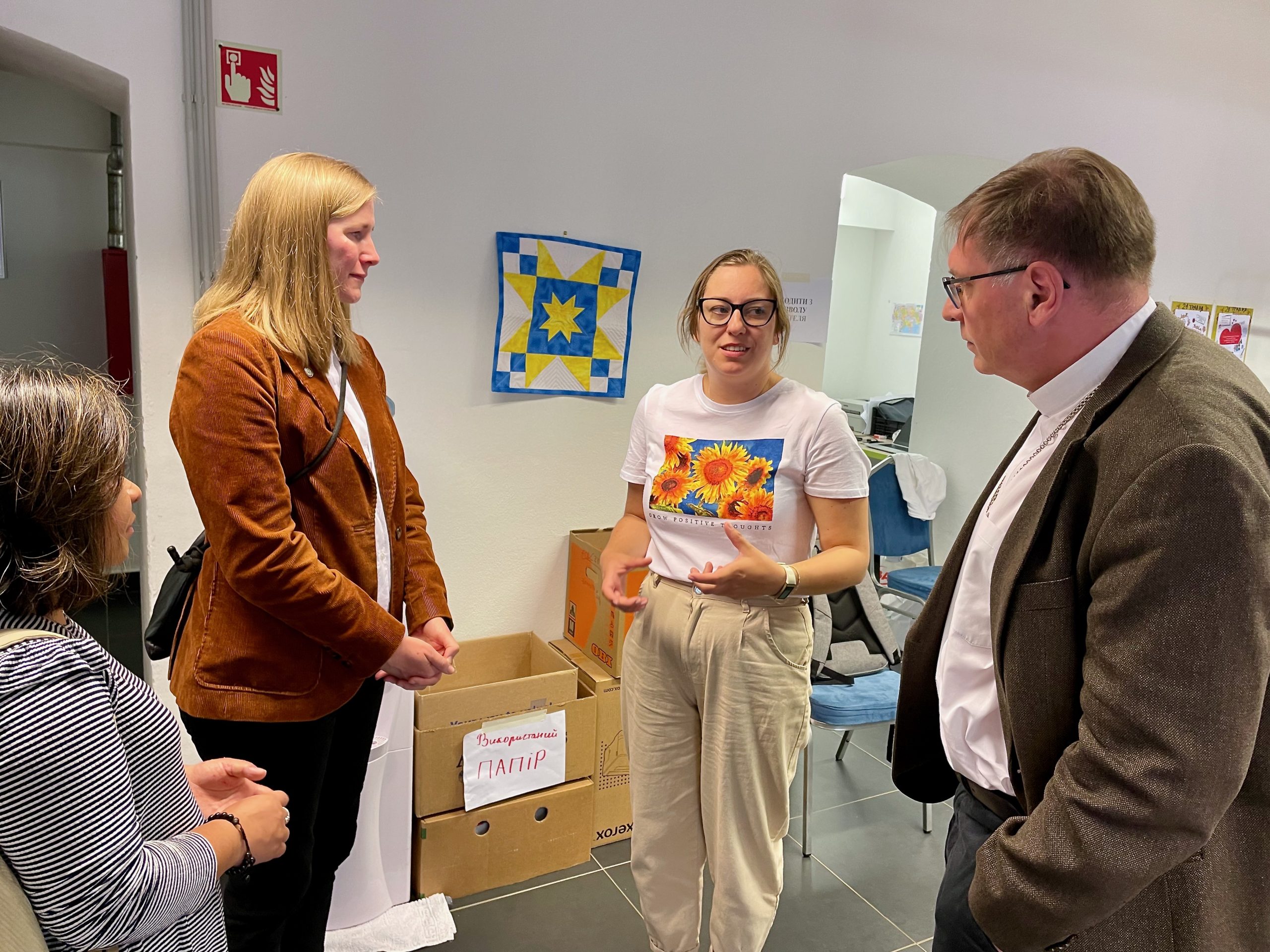
Rev. Tamás Fabiny (far right), ELCH Bishop, with a volunteer teacher at a school for Ukrainian children in the basement of the ELCH offices in Budapest.

Lutherans in the U.S. established a ministry of welcome in the era of World War II, Lutheran Immigration and Refugee Service (LIRS), founded in 1939. LIRS resettled more than 30,000 refugees from Germany and elsewhere in Europe in the aftermath of the war, and has since assisted more than 500,000 refugees from all over the world to rebuild their lives in the U.S.

While the current situation in Ukraine is creating the largest refugee crisis in Europe since World War II, other conflicts over the years have also led people to seek refuge and provided opportunities for the church to live out its ministry of welcome. An attempted Hungarian uprising against communism in 1956 led nearly 300,000 people to leave the country, Fabiny said, and many of those people built new lives in Austria, Germany, and even the United States thanks to the welcome of Lutherans. 

“I had the opportunity to visit several of these Lutheran communities,” he said, and “people told me how wonderful it was that they were received by families who gave them shelter, helped them find a job, or the church was opened for them. So we know what it is to be a displaced person because hundreds of thousands of people left Hungary in ‘56.”

The end of the Cold War and the Romanian revolution in 1989 also brought refugees to Hungary, he said, as did the Balkan war in the early 1990s, and the civil war in Syria in 2015. When he put out a video statement in support of welcoming refugees, as part of a 2017 UNHCR campaign, however, he received a great deal of backlash for his message. The political climate in Hungary had become more hostile toward refugees, he said, and his message of welcome was not well received by the general public. 

But part of his role as a church leader, he says, is to speak out against injustice, following in the footsteps of Dietrich Bonhoeffer. It is important for the church not only to act in service to our neighbors, he says, but also to pray and reflect on our calling as Christians to work for peace and serve our neighbors. 

“We have to reflect theologically on war and peace,” he says. “We had to learn from the Nazi time when many churches were supporting Hitler theologically. There were just a few, like Bonhoeffer, who criticized [Hitler]. I think it is very important for us as a church to have prayers, of course, and also theological reflection. Action should come after that.”


Emily Sollie is a freelance writer, editor and communications consultant. She lives in Washington, D.C. with her husband and 4-year old son, and is a member of Lutheran Church of the Reformation. 

Share

Situation Report: Ukraine and Eastern Europe (June 6, 2022)

More than three months since Russian troops invaded Ukraine, fighting continues to intensify as humanitarian conditions deteriorate. The United Nations’ OCHA Ukraine: Humanitarian Report estimates that 6.6 million people have fled the country and 8 million are displaced internally. While the majority of the people who crossed borders to safety have remained in the neighboring countries, others have continued to other countries in Europe and beyond. The UN estimates that more than 24 million people — more than half of Ukraine’s population — will need humanitarian assistance in the coming months.

The policy in Ukraine that prevented most men between the ages of 18 and 60 from leaving the country has resulted in forced separation of families. Far from their homes in Ukraine and often from their husbands and extended families, many mothers with children face the difficult challenge of creating a safe space and a version of stability for their families. In addition to continuing to meet the immediate needs of arriving refugees including food, shelter, hygiene kits and medical supplies, our partners in the region support those fleeing the violence in Ukraine with assistance in psycho-social care, pastoral care, housing, job searches, language study, school admission, legal services, cash assistance and other key integration support for individuals and families. Our support is also reaching communities not eligible for state-sponsored services for refugees, including Roma people and third-country nationals fleeing the violence in Ukraine.

Partners: Evangelical Church of the Augsburg Confession in Poland (ECACP), Evangelical Church of the Augsburg Confession in Romania (ECACR), Evangelical Church of the Augsburg Confession in Slovakia (ECACS), Evangelical Lutheran Church in Hungary, German Evangelical Lutheran Church of Ukraine (GELCU), and in collaboration with Lutheran World Federation (LWF), ACT Alliance, Church World Service (CWS), Hungarian Interchurch Aid (HIA) and Phiren Amenca.

Partner update: Evangelical Lutheran Church in Hungary (ELCH)

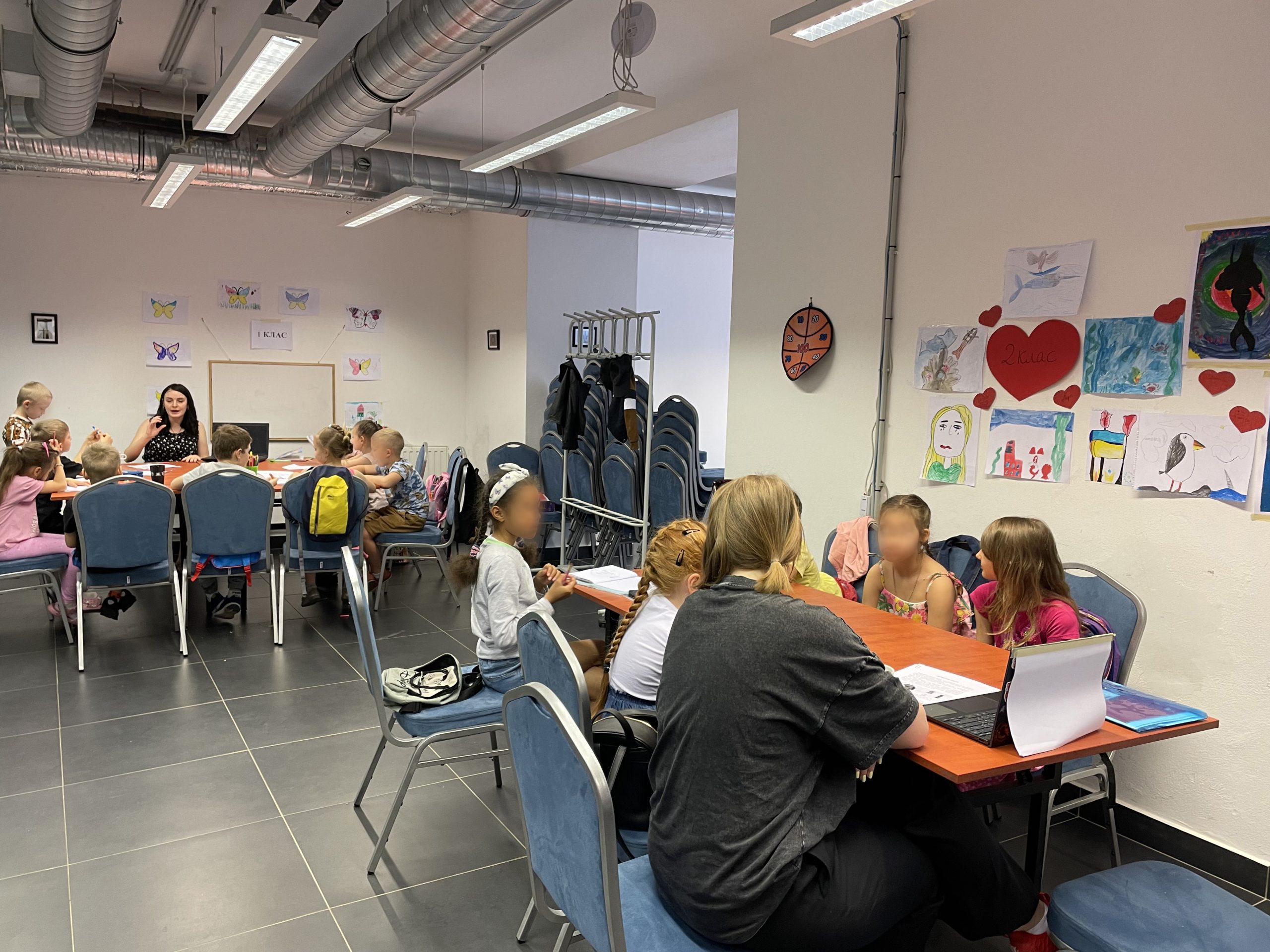
A Ukrainian-language school in the basement of the ELCH office in Budapest, Hungary, provides structure and learning opportunities for children who fled Ukraine with their families due to the war.

As the early-spring influx of refugees has slowed, the humanitarian needs have changed. In a recent interview on the ELCH website, Anna Gyöngés Kelemen, the head of the ELCH diaconal department, observed that “our tasks have changed to the extent that the focus is not on providing rapid assistance at border crossing points and nearby settlements, but on providing assistance to those who remain in Hungary temporarily or permanently in the medium and long term.”

One of the ways the church is assisting is through a temporary school for Ukrainian children, set up in the basement of the ELCH office in Budapest. Though not an accredited educational institution, the school provides structure for children, allows them to continue learning, and enables their caregivers to have time to work or seek employment. The volunteer teachers are themselves refugees from Ukraine as well. The school serves children in first through eighth grades and approximately 50 children attend each day.

ELCH congregations, as well as the national church, are also assisting refugees with longer-term integration needs such as financial support, counseling, housing and more.


Partner Update: Lutheran World Federation

As of the end of May, LWF has opened two of six planned enrollment centers for refugees in Poland. The two centers, in Gdansk and Wroclaw, will serve a combined 37,000 families. Families will be able to enroll in a multi-purpose cash assistance program as well as access services including counselling for children experiencing post-traumatic stress and referral services for victims of sexual and gender-based violence.

“I have mixed feelings about today,” said Allan Calma, LWF global humanitarian coordinator, at the opening in Gdansk on May 17. “I am happy that we can open this center today, but I am also thinking that we should not have an enrolment center in Gdansk. This war is not right, it is not right for women and children to flee their homes, to leave their husbands and fathers, and flee for safety.”

“This war has divided a lot of people,” he added. “But all I could see in the past weeks was people coming together and trying to be human.”

The additional centers will be based in Ostróda, Zgierz, Bielsko-Biała and Bytom Miechowice, and will support a total of 56,000 households or about 168,000 people.


Be a part of the response:

Pray
Please pray for people who have been impacted by the war in Ukraine. May God’s healing presence give them peace and hope in their time of need.

Give
Thanks to generous donations, Lutheran Disaster Response is able to respond quickly and effectively to disasters around the globe. Your gifts to Lutheran Disaster Response (Eastern Europe Crisis Response) will be used in full (100%) to assist those impacted by the war in Ukraine.

To learn more about the situation and the ELCA’s response:

  • Sign up to receive Lutheran Disaster Response alerts.
  • Check the Lutheran Disaster Response blog.
  • Like Lutheran Disaster Response on Facebook, follow @ELCALDR on Twitter, and follow @ELCA_LDR on Instagram.


Share

Repentance, Reconciliation, Restoration: A Missionary Update from Slovakia

The following is a newsletter update from Rev. Kyle & Ånna Svennungsen, ELCA missionaries in Slovakia.


Greetings dear partners in ministry!

We are writing to you from Bratislava, Slovakia. At Bratislava International Church, our theme for Lent is ‘Walking with Jesus: Repentance, Reconciliation, Restoration.’ This theme was chosen before the war in Ukraine began and it has taken on a whole new meaning in these last four weeks. Not only is there need for repentance, reconciliation, and restoration with our Creator; but also with one another.

Someone once said, “Sometimes in the worst of times, you see the best in people.” Despite how the world aches each day from more news of innocent lives being destroyed in Ukraine, we also see God at work in so many ways as a result of this war. We see people from around the world opening up their homes to Ukrainian refugees. We see donation centers overflowing with goods to be shipped to Ukraine or for refugees to pick up supplies as needed. We see free transportation offered for any Ukrainian refugees from the surrounding countries as they flee in search of safety. This is just a snapshot of the many other efforts we see from so many kind people. It seems the world is certainly walking with the people of Ukraine during these dark days, just like we believe Jesus is walking with them too.

We have been blessed to be able to buy goods and deliver them to donation centers. These donation centers put out new lists daily that call for items of greatest need. Kyle has volunteered at a donation center that organizes thousands of goods from clothing, to toiletries, to non-perishables and more. Some of these goods are shipped directly to Ukraine and other goods shared with refugees in our own community. Many of our friends here have opened up their homes to refugee families, people they’ve never met but happily welcomed. Others in our congregation have paid for hotel rooms that serve as temporary housing for refugee families.

The main train station in Bratislava has an ‘Info Point’ setup for all the Ukrainian refugees arriving there. Ukrainians can travel for free on regional trains and other public transportation in all of the neighboring countries. Some refugees have attended worship with us and we have helped with putting some up in hotel rooms. Many are unsure of where they are going, or where they might want to settle, and are unsure of when and if they will be able to return to their home.

Once they claim refugee status/seek asylum in a country, they cannot leave that country. It is a big decision for refugees to make when they are already overwhelmed from fleeing their war torn country. Many are mothers with children and the elderly who have just left behind the men in their life; husbands, fathers, brothers, uncles, etc. These people are simply overwhelmed and exhausted. At the train station, they often collapse from pure exhaustion as they exit the trains. There is always a crisis team available to help with psychological and medical needs. At the Info Point, there are also people from the city office ready to offer assistance with housing, legal aid, and information about the city and the immigration process. A local cell phone company has even offered free SIM cards so refugees can use their cell phones.

There are two waiting rooms designated for the refugees; a family room and a general waiting room. In them are free microwave meals, coffee, tea, mattresses, blankets and more. The family room is mainly for mothers and children to use as they wait for their next train or need a place to spend the night. There are mattresses, travel cribs, high chairs, changing tables, toys, a TV with kids shows and movies, and couches. There are also free clothes, strollers and baby carriers for them to take if they need them. It is a helpful place of rest for these tired mothers and families.

Ånna organized a group from church to clean, disinfect, and organize these waiting rooms. They watched as families came and went, finding hope in the excited faces of children when they saw all the toys. It seemed to be for them a sense of something familiar in an unfamiliar time and place. They were even able to play with the children, and give just a moment’s break to their mothers. It is almost unbelievable for us to imagine what they are going through, but then we witness it with our own eyes. The strength and resilience we see in these mothers is truly inspiring. The bravery of the men who stay behind to defend their country, their home, leaves us in awe. We’ve heard their stories first-hand and see them walking with Jesus in bold ways. But most of all, we see Jesus in them and their experience, and our call to walk with them.

As we journey through the rest of this Lenten season, we invite you to notice with us all the ways in which the Ukrainian people walk with and embody Jesus. Be bold in your own response to walk with and embody Jesus for those in need in your community too. And most of all, we invite you to join us in unceasing prayer for peace to rise from the ashes of this war as soon as possible. Pray with us that leaders may see reason and the extreme toll this is taking on so many innocent people. Thank you for your concern and prayers. Your support carries us through each day. Know that even though we do it 5,000 miles apart, we are walking with you through this trying time and praying for you every step of the way.


Lutheran Disaster Response is responding to the humanitarian crisis in Eastern Europe in partnership with the Lutheran World Federation and other local and global partners.

Share

Situation Report 2: Ukraine and Eastern Europe Crisis Response

Situation: As of Mar. 23, over 3.5 million people are estimated to have left Ukraine, most of which are women and children. The refugees are primarily fleeing to Poland, Slovakia, Hungary, Romania and Moldova. According to UNHCR, another 2 million people are displaced within Ukraine.

Response: Lutheran Disaster Response has committed over $2 million to companion churches and ecumenical partners that are accompanying refugees and other impacted by the conflict in Ukraine. These include:

  • German Evangelical Lutheran Church of Ukraine
  • Evangelical Church of the Augsburg Confession in Poland
  • Evangelical Church of the Augsburg Confession in Slovakia
  • Evangelical Church of the Augsburg Confession in Romania
  • Evangelical Lutheran Church in Hungary
  • Evangelical Lutheran Church in Romania
  • RGDTS-Phiren Amenca
  • Lutheran World Federation
  •  ACT Alliance


Be a part of the response:

Pray
Please pray for people who have been impacted by the crisis in Ukraine and Eastern Europe. May God’s healing presence give them peace and hope in their time of need.

Give
Thanks to generous donations, Lutheran Disaster Response is able to respond quickly and effectively to disasters around the globe. Your gifts to Lutheran Disaster Response (Eastern Europe Crisis Response) will be used in full (100%) to assist those impacted by the war in Ukraine.

To learn more about the situation and the ELCA’s response:

  • Sign up to receive Lutheran Disaster Response alerts.
  • Check the Lutheran Disaster Response blog.
  • Like Lutheran Disaster Response on Facebook, follow @ELCALDR on Twitter, and follow @ELCA_LDR on Instagram.
Share

Conflict and Hunger Part I: How Will the War in Ukraine Affect Food Security?

As the Russian invasion of Ukraine continues, the immediate, deadly consequences are starkly visible in Western media – an as-yet uncounted number of dead soldiers and civilians, millions forced to flee from their homes and seek safety in other countries or regions, and the devastation of homes, hospitals and critical infrastructure. Less vivid but no less significant, are the long-term consequences the war will have for food security in Ukraine and around the globe.

While other causes of hunger, such as climate change, migration or economic poverty, may seem to receive more attention, the single biggest driver of food crises around the world is conflict. As António Guterres, Secretary-General of the United Nations, wrote in 2021, “Conflict and hunger are mutually reinforcing. We need to tackle hunger and conflict together to solve either.” As the World Food Programme (WFP) notes nearly every year in its annual Global Report on Food Crises, conflict often leads to food crises[1] (especially when it occurs at the same time as climate events or economic downturns) and food crises can exacerbate conflict.

Food security depends on the adequacy of four things: food production, food access, food utilization and stability. In simpler terms:

  • Is enough food being produced or supplied?
  • Is the food available to consumers in safe, reliable ways?
  • Are people able to meet their nutritional needs with the food?
  • Is access to food reliable, even during crises?

Over a series of posts, we’ll take a brief dive into each of these. Follow the links to read more:


Reading through each of these posts will give a picture of some of the ways violent conflict impacts hunger, as well as some of the long-term effects that may come from the war in Ukraine. Even as we pray for and take action to support neighbors in Ukraine, we need to remember that this conflict could have devastating and far-reaching consequences that may not go away the moment a ceasefire agreement is signed. Our globalized food system, while so efficient and effective when operating well, also leaves each of us vulnerable to destabilizing shocks around the world.

This is one of the reasons why the complementary responses of Lutheran Disaster Response and ELCA World Hunger through partners and companion churches are so important. Lutheran Disaster Response, working through companions in Eastern Europe, is helping to meet the most immediate needs created by the crisis, while also drawing on years of experience to plan long-term support for refugees, internally displaced persons, and other victims of the war.

Together with Lutheran Disaster Response, ELCA World Hunger accompanies communities around the world as they build resilience against these kinds of shocks. Supporting work in agriculture helps local farmers take steps to improve the productivity of their labors, which provides some security against interruptions in exports or rising prices. Working together with partners and companions in advocacy helps to ensure that social safety net programs are robust and effective in the event of a crisis. Support for healthcare workers, counselors, clinics and hospitals helps reduce vulnerability to disease and illness, care for neighbors dealing with trauma and build capacity to respond to future health crises. And by accompanying refugees and migrants around the world, we can be part of the work God is doing to foster the stability that’s needed to ensure long-term health and well-being wherever they are.

The ripple effects of the war in Ukraine could echo throughout the food system for a long time. But we find courage and hope in God who “calls us to hope, even when hope is shrouded by the pall of war” and who, even now, is at work in, among and through peacemakers, supporting neighbors in need and “striving for justice and peace in all the earth.”

For more information on Lutheran Disaster Response’s ongoing efforts to provide support in Eastern Europe, visit https://blogs.elca.org/disasterresponse/situation-report-eastern-europe-crisis/.


Ryan P. Cumming, Ph.D., is the program director of hunger education for ELCA World Hunger and the author of The African American Challenge to Just War Theory (Palgrave, 2013).


[1] A food crisis occurs when there is a sharp rise in hunger or malnutrition within a geographic region. The World Food Programme uses the Integrated Food Security Phase Classification and the Cadre Harmonise (IPC/CH) to describe levels of acute food insecurity. The classification phases range from Phase 1 (none or minimal) to Phase 5 (Catastrophe/Famine.) More information on the phases can be found in WFP’s Global Report on Food Crises. Phase 3 represents a “crisis,” during which immediate action is needed to protect livelihoods and prevent worsening hunger.

Share

Conflict and Hunger Part II: Food Production

This post is Part II of a five-part series discussing the many ways that violent conflict impacts hunger. The first key aspect of food security is food production, or put another way, is enough food being produced or supplied to meet human needs? Here, we take a look at how conflict impacts this, with specific attention to the crisis in Ukraine. Read Part I and find links to the other posts here.

Violent conflict puts the entire food supply chain at risk. The immediate destruction or occupation of land and storage facilities can reduce the amount of land that is farmed and the amount of food crops harvested. The effects, though, are complex, as research into the recent conflicts in Syria and Iraq has found, since militaries can and do turn some of their energy to cultivating occupied land while local farmers also increase their production (or try to) to meet growing need.

Far more significant than control or destruction of land are the impacts on labor and inputs. Are there enough people to work a farm, and does the farm have enough supplies to keep operating? As people flee their homes in search of safety, farms are often left fallow, crops are left unharvested and livestock are left untended and vulnerable to death or theft, as has been the case in Nigeria, for example, amid the violence of the Fulani militia. Conflict can also make it hard for farmers to get shipments in or out, so obtaining seeds, new animals, machinery and other necessary supplies gets difficult and expensive, if not impossible.

This is a huge problem when it comes to the conflict in Ukraine. It’s no exaggeration to call Ukraine “the breadbasket of Europe.” Agriculture is about 9% of the country’s total gross domestic product (GDP), and Ukraine is a leading producer of wheat, corn, barley, sunflower oil, rapeseed oil and soybeans. Together, Russia and Ukraine provide more than 30% of the world’s cereal[1] supplies. These cereals are essential staples for many countries around the world that rely on Ukraine’s exports – exports that are now at severe risk. As Qu Dongyu, Director-General of the Food and Agriculture Organization of the United Nations (FAO), has pointed out, some cereal crops in Ukraine will be ready for harvest in June. The longer the conflict lasts, the greater risk that these crops won’t be harvested or shipped later this year.

That extends the crisis far beyond the borders of either Ukraine or Russia. Many of the countries dependent on importing Ukrainian grains do so because their own production can’t meet their needs. Some of these counties, such as Yemen (which imports about 700,000 tons of Ukrainian wheat each year), are already facing their own food crises. A shock like this could make famine more likely. On the other hand, because of our interconnected global food system and the widespread concern about the situation in Ukraine, we may see other producers step up to help fill the gaps through increased exports and reduced trade barriers. This, of course, doesn’t avoid other problems, as we’ll see in the next post on food access.


[1] “Cereals” includes a wide variety of grains used for foods, such as rye, barley, wheat, sorghum, maize or rice.

Share