Skip to content
ELCA Blogs

Faith Lens

January 8, 2012–Person of the Year

Contributed by David Delaney, Salem, VA

Warm-up Questions

  •  What kind of people get your attention – I mean really get your attention for a good long period of time, maybe for as long as that person is willing to talk?  Can you think of anyone you know – celebrity, friend, or otherwise – whom you would be very willing and happy to listen to non-stop for ten minutes, or an hour, or a day?  What is it about such a person that makes you pay attention?  New ideas?  Personal charm?  Fantastic stories?  Outrageous language?   Alluring promises? Disaster waiting to happen?
  • Imagine for a bit what must have gotten people’s attention about John the Baptist.  Mark’s Gospel says that people from the whole area (maybe a 20-30 mile radius), including “all the people of Jerusalem” were coming to see him.  Maybe he was just an oddity for people in need of entertainment.  Maybe people heard about him and wanted to know what all the fuss was about.  But maybe he was a brave voice saying a new thing to a group of people who had kind of given up because of their situation.  What do you think?  What intrigues a group of people who are overtaxed, ruled by an occupying foreign power, feeling abandoned by God, and just in general watching their hopes and dreams fade?

Person of the Year

At the end of each year, news organizations and publications release their editorial choices for “newsmaker of the year” or a similar title.  For 2011, many names came to the top:  Republican Presidential Candidate Rick Perry, Pope Benedict XVII, Harold Camping (remember him?  He was the guy who predicted the end of the world for May), Apple Founder Steve Jobs, and as always, the President.

Yet Time Magazine named as Person of the Year “The Protestor,” not a specific individual, but anyone –  from the Tea Partiers to the Occupy Movementeers to the Egyptian and Syrian Protestors – who takes a stand against what they think is unjust power and wealth concentrated in the hands of a few.  Recall that the so-called “Arab Spring” of protests in northern Africa began in Tunisia not by a great philosopher or statesman, but when an otherwise unknown man named Mohamed Bouazizi set himself on fire after claiming he was slapped by a policewoman.   Many, many important and notable people could have been named to the top news spot for 2011, but in the end it was people whose names had never really been mentioned before.

Notice that in the story of Jesus’ baptism which is our focus this week, Jesus himself is a bit player.  Most of the action and all of the dialogue are from John the Baptist and the “voice from heaven.”  Lots of important and notable people – including John the Baptist – could have been called by God to be the ones who would deliver the news about the coming Kingdom of God, as Jesus does in verse 15, and then to carry it all through Galilee and on to Jerusalem and the cross.   But Jesus seems to come out of nowhere, at least in Mark’s gospel.  And in some ways, that makes perfect sense.  His place of birth (Bethlehem) had some history behind it, but his hometown of Nazareth was a village so small and insignificant that it was not mentioned in any other sources of the day.  The other gospels have portions of Jesus’ ministry set there, but Mark doesn’t even mention Nazareth except when he is identifying Jesus.  When John announced that one was coming who would be even greater (more popular?) than he was, surely everyone expected Time’s Person of the Year, a great national leader, a great religious figure, someone of fame, power, and stature.  Who would have thought that the man that heaven would have identified as God’s beloved and well-pleasing Son would be this uncredentialed person from the middle of nowhere?

Discussion Questions

  • Does Jesus ever surprise you, coming out of nowhere to join in the work of your life like he did John’s?
  • Think back over your past year. Who would have been your personal “Person of the Year,” the person most influenced your life for good or ill?
  • How carefully do we watch for God or listen for a voice from heaven when those who are seemingly small and insignificant cross our paths?

Scripture Texts (NRSV) for Sunday, January 8, 2012 (Baptism of Our Lord)

 Genesis 1:1-5

Acts 19:1-7

Mark 1:4-11

(Text links are to Oremus Bible Browser. Oremus Bible Browser is not affiliated with or supported by the Evangelical Lutheran Church in America. You can find the calendar of readings for Year C at Lectionary Readings.)

For lectionary humor and insight, check the weekly comic Agnus Day.

 Gospel Reflection

It’s possible that the way we probably imagine the baptism of John – as people stepping into water, being washed or dipped, and then stepping out again – may not be the best way to visualize it.  Although it is rarely depicted this way, it is just as likely that we should imagine these people standing on the opposite bank of the Jordan from Judea, looking back west in agony over the economic and personal oppression brought by the Roman Empire as well as the deep sense of hurt and resentment at this pagan power having possession of the promised land that was supposed to have belonged to the Jews.  As they stood in the same place the original Israelites under Joshua had stood prior to their entry into the promised land, filled with despair and hope that God would finally do something, they would then come across the river again, just as the first Israelites had done, but this time being washed as they went, signifying that here was a people ready to occupy their promised land once again, not by virtue of their fighting or political skill, but by their repentance, that is, their readiness to be the representatives of God’s gracious law and mercy.   When we are baptized, we too are walking through a little re-creation of the Jordan river, waters that take us from being a people of no homeland to being a people of God’s own land.  Only now the land is no longer a section of real estate, but is instead our lives, remade in the pattern of Christ’s self-giving death and resurrection.  As the Israelites crossed the Jordan to a life of freedom and responsibility, and as John’s followers crossed the Jordan to a life of discipleship and witness, so we carry our baptism with us as a reminder, always speaking to us of God’s hopeful declaration of a promised land – the community of God’s people now and the hope of the life to come.

Discussion Questions

  • Sometimes we dream of spending time with celebrities or meeting famous and important people.  Would we want to meet John the Baptist?  Hang out with him?  Follow his fashion example?  Share his special diet?   If John the Baptist came to your town, or even your church, what would the reaction be?
  • In all of the gospels, John is always the one who “prepares the way” for the coming of Christ.  He also prepares people to hear and receive the good news of God’s love and grace.  How have people done that for you over the years and who have those people been?  And what are some ways you can be that person for others?
  • Notice that verse one is more of a title than a sentence. We might paraphrase it as a sentence:  “Good news begins here!  … with Jesus the Messiah, the Son of God!”  except that the very next verse goes back to a passage of good news from hundreds of years earlier, from the prophet Isaiah.  Doesn’t this also show us that proclaiming the good news doesn’t just start with talking about Jesus, but looking back and seeing how God has been hard at work in the lives of a person or a group of people, preparing them over time to be receptive to Christ once he appears?  How do we see God working like that in ourselves or in others or in our schools or in our families or in the society around us?
  • The Judean wilderness was a rocky desert, watered only by the occasional natural spring, a place where it was easy to become disoriented and dehydrated.  In the history of God’s people, the wilderness had always signified two things:  death to those who were sent there, and the possibility of new life.  When in our own lives do we experience that kind of barrenness?
  • When we hear “a baptism of repentance for forgiveness of sins” we probably think we know what that means because of baptisms we have seen in our churches, and we know what “repentance,” “forgiveness,” and “sins” are.  So we conclude that in John’s day people with guilty consciences were lined up by the water and by being baptized were no longer guilty for their evil deeds.  But we probably do better to reexamine what the Judeans’ experience with those ideas was.  “Sin” was not just something one did wrong, it was an awareness of a broken relationship with God.  “Forgiveness” was not only the cancellation of guilt, but the restoration of relationship on the basis of God’s freely-given grace.  “Repentance” was an acknowledgement of our responsibility for breaking that relationship in the first place and the desire and willingness to turn in directions that would not disrupt that relationship in the future.  What are our own definitions of these words?
  • When John promises that Jesus will baptize with the Holy Spirit, what does that mean?   In the Christian tradition, the Holy Spirit is the third member of the Trinity.   To baptize means to dip or immerse, so John says that Jesus will make it so that you are completely surrounded – as close as water is to your skin when you are walking through the Jordan – with the same love that he and his Father share.  What does this kind of promise mean to us?  Are we drawn to the promise of that kind of intimacy and honesty with God that this would bring?
  • Students of Mark’s gospel point to the connection between 1:10 – the heavens being torn open – and 15:18 – where the curtain of the temple (which was a tapestry of a vision of heaven) is torn in two.  Both images – the one at the beginning of the gospel and the one at the end – speak of the complete removal of any obstacle between God and God’s people with the arrival of Jesus.  Yet we still often feel like God is absent from our lives or from the tragedies and injustices of the world.  What kinds of things still separate us like a curtain from God?   Can we have closeness with God at the same time as we experience God’s distance, silence, or hiddenness?

Activity Suggestions

  • Baptism is our adoption into God’s family as God’s child, and God is “very pleased” (Mark 1:11) that this is so.  As a way of testing how your life would be affected if you always had a reminder of that gracious truth, take an index card and write the words of verse 11, starting with your own first name, “_____, You are my beloved child;  with you I am well pleased.”  Fold this index card and carry it around with you all week, in a pocket or purse where you will come across it often.  Then pay attention to how hearing this word from God – a reminder of your adoption – changes the way you think about yourself and the world around you.
  • Take a look at the John the Baptist story in the other three gospels.  If possible, obtain the page from “Synopsis of the Four Gospels” that has all four versions side-by-side or find a column chart of the four versions of the story on the internet.  Notice that there are various differences, but also that Jesus’ baptism is one of the stories of Jesus that is in all four gospels and is a very important part of the gospel narrative.  What might some of the differences mean in terms of the special emphasis each gospel writer is trying to make?

Closing Prayer

Almighty God, you have invited people throughout history to be both servants and children.  Bring us with the Israelites of old, the disciples of John, and Jesus himself, through the cleansing waters of the Jordan to lives of repentance and joy, so that our lives may be places of your promise and that others may be inspired and invited to join us in your gentle and glorious kingdom.  Through Jesus Christ our Lord, who lives and reigns with you and the Holy Spirit, one God, now and forever.  Amen.

December 11, 2011–We Will Live

Contributed by Jay Gamelin, Pilgrim Lutheran Church, Lexington, SC

Warm-up Question

What do you hope to do with the rest of your day today?  What are you hoping to get or give for Christmas this year?  Do you already have some New Year’s resolutions planned for 2012?  What might those be?

We Will Live

The best part of Christmas isn’t the day itself but the preparation for December 25.  A part of the Christmas season is seeing the decorations go up in the mall and on your neighbor’s gutters.  It is putting together the schedule of Christmas parties and worship services.  Preparing for Christmas means it is time to pull out the manger scene and the artificial tree and grumble about the time it takes to set up.

But of all the preparations perhaps the most fun is the creation of the Christmas wish list.  Once a year young folks (and some older ones as well) get a chance to dream about what may land beneath that tree and hope for the best.  It is an art of dreaming and then ordering the list in such a way that what you really, really want comes out on top.  In the past they may have dreamed of sugar plums.  Today it is Xbox games.

For some adults the list of hoped-for gifts can be expensive and, worse, what can be purchased may never be used.  In this article on thestreet.com (http://www.thestreet.com/story/11230328/1/5-things-you-spend-on-then-never-use.html) a list of the most expensive gifts you never use includes items such as swimming pools and outdoor grills.

When we plan what we want for Christmas, we are often thinking of the life we will have when we have this “thing”.  We imagine spending time by the pool or cooking off the grill or treating ourselves to an afternoon espresso.  When push comes to shove, we may end up getting what we want, but discover the life that comes with it is not exactly what we thought it would be.

Discussion Questions

  • What are you hoping for Christmas this year?  What do you think “life” will become when you have what you want?
  • Think about a gift you want this Christmas.  What does this gift say about you?  What does it say about what is important about you?

Scripture Texts (NRSV) for Sunday, December  11, 2011 (Third Sunday of Advent)

Isaiah 61:1-4

1 Thessalonians 5:16-24

John 1:6-8, 19-28

(Text links are to Oremus Bible Browser. Oremus Bible Browser is not affiliated with or supported by the Evangelical Lutheran Church in America. You can find the calendar of readings for Year C at Lectionary Readings.)

For lectionary humor and insight, check the weekly comic Agnus Day.


Gospel Reflection

There was a lot of hope surrounding John.  Clearly he was leading quite a revival movement among the people of Israel.  In John they heard words that reminded them of a greater story.  They thought of Elijah, a prophet who would usher in the messiah.  They wondered if he were a prophet. They had not heard a prophet in more than 400 years!  They even hoped that perhaps he might be the messiah.

John denied it all.  When asked who he was John pointed, not to his own life and witness, but to the one who would come after him.  John pointed to the one who would baptize with the Holy Spirit’s fire.  He knew what he wanted was not for him but for those who came after him.

Perhaps John could have been a greater prophet and more of his words would be remembered. John was careful to point people to a bigger, better gift to come.  People may have thought that what they wanted was John, but John knew the better gift was coming.  It would be a gift that would truly change the world.

Like the people who came to see John we often think we know what we want.  We dream and hope for the life we want. We  settle for the lesser and do not realize the greater thing that is beyond the gift we want.  We want a pool but even more we want the community that gathers around the cool relief on a hot day.  We may want the wine cellar but what we really want are the people who gather for a glass and conversation.  We think we want an exercise machine but our real desire is to feel good, feel beautiful, and to be appreciated.  The thing is often not the thing we want!  We long for something beyond “stuff,” something much more beautiful.

As you prepare for the season be sure to look beyond the garland and tinsel, the music and the sweets, and the gifts and cards.  Instead, see that which is coming.  A true gift is on its way.

Discussion Questions

  • Have you ever gotten a gift you really wanted but then were disappointed?  How were you let down?
  • Have you ever been in a situation that felt rotten at the time but came out the other side in a better place? Share this time.

Activity Suggestions

All I want for Christmas. Make a Christmas Wish list, but instead of the usual “things” make a list of intangibles that you are hoping for this season.  For instance you may want a Christmas where the family all gets along or a Christmas that is not so hectic.  Perhaps you want a Christmas where you see good friends you have not seen in awhile.  Put this list down.  When you are done, what are steps you can take to help “get” the things on this list?

PROCESS:

+    What are you hoping for on this list?

+    What does this list say about what you value?  What are your hopes and dreams beyond stuff?

Closing Prayer

Immanuel, you have sent your servant John to point us to you.  While we are thankful for John, it is not John we hope for but you, God-with-us.  Help us to desire the things this season that you desire.  Give us what we need to see you clearly.  All this in your name.  AMEN.


December 4, 2011–Why Aren’t We Gasping (or Laughing)?

Contributed by Paul Henrickson, Salem, VA

[Editor’s note:  This week’s Faith Lens is in a slightly different format than usual, but you will find the same opportunities for reflection and discussion]


Warm-up Question

What event has most impacted your life?

Why Aren’t We Gasping (or Laughing)?

I am writing this on November 22, 2011.  Like everyone over the age of 54, I remember exactly where I was at 1:30 pm 48 years ago.  The assassination of President Kennedy is etched in my memory.  When I watch this YouTube video, I still gasp at the harsh reality.  http://www.youtube.com/watch?v=cP-YKYBfLuU

What makes you gasp today?  What event, idea, or proposal takes your breath away?  I am not a social-psychologist, but I have a hunch that, because we have instant access to so many events, there are fewer things that truly amaze us.  We may be entertained or even embarrassed, but are we left breathless with the surprise of real life?

Mark 1:1 is an incomplete sentence that simply blurts out a truth that is breathlessly remarkable: “The beginning of the good news of Jesus Christ, the Son of God…”  Listen!  Good News, Jesus, the Christ, Son of God; these words are like a prelude that we need a few moments to digest.

What might come next?  Are we prepared for an Old Testament reference, a “Wilderness Man” preaching a baptism of repentance, a promise of one even more powerful yet to come?  Compare this story with the accounts in Matthew and Luke and you will find that Mark gives the polite version of events.  In Mark there is no “brood of vipers,” no clearing of the threshing floor; no burning of chaff with unquenchable fire.  It is straight forward proclamation of the Good News.  Are you gasping yet?  Do we need disastrous consequences or is the simple declaration of Mark sufficient.

Below are 6 “P” words to help you work through this text.  Once you are finished, try telling the story to another person in your group with amazed excitement.

Scripture Texts (NRSV) for Sunday, December 4, 2011 (Second Sunday of Advent)

Isaiah 40:1-11

2 Peter 3:8-15a

Mark 1:1-8

(Text links are to Oremus Bible Browser. Oremus Bible Browser is not affiliated with or supported by the Evangelical Lutheran Church in America. You can find the calendar of readings for Year C at Lectionary Readings.)

For lectionary humor and insight, check the weekly comic Agnus Day.


Gospel Reflection

Prelude

The beginning of the good news of Jesus Christ, the Son of God.

+ begin a conversation with these words of verse 1, what would you say next?

Preparation

2 As it is written in the prophet Isaiah,
‘See, I am sending my messenger ahead of you,
who will prepare your way;
3 the voice of one crying out in the wilderness:
“Prepare the way of the Lord,
make his paths straight” ’,

+ why is the voice crying in the wilderness?

+ what wilderness of the spirit do you know?

Proclamation
4John the baptizer appeared in the wilderness, proclaiming a baptism of repentance for the forgiveness of sins.

+ Again, Baptism takes place in the wilderness.  Why?

People

5And people from the whole Judean countryside and all the people of Jerusalem were going out to him, and were baptized by him in the river Jordan, confessing their sins.

+ Can you imagine “all” the people of a city showing up for baptism?

+ What people might show up today?

Preposterous

6Now John was clothed with camel’s hair, with a leather belt around his waist, and he ate locusts and wild honey.

+ John is truly a “Wilderness Man.”  Why is that important?

Powerful

7He proclaimed, ‘The one who is more powerful than I is coming after me; I am not worthy to stoop down and untie the thong of his sandals. 8I have baptized you with water; but he will baptize you with the Holy Spirit.’

+ How would you share with another person, the power of your baptism?

Activity Suggestions

Role Play the situation in the text.  Assign persons to be John, some hearers, persons who are offended by him–and a news crew covering the event.  Have the crew interview folks to get their reaction.  Pay special attention to what would be “newsworthy.”  What would excite people and get them talking?

Closing Prayer

God of Grace and Glory, forgive us when we are not amazed at the in-breaking of your kingdom; forgives us when we are complacent with the sacred presence of your Son.  Strengthen our faith so that we may receive Him with Joy and Thanksgiving.  Amen

December 9-16, 2009–Doom Looms for Shishmaref, Alaska

 contributed by Steven Alloway

 Warm-up Question

 Have you ever had to prepare for an important event or occurrence in your life? What was it? How did you prepare? Was it a good event, or a bad one?


Doom Looms for Shishmaref, Alaska

From CNN.com

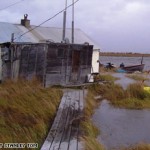
 eskimo houseA warming climate is having adverse effects on the Eskimo village of Shishmaref, Alaska. As the ice melts gradually earlier in the spring and forms later in the fall, the coast is beginning to erode—and the houses built along it are in danger of falling into the sea. One house has succumbed to the erosion already and thirteen more have been moved inland to protect them from meeting the same fate. Only one house remains—that of Shelton and Clara Koreok, only feet from the edge. Shelton refuses to move, no matter what the danger, because he fears that moving would mean losing everything he knows.
 “This is my hometown,” said Shelton. “I don’t want to go anywhere.”


Discussion Questions

  1. Besides the looming danger for their houses, in what other ways do you think this coastal erosion will affect the people of Shishmaref?
  2. What do you think the people should do about this crisis? Should they try to prevent further erosion? Carry on in spite of it and find ways of dealing with it? Pack up and leave Shishmaref altogether?
  3. What do you think of Shelton Koreok’s decision not to move his house inland? What do you suppose he’ll do if his house falls into the sea?


Scripture Texts (NRSV) for Sunday, December 13,2009 (Third Sunday of Advent)

 (Text links are to Oremus Bible Browser. Oremus Bible Browser is not affiliated with or supported by the Evangelical Lutheran Church in America. You can find the calendar of readings for Year C at Lectionary Readings.)

For lectionary humor and insight, check the weekly comic Agnus Day.

Zephaniah 3:14-20

Phillipians 4:4-7

Luke 3:7-8


Gospel Reflection

 We’re in the advent season now: the time of preparation for the coming of Jesus. But what does that preparation entail? Reading the Christmas story in our Bibles? Singing “Silent Night” with friends and family? Putting a manger scene under the tree?

 Well, according to John the Baptizer, there’s quite a bit more to it than that. John came to prepare the way of the Lord, to get the people of Israel ready for his coming. But he didn’t do it by giving them images of a baby in a manger, surrounded by cherubic angels and a blandly serene Virgin Mary. The preparation he spoke of was for an impending doom. He spoke of unquenchable fire. He called his hearers vipers. He told them to expect wrath and an ax poised to cut them down. Far from the traditional Christmas message. But a necessary message for understanding the coming of Christ.

 Jesus came to save us from our sins. So in order to prepare for his coming, we need to think about what sin is and what it means. Sin means condemnation. Sin means unquenchable fire and wrath. In order to be saved, we must recognize our  need for salvation. We must be convicted of our sins and realize that the consequences are death and destruction. We are standing on an eroding coast, and if we stay there, we will surely fall into the sea.

 But Jesus offers to lead us to safety. He can take us away from the impending doom, and give us a new life with him. But we cannot be saved until we first understand that staying where we are means death, and going with Christ means life. Otherwise, we’re like Shelton Koreok: refusing to leave for fear of losing everything—when really, we lose everything only if we stay where we are.

 That’s what repentance is: turning around. We turn from the sinful path we’re on, and instead follow Christ. Jesus came to set us free. His human birth was only the first step. He then lived a human life, and died a human death, just as we do, so that he could save us from the unquenchable fire. Jesus came with a fire of his own: the fire of the Holy Spirit. A fire of life, rather than a fire of death. When we repent of our sins, we are baptized with fire, and the Holy Spirit lives in us. And when the Spirit lives and burns within us, we are able to bear fruits worthy of repentance. But we can only do it if we turn around.


Discussion Questions

  1. John provides some suggestions for bearing fruit worthy of repentance (share with those who have nothing, be fair with money). What are some other ways that we can bear fruit worthy of repentance in our own lives?
  2. Even in the face of doom, why do you think some people are reluctant to repent and turn to Christ? What do you think they’re afraid of losing?
  3. How can we help others this Christmas season to understand what it means to prepare for the coming of Christ?


Suggested Activity:

 Sing, “O Come O Come Emmanuel.” Go through the lyrics one at a time, and talk about what they mean in terms of Christ’s saving us from sin and death.


Closing Prayer:

Lord Jesus, thank you for your saving grace. Thank you for the freedom we have from sin, and our new life with you. As we remember your first coming, prepare our hearts for your Second Coming. Amen

December 2-9, 2009 – Preparing a Way for Spirit

Contributed by Scott A. Moore


Warm-up Question

When have you ever helped someone who was “stuck?”


Preparing a Way for Spirit


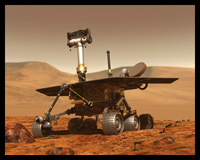
rover_low_angle_200The National Aeronautic and Space Administration (NASA) along with Jet Propulsion Laboratories (JPL) and some partners from other countries around the world have been working diligently to find a way out for a stuck Mars rover named Spirit. Spirit has been stuck for over six months now in an area where the ground is made up of very fine, soft sand. The six wheels (one of them has not been working properly for quite a while now) cannot seem to get the traction needed to move forward in any significant way. NASA is not giving up on Spirit, which along with its twin, Opportunity, has continued to function well for five years longer than the originally planned mission of three months. Teams here on earth are working with sample rovers in artificially created environments trying to recreate the actual conditions in order to find the perfect solution…to find a way out. Some of the attempts range from trying various wheel directions and speeds, to having Spirit try to dig itself out with its robotic arms. Just before the Thanksgiving Day weekend, Spirit was commanded to move its wheels forward. NASA indicated that the rover completed a spin which should have equaled a total of 13 feet. The rover actually only moved 0.2 inches forward, 0.1 inches to the left, and 0.1 inches further down into the sand.

To follow the story   http://marsrovers.nasa.gov/home/index.html

  • Is it worth the time and effort for NASA to get Spirit unstuck?
  • When should someone call it quits and move on?
  • Have you ever wanted to help someone else get “unstuck?” If you tried to do something, how did that go?
  • What kinds of situations frustrate you the most?
  • When have you been “stuck” in a situation where someone else kept trying to help you?
  • Where in your life, in your congregation’s life, could you use a little “push” to move forward?
  • Who are the people in your life, who are usually able to help you move forward?
  • How are they able to help you best?


Scripture Texts (NRSV) for Sunday, December 6, 2009 (Second Sunday of Advent)

(Text links are to oremus Bible Browser. Oremus Bible Browser is not affiliated with or supported by the Evangelical Lutheran Church in America. You can find the calendar of readings for Year C at Lectionary Readings.)

For lectionary humor and insight, check the weekly comic Agnus Day.


Gospel Reflection

In the sandy Judean desert, a voice communicates a message of action. The word of God comes to John, son of Zechariah and cousin of a man named Jesus of Nazareth. John is called to go and preach a “baptism of repentance for the forgiveness of sins.” The voice of the prophet Isaiah is quoted as the guiding principle of what John is doing. He is preparing the way of the Lord. He is making the Lord’s paths straight. Valleys filled, mountains and hills brought low. Crooked made straight and rough made smooth. He is eliminating every possible barrier between the Lord and the world. 

 A “baptism of repentance for the forgiveness of sins.” This seems to be the method to remove every barrier. Repentance seems to be the manner of preparing the way of the Lord. Repentance often sounds to us like simply saying sorry. There is certainly an emotional part to repentance but it is much, much more than that. Repentance in the New Testament is based on a word which means “to change one’s mind.” Repentance is seeing things in a new way, turning towards that new way, and living in that new way.  John’s baptism of repentance is a calling, and a gift of God. It is a call to be washed and set on a new path. It is a call to conversion. This call to repentance is a setting of our thoughts and actions in the Lord’s direction. Not only are we to be turned toward him, but we are to be turned to face the same direction our Lord faces.

Repentance means having our minds turned away from ourselves and our often selfish ways and to be shaped by God’s mind. It is seeing the world with God’s eyes. Perceiving and acting in love for the world and for our neighbor.

Being turned in repentance seems like an easy task. John called for a once and for all repentance. Our reality is often much different than that. We are often called by the voice of God to turn in the right direction, but find ourselves stuck and only able to move in tiny increments.  Or, we try so hard to turn ourselves that we overshoot our goal. God is very patient with us. Again and again God calls us to the way. A way of love, a way of sacrifice, a way of Christ.

Our repentance—never perfect, and never permanent—locates us in the central drama of Advent:  preparing the way of the Lord. In the world, and in our real lives. To that we can only say—“Amen. Come, Lord Jesus.”

  • What does God’s “way” look like?
  • When are you most comfortable living in that “way?”
  • When have you had real difficulties seeing things with a godly mind?
  • When have you been successful at getting temporarily unstuck?
  • What helps you in your own “changing of your mind” or repentance?
  • What makes it difficult for you?
  • Who helps you to repent?


Activities

Preparing the Way of the Lord for Others
Here is a list of ideas your group might try in order to prepare the way of the Lord for others:

  1. Write and deliver invitations for Christmas worship to people you know are not part of a faith community.
  2. Think about the things in your congregational community which might create barriers between the world and the Lord.  Take some action to “smooth” them out!
  3. How can you visually help members of your congregation to prepare as they come to worship (sidewalk chalk sayings/Bible verses that address people as they come to church, posters and signs that do the same thing, maybe even a play on various traffic signs: one way, yield, stop…around various locations in church like the baptismal font, altar, pulpit, etc.)?
  4. Can your group serve as the greeters in worship, helping worshipers “get ready?”
  5. Could you literally “roll out the red carpet” (a saying which communicates a generous and honor-filled welcome) in your worship space, or outside your church as a symbol of the way we walk toward God.  Or, roll it out from worship into the world?


Preparing the Way of the Lord for Ourselves
Perhaps your group could write some prayers for yourselves and for other individuals in the congregation to pray at home as a preparation for worship. These could be thematic, scriptural, or guided by the church year. See Lutheran Book of Worship (LBW) and Evangelical Lutheran Worship (ELW) for examples.


Closing Prayer

God of mercy, God of strength. We have so often walked a different path than the one you want us to walk. We need your guidance. Turn our minds to be like yours. Guide our steps. Lead us by your grace. We pray in our Lord Jesus’ name. Amen