Skip to content
ELCA Blogs

Lutheran Disaster Response

Humanitarian Update: Climate Disasters and Conflicts


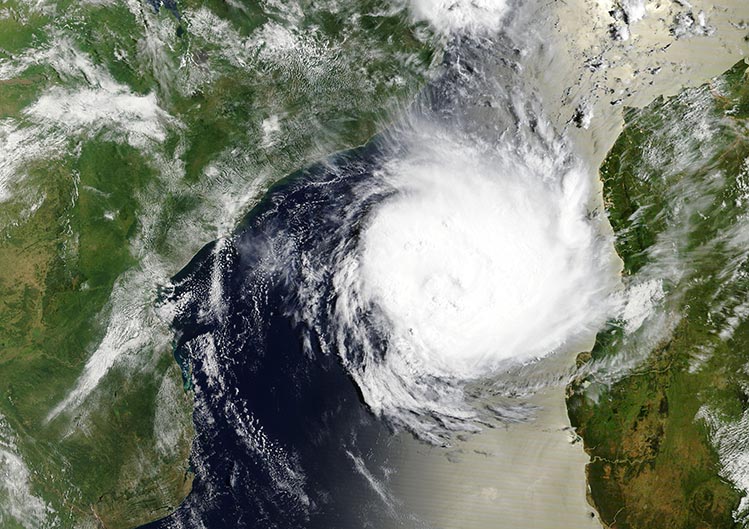
Tropical Cyclone Gezani | Image credit MODIS Land Rapid Response Team, NASA GSFC


February and March 2026 were marked by a series of devastating climate-induced disasters and escalating conflicts across the globe. Together, these crises have profoundly impacted lives, livelihoods, health, housing, and the environment—placing millions of people in urgent need of humanitarian assistance. During this period alone, national and international agencies reported seven medium and large-scale weather and climate-related disasters, highlighting the growing intensity and frequency of such events.

Major Climate and Natural Disasters

  • Brazil – Floods and Landslides: In late February, relentless rainfall triggered catastrophic flooding and landslides in Minas Gerais, particularly in Juiz de Fora. More than 70 lives were lost, and nearly 10,000 people were displaced, leaving communities devastated and in need of urgent relief.
  • Madagascar – Tropical Cyclone Gezani (Early February): Cyclone Gezani struck Madagascar with destructive force, claiming over 30 lives and displacing thousands. It was the second major cyclone to hit the country within just two weeks, compounding vulnerability and damage.
  • Southern Africa – Regional Flooding: Persistent heavy rains worsened flooding across Mozambique, Malawi, Zimbabwe, and South Africa. The widespread inundation caused severe damage to infrastructure, agriculture, and homes, deepening regional humanitarian needs.
  • Colombia – Widespread Floods: Continuous rainfall from early February led to flooding across 17 municipalities, damaging more than 12,000 homes and disrupting thousands of lives.
  • Kenya – Floods (March): Beginning March 6, intense rains triggered deadly flooding across parts of Kenya, resulting in more than 70 reported deaths and widespread displacement.
  • India – Tornado and Floods (March 15): A powerful tornado struck Odisha’s Mayurbhanj district, killing two people and injuring dozens. The disaster was followed by extensive flooding, further exacerbating local hardship.
  • Philippines – Canlaon Volcano Eruption (Mid-March): A moderate eruption of Canlaon Volcano sent a 5-kilometer ash plume into the sky, affecting at least 54 villages with ashfall and disrupting daily life.


Escalating Conflicts and Humanitarian Crises

Alongside natural disasters, ongoing conflicts continue to force millions from their homes and deepen global instability. In Ukraine and Gaza, displacement remains widespread as civilians continue to flee in search of safety. Meanwhile, intensifying conflict in Iran and other parts of the Middle East is claiming thousands of lives and rendering vast areas uninhabitable. These conflicts are not only humanitarian tragedies but are also straining the global economy and worsening living conditions far beyond the immediate regions. Fear, uncertainty, and psychological stress have become part of daily life for affected populations.

According to recent reports from UN and UN-supported platforms:

  • Lebanon: Over 1.2 million people—nearly one-fifth of the population—have been displaced.
  • Somalia: Rising fuel costs and supply disruptions linked to Middle East conflict threaten to worsen conditions for children already suffering from prolonged drought.
  • Afghanistan: Nearly two-thirds of families affected by severe drought report increased child labour, while only about one in five children is attending school.
  • Yemen: An estimated 18.3 million people are facing acute food insecurity, highlighting one of the world’s most severe humanitarian crises.


A Growing Global Emergency

These overlapping crises—climate disasters and armed conflicts—are placing unprecedented strain on vulnerable communities and humanitarian systems worldwide. The scale and complexity of needs underscore the urgency for coordinated global action, sustained funding, and long-term resilience-building efforts.

Without immediate and collective response, the gap between humanitarian needs and available support will continue to widen, leaving millions at risk.


Supporting Communities Through Lutheran Disaster Response

In the face of these compounding emergencies, Lutheran Disaster Response (LDR) continues to walk alongside communities as they respond to immediate needs and rebuild with dignity and hope. Through trusted international partners, LDR supports emergency relief, recovery, and long-term resilience efforts, addressing food security, shelter, livelihoods, psychosocial support, and disaster preparedness.

Supporting Lutheran Disaster Response enables timely, locally led responses that prioritize the most vulnerable and strengthen communities against future crises. As climate impacts intensify and conflicts persist, sustained solidarity and partnership are essential. Together, we can help ensure affected communities are not only supported in times of crisis, but also empowered to recover, rebuild, and thrive. Learn more about how to support the work of LDR here.
SE Asia Floods: Interview with LWD Exec Director (Cambodia)

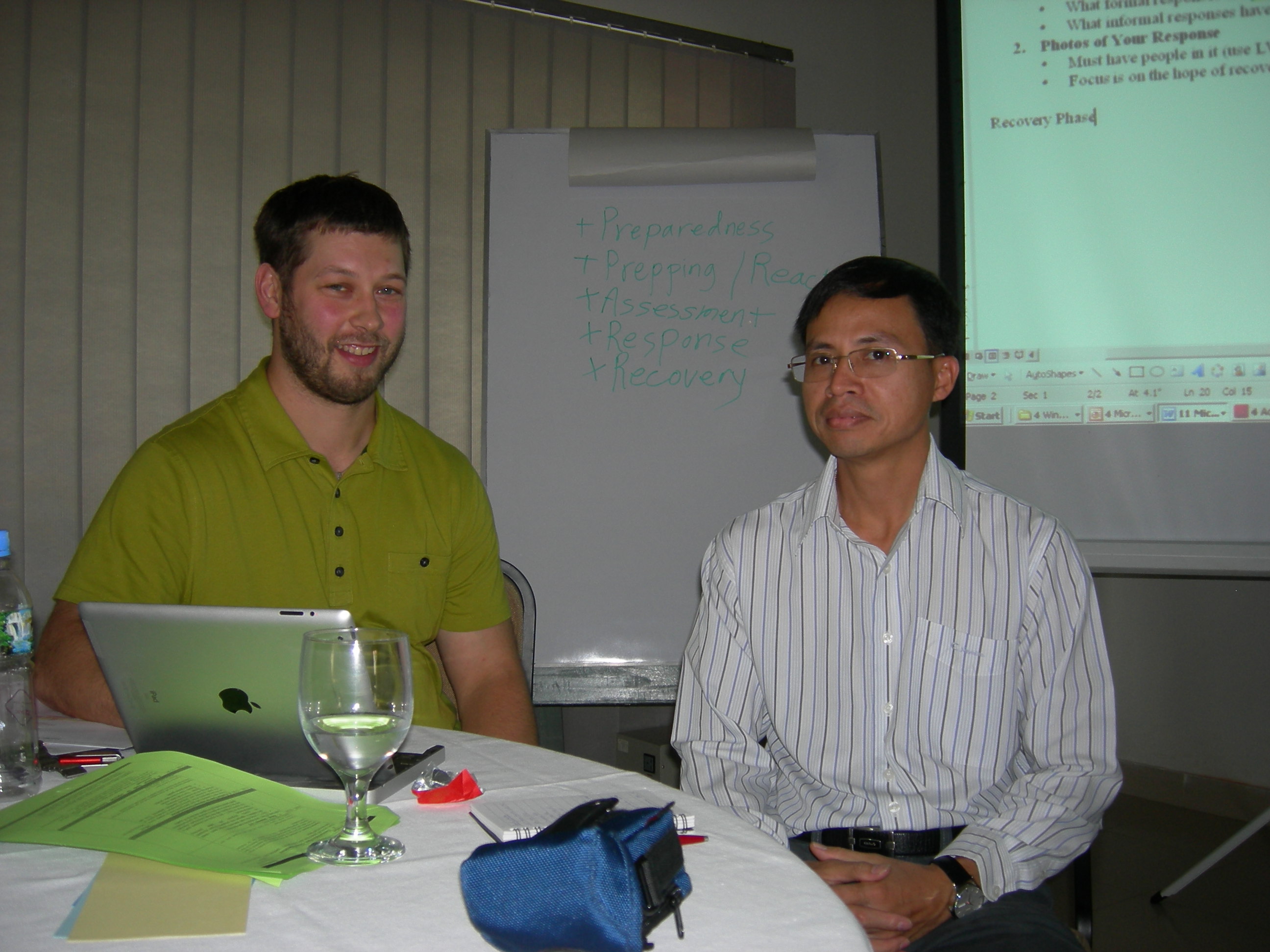
Sam Inn (right) and myself at LWF Communications Workshop in Dhaka, Bangladesh. Credit: Ulla Karki/FCA

Over the last three days I attended an LWF workshop in Dhaka, Bangladesh. The purpose was to bring communications personnel from agencies, like the ELCA, and country programs, like Life With Dignity (LWD) in Cambodia, to talk about how to better share our story of the church active in the world, particularly around disasters. In the spirit of the workshops purpose I asked Dr. Sam Inn, Executive Director of LWD, if he would give me his thoughts on the situation of flooding in Cambodia. Below is a summary of the main points of that conversation.

To get some background on the situation and the initial ELCA response, see the previous post SE Asia Floods: ELCA Responds in Cambodia & Thailand.

Overview
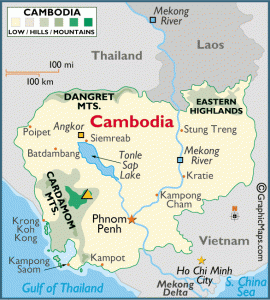
According to Dr. Inn, the flooding has affected the areas mainly along the Mekong River and around Tonle Sap Lake, though 17 of the 24 provinces have been affected in one way or another. Luckily the capital, Phnom Penh, has not been affected. The situation has led to 250 deaths and 1.2 million people strongly affected.

Short Term Response
The main issue he raised in the short term has been the displacement of people by flooding. To address this LWD has been working with to provide emergency food kits in two provinces of rice, cooking oil, ionic salt, a water purifier and mosquito nets.

Long Term Response
Currently LWD is helping to conduct a post-flood assessment over the next 4-6 months to determine the long term needs of the people in affected areas. Dr. Inn shared that the most likely needs will be around people’s livelihood, mainly in agriculture. Since the rice crops have been affected, the response will probably focus on supplying rice seed. They also may distribute vegetable seed for home gardens and poultry for livelihood improvement. Overall Dr. Inn believes they have gotten past the worst of the disaster in Cambodia and LWD will now be focusing their energies on helping the affected people return to and rebuild their lives.

Update on Thailand
As to the situation in Thailand, their Disaster Prevention and Mitigation Department has reported 689 deaths and over 4.4 million people affected as of today. They also are reporting that heavy rains in the southern part of the country may lead to further flooding over the weekend. Dr. Inn also shared that with the flooding of Bangkok, much of the media attention has been focused on the urban areas and not on those affected in the rural parts of the country.

————-
Gifts to ELCA International Disaster Response allow the church to respond globally in times of need. Donate now.

SE Asia Floods: ELCA Responds in Cambodia & Thailand

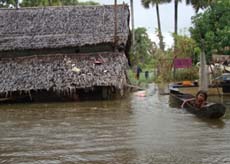
Flooding in Cambodia. Credit: CWS

Since July, heavy rains and four tropical storms have hammered Southeast Asia, affecting the entire region with flooding and landslides. In the two hardest hit countries, Cambodia and Thailand, it is estimated that one-third of each country is underwater. Recent reports put the number of dead at over 1,000, with over 75% of those lost coming from Thailand (533 deaths) and Cambodia (250 deaths). With the rains continuing to come the crisis grows as more areas become inaccessible while simultaneously increasing the number of those in need. An example is the city of Bangkok, with a population of 12 million, being threatened with complete submersion.

On November 2, the ELCA commited $150,000 to the relief efforts being coordinated by Church World Services (CWS) in Thailand ($50,000) and Cambodia ($100,000). In Thailand they are working with our companion, the Church of Christ in Thailand (CCT) and in Cambodia they are working with our partner, Life with Dignity (LWD). These efforts will address immediate needs such as supplying emergency food, water and hygeine kits. It will also involve the rebuilding of destroyed homes and the restoring of lost livelihoods.

As this disaster continues to develop and relief efforts move from disaster response to disaster recovery, the ELCA will continue to walk with our companions. Please check back here to learn about these efforts and continue to keep the people of the region in prayer.

For more information:

————-
Gifts to ELCA International Disaster Response allow the church to respond globally in times of need. Donate now.

Dispute Over Preah Vihear Temple

No one has been able to say specifically why * on February 4th fighting broke out at the disputed Preah Vihear between Thai and Cambodian military forces, but the outcome has been a handful of deaths and injuries on both sides and 1500+ families fleeing from their homes. In response to this displacement the ELCA, and partner organizations, have given financial support to Life With Dignity (LWD), our local partner on the ground. The funds will be used set up a camp to provide stable conditions for temporary housing, clean water, sanitation and food.

The hope is that the fighting will not escalate further and thankfully there has been a ceasefire in effect since February 8th. At the moment the goal is to help people momentarily displaced while they wait to return home. Please join us in praying for the people of the region that they may find peace in this period of uncertainty and that the two sides may find a peaceful and agreeable solution.

——
* Though the reason for the recent outbreak of violence is not know the general reason for tensions stem from the Preah Vihear temple sitting on a disputed stretch of border between Cambodia and Thailand. The dispute has gone on since France withdrew from Cambodia in 1953, was heightened in 1962 when the International Court of Justice ruled the temple to be on the Cambodian side of the border and peaked in 2008 when UNESCO accepted Cambodia’s bid to list the temple as a World Historical Site, a move Thailand disagrees with.