Skip to content

ELCA Blogs

Febrauary 1, 2026 – Blessed by Presence, Not Circumstance

Prepare

This week, the Revised Common Lectionary gives us four meaty texts. They relate to one another, but it is also important to think about them individually.

Micah 6:8 might be the best-known verse of the whole book, but it is important to read it within its literary context. Chapter 6 reads like a court transcript. God has dragged the people of Israel (ancient, not the modern-day state) to court. Creation acts as judge and jury. God starts to list all the ways that God has saved and delivered. The people then ask “How shall we say thank you? With sacrifices? Huge sacrifices? Over the top sacrifices?” And a voice responds, God has told you: “to do justice and to love kindness and to walk humbly with your God” (Micah 6:8, NRSVue).

Psalm 15 echoes the high standards of living that God yearns to see from God’s people in Micah 6. Notice the focus on how people interact with others—their friends, their neighbors, the innocent.

The assigned passage from First Corinthians this week starts with the same verse that last week’s passage ended with. The cross is foolish; it does not make sense when selfish power-hungry human logic is applied. Through Christ, God provides to God’s people wisdom, righteousness, sanctification, and redemption.

Like the other texts assigned for today, Matthew 5:1-12 shows us God’s character—one who saves, delivers, and defies human logic. The Beatitudes (as they are usually called) are not meant to encourage Christ’s followers to seek out/cause suffering for ourselves in order to get closer to God, but to see where and with whom God promises to be and invite us to come alongside them as well.

Opening Exercise

Text Read Aloud

Micah 6:1-8
Matthew 5:1-12

Blessed by Presence, Not Circumstance

If you search #blessed on social media, you will most likely see a seemingly never-ending stream of personal achievements (especially of the athletic variety), the acquisition of material possessions, and the enjoyment of exotic vacation spots.
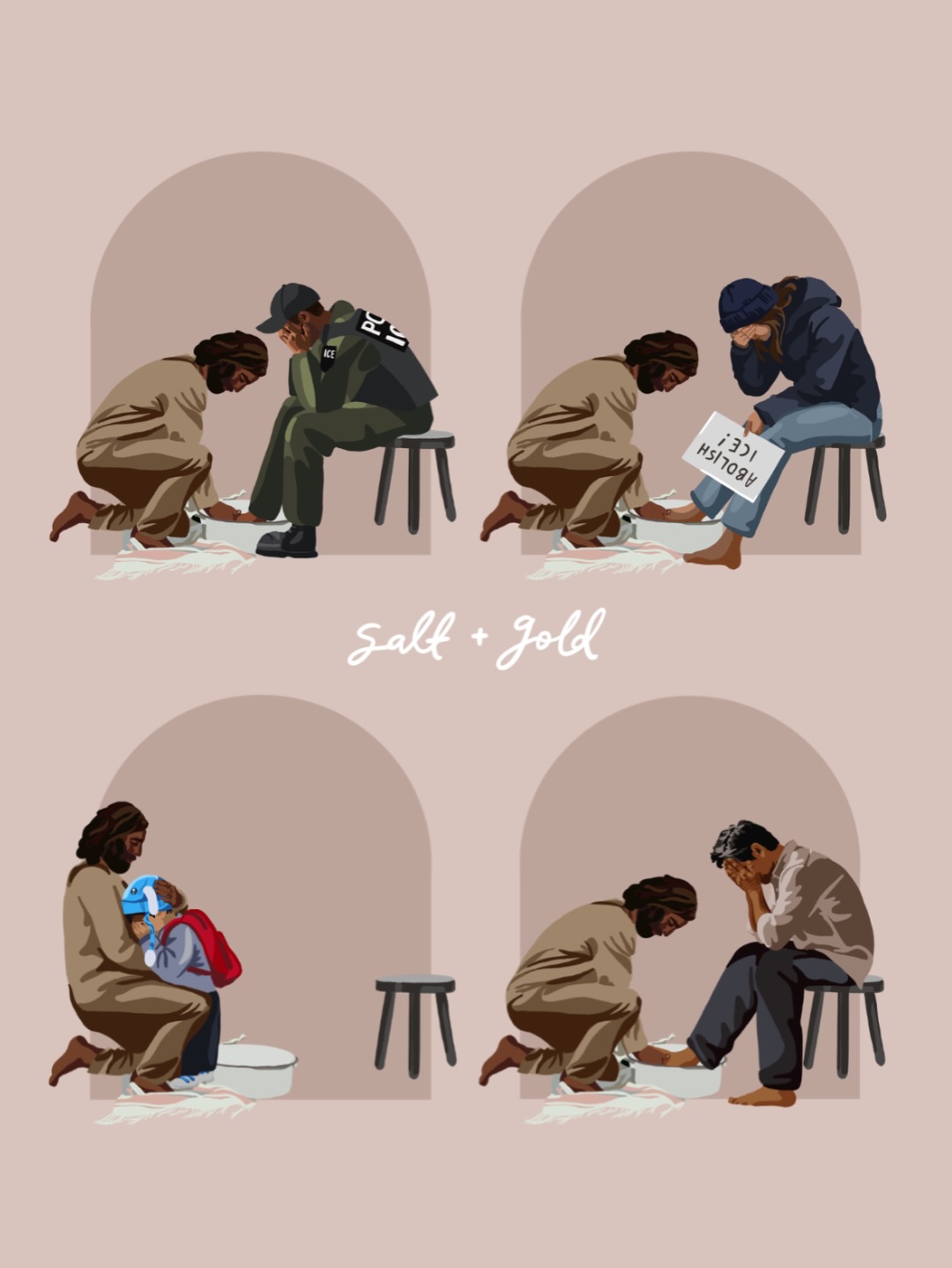
artwork by Salt & Gold Collection

It seems like today’s popular definition of “blessed” is almost the exact opposite of what Jesus had in mind at the Mount of the Beatitudes. A state of blessedness is not something that is earned or even something to be aspired to. It is a statement of promise—God promises to be with all God’s people no matter how bad things get.

Our God is about turning the world upside down—which is why Jesus speaks what seems like foolishness when he calls those in so many terrible situations “blessed.” The poor in spirit, those who mourn, the meek, those who hunger and thirst for righteousness, the merciful, the pure in heart, the peacemakers, and those who are persecuted are not blessed BY their situations. Rather, they are called blessed because God remains with them amid their less-than-ideal situations, promising that things will ultimately be different. This presence and solidarity with those whom society would otherwise cast off is the heart of the good news—no one is out of God’s purview. All are invited into the abundant life of God’s kin-dom.

Too often, though, we lose sight of God’s plan for creation and make up our own. We lose sight of the communal for the individual, turning inward and gazing at our navels. It is this manifestation of sin that leads to the list of Solemn Reproaches that we confess as a community on Good Friday in the style of Micah 6.

Yet, as we confess our complacency with injustice and the ways we work against God’s plan and God’s people, let us also hear the good news that God continues God’s saving action despite us. We do not have to do anything or be good enough to receive “righteousness and redemption and sanctification” from our Lord. Instead, when we are given God’s free gift of grace, we are transformed to “do justice, and to love kindness, and to walk humbly with your God.” When our egos and selfishness are kept in check, we get to experience God’s kin-dom and true plan for creation—where there is more than enough to go around and abundant life for all.

Reflection Questions

  • According to Micah 6:1-8 and Matthew 5:1-12, what do the actions of God tell us about the character of God?
  • According to Micah 6:1-8 and Psalm 15, how does God want God’s people to live?
  • Why do you think that Jesus mentioned the groups/kinds of people that he did in the Beatitudes?
  • If Jesus were preaching the Sermon on the Mount today, what groups/kinds of people would he name in the Beatitudes today?
  • How have you or could you actively work to bless the groups/kinds of people that Jesus included in the biblical Beatitudes or that are on the modern-day list y’all came up with?

Closing Activity

  • Work individually or in small groups to design a visual representation of Micah 6:8 or the Beatitudes—think t-shirt, temporary tattoo, mural, or banner for your worship space. Give each person/group a chance to share about their design as they desire.

Final Blessing—by Sr. Ruth Marlene Fox, OSB

May God bless you with a restless discomfort
about easy answers, half-truths and superficial relationships,
so that you may seek truth boldly and love deep within your heart.

May God bless you with holy anger
at injustice, oppression, and exploitation of people,
so that you may tirelessly work for justice, freedom,
and peace among all people.

May God bless you with the gift of tears to shed with those who suffer
from pain, rejection, starvation, or the loss of all that they cherish,
so that you may reach out your hand to comfort them and transform their pain into joy.

May God bless you with enough foolishness to believe that
you really CAN make a difference in this world,
so that you are able, with God’s grace,
to do what others claim cannot be done.

And the blessing of God the Supreme Majesty and our Creator,
Jesus Christ the Incarnate Word who is our brother and Saviour,
and the Holy Spirit, our Advocate and Guide, be with you
and remain with you, this day and forevermore. Amen.*

Bio of Author

Leslie Weber is a pastor, spouse, mother, daughter, sister, friend, and ally. She serves at Grace Lutheran Church (Chesapeake, VA) and Holy Communion Lutheran Church (Portsmouth, VA). She was born in California, but has lived most of her life on the East Coast, where she has lived in three of the four U.S. Commonwealths (MA, PA, and VA).
*“May God bless you with a restless discomfort…” A four-fold Benedictine blessing by Sr. Ruth Marlene Fox, OSB, 1985, as reprinted on WorldPrayers.org

Share

ELCA World Hunger Education and Networking Grants

The 2025 ELCA World Hunger Education and Networking Grant application cycle is now open!


Hunger Education and Networking Grants are one of the ways ELCA World Hunger accompanies congregations, synods, organizations, partners and local teams throughout the US and the Caribbean. We know that learning about the root causes of hunger and effective responses is key to ending hunger locally and globally. 

We will be accepting proposals from August 4th through September 15th. Grant application review will begin after September 15th. Please allow 2-4 weeks for review of your application. Grants average between $500 and $1,000 and are non-renewable. 

ELCA World Hunger Education and Networking Grants support work that: 

  • educate and engage ELCA congregations, groups, and/or synods;
  • influence this church body toward better action and engagement against hunger and poverty;
  • encourage sustainable participation in the work of ELCA World Hunger beyond the conclusion of the project, event or initiative. For more on the intersectional priorities of ELCA World Hunger, visit the link found here.


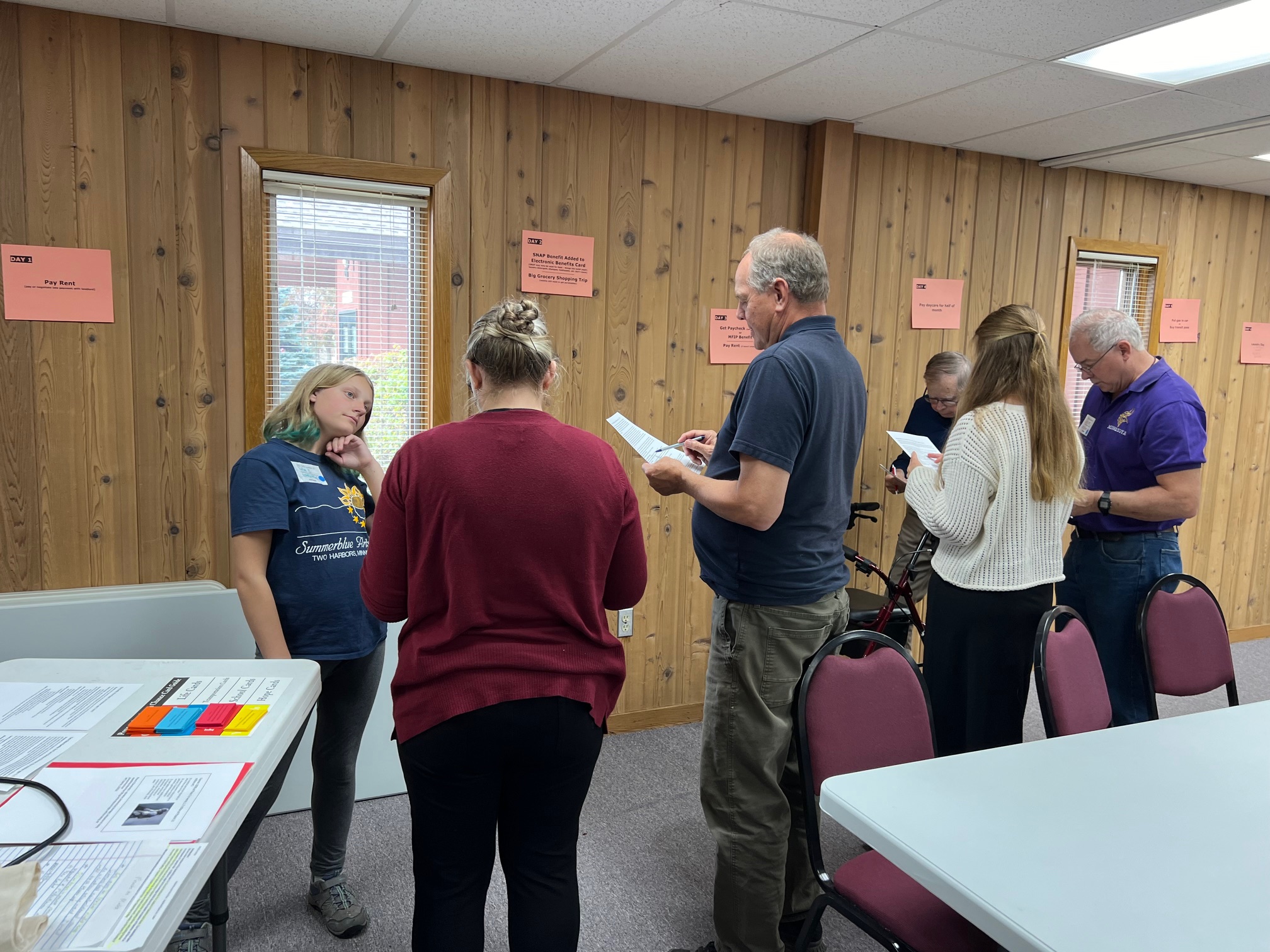
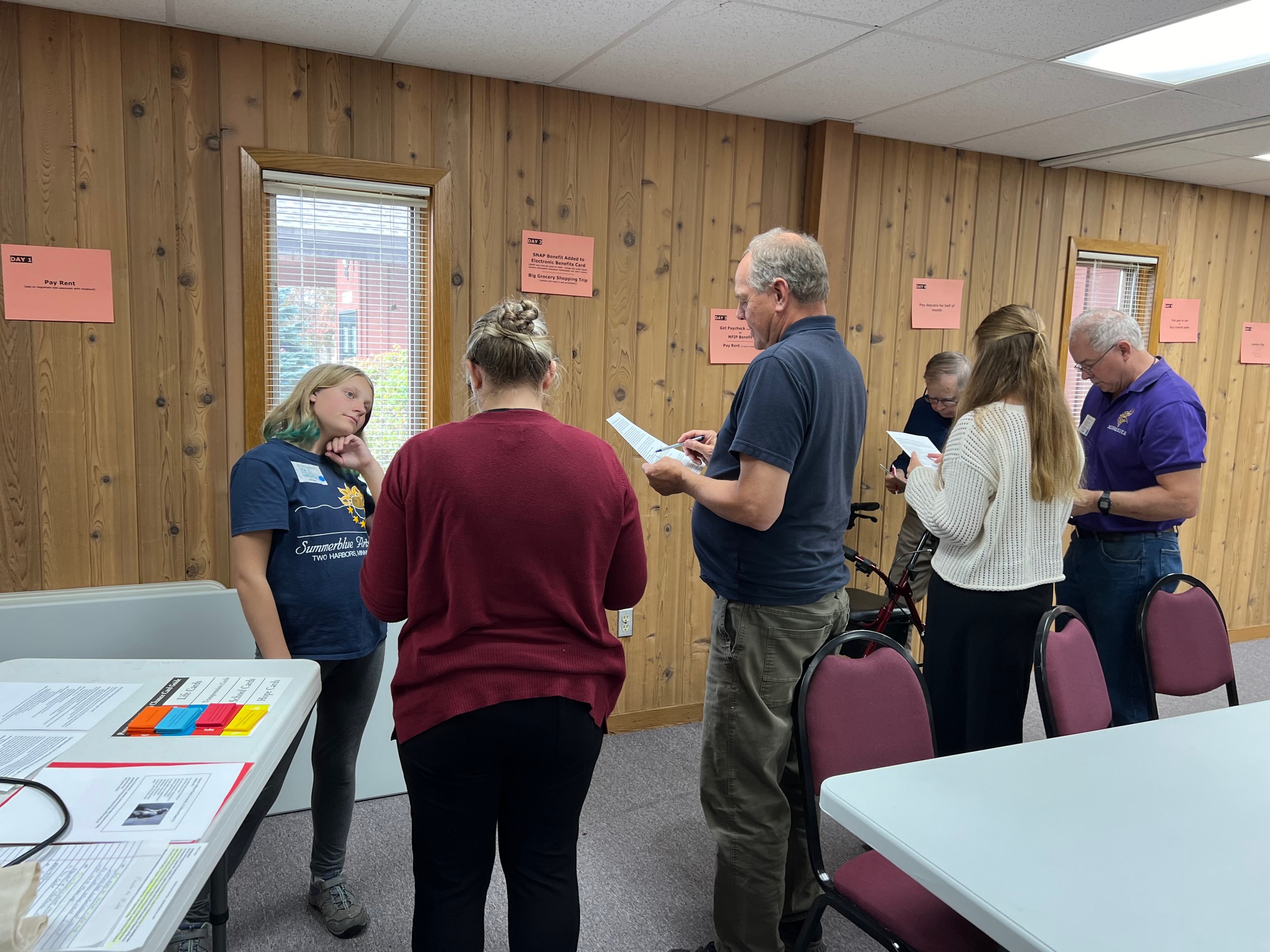
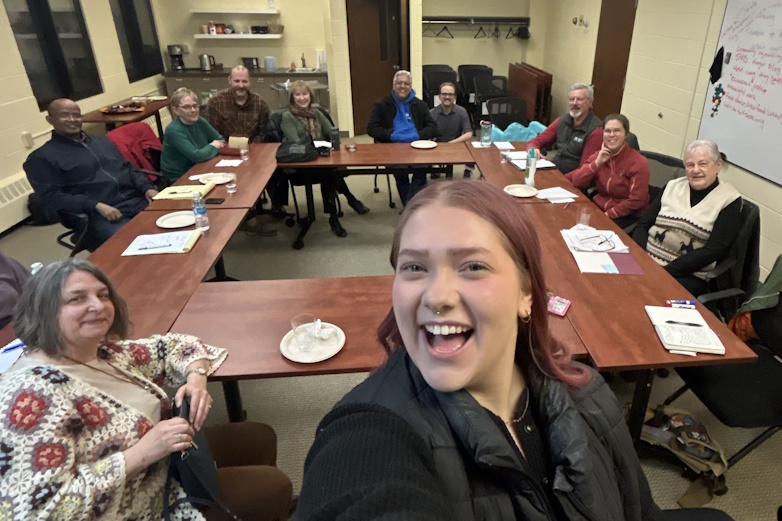
An intergenerational gathering of rostered and lay ministers of the ELCA gathered around a table during a discussion.

Hunger leaders of the St. Paul and Minneapolis Area Synods, discussing areas for future collaboration of their justice ministries.

ELCA World Hunger Education and Networking Grants are designed for projects that provide educational opportunities to deepen participants’ understanding of poverty and hunger (including root causes and intersectional issues) and equip participants to work toward effective solutions.

Projects involving direct service within communities are only eligible if the service happens within a program for service learning. If your project involves direct service, ELCA World Hunger’s Domestic Hunger Grants or Daily Bread Grants may be more appropriate for your needs. 

Some examples of past grant partnerships or potential future projects include (but are not limited to): 

  • synod-wide bike rides to promote hunger awareness; 
  • creation of shareable networking databases for hunger ministries, community organizers, or advocates; 
  • service learning events for youth and young adults; 
  • online and in-person workshops; 
  • climate justice education opportunities; 
  • community organizing training; 
  • creation of new resources to help participants learn about hunger; and 
  • local research projects to help others learn more about hunger, health, and housing in their community. 

The work of grant partners in the past has focused on a wide variety of areas, including climate change and sustainability, housing security, racial justice, worker justice, reducing food waste and economic justice. 


Eligibility

To be eligible for an ELCA World Hunger Education and Networking Grant, proposals must be: 

  • received through the ELCA’s online Grantmaker portal (the link to the Grantmaker portal is at the link found here) from August 4th through September 15th, 2025; 
    • [Note: If you have any difficulties with the ELCA GrantMaker platform and would prefer to apply in a different format, we can provide a Word document application. This is available upon request via email to Peter McLellan (peter.mclellan@elca.org).] 
  • submitted by a 501(c)3 tax-exempt organization; 
    • [Note: If your organization does not have 501(c)3 status (this might include a synod hunger team), your ELCA synod can serve as your fiscal agent. Contact your synod office for this support.]
  • focused on education, engagement, and networking toward a just world where all are fed; and 
  • consistent with ELCA World Hunger’s values and priorities (found at the link found here). 

In addition, eligible projects must occur within the geographic footprint of the ELCA, which includes the United States and the Caribbean. 

Intergenerational gathering of hunger leaders standing in a semi-circle participating in an interactive hunger simulation.

Hunger leaders in the Northeastern Minnesota Synod participating in a hunger simulation.


How to Apply

Applicants must pre-register on ELCA GrantMaker in order to access the grant application. Approval of registration may take up to ten business days, so register now at ELCA.org/grants, and submit your application by September 15th. 

If you have any questions, please email Peter McLellan, program director for hunger education, at peter.mclellan@elca.org or hunger@elca.org. 

Share

“Making All Things New”: A Brief Reflection on an ELCA World Hunger Leader Retreat

This is a re-post of an article by Rev. Sarah Stadler, originally published in the Northeast Minnesota Synod Enews, covering the the March 7th – 8th gathering of hunger leaders from across Region 3. 


On March 7-8, 2025, over 20 people from across Region 3 of the ELCA – Minnesota, North Dakota, and South Dakota – gathered at Camp Onomia for a Hunger & Justice Leaders Retreat under the theme Making All Things New.  The group built relationships, discerned how God is calling hunger and justice leaders to better work together in our region to end hunger, and learned how various justice issues impact hunger.  We were led in Bible study by Dr. Jimmy Hoke and in our discernment process by Rev. Barbara Lund, a Senior Director in the Service & Justice Home Area of the ELCA.  We were led in worship by Peter & Vicki Schmidt and Sarah Stadler; Peter and Sarah are pastors serving in the Northeastern Minnesota Synod.  The retreat was largely funded through an ELCA World Hunger grant.

One of the synod committees in the Northeastern Minnesota Synod is the Hunger, Justice, and Rural Life Committee.  Though the committee has been active in the synod – for instance, we organized last summer’s Bike For Justice ride – we had felt a bit lost in terms of our purpose.  Also, we wished to connect with other hunger leaders from our region.  In the not-too-distant past, hunger leaders from Region 3 had gathered annually to encourage one another and learn.  We wondered if it was time to reinvigorate that ministry.  In reaching out, we were delighted to discover that nearly all of the synods in Region 3 were interested and able to participate!  Participants included synod staff, including Minnesota’s Lutheran advocacy director, parish pastors, synod hunger committee members, WELCA leaders, lay people active in hunger ministries, and others who were simply drawn by the Spirit of God to participate.

By the end of our time together, we had identified five areas of action to which we feel called: (1) Worship, (2) Giving, (3) Networking in our local communities, (4) Building Community among hunger and justice leaders, and (5) Education.  Within each of these areas, we clarified specific goals.  In returning to our home synods, we will now discern which specific goals each synod’s committee will tackle – with the hope that, once a resource or strategy is created, it will be shared and used throughout the region.  Moving forward, we are also utilizing a platform to keep in touch so that we can encourage one another and continue to build community.

Hunger and injustice are pervasive, and this time in our life together feels particularly challenging.  Still, God is among us making all things new!  That hope is ever before us.  If you are interested in being part of the Hunger, Justice, and Rural Life team, please email Sarah Stadler at sarahleestadler@gmail.com.

Share

Both/And in Walking Together

This is a re-post of an article by Rev. Taryn Montgomery, originally published in the Northeast Minnesota Synod Enews, covering the October 12th “Walking Together” celebration of ELCA World Hunger’s 50th anniversary. Note: this article was written on October 29th, before the November 5th election, which Rev. Montgomery references in the piece as an upcoming event.


“For you always have the poor with you, but you will not always have me.” -Matthew 26:11

“Pastor Taryn, why are we gathering again?” asked the 13 year-old usher, as we prepared for worship at the Walking Together event earlier this month.

“Because we’re marking the 50th anniversary of world hunger and how we as a church have been able to help those who experience food scarcity,” I responded.

“Um, I’m pretty sure world hunger has been around longer than 50 years,” she said deadpan.

Rev. Taryn Montgomery welcoming the participants to opening worship.

Touché.

I left out the ELCA part of World Hunger when responding to Lila that morning, but she is right. Jesus was right. People have been hungry for centuries upon centuries. The poor have been among us from the very beginning. And let’s be clear, “the poor” is not a “them”. It can be our neighbor, our family, even ourselves.

It’s in this spirit that we gathered on Saturday, October 12th at Lutheran Church of the Cross in Nisswa to straddle the line between celebrating a ministry milestone and being inspired to “keep on” in our work of ending hunger. Both/and.

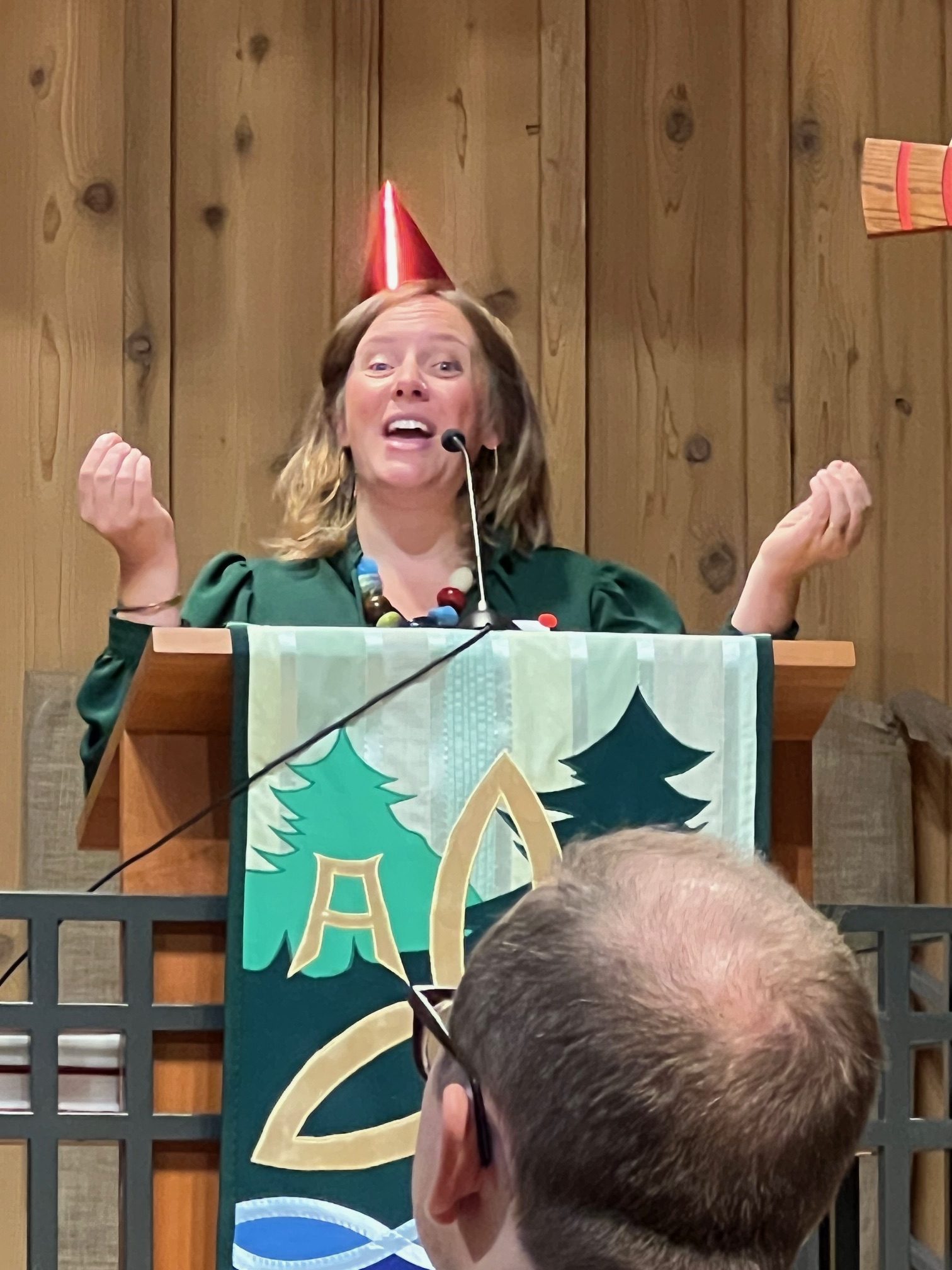
And it was a great event! We gathered in worship, confronting a scripture that both challenged and stirred us. We experienced a poverty simulation, walking through a month in the life of a family trying to make ends meet. We learned how hunger interacts with issues of climate change, racism, and conflicts in the Middle East. We wore party hats and blew noise makers, and we gathered in silence for the people of Gaza. We enjoyed a delicious Caribbean lunch, and we remembered those who went without a meal. We made art together, bid on baskets together, and rallied around a common mission together – to give thanks for the past 50 years and to keep working long into the future.

Participants talking part in a hunger simulation.

One week from today our polls will open. Some of you have already filled out your ballot. As a nation we will cast our vote, a kind of faith statement. A statement of what we believe, what we value, what we hope for. We won’t all vote the same way and that’s okay. But may we vote in the spirit of reaching across the table, of extending the table. In the spirit of invitation for the hungry, the poor, and those on the margins – those we will always have with us. May we cast our vote recognizing the both/and experience of our faith.

Lila was right, world hunger has been around far longer than 50 years, and it doesn’t have to be that way in the future. It might be – history has shown that to be true. But it doesn’t have to be. Because we are people of faith, followers of Jesus. And, if there’s one thing we’re really good at, it’s hoping for things as yet unseen.

Share

World Water Day 2023

March 22 marks the 31st annual World Water Day, a United Nations observance to celebrate the progress the world has made in providing access to clean, safe water for all and to remember how far we have to go as a global community toward that goal.

This week, the UN will host an international conference on water in New York City to commemorate World Water Day and to encourage “bold action” in pursuit of the Sustainable Development Goal of “clean water and sanitation for all.” The ELCA will be represented at the conference by staff from the Building Resilient Communities team and the Lutheran Office for World Community, learning and sharing together with other faith-based groups, governmental actors and organizations. Reaching the goal of clean water and sanitation for all is critical. As the conference announcement shares, “Water is a dealmaker for the Sustainable Development Goals, and for the health and prosperity of people and planet.” Indeed, without access to clean water and sanitation, many of the other Sustainable Development Goals will be out of reach.

Water and Hunger

This is especially true of the goal of ending hunger. Projects and initiatives that provide access to clean water and sanitation have long been part of the work supported by ELCA World Hunger. And with good reason. Northwestern University anthropologist Hilary Bethancourt notes, “In some cases, the most sustainable way to improve food security may be through improving water security.” Bethancourt and a team of researchers found in a 25-country study that people who frequently faced water insecurity[1] were nearly three times as likely to face food insecurity as those who did not.

What might be surprising is that one of the few longitudinal studies of water and food insecurity found that water insecurity actually precedes and may predict future food insecurity. So, rather than occurring together due to a single cause, water and food insecurity interact, with water insecurity actually occurring before food insecurity.

Similar dynamics are found in research in the United States. A study published last year examining tap-water avoidance found that food insecurity was more than 20% higher among the 61.4 million Americans who do not use tap water than among those who do use tap water.[2] What the study suggests is that access to – and use of – clean, safe, affordable tap water can help reduce the risk of hunger.

Addressing access to water is important, too, for solutions to hunger. As Manuel Fontaine, UNICEF Director of the Office of Emergency Programmes, has said bluntly, “No matter how much food a malnourished child eats, he or she will not get better if the water they are drinking is not safe.”

Perhaps even more startling are the results of a study involving 69 experts from around the world. When asked by researchers to identify the top threats from extreme events to global food security, the four most common responses involved water, while 6 of the 32 threats identified directly mentioned water.

Water and Sanitation by the Numbers

Where do we stand with progress on clean water and sanitation? What are some of the realities that are behind the “global water crisis”?

  • 2 billion people lack access to safely managed water.[3] The rate of people with access to safely managed water services increased from 70% in 2015 to 74% in 2020.
  • That number includes 2 billion people who lack access to basic drinking water services.[4]
  • By 2025, half of the world’s population could be living in water-stressed areas.
  • 6 billion people around the world lack access to safely managed sanitation services, which puts them at higher risk of waterborne illnesses.
  • Diarrhea resulting from unsafe water and insufficient access to adequate medical care claims an estimated 829,000 lives every year.

Some progress has been made, but we are not yet on track to reach the Sustainable Development Goal of clean water and sanitation for all. This makes the question raised Rev. Philip Vinod Peacock of the Church of North India, in his reflection on the words of Jesus, all the more poignant: “While the offer of living water is made, how come many still cry, ‘I thirst’”?[5]

Water and Power

Water scarcity affects communities in nearly every country around the globe, and the number of people facing water crises continues to grow. But that doesn’t mean the burden is shared equally. As Peacock notes about his context in India,

“The issues of water scarcity and pollution and its resulting impact…are closely connected with issues of justice and peace, caste and gender.”[6]

In discussions of water crises, Peacock writes, “another issue that has to be taken seriously…is the place of power relations.”[7] His co-authors in Waters of Life and Death: Ethical and Theological Responses to Contemporary Water Crises offer examples of the many ways water scarcity reflects and springs from marginalization and injustice, from the displacement of Dalit and indigenous Adivasi communities by large dam projects (J. Jeremiah Anderson) to the theft of groundwater in the village of Plachimada by Coca-Cola (Philip K.J.)

Their sentiments are echoed by Catholic ethicist Christiana Zenner:

“Clean water flows toward power.”[8]

Without a doubt, there is a global water crisis – or, rather an interlocking set of water crises – with a rippling impact. But the water crisis is not just a hydrological or ecological crisis. It is a political and economic crisis. We see this in the racial disparities in water access here in the United States, where people of color are more likely to live in homes without full plumbing for clean water or sanitation and where water systems are more likely to violate the Safe Drinking Water Act in communities of color and in communities with households with low-income. The likelihood of a water system protecting residents from unsafe water decreases in communities as the proportion of people of color and households with low income increase.

Along with racial and economic disparities are clear gender inequities when it comes to water. In areas without basic drinking water services, the burden of water scarcity and lack of sanitation often falls on women and girls, who are typically responsible for collecting water for their households. The time spent on this, according to UNICEF, could be as high as 200 million collective hours each day.[9] A study on sanitation found that girls also bear the brunt of lack of sanitation facilities in schools. In a study of West African countries, WHO/UNICEF found that 15-25% of girls missed school during their period, in part due to a lack of adequate sanitation facilities and resources, such as running water, soap, sanitary supplies or waste bins.

Ripples of Hope

The communities ELCA World Hunger is invited to accompany inspire hope that change is possible, despite the complex undercurrents of injustice that flow beneath the global water crisis. This hope is rooted in movements that not only provide clean, safe water but that open opportunities for local communities and neighbors to make meaningful decisions about their own ecological future. Each of these stories – from microbasin restoration in El Salvador to awareness-raising and advocacy to reduce lead contamination in Milwaukee, from drought-resistant agriculture in Bangladesh to rainwater harvesting in Zimbabwe – is a step toward providing clean water or sanitation and an invitation to bear witness to the effective solutions that can come from communities working together for change.

We have a long way to go. But in faith, we journey together with neighbors and companions, taking seriously the words of Rev. Atle Sommerfeldt, the former General Secretary of Norwegian Church Aid:

Water is too important a matter to be left to politicians and technicians alone. Water must be an integral part of our spiritual and social agenda in every local community and nation.”[10]

Commemorating World Water Day

This World Water Day, and the gathering times that follow it, set aside time to pray for neighbors near and far facing water scarcity and water injustice, and give thanks for the local leaders whose tireless efforts inspire us with hope.

With your congregation or your household, use one of ELCA World Hunger’s educational resources to learn more about water and hunger:

Water and Hunger Toolkit

River of Life Vacation Bible school

Want to plan a larger event for this Spring or Summer? You can also check out ELCA World Hunger’s Walk for Water, an interactive track experience with a complete DIY guide.


Ryan P. Cumming, Ph.D., is the interim director of education and networks for the Building Resilient Communities team in the ELCA churchwide organization.

—————-

[1] “Water insecurity” can be defined as lacking reliable access to clean, safe and sufficient water to support livelihoods and human well-being. This is related to other terms such as “water stress” or “water scarcity.” Water scarcity generally describes the relationship between supply and demand, while water stress is a bit broader, encompassing not just adequate availability but dependable and sufficient access. See Young SL, et al.. Perspective: The Importance of Water Security for Ensuring Food Security, Good Nutrition, and Well-being. Advances in Nutrition. 2021 Jul 30;12(4):1058-1073.

[2] The reasons for tap water avoidance can vary. This can include a lack of adequate plumbing, safety or contamination concerns, shut-offs due to lack of payment, and lack of trust in municipal services and government.

[3] The World Health Organization (WHO) and the United Nations Children’s Fund (UNICEF) define “safely managed drinking water service as “an improved water source that is accessible on premises, available when needed and free from faecal (sic) and priority chemical contamination. Improved water sources include: piped water, boreholes or tubewells, protected dug wells, protected springs, and packaged or delivered water.”

[4] WHO and UNICEF define a basic drinking water service as “drinking water from an improved source, provided collection time is not more than 30 minutes for a round trip.”

[5] Philip Vinod Peacock, “Water Conflict,” in Sam P. Mathew and Chandran Paul Martin, eds. Waters of Life and Death: Ethical and Theological Responses to Contemporary Water Crises (Chennai: UELCI/ISPCK, 2005), 65.

[6] Ibid, 64.

[7] Ibid, 63.

[8] Christiana Zenner, Just Water: Theology, Ethics, and Fresh Water Crises (Maryknoll: Orbis, 2018).

[9] This estimate was derived by calculating the number of women and girls living in areas where water sources are more than 30 minutes away from the home.

[10] In Mathew and Martin, eds., xi.

Share

Migration Policy: Hunger Policy Podcast December 2021


Saturday, December 18, is International Migrants Day, a day set aside by the United Nations to raise awareness and focus attention on the 281 million people around the world where are on the move, in search of peace, stability, security and an opportunity for new life. In 2020, more than 3.6% of people around the world were migrants.


Hunger Policy Podcast-Migration (Audio Only)


In the US, the latest data we have on hunger and poverty confirms what we had guessed. Hunger is on the rise, poverty is on the rise, and yet neither is quite as high nationally as we thought they would be, due largely to the unprecedented federal legislation that expanded the safety net in the United States. While that is true nationally, that’s not the case for every community and every family here in the US or around the world, however. Immigrant and non-citizens in the US saw a steeper decline in income in 2020. Internationally, migrants are more vulnerable to hunger and poverty than native residents, and migrants experience unique risks when it comes to COVID-19. All this, coupled with the large numbers of people forced to flee their homes worldwide, makes immigration a key conversation we need to be having.

In this podcast, Giovana Oaxaca, the ELCA’s program director for migration policy, joins Ryan Cumming of ELCA World Hunger to talk about the realities of migration and immigration policy. As they describe in this conversation, “immigration policy” refers to more than just who is able to enter the United States, but also to questions about who has access to public benefits, what it means to be a “non-citizen” and how policy changes can impact individuals and communities. Ryan and Giovana also discuss how the COVID-19 pandemic specifically impacted immigration and immigrants in the United States and confront some of the prevailing myths about immigrants and migration.

https://youtu.be/p-iIASCYOMU

Prefer to read the interview? Follow this link to access a transcript of the conversation.

Immigration and Migration Links from the Podcast

Newsletters

Social Media

AMMPARO Resources

  • Bible Studies
  • Sanctuary
  • Videos
  • Words Create Worlds

ELCA and Peace Not Walls: Advocacy Summer School

Interested in other podcasts? Visit the ELCA World Hunger blog and click “subscribe.”

Share

Hunger Policy Podcast: May 18, 2021


We know that hunger is not just a matter of food but a matter of policy. Public policies impact where our food comes from, the kinds of food we eat, how we acquire food – and what our options are when we don’t have enough. In this new kind of post for the ELCA World Hunger blog, John Johnson, director of domestic policy for the ELCA, joins Ryan Cumming, program director for hunger education with ELCA World Hunger, for a conversation about hunger and policy, including important public policies that could impact people experiencing hunger and poverty in the United States. Links to both the audio and the video are below.

https://youtu.be/ZufOAqbl9NM

Interested in more conversations like this about hunger and policy? Are there specific public policy issues you’d like to hear about? Let us know! Email Ryan.Cumming@elca.org to share your feedback and ideas.

Subscribe to the ELCA World Hunger blog, and sign up to join the ELCA’s network of advocates.

(If you are one of our regular subscribers to the ELCA World Hunger blog and reading this via email, the audio and video files may not show up. Just click on the title of the post to head over to the main blog webpage to listen in.)

Share

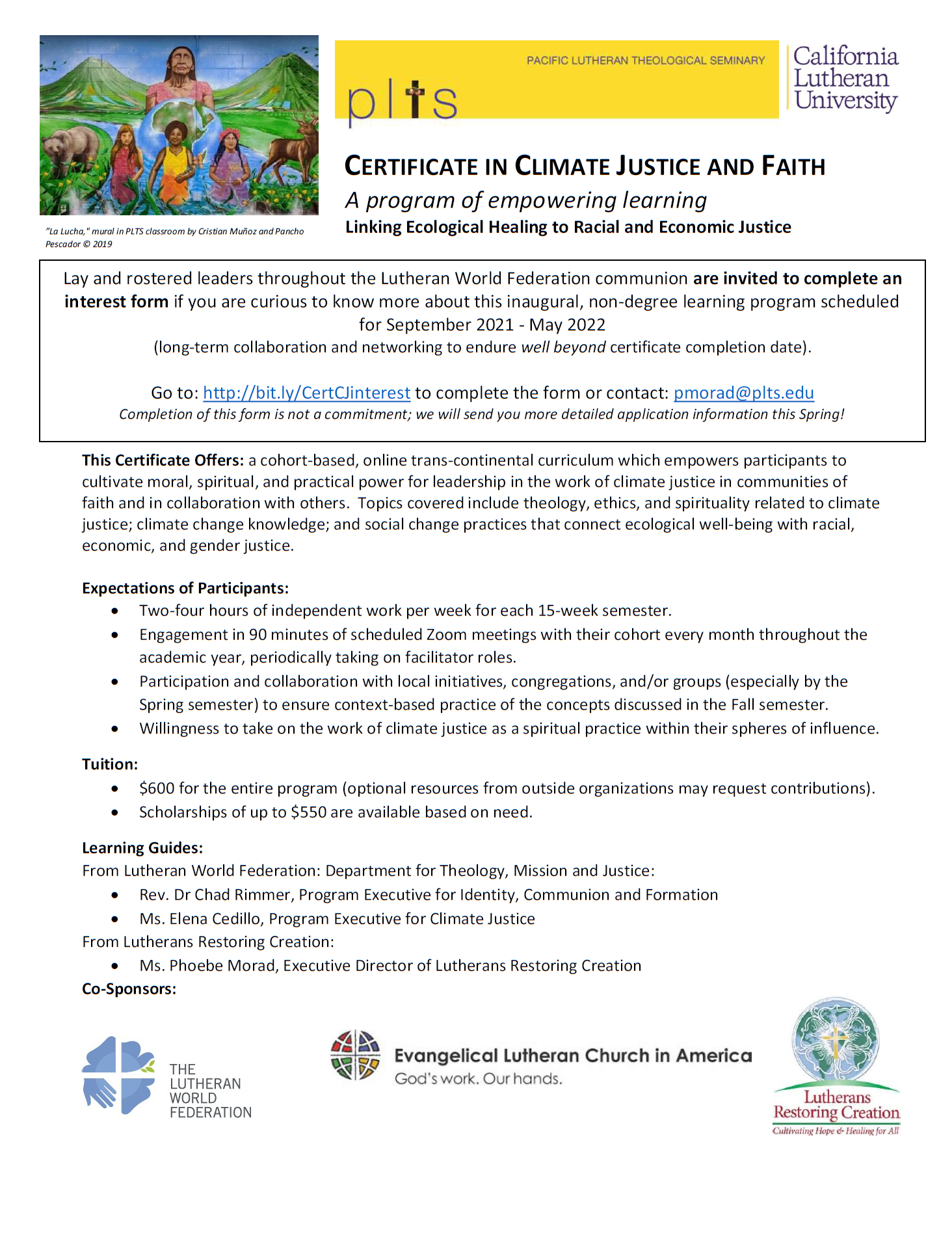
New! Certificate in Climate Justice and Faith


We know that ending hunger will take more than food. Addressing climate change is a critical step in this work. That’s why ELCA World Hunger is excited to share a new opportunity from Pacific Lutheran Theological Seminary’s Center for Climate Justice and Faith. The Center’s work focuses on helping leaders learn about sustainability, caring for creation and working for justice so that all can enjoy the abundance of God’s creation.

This Center’s new Certificate in Climate Justice and Faith offers a cohort-based, online trans-continental curriculum which empowers participants to cultivate moral, spiritual, and practical power for leadership in the work of climate justice in communities of faith and in collaboration with others.  Topics covered include theology, ethics, and spirituality; climate change knowledge; and social change practices that connect ecological well-being with racial, economic, and gender justice.

Lay and rostered leaders throughout the Lutheran World Federation communion and from other faith traditions are invited to complete an interest form if you are curious to know more about this inaugural, non-degree learning program scheduled for September 2021 – May 2022.  Long-term collaboration and networking are expected to endure well beyond certificate completion date.

Applications are now open and will be accepted until June 15, 2021. To apply or to learn more, visit https://www.plts.edu/programs/certificates/certificate-in-climate-justice-and-faith.html.


Share

Lenten Reflection 1: What Will It Take to End Hunger?


A Bigger “We”

“Your Father who sees in secret will reward you”
(Matthew 6:4).


Almost eight years had passed since Marina set foot inside a church building. A car accident when she was in her late 40s had left her homebound with chronic pain and without use of her legs. One of her favorite visits in her home was on Sunday afternoon, when her pastor would come by to give Marina Holy Communion and pray with her. With a half flight of stairs leading up to the church door and more stairs between the foyer and the sanctuary, worshiping with her congregation was not an option.

That’s why Marina was so surprised to get a call from her pastor in July 2020 asking her to be part of a conversation about reopening the building for worship during the COVID-19 pandemic. She was quiet in that first Zoom meeting, listening to the other 10 people share their ideas and concerns. Some were scared, some weren’t, but most were exasperated and at a loss. One man seemed to put it best when he said, “This is all new to us. We’ve just never had to think about what it would mean to not be in church together ever.”

Before anyone could murmur agreement, Marina made her sole contribution to the discussion: “Whaddya mean ‘we’?”

This “we” — or, more specifically, this call to reexamine “we” — is at the core of the gospel message for Ash Wednesday this year and, indeed, of the church’s vision of a just world where all are fed.

Jesus’ teaching in Matthew 6:1-6 and 16-21 is the starting point on the journey through Lent. In this excerpt from the Sermon on the Mount, Jesus admonishes his audience about public, showy displays of spirituality. Rather than take pleasure or pride in giving alms, we are to hide the deed even from ourselves. Rather than pray in public, we are to retire to private rooms. Rather than display the effects of our fasting, Jesus tells us, “put oil on your head and wash your face” (6:17).

In fact, each of Jesus’ directives seems to contradict the very notion of what we have come to call “being a public church.” The sermon of Jesus appears to favor private spirituality over public displays of faith. He seems to suggest that faith is best lived out in the quiet and private spaces of our hearts rather than in public.

However, reading the sermon in this way misses the fact that the Gospel of Matthew is a call to be this very public church, which will “make disciples of all nations” (Matthew 28:19). We might believe that the message of Lent is to practice private piety, yet Jesus focuses here not on the mere practices of faith but on the community of faith. In other words, Jesus is talking not about the what but about the who — who we are and who God is.

Michael Joseph Brown hints at this in his commentary on Matthew in True to Our Native Land: An African American New Testament Commentary (Fortress, 2007), noting the subtle assumptions about privilege in Matthew 6. Jesus’ command to the disciples to pray in their “room” (6:6) assumes they have a private room to retreat to, even though Jesus himself “has nowhere to lay his head” (Matthew 8:20). “Almsgiving,” as Brown writes, “assumes that you have something to give.” Even fasting assumes that one has the means to make choices about when to start and stop their own hunger

Jesus’ message is a challenge to a privileged church to think more carefully about who they are. The problem isn’t that they are doing the wrong things. Giving alms to support neighbors is a good thing. Praying in the synagogue is, well, what is supposed to happen when the community is gathered. They are going through the right motions. But they have forgotten why they are doing them, and they have forgotten who they are. Their practices are no longer about the good of the community or the good of the neighbor but are mere performances, focused entirely on themselves.

Almsgiving, praying, fasting — these are practices meant to remind us of each other. But has being faithful become a matter of making sure we are seen rather than of training our hearts and minds to see each other? Marina’s fellow congregant in the Zoom call was more than willing to help the church with what it needed to do. But as her question revealed, he had forgotten who the church is called to be. His “we” was no more than an “I.”

Yet even when the church forgets, God remembers. In each of the dictates to his followers, Jesus reminds them of the “Father who sees in secret.” He reminds us that God’s concern for us is not measured by our conspicuousness, nor is it limited by our narrow imagination.

Accompanying our neighbors in God’s work of building a just world where all are fed means reimagining who we are and who we are called to be. There are so many stories shared across this church about friends and neighbors addressing hunger and poverty together. But perhaps the significance of faith in God, who “sees in secret,” is best exemplified not by the stories we can tell but by the stories we can’t — stories of God at work “in secret” and in hidden ways. These are the stories we don’t hear, of neighbors whose names can’t be shared.

They include the story of the clinic that cannot be named because unjust laws would put its noncitizen clients at risk. They include the story of women in a shelter whose names must be hidden to keep the women safe from their abusers. They include the story of ministries in conflict zones whose details cannot be shared without exposing workers and guests to violence.

These are the stories that cannot be trumpeted but are nevertheless triumphant examples of the work of God, “who sees in secret.”

Ending hunger means seeing what unjust power tries to keep hidden. It means defining “we” in a way that threatens the principalities and powers — including our own privilege — that make everything about “I.” And it means remembering, when we are isolated or marginalized, that “I” am never excluded from God’s “we.”

Jesus’ call in the Gospel reading reminds us that being the church requires a definition of community that is more expansive, more diverse and, thus, more beautiful than the exclusive vision put forth by
those in power.

Reflection Questions

  1. Think, journal or share about a time when you felt left out or unable to speak because of fear. How does that memory impact your reflection on this reading and devotion?
  2. The members of Marina’s church were unable to see that their ability to climb stairs gave them the privilege to gather together in one space. The members of the ancient church to which Jesus was speaking were unable to see that their ability to give alms, fast and pray in private rooms was a privilege. What are some ways that privilege might affect who feels included in your community?
  3. What does your church community look like? In what ways are all neighbors in your community invited to share their experiences and ideas openly and freely with your congregation?

Prayer

Gracious and loving God, through your Son, Jesus Christ, our Lord, you bring light and life for all the world. Help us to listen, learn and love until your light and life fill every community. Amen.

Share

“We Come to the Hungry Feast”: Hunger Advocacy in Arizona Videos


This Fall, ELCA World Hunger was invited to join leaders from Arizona via Zoom at the first statewide gathering of advocates and friends hosted by Lutheran Advocacy Ministry Arizona (LAMA).

LAMA is the newest State Public Policy Office of the ELCA, in partnership with the Grand Canyon Synod, ELCA World Hunger and Lutheran Social Services of the Southwest. LAMA joins a network of 15 public policy offices operating in 18 states. This network is a critical part of the work of ELCA Advocacy. On a state level, LAMA and the other state public policy offices amplify the voices of Lutherans for fair and equitable policies on housing, education, health care, employment and so much more. Working for just policies is an important way people of faith participate in God’s work of building a just world where all are fed.

John Johnson, program director for domestic policy for the ELCA, highlights the importance of this work to the work God calls this church to pursue:

Our return on investment for advocacy is one of the great untold successes of the ELCA. Our federal and state advocacy leverages BILLIONS of public dollars annually for vulnerable populations at home and abroad. In 2020, with COVID-19 recovery packages in Congress, Lutherans have engaged policy makers to the tune of trillions of dollars.
Below are recordings of the Summit presentations from Ryan P. Cumming, program director of hunger education for ELCA World Hunger, and Angie Rogers, president and CEO of the Arizona Food Bank Network.
Angie Rodgers spoke about the state of hunger in Arizona, the ongoing impacts of the COVID-19 pandemic and the ways Lutherans can make a difference through advocacy.


Ryan Cumming spoke about the importance of advocacy in the work and mission of the church and the difference between responding to hunger and ending it.


Share