Skip to content

ELCA Blogs

December 21, 2025 – What Makes You Afraid?

Note from the Editor:

This week on Faith Lens, we’re revisiting a post from the archive. Originally published several years ago, the article still speaks with quiet strength and hope today. As Advent draws to a close, this reflection offers a grounding reminder at just the right moment: Emmanuel, God is with us. In a season that invites us to name our fears and watch for God’s nearness, this piece remains a faithful word for young people and leaders alike.

One more note: in partnership with ELCA Children’s Ministry and ELCA Youth Ministry, the ELCA Youth Gathering is launching a new quarterly newsletter, Faith Foundations, created especially for volunteer and paid youth ministry leaders. Each issue will include practical resources, ministry insights, and tools you can use right away in your context. Sign up now and get the first issue sent right to your inbox next spring.

Warm-up Question

How many times per week, would you estimate, that you make a choice of what to do or what not to do based on fear?

What Makes You Afraid?

shutterstock_131290649Fear can be a highly powerful motivator. We can be afraid of consequences (from parents, teachers, coaches, school administrators) or we can be afraid of what happened last time we did that (a small child touching a hot stove). Some of us have phobias – fear of the dark, of spiders, of snakes (to name a few). Did you know that there is even a name for the fear of Santa Claus? Not surprisingly, it’s Clausophobia.

Sometimes fear motivates us in ways we’d rather not talk about. Other times we avoid doing something we’d otherwise do for fear of what our peers might think or say. Or we avoid trying something new for fear of failure.

For some people, these fears can be crippling. PTSD (Post-traumatic stress disorder) and some phobias keep people from acting because of the strong painful memories and fears often associated with past experiences. Researchers in the United Kingdom and in Japan are working on techniques that might allow people to “re-wire” their brains and overcome those fear-filled memories.

Even if our fears are not extremely strong and limiting, fear affects all of us to some degree and can keep us from engaging in life to the fullness that’s intended for us.

Discussion Questions

  • What kinds of fears do you have? What are you afraid of? Can you isolate why? Was there a specific experience that made you afraid?
  • What are things you wish you could do but are afraid to try?

Read Text Aloud

Matthew 1:18-25

For lectionary humor and insight, check the weekly comic Agnus Day.

Gospel Reflection

Joseph was afraid. He was afraid to take Mary as his wife, because she was having a baby that wasn’t his. He was afraid of what it would mean for him; he was afraid of what others might think. But he also was afraid to publicly accuse her of infidelity, so he wanted to send her away quietly. But the angel knew what was going on and told him not to be afraid.

Not only did the angel command Joseph not to be afraid but he told Joseph to name the child something that could combat fear. Emmanuel means “God is with us.” God is with us. We are not alone. Perhaps knowing this and trusting this can help to combat the fears that are inside all of us.

Discussion Questions

  • When do you need a reminder that God is with you?
  • Who do you know who might need a reminder that God is with them?

Activity Suggestions

Make an Emmanuel rock. This can be as simple as taking a small stone and painting a cross (or other symbol) on it. Carry the Emmanuel rock in your pocket. It can remind you that Emmanuel – God is with you. Make tw0 Emmanuel rocks – keep one for yourself and give one away.

Closing Prayer

Good and gracious God, come into our world as Emmanuel. Come into our world and banish fear. Come into our world and banish darkness. Amen.

Written by Seth Moland-Kovash and originally posted on December 18, 2016.

Share

November 30, 2025 – Jesus Watches so You Can Rest

Opening Activity Part 1

Gather some paper, preferably blue in color to match the Season of Advent. On one side of the paper, invite attendees to write down one or more things that are currently wearing them down. This is to be done privately by each individual because these have the potential to be personal. Some examples of current hardships could be:

  • family divisions at the holiday meals
  • higher prices of necessary goods and lower wages
  • friendships that have soured
  • or simply having had to wake up early for church services

Text

Read: Matthew 24:36-44

Jesus Watches so You Can Rest

This gospel lesson contains a sense of urgency that readily fits into modern times. There are single parents who work multiple part-time jobs to make ends meet, barely having any time to rest. School-aged children are swamped with activities that will look good on university applications, but do not allow space for the joy of non-adulthood.. All ages, occupations, backgrounds, etc. are impacted by our go-go-go culture. It could be then that we find ourselves nodding our tired heads, blinking back much-needed sleep, as Jesus’ urgent words resound from the pulpit:

“Keep awake, therefore, for you do not know on what day your Lord is coming.” (Matt. 24:42)

However, I invite us to consider the Greek word Γρηγορεῖτε (grégoreó, pronounced gray-gor-eh’-o) which is translated “keep awake.” Yet, in English, it could also be faithfully expressed as Jesus saying, “Be on the lookout for …” or even “You should expect …” And so, let us wonder what it means to be expectant, rather than awake.

In my estimation, Jesus is inviting his followers to expect a hopeful tomorrow because, he assures us, it will come! In fact, because of the Incarnation, it already has come near. There is nothing that we can do, no labor we can accomplish, and no tiredness that can usher in what God has already promised. The late Roman Catholic Bishop Ken Untener beautifully penned this Christian truth when he affirmed that, “It helps, now and then, to step back and take a long view. The Kingdom is not only beyond our efforts; it is beyond our vision … We are prophets of a future not our own.”

As the busy holiday season envelopes us and our culture asks us to do more than is humanly possible, I encourage you to step back and consider what God has already done. Jesus has already been born, and the Kingdom of God has already come near. The promise of Christ is that one day, of which we do not know the date, God will set all things right. Let us trust in Jesus who faithfully keeps watch so that we can rest in God’s promises. And, if we can rest in these promises, what good things can we certainly expect?

Opening Activity Part 2

Focus on how God has already done everything necessary for this world in having sent Jesus to be born. This means that our role is to step back, consider what God has already done, and rest in the promises which God gives to all. Instead of urgency lest we miss it, Jesus is inviting us to expect goodness that will surely come one day.

What does this look like for Jesus followers today? Invite all the attendees to turn their pieces of paper over and write how Jesus is inviting them to let God keep watch? What goodness ought you expect? Some examples of this could be:

  • Those gathered at holiday meals can pray the Lord’s Prayer together despite strong disagreements.
  • The congregation can begin a program to address food/rent insecurity for everyone.
  • One person could send a holiday card to an estranged friend asking for another opportunity.
  • Those who are sleepy can have a nap after church services.

Resting in Christ’s promises is also very personal, so participants may want to keep this part of the exercise private as well. In all of this, we do not accomplish what God has already done, for God has redeemed the world through Jesus. But we do experience glimpses of hope which make us expectant for the one, unknown day that God will make all things new, all things whole, and set everything right.

Closing Activity

If your space allows for it to be done safely, have adults burn their own pieces of paper and help minors burn theirs in the flame of the first Advent candle. If your space does not allow for this, have a responsible leader collect all the pieces of paper and make sure to tell everyone in attendance that they will be burned using the flame of the first Advent candle.

This can be done in an outdoors firepit, a fireplace, etc. after the gathering. If this is done outside of the gathering, it is important that the individual(s) tasked with the burning maintain confidentiality and not read what people have written. It is also important that the flame of the first Advent candle is somehow used in the burning.

In whatever way you choose to complete the closing activity, remind everyone that Jesus invites them to rest in God’s promises and expect something good to come.

Ending Prayer

You may all choose to pray together the late Roman Catholic Bishop Ken Untener’s prayer. It is a long prayer so you can choose to pray only a section, have it printed so multiple voices can read, or simply make a copy for everyone to take home.

The Romero Prayer

“It helps, now and then, to step back and take a long view. The Kingdom is not only beyond our efforts, it is beyond our vision.

We accomplish in our lifetime only a tiny fraction of the magnificent enterprise that is God’s work. Nothing we do is complete, which is a way of saying that the kingdom always lies beyond us. No sermon or statement says all that could be said. No prayer fully expresses our faith. No confession brings perfection. No pastoral visit brings wholeness. No program accomplishes the church’s mission. No set of goals and objectives includes everything.

This is what we are about. We plant seeds that one day will grow. We water seeds already planted, knowing that they hold future promise. We lay foundations that will need further development. We provide yeast that produces far beyond our capabilities.

We cannot do everything. There is liberation in realizing that. This enables us to do something, and to do it very well. It may be incomplete, but it is a beginning, a step along the way, an opportunity for God’s grace to enter and do the rest.

We may never see the end results, but that is the difference between the Master Builder and the worker. We are workers, not master builders, ministers, not messiahs.

We are prophets of a future not our own.”

Bio

David Larson-Martínez is a consecrated deacon of the Lutheran Diaconal Association and an ordained pastor serving at Holy Trinity Lutheran Church in Minneapolis, MN. A graduate of Valparaiso University and Luther Seminary, he grew up in Cuernavaca, Mexico and now happily calls the Twin Cities home. David treasures his large cross-border family—his mom, five siblings, and a growing crew of nieces and nephews who live in both Mexico and the United States.

Share

November 16, 2025 – My Greatest Fear… Realized

Prepare

This lesson from Luke comes just as Jesus turns toward the cross. The dark times he alludes to are not in some far-off future. His arrest and crucifixion are only days away.

These verses are not a springboard to the future, a map to God’s plan for this world, nor a dire warning to God’s people of what lies ahead. They point not to some future time but to our present fears, addressing the deepest parts of our doubt, grief, anger, guilt, and pain, whether we believe them deserved or not, whether the source lies within us, or with someone who has hurt us deeply.

Jesus’ words, and more importantly, Jesus’ promise, are about today, this day.

Opening Exercise:

What is it you worry or wonder about the most? Your deepest fear, the recurring doubt, or insecurity you hold?

Don’t share this with the group but be mindful of it as you listen to Jesus speak to his disciples about dark times ahead. He gives them only one instruction, listen for it.

Text Read Aloud

Luke 21:5-19

My Greatest Fear… Realized

The passage begins with the disciples admiring the beauty of the Jerusalem temple, recently renovated by Herod the Great. It was a structure many saw as a testimony to God’s power and providence, and, as public works often are, a reminder of Herod’s own power and ambition. Things quickly turn grim as Jesus speaks of the temple’s destruction and dark times ahead for not only the world, but for those who follow Jesus’ teaching. He tells them they will endure great suffering.

The disciples are quick to ask when this will happen and what signs to watch for. However, the signs Jesus speaks of are vague and imprecise enough to fit all times throughout history. There has never been a time when the world was free of war and insurrection. The darker truth is that there is never time when those who follow Jesus have lived problem free lives.

Jesus never hid the high cost of discipleship. Persecution need not come from those lording over us. Fear, doubt, and insecurity relentlessly pursue us in life. As to suffering and betrayal, those too, wait in ambush throughout our life’s journey. Not in the abstract but in our families, our relationships, our lives.

Following these grim and dire words, Jesus surprises once again with a prescription and a promise. The odd prescription, “…make up your minds not to prepare…” is more of a non-prescription. In essence, “Don’t worry about it.” And the promise is Jesus himself, “…I will give you words, I will give you wisdom… not a hair of your head will perish.”

Reflective Questions

  • What kinds of hardship or warning does Jesus say his followers will face, and what does he promise them in return?
  • Why do you think Jesus tells his followers to “make up your minds not to prepare your defense”? What do you think that means?
  • Jesus gives what sounds like an impossible task, not to worry when our hopes and dreams lie shattered and crushed. Who comes to mind as someone who has exhibited faith, trust, or hope in the face of great adversity?
  • What person or place can you turn to today with the troubled parts of your life?

Closing Activity

Two Options:

  1. Think back to when you were very young, before school or in early childhood. What was something you were afraid of then that turned out not to be true or not worth fearing? Share that story with someone else or the group.

Then, reflect together:

    • What helped you realize you didn’t have to be afraid?
    • How might that experience help you trust God now when fears or worries rise up?
  1. Give each person a small stone (to represent the temple’s destruction). Ask them to hold it while reflecting silently on something in life that has felt like it’s “falling down” or uncertain. Then, read aloud Jesus’ promise: “Not a hair of your head will perish.”
    Invite participants to set down their stone in front of a cross or candle as a symbol of placing their fear and trust in Christ.

Final Prayer

God,

Help us trust your promises when they don’t feel real in our lives. Thank you for those people in our lives whose wisdom and faith strengthens ours. Open our ears and our hearts so we can reach out with words and actions encouraging others when they feel helpless and hopeless. Amen

Bio

Pastor Bob Chell’s Dad took him to watch fire fighters train on an abandoned house when he was very young. He thought—and worried—for years that fire fighters drove around in their trucks looking for houses that were in disrepair burn down. Now retired, he pastored congregations, campus ministries and a prison congregation.

Share

October 19, 2025 – Songs for the Climb

Prepare

This well-known psalm is a song about the pilgrimage to Jerusalem the Israelites would have taken multiple times per year. I would caution leaders (including myself) against assuming that our youth/young adults know this psalm. Depending on the rhythms and practices of your congregation, they might. But, in my experience with youth/young adults, Psalm 121 is more of a “that sounds familiar” kind of recognition, not something they are able to recite all the way through. Nevertheless, this psalm is intended to carry one through a long and difficult journey, making it very helpful for any of us to know as we navigate the world.

The pilgrimage journey of returning to a place where you know you will meet God is reflected in the structure of the psalm. That makes reciting or singing the psalm itself a pilgrimage, returning us to what we know about who God is and where God shows up in the world (with those in sticky, terrifying, impossible situations, and also with each of us).

This psalm names the fear of the psalmist’s current situation: the journey they are in the middle of is scary and difficult. The hills in question are likely both a nod to the landscape along the journey of their pilgrimage and also a metaphor for the large challenges ahead of them. The middle section of this psalm is both a statement of trust in God and a request. “God will not let your foot be moved” is a statement of trust in God’s power and care for those singing the psalm. It is also a plea to God that God would continue to provide stability and safety for those on this treacherous journey.

Opening Exercise

Is there a song or an artist that you listen to when you’re feeling anxious or overwhelmed? If so, what about that song/artist comforts you? If not, what do you do to comfort yourself when life feels overwhelming?

Read Aloud

  • Psalm 121

    A familiar song for the soul’s journey—lifting our eyes, finding help, and trusting the rhythm of God’s care along the way.

Songs for the Climb

One of my favorite indie artists, Marielle Kraft, has a song about navigating difficulties in life. This line gets stuck in my head over and over again:

  • “Future pebbles are present boulders, it’s a moment, not forever, we’ll make it through together.”

Marielle’s song is about a romance in her life and the courage she finds to overcome difficulty because she is in a loving relationship.

Originally, the Psalms were sung as songs, and sometimes still are today. This makes them great at getting stuck in our heads whether we like it or not. While Psalm 121 focuses on our relationships with God, the message that whatever challenges we are currently facing will become much smaller in the future with the perspective of having made it through a difficult time, stands. Psalm 121 starts with an acknowledgement that there are “hills”, or difficulties, in life that face us head on. The Psalm continues then to point us towards God’s power when we feel weak or unable to accomplish something on our own. Verses 3-8 all repeat the same idea: God is powerful enough that we don’t need to worry about whatever scares us.

Verse 8 says God will keep us in our going out and coming in, declaring God present in each aspect of our day. Do you go to school, work, or a friend’s house? God is there, blessing those actions.

Of course, we all know that danger doesn’t stop at our doors. Plenty of hurt can happen in our homes through broken relationships and the power of the internet. It can feel as though we aren’t safe anywhere.

The psalm tells us that God will keep us from all evil. Oftentimes, we can see how we are protected from hurt or pain or discrimination or other forms of evil in the world. And sometimes the world looks evil, and we can have a difficult time seeing God. This psalm is both a declaration of God’s goodness and a prayer. The psalmist is trusting that God will be with them and comfort them no matter what happens, AND they are asking God to protect them from evil in the future. This psalm shares the same hope we find in Christ, that God will not abandon us even on our worst day. God keeping us from evil is God sitting with us on our darkest day and by being present with us, not allowing the darkness or difficulty of life to overcome us.

It is because we know God is with us whether our life is perfect or a total mess that we can declare “My help comes from the Lord.” We pray that truth, like the song or artist we turn to, is what gets stuck in our heads next time life feels overwhelming.

Reflection Questions

  • In Psalm 121, what does the author need God to protect them from?
  • Why do you think the Israelites sang their prayers in this way?
  • Do we still sing our faith/prayers today? How might it be helpful to do so?
  • What might change about how we face overwhelming/difficult situations if we always remembered and trusted that God was with us?

Closing Activity

  • Have folks write out their own Psalm 121, following the structure of naming something overwhelming and listing ways they need God to protect them.
  • If your congregation has a song or two that the youth enjoy singing, sing those songs together! Remind them of God’s presence with music and send them into their weeks with that truth stuck in their heads. Some suggestions:
    • “I Lift my Eyes” by Ellie Holcomb,
    • The Doxology
    • “Waymaker” by Leeland

Final Prayer

Prayer of Good Courage:
O God, you have called your servants
to ventures of which we cannot see the ending,
by paths as yet untrodden, through perils unknown.
Give us faith to go out with good courage,
not knowing where we go,
but only that your hand is leading us
and your love supporting us,
through Jesus Christ our Lord. Amen.

Bio of the Author

Lindsay Batesmith is the pastor of Rejoice Lutheran Church in Erie, CO. She is consistently in awe of the power of vulnerability to connect us to each other and invite the Holy Spirit to transform lives. When not at Church or her favorite coffee shop, Lindsay is usually playing with her dog, Echo, or watching the Great British Bake Off with her wife, Tillie.

Share

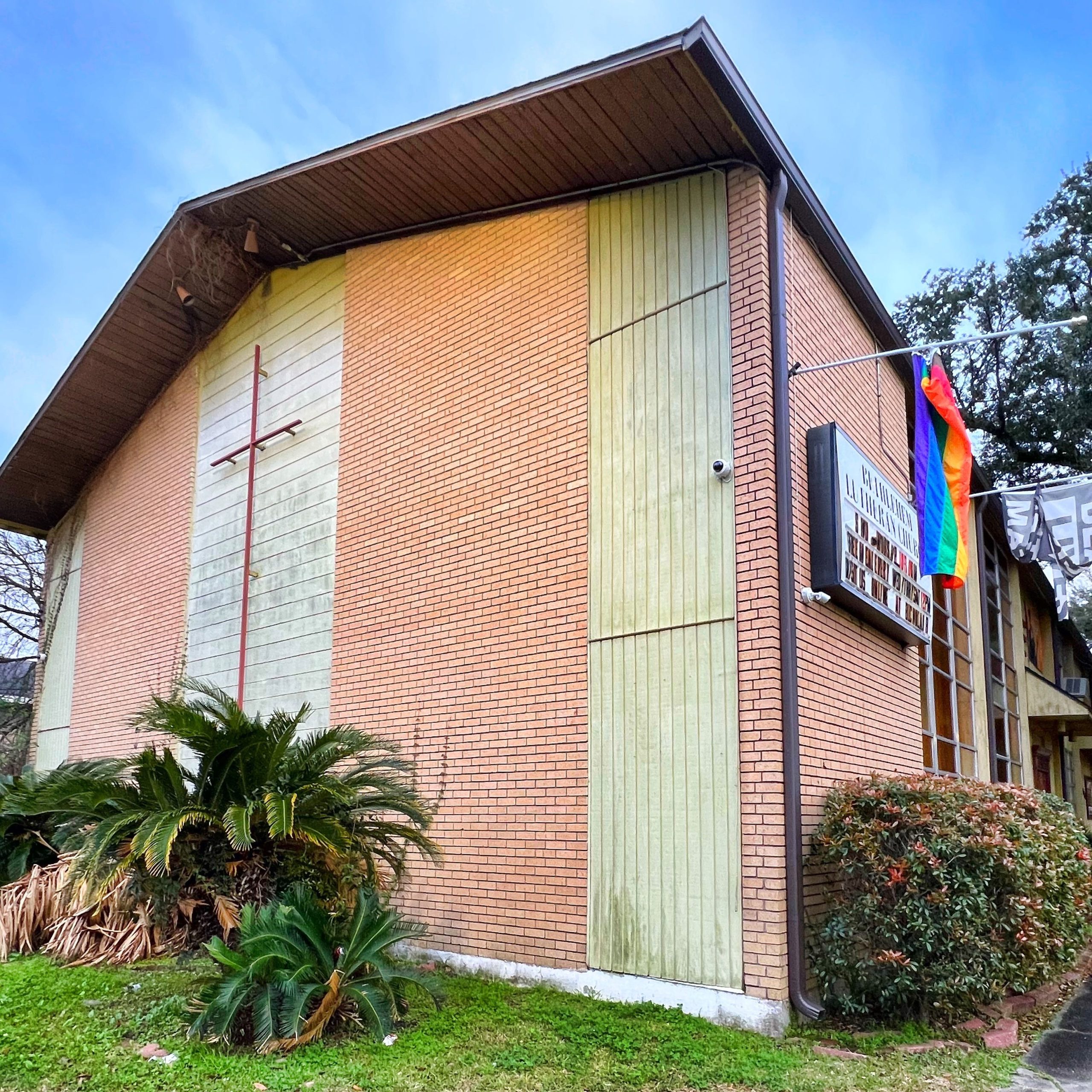
A Story of God’s Resurrection Hope | Bethlehem Lutheran Church, New Orleans

We are Easter people who believe in the resurrection hope of Jesus. As followers of Jesus, we have hope beyond the grave. We know that death is not the end. In Christ’s death, there is life, and we have hope in that new life. In this world there are places we see glimpses of this resurrection hope of Jesus.

In New Orleans, there is a Lutheran congregation shining this resurrection hope of Jesus in their community. Founded in 1888, Bethlehem is a remarkable church with a rich history of service that goes deep into the community. Bethlehem is a beacon of light on a hill in a weary world.

In Talks at the Desk: Our Black Church, Ep. 3 that premiered in February 2022, Pr. Ben Groth describes Bethlehem by saying, “We’re not one of the big fancy churches on a big fancy avenue. You know, we’re a small, scrappy church trying to do a lot with, with not very much in resources.” That being said, Bethlehem is absolutely a transformational church to its community. Bethlehem is a church that doesn’t just talk-the-talk, they live their faith out loud and have showed up for their community in some pretty amazing ways. This faith community models what it looks like to trust in the Holy Spirit, follow Jesus, and be in partnership with God. 

It’s incredible how the simple question of “what if?” can turn a church fish-fry into a story of Jesus feeding the 5,000.  This small “scrappy church” has begun a community meal that is currently serving about 600 free, no-questions-asked, hot meals four times each week. In the video, Bethlehem’s Council vice president, Brandon Blake, says,

“We just don’t want to be the brick church on the corner of Dryades and Washington. We want to be, a lighthouse, a beacon, you know, somewhere where you can go for assistance somewhere where someone can help you in some way.”

In this episode, you can see how the Spirit is pouring out through Bethlehem as they not only feed the community but have also taken a leap of faith and are now building affordable homes. What’s miraculous about this story is that they purchased the land and waited patiently and with hope in the Spirit, discerning how God intended for it to be used.

Nicolette Peñaranda, Program Director for ELCA African Descent Ministries and Interactive Learning Creative Expressions Manager for the 2024 Gathering, shares that “Bethlehem is a special place that is doing something that none else has done in our tradition.” This is a church that is committed to loving one’s neighbor. Take note, this small congregation that is understaffed and under-paid is finding inspiring ways of pouring their heart, soul, and funds into the community in ways that do not directly benefit them. This is a church that is not focused inward, but rather on the ways God is calling them to abundantly love their surrounding community.

In the video, Blake sums it up like this: 

“What is better than to serve others? What, shows your true heart more than you being there for someone else? Not just yourself, not just, you know, the person next to you or your neighbor, but being there for as many people as you can. And in many ways is, you know, it always doesn’t translate to giving out meals. It might be giving someone a ride or just go and drop off a meal to someone, or, you know, just trying to be involved because, you know, we’re not islands, we’re not alone in this life. You know, we may come in and go out by ourselves, but there’s a lot of contact and, you know, involvement in the middle. So you know, you gotta be open to that.”

Thank you, Bethlehem, for being a beacon of light and hope in the city of New Orleans.

Originally premiered by the ELCA in a four-part series of  “Talks at the Desk” during Black History Month on February 17, 2022. 

Learn more about Bethlehem Lutheran Church and the goodness they are up to on their website and follow Bethlehem on Facebook.

Written by: Bobbi Cyr (she/her)
Share

Holy Week: Feasting, Fasting and Living in Tension

Blessings as we enter holy week! Many of you have journeyed with ELCA World Hunger through Lent as we have reflected on the Psalms and what meaning that vast collection of hymns, poems, laments and prayers might have for hunger ministry today. As the season comes to a close, thank you for being part of the 40 Days of Giving!

Lent is a common time for congregations to focus on hunger and social ministry. Indeed, almsgiving is one of the traditional “three pillars” of Lent (the other two being prayer and fasting) and is still found as one of the disciplines of Lent observed by Lutherans today. While many of us think of fasting as the core practice of Lent, the history of the church reminds us that fasting and giving are two sides of the same coin. The witness of Isaiah goes even further, describing authentic fasting as intimately tied to love and justice for the neighbor:

Is this not the fast I choose, to loose the bonds of injustice, to undo the thongs of the yoke, to let the oppressed go free, and to break every yoke? (Is. 58:6)

Scripture and tradition make a good case for focusing on hunger ministry during Lent. But this upcoming weekend may be an even more important time to reinvigorate our efforts. As pointed as Isaiah’s message about fasting may be, for Lutherans, it is the feast – and not just the fast – that calls to us.

Sharing the Feast

Say what you will about Martin Luther (no, seriously, say whatever you want – he deserves heaps of both praise and blame), but he certainly knew how to craft a pithy phrase or two. One of his most famous couplets comes from his 1520 “Treatise on Christian Liberty”:

A Christian is a perfectly free lord of all, subject to none.

A Christian is a perfectly dutiful servant of all, subject to all.

As paradoxical as it might seem, what Luther is getting at is that we don’t experience God as humanity’s captor, binding us to rules and obligations, but as our liberator. That’s not to say that there aren’t obligations and demands – the Law is still the Law and still God-given. But within the Gospel, God reveals Godself to be the one who frees us from bondage to sin, death and to the notion that we can save ourselves, hence “perfectly free.”

This is a dramatic shift in Christian ethics. Why do we do “good works”? Certainly, for Lutherans, we know that those works won’t save us. No amount of fasting or almsgiving will merit a reward (or even make us good people.) And it’s not merely because the Law, with its rules for righteous living, is so compelling (we can’t fully follow it anyway.) Instead, what motivates Lutheran ethics is the experience of being loved and set free from the burden of trying – and failing – to overcome our own sin. The foundation of loving a neighbor, of striving for justice and of working to end hunger is nothing more or less than gratitude.

To play a bit with Dietrich Bonhoeffer’s popular phrase “cheap grace,” this isn’t “cheap thanks.” It’s not the kind of gratitude for all the great things we have or, worse, the gratefulness that “at least we aren’t like them.” It’s deeper than that. What moves us to choose for ourselves being “subject to all” is the realization that our entire lives, our eternal salvation, is an undeserved gift. We don’t have to worry about our own salvation, or feeling as if we aren’t enough, or fearing that the world around us will corrupt our souls or separate us from God. Instead, we can freely and boldly love and serve one another. Social ministry is not a legalistic requirement but a response to an invitation to be part of what God is doing in the world: “Come and see!”

Easter, then, isn’t the celebratory end to the sacrifice of fasting and almsgiving in Lent but the very foundation of a new life lived in gift and promise, the free gift to be bold in our love of one another and the assured promise that in so doing, we are bearing witness to God’s building of a just world where all are fed. The feast of Easter nourishes us for the work ahead.

Surveying the Cross

We can’t get there too quickly, though. All too often, our Holy Week moves from Good Friday to Easter Sunday without giving us time to hang in the liminal space of Holy Saturday. Swiss theologian Hans Urs von Balthasar says that the church needs to avoid this temptation of moving too quickly from Good Friday to Easter Sunday. We have to be in that Holy Saturday moment with the disciples, von Balthasar writes, even just for a bit. For those disciples, that first day after Friday, Jesus is dead. The one they’d given up their lives to follow is now laying in a tomb. A quote often attributed to Luther describes the moment: “God’s very self lay dead in a grave.” For the disciples, there is no Easter Sunday. The messiah is dead, and hope seems lost.

Living after the resurrection, it’s difficult to fully understand that kind of grief, but we must because in that grief is honesty. For all the joy and hope and feasting of Easter, we live in a world where the number of people facing hunger is growing, not declining, where income inequality continues to rise, and where justice and opportunity seem further and further away, especially for communities whose strides toward progress are often stymied by violence, marginalization and oppression.

It’s a grief not only for our world, though, but also for our own shortcomings. As the church, the death of Christ reminds us of our own complicity in human suffering. Sure, the church has done some wonderful things, but the cross confronts us with the ways we have fallen short, the ways we have contributed to rather than alleviated injustice, the communities harmed by the church’s good intentions, and the people pushed aside, sometimes violently, as we have pursued what we call “mission.”

Living and Serving in Holy Week Tension

Living in Holy Saturday means living into that grief and honesty about ourselves and our world. Where Easter inspires joy in God’s promise, Holy Saturday fills us with a sacred longing for that same promise. In Easter, we celebrate it. In Holy Saturday, we yearn for it.

That movement between celebration and yearning, between joy and grief is the tension that grounds our work together as ELCA World Hunger and as a church accompanying neighbors in need. We are caught between the cross and the empty tomb, embodying the grief and longing of a long Holy Saturday before we see the promise fulfilled. And we should be. We celebrate as God works through communities near and far to create new opportunities for abundant life through neighbors joining together with determination and hope. And we lament for a world where the crosses of injustice, violence, marginalization, inequity, racism, heterosexism, sexism, ableism, ethnocentrism, exploitation and more continue to dot the landscape.

This is where the ministry of the church in a hungry world begins. Not in the self-sacrifice of Lent but in in grief and joy, in lament and hope, in yearning and thanksgiving, in the tension between Holy Saturday and Easter Sunday. It’s a costly faith that we find there, with no easy answers – but with the assurance that even then, God is still at work.

What might that mean for our day-to-day responses to hunger? What might it look like for hunger ministry to be grounded in both hope and lament? As we emerge into the season of Easter, I pray that that those questions can stay with us, that we can carry a bit of both Easter Sunday and Holy Saturday with us into the rest of the year.

Our journey through Lent doesn’t end at the cross or even the empty tomb but continues in the long walk with one another toward the future that is both promised and deeply, deeply needed.


Ryan P. Cumming, Ph.D., is the interim director for education and networks for the Building Resilient Communities team.

Share

Advent 2020- Week Three Study Guide


This advent reflection is part of ELCA World Hunger’s 2020 Advent Study. You can download the full study here. You can also download the corresponding advent calendar here

Advent Week Three

“Comfort”

Read

Isaiah 61:1-4, 8-11
Psalm 126
I Thessalonians 5:16-24
John 1:6-8, 19-28

Study

Volunteering has always been the lifeblood of Cacilda Rodrigues Barcelos. Born in São Borja, Brazil, she moved at age 13 with her family to the metropolitan region of Porto Alegre. Alone, her mother raised 11 daughters and sons, until her 50th birthday, when she died. Cacilda was 22 at the time, and the community helped to support her. “People taught me how to do what I do, because I was welcomed by them,” she says.

Now 63, Cacilda has dedicated years to giving back through volunteering. Early on, she worked with young boys in the community to make and sell food at fairs to help pay for uniforms and tournaments for their soccer team. Today, as a member of the management board of the Fair Trade and Solidarity Network (a project of the diakonia foundation of the Evangelical Lutheran Church of Brazil), she helps train other women in entrepreneurship and helps plan workshops and fairs where they sell their goods. She also volunteers in the Peace Service and teaches women to prevent and overcome violence.

As much as Cacilda has changed her community, the biggest change has been in her personal life. “I learned to put myself in other people’s shoes and respect each other. I was very angry, as a way to defend myself, and it was in these meetings and meetings [with other women from the Fair Trade and Solidarity Network] that I grew and improved,” she says. “That’s why I say I’m the one who gains the most.”

As common — and often justified — as anger is, it is one of those emotions that we struggle to deal with in the church, at times. We might find it difficult to place raw, tumultuous emotions within the life of the people of God. Perhaps it is one of the reasons that this season we will sing songs about the “holy infant so tender and mild” (“Silent Night”) or “that mother mild” (“Once in Royal David’s City”) while we still await the writing of an ode to Jesus’ overturning of tables in the temple. Volatile emotions, particularly in the seasons of Advent and Christmas, feel so out of place. We aren’t quite sure what to do with them.

That has made 2020 particularly hard to navigate. This year, we have lived with the grief of the hundreds of thousands of lives lost to the COVID-19 pandemic. We have mourned isolation from one another and the loss of that most basic human need of touch, even as we understood the risk that accompanied handshakes and hugs. We grieved together as loved ones and neighbors died alone in hospitals or nursing homes. And when we couldn’t gather together for funerals, we lost a key ritual for processing our grief as a community.

We grieved the loss of livelihoods and the closure of family businesses that had been part of our communities for generations. We feared the long-term consequences for our communities as jobs were lost and more and more people around the world went hungry.

And we were angered together by the deadly injustice of racism and the persistent inequalities that exacerbated the pandemic in many communities. Demonstrations filled streets in cities large and small as a collective voice of rage was raised against a racist justice system that continues to disproportionately permit and even sanction extrajudicial killings of people of color.

Certainly, our hope rests in that just peace (shalom) that “surpasses all human understanding,” which will “wipe away every tear from our eyes” and bring such equity and harmony that the lion will lie down with the lamb and the child will play with the viper and not be harmed. But there are times when it is difficult to see this promise through the lens of overwhelming grief and righteous anger. And there are times when grief and anger are what we need to move us toward justice, which is the form of the love of neighbor takes in society. For many of us, 2020 was one of those times.

The promise of Advent is not merely the promise of a future when all shall be made well, when all grief and anger shall cease and when the weight of heavy emotions shall be lifted from our shoulders. The promise of Advent — or, perhaps, the comfort of Advent — is that, amid our grief and anger, God is present, walking with us, consoling us, inspiring us and prodding us to walk together toward the future
where justice and peace will kiss (Psalm 85:10).

The future day promised by Isaiah in this week’s reading is a promise not to those who are comfortable but to those who are afflicted. In “the year of the Lord’s favor,” God will “provide for those who mourn in Zion — to give them a garland instead of ashes, the oil of gladness instead of mourning” (Isaiah 61:2-3). It is a promise that those whose burdens have left them with a “faint spirit” will be given the strength of “oaks” and that God will “cause righteousness and praise to spring up” like the first plants of spring (61:11). It is a promise that God, who “loves justice,” (61:8) will establish the same — and an invitation for us to be part of this.

Perhaps that is the reassurance of the Scripture readings for this week. The grief and anger that have marked so much of this year — and that mark so much of every year for many of us living in vulnerability to disease, injustice, hunger and violence — is where God meets us. We need not gather the strength to move on nor ignore the depth of our pain in order to find God. God finds us in these depths.

Cacilda, working tirelessly with neighbors in Brazil, was able to let go of her anger and felt herself changed by the experience. But God did not wait for that moment to work transformation and renewal through her. Indeed, it may be through this very tumult that God moves us toward greater actions of justice. Christ did not wait for a comfortable bed but was born in the sharp, chafing, ill-fitting manger, amid the noise of the animals and the loneliness of the stable. We need not wait to be comfortable, for our grief to resolve or our anger to subside, in order to draw close to God.

God has been there all along.

Ask

  1. What caused you to mourn or angered you this year?
  2. How does God meet you amid your grief and anger?
  3. How can the transformation of our grief or anger help spur us to
    deeper acts in service of one another or in service of God?
  4. What would a just peace (shalom) look like in your community?
    In the United States?

Pray

Comforting and empowering God, you meet us amid our pain and ease the load of our burdens. Be near us in our grief and anger, comfort us as we mourn and move our will toward acts of justice for one another. Grant the world just peace this season, that we may find rest and hope in you. In your holy name, we pray. Amen.


Share

Advent Study Series: Beginning at the End


Advent is a season of hope and expectation. It is a season in which we “prepare the way of the Lord” (Mark 1:3). Advent candles, wreaths and calendars are joined with as-yet unfinished nativity scenes to mark our preparations for the birth of Jesus Christ. This year, ELCA World Hunger’s Advent Study celebrates this season with reflections focused on the preparation of the people of God for the work of the new year – the work of feeding, clothing, accompanying and advocating with our neighbors for a just world in which all are fed.

The four sessions of this Advent Study and the accompanying Advent calendar are based on the Scripture readings for each week of Advent. Each week includes a meditation on the theme, reflection questions, a prayer and hymn suggestions.

May you, your family and your community be blessed this season to see the important role the people of God are called to play in God’s transformation of the world – as individuals, as families and as the church together.


We begin at the end, and we will end at the beginning. What an odd way to go through Advent! We enter this season of expectation of Jesus’ birth and the advent of his ministry, only to start by hearing the words of Jesus describing the end of days. In a few weeks, we will celebrate the beginning of Jesus’ incarnate life among us.

We begin at the end, and we will end at the beginning.

The heavy thumb of Roman rule, high taxes and widespread vulnerability to poverty were all part of everyday life in first century Palestine. The people among whom Jesus would be born were eager for the Messiah who would deliver them. And there was no shortage of “false messiahs” (Mark 13:22) claiming to offer salvation. Some promised military victory over the Romans. Others claimed gifts of magical power and prophesied re-taking the temple.

And yet, here, in the Gospel of Mark, the true Messiah comes offering a very different story. The people of God will not ride triumphantly into Jerusalem – they will “flee to the mountains” (13:14). They will not re-take Jerusalem and its temple – “all will be thrown down” (13:2b).

But “after that suffering” (13:24)…

In the end…

Of all the Gospels, Mark is perhaps the most honest about suffering. Facing persecution at the hands of Rome, early Christians needed a message that was honest about suffering. More than that, they needed to know that God was honest about their suffering. In Mark, Jesus does not hold back in naming that suffering. The Messiah is born into suffering. The people will face suffering. He himself will suffer.

This wasn’t a newsflash to first century Jews any more than it is to the millions of people today for whom suffering is a mournful part of life – those who know the pangs of food insecurity, those who long for clean water, those who grieve the loss of their homes or their jobs. The idea that suffering is a part of life is sadly nothing new to so many of us. But Jesus makes clear two things that transform how we understand suffering. First, God knows our suffering. And, second – God rejects it.

The “great buildings” (13:2) in Jerusalem, which occasioned the beginning of Jesus’ long speech in Mark 13, were not merely beautiful examples of architecture. They were symbols of the powers and principalities that maintained systems of oppression and marginalization and would eventually carry Jesus to the cross. They seem imperishable, unshakable, overwhelming.

But the world is about to turn. And those walls are coming down.

Advent is a season of hope and expectation, but with Jesus’ exhortation in Mark 13:33 (“Beware, keep alert”), we move from “Advent as anticipation” to “Advent as active alert.” As we await the birth of the Messiah, let Advent be a season not of patience but impatience, not of passivity but activity, seeking out those places where God is already at work undoing systems of suffering and living in the daring confidence founded on faith in the promised end of suffering, sin and death.

Reflection questions

  1. How has God been present with you in your suffering?
  2. Where do you see suffering in the world today? How are people of faith actively working to end it?
  3. As people of faith who believe God rejects suffering, how are we called to respond to suffering in the world?
  4. What is the difference between patient anticipation and being on “active alert” during Advent?

Prayer

Loving God, in your incarnation, you took on to yourself our humanity and our suffering. Be present with us today as we face the pain of hunger, thirst, war, disease and neglect. Keep fresh in our hearts your promise of an end to suffering and an eternity of well-being with you. Send us out among our neighbors, that we may share with them your promise and share with you in the transformation of our world. In the name of your son, Jesus Christ. Amen.

Hymn suggestions

Canticle of the Turning ELW 723

The People Walk (Un pueblo que camina) ELW 706

Each Winter as the Year Grows Older ELW 252

To download this entire study, or to see some of our other congregational resources, please visit www.elca.org/Resources/ELCA-World-Hunger.

Share