Skip to content

ELCA Blogs

December 21, 2025 – What Makes You Afraid?

Note from the Editor:

This week on Faith Lens, we’re revisiting a post from the archive. Originally published several years ago, the article still speaks with quiet strength and hope today. As Advent draws to a close, this reflection offers a grounding reminder at just the right moment: Emmanuel, God is with us. In a season that invites us to name our fears and watch for God’s nearness, this piece remains a faithful word for young people and leaders alike.

One more note: in partnership with ELCA Children’s Ministry and ELCA Youth Ministry, the ELCA Youth Gathering is launching a new quarterly newsletter, Faith Foundations, created especially for volunteer and paid youth ministry leaders. Each issue will include practical resources, ministry insights, and tools you can use right away in your context. Sign up now and get the first issue sent right to your inbox next spring.

Warm-up Question

How many times per week, would you estimate, that you make a choice of what to do or what not to do based on fear?

What Makes You Afraid?

shutterstock_131290649Fear can be a highly powerful motivator. We can be afraid of consequences (from parents, teachers, coaches, school administrators) or we can be afraid of what happened last time we did that (a small child touching a hot stove). Some of us have phobias – fear of the dark, of spiders, of snakes (to name a few). Did you know that there is even a name for the fear of Santa Claus? Not surprisingly, it’s Clausophobia.

Sometimes fear motivates us in ways we’d rather not talk about. Other times we avoid doing something we’d otherwise do for fear of what our peers might think or say. Or we avoid trying something new for fear of failure.

For some people, these fears can be crippling. PTSD (Post-traumatic stress disorder) and some phobias keep people from acting because of the strong painful memories and fears often associated with past experiences. Researchers in the United Kingdom and in Japan are working on techniques that might allow people to “re-wire” their brains and overcome those fear-filled memories.

Even if our fears are not extremely strong and limiting, fear affects all of us to some degree and can keep us from engaging in life to the fullness that’s intended for us.

Discussion Questions

  • What kinds of fears do you have? What are you afraid of? Can you isolate why? Was there a specific experience that made you afraid?
  • What are things you wish you could do but are afraid to try?

Read Text Aloud

Matthew 1:18-25

For lectionary humor and insight, check the weekly comic Agnus Day.

Gospel Reflection

Joseph was afraid. He was afraid to take Mary as his wife, because she was having a baby that wasn’t his. He was afraid of what it would mean for him; he was afraid of what others might think. But he also was afraid to publicly accuse her of infidelity, so he wanted to send her away quietly. But the angel knew what was going on and told him not to be afraid.

Not only did the angel command Joseph not to be afraid but he told Joseph to name the child something that could combat fear. Emmanuel means “God is with us.” God is with us. We are not alone. Perhaps knowing this and trusting this can help to combat the fears that are inside all of us.

Discussion Questions

  • When do you need a reminder that God is with you?
  • Who do you know who might need a reminder that God is with them?

Activity Suggestions

Make an Emmanuel rock. This can be as simple as taking a small stone and painting a cross (or other symbol) on it. Carry the Emmanuel rock in your pocket. It can remind you that Emmanuel – God is with you. Make tw0 Emmanuel rocks – keep one for yourself and give one away.

Closing Prayer

Good and gracious God, come into our world as Emmanuel. Come into our world and banish fear. Come into our world and banish darkness. Amen.

Written by Seth Moland-Kovash and originally posted on December 18, 2016.

Share

November 16, 2025 – My Greatest Fear… Realized

Prepare

This lesson from Luke comes just as Jesus turns toward the cross. The dark times he alludes to are not in some far-off future. His arrest and crucifixion are only days away.

These verses are not a springboard to the future, a map to God’s plan for this world, nor a dire warning to God’s people of what lies ahead. They point not to some future time but to our present fears, addressing the deepest parts of our doubt, grief, anger, guilt, and pain, whether we believe them deserved or not, whether the source lies within us, or with someone who has hurt us deeply.

Jesus’ words, and more importantly, Jesus’ promise, are about today, this day.

Opening Exercise:

What is it you worry or wonder about the most? Your deepest fear, the recurring doubt, or insecurity you hold?

Don’t share this with the group but be mindful of it as you listen to Jesus speak to his disciples about dark times ahead. He gives them only one instruction, listen for it.

Text Read Aloud

Luke 21:5-19

My Greatest Fear… Realized

The passage begins with the disciples admiring the beauty of the Jerusalem temple, recently renovated by Herod the Great. It was a structure many saw as a testimony to God’s power and providence, and, as public works often are, a reminder of Herod’s own power and ambition. Things quickly turn grim as Jesus speaks of the temple’s destruction and dark times ahead for not only the world, but for those who follow Jesus’ teaching. He tells them they will endure great suffering.

The disciples are quick to ask when this will happen and what signs to watch for. However, the signs Jesus speaks of are vague and imprecise enough to fit all times throughout history. There has never been a time when the world was free of war and insurrection. The darker truth is that there is never time when those who follow Jesus have lived problem free lives.

Jesus never hid the high cost of discipleship. Persecution need not come from those lording over us. Fear, doubt, and insecurity relentlessly pursue us in life. As to suffering and betrayal, those too, wait in ambush throughout our life’s journey. Not in the abstract but in our families, our relationships, our lives.

Following these grim and dire words, Jesus surprises once again with a prescription and a promise. The odd prescription, “…make up your minds not to prepare…” is more of a non-prescription. In essence, “Don’t worry about it.” And the promise is Jesus himself, “…I will give you words, I will give you wisdom… not a hair of your head will perish.”

Reflective Questions

  • What kinds of hardship or warning does Jesus say his followers will face, and what does he promise them in return?
  • Why do you think Jesus tells his followers to “make up your minds not to prepare your defense”? What do you think that means?
  • Jesus gives what sounds like an impossible task, not to worry when our hopes and dreams lie shattered and crushed. Who comes to mind as someone who has exhibited faith, trust, or hope in the face of great adversity?
  • What person or place can you turn to today with the troubled parts of your life?

Closing Activity

Two Options:

  1. Think back to when you were very young, before school or in early childhood. What was something you were afraid of then that turned out not to be true or not worth fearing? Share that story with someone else or the group.

Then, reflect together:

    • What helped you realize you didn’t have to be afraid?
    • How might that experience help you trust God now when fears or worries rise up?
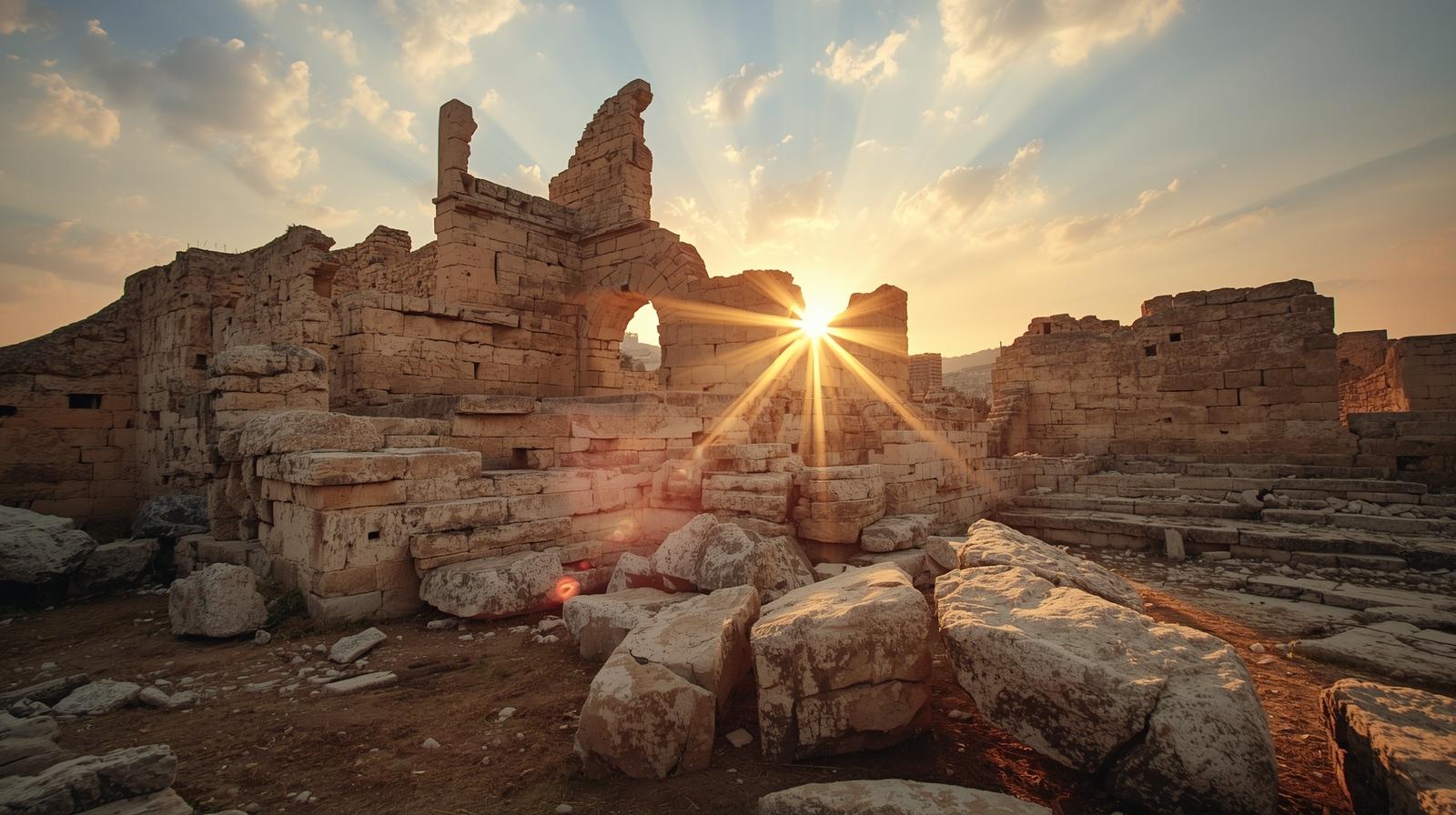
  1. Give each person a small stone (to represent the temple’s destruction). Ask them to hold it while reflecting silently on something in life that has felt like it’s “falling down” or uncertain. Then, read aloud Jesus’ promise: “Not a hair of your head will perish.”
    Invite participants to set down their stone in front of a cross or candle as a symbol of placing their fear and trust in Christ.

Final Prayer

God,

Help us trust your promises when they don’t feel real in our lives. Thank you for those people in our lives whose wisdom and faith strengthens ours. Open our ears and our hearts so we can reach out with words and actions encouraging others when they feel helpless and hopeless. Amen

Bio

Pastor Bob Chell’s Dad took him to watch fire fighters train on an abandoned house when he was very young. He thought—and worried—for years that fire fighters drove around in their trucks looking for houses that were in disrepair burn down. Now retired, he pastored congregations, campus ministries and a prison congregation.

Share