
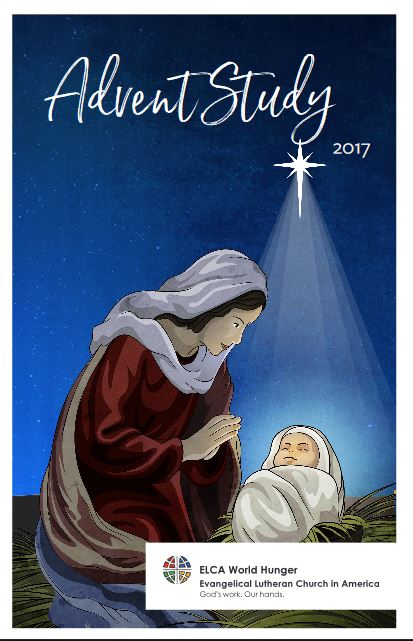
Advent is a season of hope and expectation. It is a season in which we “prepare the way of the Lord” (Mark 1:3). Advent candles, wreaths and calendars are joined with as-yet unfinished nativity scenes to mark our preparations for the birth of Jesus Christ. This year, ELCA World Hunger’s Advent Study celebrates this season with reflections focused on the preparation of the people of God for the work of the new year – the work of feeding, clothing, accompanying and advocating with our neighbors for a just world in which all are fed.
The four sessions of this Advent Study and the accompanying Advent calendar are based on the Scripture readings for each week of Advent. Each week includes a meditation on the theme, reflection questions, a prayer and hymn suggestions.
May you, your family and your community be blessed this season to see the important role the people of God are called to play in God’s transformation of the world – as individuals, as families and as the church together.
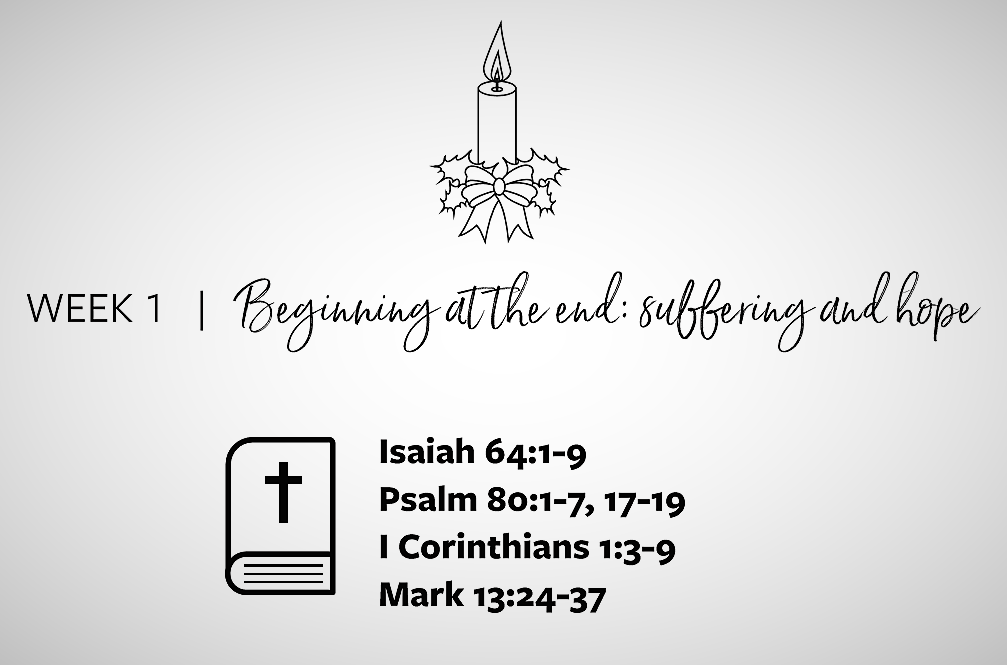
We begin at the end, and we will end at the beginning. What an odd way to go through Advent! We enter this season of expectation of Jesus’ birth and the advent of his ministry, only to start by hearing the words of Jesus describing the end of days. In a few weeks, we will celebrate the beginning of Jesus’ incarnate life among us.
We begin at the end, and we will end at the beginning.
The heavy thumb of Roman rule, high taxes and widespread vulnerability to poverty were all part of everyday life in first century Palestine. The people among whom Jesus would be born were eager for the Messiah who would deliver them. And there was no shortage of “false messiahs” (Mark 13:22) claiming to offer salvation. Some promised military victory over the Romans. Others claimed gifts of magical power and prophesied re-taking the temple.
And yet, here, in the Gospel of Mark, the true Messiah comes offering a very different story. The people of God will not ride triumphantly into Jerusalem – they will “flee to the mountains” (13:14). They will not re-take Jerusalem and its temple – “all will be thrown down” (13:2b).
But “after that suffering” (13:24)…
In the end…
Of all the Gospels, Mark is perhaps the most honest about suffering. Facing persecution at the hands of Rome, early Christians needed a message that was honest about suffering. More than that, they needed to know that God was honest about their suffering. In Mark, Jesus does not hold back in naming that suffering. The Messiah is born into suffering. The people will face suffering. He himself will suffer.
This wasn’t a newsflash to first century Jews any more than it is to the millions of people today for whom suffering is a mournful part of life – those who know the pangs of food insecurity, those who long for clean water, those who grieve the loss of their homes or their jobs. The idea that suffering is a part of life is sadly nothing new to so many of us. But Jesus makes clear two things that transform how we understand suffering. First, God knows our suffering. And, second – God rejects it.
The “great buildings” (13:2) in Jerusalem, which occasioned the beginning of Jesus’ long speech in Mark 13, were not merely beautiful examples of architecture. They were symbols of the powers and principalities that maintained systems of oppression and marginalization and would eventually carry Jesus to the cross. They seem imperishable, unshakable, overwhelming.
But the world is about to turn. And those walls are coming down.
Advent is a season of hope and expectation, but with Jesus’ exhortation in Mark 13:33 (“Beware, keep alert”), we move from “Advent as anticipation” to “Advent as active alert.” As we await the birth of the Messiah, let Advent be a season not of patience but impatience, not of passivity but activity, seeking out those places where God is already at work undoing systems of suffering and living in the daring confidence founded on faith in the promised end of suffering, sin and death.
Reflection questions
- How has God been present with you in your suffering?
- Where do you see suffering in the world today? How are people of faith actively working to end it?
- As people of faith who believe God rejects suffering, how are we called to respond to suffering in the world?
- What is the difference between patient anticipation and being on “active alert” during Advent?
Prayer
Loving God, in your incarnation, you took on to yourself our humanity and our suffering. Be present with us today as we face the pain of hunger, thirst, war, disease and neglect. Keep fresh in our hearts your promise of an end to suffering and an eternity of well-being with you. Send us out among our neighbors, that we may share with them your promise and share with you in the transformation of our world. In the name of your son, Jesus Christ. Amen.
Hymn suggestions
Canticle of the Turning ELW 723
The People Walk (Un pueblo que camina) ELW 706
Each Winter as the Year Grows Older ELW 252
To download this entire study, or to see some of our other congregational resources, please visit www.elca.org/Resources/ELCA-World-Hunger.