Skip to content

ELCA Blogs

November Update: U.N. and State Edition

U.N. | California | Colorado | Kansas | Minnesota | New Mexico | Ohio | Pennsylvania | Southeastern Synod | Washington | Wisconsin

Lutheran Office for World Community, United Nations, New York, N.Y.

Dennis Frado, director

THIRD COMMITTEE OF THE GENERAL ASSEMBLY: During October, UN Special Procedure mandate-holders and other experts delivered reports to the General Assembly’s Third Committee (on Social, Humanitarian and Cultural Issues), as mandated by the Human Rights Council. These reports focused on the advancement of women, indigenous issues, the protection of children and the promotion and protection of human rights to name a few. The meetings were chaired by H.E. Mr. Christian Braun, Permanent Representative of Luxembourg and can be viewed online here.

Ms. Phumzile Mlambo-Ngcuka, Under-Secretary General and Executive Director, UN Women, gave opening remarks on the Third Committee’s session on Advancement of Women, highlighting that “violence against women and girls and the renewed pushback against women’s rights remain pervasive around the world so as we prepare for the 25th Anniversary of the Beijing Platform for Action in 2020, we need renewed commitment from all.” The Secretary-General focused two reports on Advancement of Women, titled “Improvement of the situation of women and girls in rural areas” and “violence against women migrant workers.” A report was also submitted by the Committee on the Elimination of All Forms of Discrimination Against Women (CEDAW).

The Special Rapporteur on the rights of indigenous peoples report focused on the implementation the right of indigenous peoples to self-determination through autonomy and self-government. The report includes eight recommendations, one including the role of States in adopting and implementing “all measures necessary to ensure the adequate recognition of the rights of indigenous peoples to their lands, territories and natural resources, as that recognition represents the cornerstone of their autonomy and self-government and is essential for their survival as distinct peoples.” Documentation of all reports for the Third Committee’s agenda items can be accessed online here.

UNITED NATIONS DAY: On October 24, 2019, the United Nations celebrated United Nations Day, marking 74 years since the UN Charter came into force in 1945, launching the United Nations. The Charter consists of a preamble and 19 chapters, calling for the U.N. to “maintain international peace and security, promote social progress and better standards of life, strengthen international law and promote the expansion of human rights”. The United Nations Secretary-General António Guterres commented at its commemoration that “United Nations Day highlights the enduring ideals of the Charter, amid stormy global seas, the Charter remains our shared moral anchor.” Guterres has announced that 2020 will kick off with a UN75 initiative that will feature the world’s largest international dialogue on “the role of global cooperation in building the future we want ” to commemorate the 75th anniversary. A special UN Day Concert, featuring musicians from Qatar (pictured above with the Secretary-General) was also held and can be viewed online here.

MANDATE ON SEXUAL VIOLENCE IN CONFLICT: The ten-year anniversary of the Mandate on Sexual Violence in Conflict was commemorated at the United Nations ECOSOC Chamber on 30 October, 2019, hosted by the Republic of South Africa and the Office of the Special Representative of the Secretary-General on Sexual Violence in Conflict. The event began with imagery from the exhibition “Youth Speak Out Through the Arts” (pictured left), showcasing art from a diverse group of youth working in New York as well as two young artists working in Iraq.

Ms. Amina Mohammed, United Nations Deputy Secretary-General, stated that “sexual violence in conflict has been called history’s greatest silence, the least reported, the least condemned.” Mohammed reflected on the creation of the mandate as the UN’s commitment to “highlight, prevent and seek justice for these crimes” after it was established through the adoption of Security Council resolution 1888 in 2009.

A ‘survivors hearing’ panel was held with panelists sharing first and secondhand testimonies and recommendations from those who have experienced sexual violence in conflict. Ms. Nadia Murad and Dr. Denis Mukwege, 2018 Peace Prize Laureates, officially launched the “Global Fund for Survivors of Conflict-Related Sexual Violence” to help survivors and their families rebuild through locally designed solutions including reparations for survivors. Read the 2019 annual “Conflict Related Sexual Violence” report of the United Nations Secretary General here.


California

Regina Q. Banks, Lutheran Office of Public Policy- California (LOPP-CA) lutheranpublicpolicyca.org

POLICY COUNCIL MEETING AND PRIORITIES: The policy council of the Lutheran Office of Public Policy- CA met at the Luther Center in Glendale, CA on October 26, 2019 to discuss the legislative priorities of the ELCA and LOPP-CA, welcome new staff and plan FUNdraisers for the upcoming program year. It was a great meeting and much was decided. Look for updates soon. But set your calendars now for LUTHERAN LOBBY DAY 2020: Wednesday May 20, 2020. We will use this opportunity to again engage with legislators and staff on issues of concern to Lutherans across the state.

Our priorities for 2020 have shifted but continue to reflect a deep concern for the least and the last in our communities, and care for creation and justice in our golden state. We will continue to advocate for the elimination of Deep Childhood Poverty and accompany those who immigrate to and migrate within California. After listening to your concerns during our congregation visits and in consultation with our partners at Lutheran Social Services of Northern California, we are adding engagement with and for the unhoused to our portfolio of issues. And with the addition of Nicole Newell as our Hunger Advocacy Fellow, we are adding food and farming as a new policy priority for the 2020 legislative session. As the largest producer of food in the U.S., California is dominated by large farms relying on undercompensated migrant labor and extensive use of water throughout the driest of months. These farming systems are too often disconnected from the processing, distributing, eating and waste aspects of the cycle. In keeping with God’s call to care for creation and our neighbor, LOPP-CA seeks to promote equitable food and farming systems in California that support healthy communities, full bellies and the preservation of vital ecosystems. Our policy council has decided to continue to support our ministry and secular partners in the implementation of the Clean Safe Affordable Drinking Water Fund though take a less active role.

All of these issues and more will be discussed leading up to and during Lutheran Lobby Day 2020 on May 20, 2020. If these priorities are in your area of expertise or you are looking for ways to get involved with LOPP-CA, there are openings for synod representatives in Pacifica, Sierra Pacific and Southwest California synods. Contact us at regina.banks@elca.org to discuss your service.

SYNOD AND CONGREGATION VISITS: A sincere Thank You goes out to the pastors and members of Immanuel Lutheran Church, San Jose; Ascension Lutheran Church, Thousand Oaks; University AME Zion Church, Palo Alto; and Advent Lutheran Church, Morgan Hill for welcoming us into your worship experiences. We continue to delight in the varied ways that the Holy Spirit manifests in your families. Continue to invite us. We will continue to walk with you.

Thank you to Bishop Mark Holmerud and staff of Sierra Pacific Synod for their hospitality during the 2019 Professional Leaders Conference at Monterey Tides. LOPP-CA was offered primetime to talk about the church’s way forward through advocacy, and God is truly still working through contacts and connections made there. Similarly, a big thank you goes to Trinity Lutheran Women of the ELCA members for welcoming our Director Regina Q. Banks’ offer of the Sunday sermon on October 20th. This was her first sermon. She was humbled and blessed to take that journey with you.


Colorado

Peter Severson, Lutheran Advocacy Ministry-Colorado, www.lam-co.org

2019 VOTER GUIDE: Our Colorado ballot measure voter guide is now available! Colorado voters received their ballots in the mail in mid-October and have until November 5 to return them. Download our guide here and share it with your friends, family and congregation today.

THEOLOGICAL CONFERENCE: The Rocky Mountain Synod held its annual Theological Conference in Estes Park, Colorado, in early October. Lutheran Advocacy was on hand to share our 2019 Colorado voter guide, while participants engaged in deep conversation about structures of accountability within the church.

NATIONAL COUNCIL OF CHURCHES: LAM-CO Director Peter Severson joined other ELCA representatives at the National Council of Churches Christian Unity Gathering in Hampton, Virginia. The Joint Action & Advocacy for Justice and Peace Table met during the first day to share updates, stories and resources on advocacy across the denominations participating at the table. On day two, participants joined a ceremony of remembrance at Old Point Comfort to mark the arrival of the first enslaved Africans to English North America 400 years ago.

LUTHERAN DISASTER RESPONSE (LDR): Rocky Mountain Synod representatives participated in the LDR Consultation in New Orleans, Louisiana, focusing on climate change adaptation and mitigation in disaster preparedness. As Colorado faces elevated drought and fire risks in a warming climate, congregations and ministries are invited to be aware of threats and to advocate for policies that will mitigate these risks.


Kansas

Rabbi Moti Riebe, Kansas Interfaith Action (KIFA) kansasinterfaithaction.org

REFORM WORK: Kansas Interfaith Action has joined an effort to reform the payday loan industry in the state. Called the Kansas Coalition for Payday Loan Reform, it was initiated by a local DART (community organizing) affiliate which, realizing that this is a statewide issue, put together a wide-ranging statewide coalition – including KIFA. The legislation is being written, and there is a kick-off press conference for the campaign on November 12th. We anticipate this being a bipartisan effort, which unfortunately tends to be rare these days.

We have also had planning meetings with our coalition partners working on criminal justice reform and voting rights (two separate coalitions) to plan strategy for the 2020 session.

MEDICAID EXPANSION: Medicaid Expansion seems to be moving forward. A Senate select committee met to propose a bill that contains a lot of conditionals (if the federal government lets us, then we will expand to only 100% of the federal poverty line; if not, then we’ll expand to 138% of FPL). Each of these conditions costs money and causes delays. We are working for a bill with, as our coalition is saying it, “No barriers and no delays.”

FAITH AND PUBLIC POLICY FORUM: Every year KIFA runs a program called “Faith and Public Policy Forum,” a panel discussion of the pressing issues facing Kansas voters. The participants are representatives of organizations that we are in coalition with, including Kansas Action for Children, the ACLU of Kansas and the Climate & Energy Project. Topics include Medicaid Expansion, criminal justice reform, voting rights, climate and clean energy and more. KIFA Executive Director Rabbi Moti Rieber moderates the panel and presents on KIFA’s legislative priorities, as well as gives remarks about the role of the faith community in developing public policy. We have three events scheduled for November in Wichita, Topeka and Johnson County. Our goal is to give Kansans good, solid information about the issues facing the state, as well as build our base of support for the 2020 legislative session.


Minnesota

Tammy Walhof, Lutheran Advocacy- Minnesota (LA-MN)  lutheranadvocacymn.org

POLICY COUNCIL RETREAT: In October, LA-MN Policy Council members gathered at St. John’s Abbey in the center of the state to spend almost 24 hours together. It was a wonderful opportunity to get to know one another better and benefit from both an outside Bible study leader and a guest speaker regarding the Minnesota housing crisis, in addition to evaluating and visioning for the work ahead.

BONDING MONEY FOR HOUSING: The Homes for All Coalition Policy Team has been meeting twice per week as we work to discern additions or changes to the 2019-2020 biennium agenda we created a year ago. In these discussions and presentations, it is very clear that in addition to the housing crisis, Minnesota has a severe statewide shortage of shelter beds for homeless individuals and families.

Given that 2020 is a bonding year at the legislature, bonding will be our primary coalition-wide focus. Last year the coalition made a bold request of $300 million, $200 million in Housing Infrastructure Bonds (HIBs) to increase the number of affordable housing units supplied through private or nonprofit developers and $100 million to create or rehab public housing options. Last session, we were able to secure $60 million in bonding (HIBs), the only area to get any bonding money in the midst of a focus on budget. (We had anticipated that the bulk of that would need to be secured in the second year of the biennium).

After long discussions about the merits of making an even bolder bonding request vs. filling in the remainder of the $300 million request, we opted to go big and bold. We intend to push for $500 million for the creation & rehabilitation of affordable housing. Within that appeal we will be asking the legislature to add shelter development as a one-time eligible use of bonding money.

CLEAN ENERGY & CLIMATE CHANGE: In our environmental coalitions, we are a long way from having our detailed clean energy and climate agenda decided but are busy with partners trying to figure out what may be able to gain momentum in 2020. One hundred percent clean energy/carbon neutral electricity by 2050 will certainly be part of the work again.


New Mexico

Ruth Hoffman, Lutheran Advocacy Ministry—New Mexico (LAM-NM)   lutheranadvocacynm.org

EARLY CHILDHOOD EDUCATION IS ESSENTIAL: LAM-NM has supported putting a constitutional amendment before the voters of our state which would increase the amount of funding available for quality early childhood education programs. Those programs include home-visiting for young children and their parents, pre-Kindergarten, child care assistance and other programs. Such programs have been proven to improve the lives of the children and families who participate in them over generations. Legislation to put the constitutional amendment on the general election ballot will be considered in the upcoming 2010 legislative session.

EFFECTIVE TAX POLICY IS CRUCIAL TO MEETING THE NEEDS OF OUR NEIGHBORS: LAM-NM advocates for tax policy that is fair and provides stable, sustainable and adequate revenue to meet the needs of our state, particularly the most vulnerable. A good tax system should be fair (distribute the tax burden broadly and progressively, with those with higher income paying more), balanced, accountable and able to be efficiently administered.


Ohio

Nick Bates, Hunger Network in Ohio hungernetohio.com  

A BROKEN IMMIGRATION SYSTEM: Miriam Vargas moved into Sanctuary in the summer of 2018 at First English Lutheran Church in Columbus. On Tuesday October 29th, Miriam hosted Bishop Allende (NEOS) and others in a Facebook Live broadcast about the ELCA sanctuary declaration. In Ohio, we are not one of the ‘big immigration states,’ but individuals like Miriam are our neighbors and valued members of our community. Deportations threaten our neighbors and our neighborhoods.

In Ohio, we are trying to live into the declaration that the ELCA is a sanctuary denomination. This will look different for everyone, because God gifts us with different gifts and talents to express God’s love for the community. What it does mean for all of us is to ask the question: “How is God calling me to love my neighbor?”

We will continue to advocate to fix a broken immigration system, a system that divides parents from children, a system that sends people to famine soaked and war plagued communities. A system that causes fear and delay for stability for those who are most in need.

It is time to fix a broken system.

You can read more here on how to accomplish this and watch our Facebook Live event here

UNTIL ALL ARE FED: Our director Deacon Nick Bates and board member Pastor Larry Novak both testified this month against SB 165. This bill will put photo IDs onto a household’s SNAP benefits card. This will create headaches for children and spouses who attempt to use the card, headaches for pastors and mission team volunteers who do the grocery shopping for homebound members and headaches for grocery stores who have no clarity on how to implement or enforce these rules.

There is no need for these headaches, because they will do little to nothing to prevent fraud. Instead Ohio should invest these resources into outreach for those who struggling with addiction and help them access the necessary medical services. Take action by clicking here


Pennsylvania

Tracey DePasquale, Lutheran Advocacy Ministry–Pennsylvania (LAMPa) lutheranadvocacypa.org

LAMPA VOLUNTEERS AND STAFF ATTEND LUTHERAN DISASTER RESPONSE (LDR) CONSULTATION: Director Tracey DePasquale accompanied seven Pennsylvania Lutheran Disaster Response coordinators and synod representatives to the 2019 LDR Consultation in New Orleans. This year’s consult focused on building relationships with synod, congregation and advocacy partners to address not only disaster relief but climate change mitigation and adaptation. There is great enthusiasm for building on these relationships for the good of our neighbors, near and far. Read more about the hopes for our work together.

STAFF ATTENDS GOVERNOR’S ANNUAL FOOD SECURITY PARTNERSHIP SUMMIT: DePasquale and LAMPa Program Director Lynn Fry attended Governor Wolf’s Annual Food Security Partnership Summit in Harrisburg. Attendees received reports on the Blueprint for a Hunger-Fee PA from various state agencies. The afternoon addressed college hunger in Pennsylvania. College students and staff representing schools across the commonwealth shared their personal experiences with hunger and the social services system. Deacon Alicia Anderson of Lutheran Student Community / Lutheran Campus Ministry at Penn State joined LAMPa staff and connected with Penn State students working to fight hunger. LAMPa hopes that the network of Lutheran Campus ministries in Pennsylvania might become engaged in helping to shape policy in this area as the First Lady focuses attention on hunger among college students.

LAMPA STAFF ATTENDS PA HUNGER ACTION COALITION BI-ANNUAL MEETING: Members shared reports on poverty and anti-hunger programs from the perspective of providers and advocates and heard from staff of state human services, agriculture and education departments about impacts of proposed federal rule changes. The coalition discussed strategy for addressing hunger policy together in the face of federal proposals and the upcoming state budget.

LAMPA JOINS COALITION PARTNERS AT RELIGIOUS SECURITY SUMMIT: Fry joined religious and community leaders in the Capitol to learn about threats to security of religious institutions as we prepared to mark the one-year anniversary of murders at the Tree of Life synagogue. Presentations were shared by: Anti-Defamation League, Pennsylvania Governor’s Office – Public Safety, Pennsylvania Homeland Security, Pennsylvania State Police, Federal Bureau of Investigation (FBI), United States Secret Service and United States Postal Service. LAMPa invited congregation, synod, seminary and social ministry leaders to attend the summit, the first of several to be held around the commonwealth.

EDUCATING AND EQUIPPING: DePasquale participated in the inaugural meeting of the Upper Susquehanna Synod Advocacy Team, launched at the direction of Bishop Collins and Synod Council to support congregations and church leaders in following their baptismal call to strive for justice and peace. She also participated in Lower Susquehanna Synod’s day of equipping on the actions taken at the Churchwide Assembly, offering to assist attendees as they encourage their congregations to live into the calls coming from that gathering – particularly around the social statement on Faith, Sexism and Justice, the Day of Repentance for the Emmanuel Nine, the Declaration of Apology to people of African Descent and declaration of sanctuary denomination. In addition, DePasquale taught about LAMPa’s work at Prince of Peace Lutheran Church in Bangor (Northeastern Pa. Synod) and St. John’s Herr Estate in Columbia (Lower Susquehanna Synod).


Southeastern Synod

Hilton Austin, Southeastern Synod advocacy team

CRIMINAL JUSTICE REFORM: The kick-off for the Second Chance campaign was very well attended. There are 31 organizational partners. According to the Georgia Justice Project’s (GJP) Facebook page, “Georgia has the highest rate of correctional control in the nation, yet is one of only a few states that do not allow expungement of convictions, no matter how long ago they occurred. 4.2 million people have a Georgia criminal record (approximately 40% of adults) and as a result they face barriers to employment, housing, higher education and other opportunities long after their sentence is over.

“Employment is the most effective way to reduce recidivism. Changing Georgia’s law so that certain misdemeanor and felony convictions can be restricted and sealed after a period of time will unlock opportunity for thousands of Georgians who are rehabilitated and want to work, rebuild their lives and provide better futures for their families and communities.”

Our synod staff is aware of our GJP partnership and have been given basic information on what “Second Chance” is about.

I also attended a documentary screening at GJP, Life After Life; if you have the opportunity to see it, the film does a good job of representing the barriers that people face after serving their time.

HUMAN TRAFFICKING: While Georgia has made great legislative strides with Safe Harbor, the funding of the rehab programs has been held up by lawsuits. We continue to monitor that process and what is happening with these funds.

HEALTHCARE: The American Cancer Society has targeted Georgia this year for Medicaid Expansion. We have contacted the Georgia chapter to see what that will look like; we should know more next week.

SOUTHEASTERN SYNOD LEADERSHIP CONVOCATION: Most of the Advocacy Policy Council and myself attended our synod leadership convocation at Lutheridge. The theme was “Preaching in Such a Time as This: Kairos, Truth, and Prophetic Gospel,” the Rev. Dr. Sam Giere, Wartburg Theological Seminary, explored the proclamation of Jesus Christ in such a time as this (Esther 4:14), by discerning “the times,” considering the relationship of trust and truth and engaging the prophetic nature of the gospel of Jesus Christ.

GEORGIA INTERFAITH PUBLIC POLICY CENTER: At our October board meeting, we added two people to our Board of Directors: Bishop Kevin L. Strickland and John Moeller, CEO of Inspiritus (formerly Lutheran Services of Georgia). Our 2020 Lobby Day will be February 26. Three of us attended an event at Redeemer Lutheran on October 30th sponsored by Inspiritus, titled “How to Have Hard Conversations Well, The Practice of Empathetic Listening .”


Washington

Paul Benz, Faith Action Network (FAN) fanwa.org

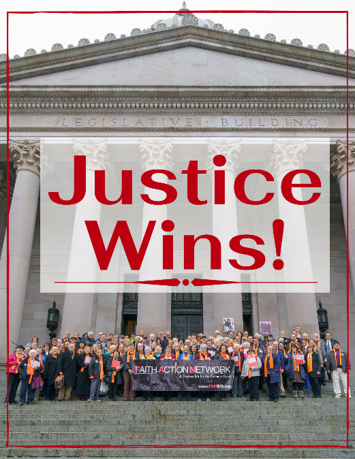
ANNUAL DINNER: FAN’s annual fundraiser will be Sunday, Nov. 10 with the theme “Raising Our Voices.” Our keynote speaker will be ELCA Minister Priscilla Austin from Immanuel Lutheran Church in Seattle. This is a great event where our partners for the common good come together to celebrate our successes and be inspired for the work ahead. We are grateful to the ELCA Hunger as one of our year-round sustaining sponsors.

NEW ELCA BISHOP INSTALLED: Shelley Bryan Wee is the new bishop for the NW Washington Synod and will be installed Nov. 2 at Saint Mark’s Episcopal Cathedral in Seattle. Bishop Wee has been a great supporter of FAN, and we look forward to continuing our collaboration with her and the 95 congregations and ministries of this synod.

FOOD WEEK OF ACTION: Every fall FAN works with the national Presbyterian Hunger program to promote Food Week of Action. We created an action-centered resource for faith communities to use that week and throughout the year. You can view our PLEA (pray-learn-educate-advocate) here: http://fanwa.org/2019/10/food-week-of-action-is-here/

2020 LEGISLATIVE SESSION: FAN members have been meeting with their state legislators to build relationships and prepare for next session which will begin on Jan. 13. The House and Senate will have their annual committee days Nov. 19-22 in Olympia when most legislators will be present for caucus and committee meetings.

CONGRESSIONAL FOCUS: As one of the main congressional issues we are following this season, we are asking our members to urge US Senator Cantwell to put her support behind the expansion of funding for the Earned Income Tax Credit (EITC) and the Child Care Tax Credit (CTC) to keep more households from falling deeper into poverty. We are also thanking her for her leadership on expanding funding for housing tax credits.


Wisconsin

Cindy Crane, Lutheran Office for Public Policy in Wisconsin (LOPPW) loppw.org

SUPPLEMENTAL NUTRITION ASSISTANCE PROGRAM: Via an action alert and social media, we supported our D.C. office’s efforts encouraging people to comment on the new proposed rule for SNAP. The director also sent individual emails to hunger leaders around the state inviting them to access their networks to respond.

CARE FOR GOD’S CREATION: Several months ago, the director suggested that members of the Wisconsin Climate Table explore how we can amplify the positive environmental efforts in parts of our state government within a highly partisan atmosphere. LOPPW is now part of a campaign that is planning how we can support Wisconsin having a clear, actionable plan to equitably meet the 2050 carbon neutral goal.

We are also supporting a bill on regulating PFAS and testing lead in water in facilities that would require child care centers, child care providers and recreational and educational camps to test for lead in drinking water.

HUMAN TRAFFICKING: The director was asked to give a legislative update to the Wisconsin Anti-Human Trafficking Consortium at our last quarterly meeting. We also had a legislator on the phone for part of our meeting and strategized next steps.

LOPPW has continued regular contact with WELCA and other LOPPW supporters to move Safe Harbor forward.

The director has met regularly with LOPPW’s intern, Amelia, who successfully had a letter to the editor published, has organized other college students to advocate and has delivered petitions written by WELCA members to legislators.

NEW PROGRAMS: The director worked with volunteers to plan for our first monthly update on FB live (Wednesday Noon Live) on November 6th and our first pilot of a gathering for young adults (Engage) on November 7th.


Share

New! VBS 2020: “On Earth As in Heaven”


It’s hard to believe that it’s time to start planning for 2020 already, but ELCA World Hunger’s new Vacation Bible School program for 2020 is now here! “On Earth As in Heaven” invites children of all ages to learn about God’s world by diving deeply into the Lord’s Prayer. This full, five-day VBS is free and available for download and order (coming soon.)


“On Earth As in Heaven” explores the meaning of the Lord’s Prayer for our world today, using one petition each day to explore faith, justice and the work to which God is calling us. The program this year is unique in that each day focuses on one petition from the prayer and ties the petition to one of the United Nation’s Sustainable Development Goals in easily accessible ways.

“On Earth As in Heaven” VBS

In the Large Catechism, Martin Luther reminds us that prayer is something “great and precious.” To pray is to give voice to our needs and our trust in God, who meets them.

But to pray is much more than this too. In thanksgiving, prayer gives voice to the things that bring us together. In lament, prayer gives voice to the things that rend us apart. Theologian Karl Barth is believed to have said that “to clasp the hands in prayer is the beginning of an uprising against the disorder of the world.” To pray is to lay bare the pain of the world and to trust God to transform it — and to strengthen us to be part of this transformation.

“On Earth As in Heaven” invites children and adults to (re-)experience the Lord’s Prayer and to see the connections between prayer and service in the world. As the church prays and plays together, we also serve together and walk together toward a just world where all are fed. The stories for each day lift up churches and communities around the world who are prayerfully and powerfully doing their part in this work, while celebrating the diversity with which God has gifted the world.

Daily Themes


Each day includes:

  • An opening to introduce the prayer petition and the topic for the day, including a skit;
  • Small-group times;
  • Stories from projects around the world supported by gifts to ELCA World Hunger;
  • Snacks and crafts from the countries and regions featured in the stories;
  • Games for different age groups;
  • Simulation Stations to help children dive deeply into the topics of the day; and
  • Large-group closing suggestions

This year, we are also excited to include an appendix of handouts to send home, so that parents and caregivers can continue the conversation with children at the end of each day.

Coming Soon

More materials are on their way, including hard copies of “On Earth As in Heaven,” posters and a supplement media kit with logos and pictures you can print, post or put on t-shirts and other promo items!

Look for Us at the E!

ELCA World Hunger will once again be at the ELCA Youth Ministry Network’s Extravaganza in 2020! We will have hard copies of “On Earth As in Heaven,” sample posters and lots of information to help you plan your VBS.

“God’s Good Creation” and “Who Is My Neighbor?” VBS Still Available!

ELCA World Hunger’s VBS programs from previous years are still available! Visit ELCA World Hunger’s resources page to find “God’s Good Creation” VBS and “Who Is My Neighbor?” VBS  – and lots of other resources for children, youth and adults!

For more information about “On Earth As in Heaven” and other ELCA World Hunger resources, please contact Ryan Cumming, program director of hunger education for ELCA World Hunger, at Ryan.Cumming@ELCA.org.


Share

November 10, 2019–It’s a Trap!

Herb Wounded Head, Brookings, SD

Warm-up Question

Describe your family. Is it a traditional family with two parents and siblings? Perhaps it’s a blended family.

It’s a Trap!

Marriage is a complicated thing. Some families come from traditional marriages and others are blended. Marriage takes a lot of commitment, work and faithfulness. There are also many reasons to get married, but the primary reason, according to an article from Pew Research,  is to marry for love. 88% cited love as an important reason to get married. Other reasons listed are commitment, companionship and to have children.

As a recent radio show noted, the traditional view of marriage we have is a relatively new thing. Throughout most of history, marriage has been a political/economic decision made between two families for the betterment of both parties involved. Marriage was a way of sharing resources. It wasn’t about our emotional feelings towards one another.

Discussion Questions

  • What are your thoughts on marriage? 
  • Why would you get married?

Twenty-second Sunday after Pentecost

Job 19:23-27a

2 Thessalonians 2:1-5, 13-17

Luke 20:27-38

(Text links are to Oremus Bible Browser. Oremus Bible Browser is not affiliated with or supported by the Evangelical Lutheran Church in America. You can find the calendar of readings for Year C at Lectionary Readings

For lectionary humor and insight, check the weekly comic Agnus Day.

Gospel Reflection

Jesus gets asked by the Sadducees about marriage. It’s interesting to note that the Sadducees don’t believe in the resurrection, so they pose a question to Jesus only hoping to get him caught up in a trap about the life hereafter. They seek to discredit Jesus and his ministry.  But, according to Luke, Jesus turns the question upside-down and answers so well that they don’t dare ask any more questions of Jesus.

Jesus avoids their trap in two ways. First, he demonstrates their failure to understand the resurrection, which is different from the here and now. Second, he demonstrates their failure to understand Scriptures by using the story of Moses’ encounter with God in the burning bush and the revelation of God’s holy name — that Jesus takes to establish the validity, indeed certainty, of life after death.

So, we are certain of life after death, Jesus promises that it is so. But what does resurrection look like? We aren’t quite sure, but we do believe and trust in the resurrection of the dead and the life of the world to come.

Discussion Questions

  • What does resurrection look like to you? 
  • Do you believe in life after death or is death merely the end?

Activity Suggestions

  • Talk about the time where you experienced a funeral.  What sort of things did the pastor do to proclaim Christ’s resurrection to those gathered? What in the service reminds you of the Gospel for us? 
  • Look at the funeral liturgy in Evangelical Lutheran Worship.  Why are various elements of the service included; what does each suggest about the Christian attitude toward death?

Closing Praye

Gracious and everlasting God, You equip us with faith to believe and follow You through Your Holy Spirit. Keep us steadfast in the faith so that we may continue to grow closer to You and Your Son, Jesus.  Help us in our doubts, affirm our faith and give us grace to meet each day with the trust in the resurrection of all Your people. Amen.


Share

Lessons From My History by Shari Seifert

As a Christian, I believe that we are all created in the image of God. Racism and white supremacy are heretical and demonic lies as they serve to say that some people are better than other people. The truth is that we are ALL one body in Christ and that body is hurt by white supremacy and racism. We are ALL hurt by these evils.

A big part of my faith journey as a European Descent Lutheran is to root racism and white supremacy out of myself and to do my part to move us towards the Kingdom of God.  A few years ago, a friend on a similar journey encouraged me to learn about the history of my hometown regarding race. Below is my reflection on a slice of history from my hometown of Rockdale–a small community in Central Texas. It involves the life and death of my Texas history teacher and serves as a stark example of how racism and white supremacy harm all of us.

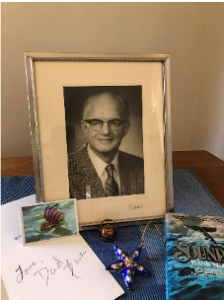
 Recently, Susie Piper, my middle school Texas history teacher died at the age of 98.  She led a remarkable life and was an amazing teacher. She is one of the reasons I learned early on that white supremacy is a lie and I am so thankful for that lesson.  I reached out to her a few years ago and to tell her she and Ms. Petty (a black woman who was my most excellent high school biology teacher) were the best teachers I had from Rockdale.  I had some exchanges with Ms. Piper and Emzy Jerome Hebert (her son).  We gave each other a few books and I got a history lesson that I sure don’t remember ever hearing in school.

I learned from Jerome and Ms. Piper that when school integration happened Ms. Piper had been the principal of the Aycock School.  The black school that was shut down.  I learned that teachers who were black women were required to have master’s degrees and teachers who were black men were required to have PhDs in order to teacher at the newly integrated school in Rockdale.  Ms. Piper was put in charge of “the hopeless kids” in study hall in the newly integrated school.  She said that they were put in “the black room” which had no windows.  I suspect that they wanted her to give up and quit – but that was not in her nature.  She told me “It was always my philosophy that everyone counted and everyone could learn.”  Somewhere along the way people wised up and put her in the classroom where I benefitted from her excellence in teaching and I am grateful for that.  She was a prolific writer and noted historian.  She was the keynote speaker at the Lyndon Baines Johnson presidential library on the 50th anniversary of the voting rights act.  I am so mad and sad about the injustices she went through.  I  don’t even have the words for this.   Mourn maybe the loss of the gifts and treasures we don’t have because other Susie Pipers were put in charge of study hall rather than the classroom. I’m angry about her and others’ mistreatments. Denying people’s gifts and not giving them a chance to shine really hurts all of us.  I don’t know what happened to move Ms. Piper from study hall to the classroom.   I would like to hear that story too.  I suspect it took some honest accounting of the situation and some bravery.  Let’s have more of that please.


Shari is a European descent Lutheran living in Minneapolis with her wife and two sons. She sells houses and dismantles white supremacy in the Lutheran Church. She is on the board of the European Descent Lutheran Association for Racial Justice and the Minneapolis Synod anti-racism table.


Share

November 3, 2019–Homeless to Feeding the Homeless

Anne Williams, Ankeny, IA

Warm-up Question

What do you think it would take to turn a life around? To recover from addiction or homelessness?

Homeless to Feeding the Homeless

If you have the ability, watch the video interview on Now This: https://nowthisnews.com/videos/news/social-entrepreneur-mark-brand-helps-feed-the-hungry. You can also find it on Facebook by searching, “Now This Mark Brand.”

Mark Brand, of Vancouver, Canada works in what is called the poorest postal code (like a ZIP code) in all of Canada, where drugs are sold openly on the streets. Mark used to live there, use there, and was then homeless there. He shares a story of the one restaurant he felt comfortable going to and how a $3.50 burger plate would actually fill him up. Mark reflects on that time in his life: “When you live like that, even if it’s briefly, it affects you forever… cause when you are in that, it’s the loneliest place on the world.” 

After recovering from addiction and homelessness, Mark became a successful chef and business man, opening restaurants. Even as his businesses thrived, he realized he wanted to do more.  So he began exploring how to feed those in need. He did something ingenious.

He tackled the question of why people don’t give money to hungry street-entrenched people. The answer he got (which might be an answer we could give) is that folks are afraid their money will go to drugs or alcohol. So, working with the restaurant, he used to eat at when he was homeless, he created a token system. People can buy the tokens and give them to the hungry, who can redeem them for a sandwich. Mark’s comments about these tokens are really very interesting. He says, “What I was most excited about is that you would hand it to somebody. So yes, I’m excited that you’re gonna get a sandwich. Great. You’re hungry, you have a place of inclusion you can go to, that’s really cool… I’m way more excited that you’re going to talk to somebody who’s feeling super isolated and street entrenched.”

Mark seems much more interested in relationships, even quick ones like saying “Hi, here’s a token, go get a sandwich,” than just sandwiches. What homeless people need is food yes, but also someone to look at them and see them.

Discussion Questions

  • What do you think Mark knows about pain in life?
  • What do you think Mark knows about blessings?
  • What would you do if a token program like Mark’s came to your town? Would you buy them? Would you give them out?
  • What do you think about Mark’s statement: “I’m way more excited that you’re going to talk to somebody who’s feeling super isolated and street entrenched?” 
  • Which is more important: feeding people or connecting with people?

All Saints Sunday

Daniel 7:1-3, 15-18

Ephesians 1:11-23

Luke 6:20-31

(Text links are to Oremus Bible Browser. Oremus Bible Browser is not affiliated with or supported by the Evangelical Lutheran Church in America. You can find the calendar of readings for Year C at Lectionary Readings

For lectionary humor and insight, check the weekly comic Agnus Day.

Gospel Reflection

The blessings and the woes that Jesus describes in this passage (specifically verses 20 to 26), often called the Sermon on the Plain, speaks of reversal. Those who suffer now will be blessed in the coming Kingdom. And those who are currently feeling blessed will have to experience some suffering. 

I think there are (at least) two reasons why we find this passage uncomfortable.

First, we really don’t want anyone to suffer. We think it’s a punishment for something. Here’s the deal:  Suffering, whether because we are sick, or lonely, or grieving, or just plain different from others around us is part of life. It is not a punishment. Most of us never do anything to earn our suffering (kind of like we don’t earn our salvation)! God did not promise no suffering. God promised to be with us in the suffering.

Second, I think we think these reversals are somehow permanent. That in the kingdom, those who have been oppressed will have all the power and those who were gluttons will now starve… does that sound like the kingdom of God? Not to me! If the Kingdom of God is going to be what we think it will be, then everyone will have enough food, and no one will hoard it or be without it. 

I think that one of the ways we can read this passage is that Jesus is trying to get at the idea that there will be times when our lives will be good, and full of blessing, and times when our lives will be harder, where we will feel empty, and broken, and will cry out to God. Suffering and blessing can co-exist in one lifetime, sometimes one after the other, sometimes both at the same time. I think it is Jesus’ way of hinting that the Kingdom we experience now, the in-between, now-but-not-yet Kingdom that we only catch a glimpse of, is full of broken people who experience suffering and woe and who know fullness and richness and blessing too, at the same time. It’s a foretaste of the feast to come – the real Kingdom, where God will be all in all and all people will be whole and full.

Discussion Questions

  • Can you relate to the idea that blessing and wore can co-exist in one lifetime?  How do you think Mark Brand would answer this question?
  • If we’re going to experience both suffering and blessing, how do we make sense of them in our own lives?
  • Where are there examples of the now-but-not-yet Kingdom in your town? i.e. places and groups that bring hope and healing?

Activity Suggestions

  • Contact your local Ronald McDonald House and see if you can bring them a meal, or snacks or treats. Make the food during class. Gather a small number of them to transport and deliver it.
  • Call your local shelter and see what kind of meal you can bring them – casseroles are easy to make and freeze for easy transport.
  • If you’re being really bold, visit a homeless shelter.
  • Ask someone who is living sober with addiction to speak to the class, or even someone who’s cancer is in remission or been cured.
  • Make cards for the homebound and hospitalized. Give to your pastor to distribute.

Closing Prayer

Giver of all good gifts, grant that this day we may offer both our material goods and ourselves to those who need, that all may have a foretaste of the feast to come, when your will is perfectly done and all know the abundance of your love.

Share

October 27, 2019–Who Belongs/ Who is Free?


Drew Tucker, Columbus, OH

Warm-up Question

Who is an authority in your life that you trust? What makes them trustworthy? 

Who Belongs/ Who is Free?

Topics of citizenship and migration remain front page news, not only in the United States, but across the globe. Many factors drive this discussion, such as the reasons for migration and the impacts on both the countries departed and the countries entered. Even more fundamental to this conversation is the question of belonging. Who belongs in what places? What are the factors that affect belonging? Who is the ultimate authority on affirming or denying belonging?

We must remember that this isn’t simply a theoretical topic. Questions of belonging, and who gets to affirm our belonging, affect the day-to-day lives of many migrants of various types across the globe. When I traveled to Europe with my wife this summer, customs agents checked passports every time we crossed a border to ensure we belonged to an acceptable country and had not overstayed our welcome in their land. However, for many migrants, their global travels aren’t simply for leisure. Many, like Miriam Vargas, seek a better, safer life for themselves and their families. Miriam and her young daughters have taken refuge in Columbus’s First English Lutheran Church because the church saw their need for safety after Miriam fled Honduras when gangs threatened her life. As First English declared their building a sanctuary for Miriam and her family, they became part of a wider network of organizations called the Sanctuary Movement, that promises belonging to migrants seeking safety and opportunity in the United States. This is not an isolated incident, either. Hundreds of congregations have stepped up to support the Sanctuary Movement, while the ELCA recently declared itself a sanctuary church body. 

To the question of “who belongs,” First English, the Sanctuary Movement, and a growing commitment across the ELCA boldly declare that, because God first welcomed us, all belong. The authority of belonging, then, does not ultimately lie with a particular law or a governmental entity, but with God 

To read more about becoming a sanctuary denomination, see this: https://elca.org/News-and-Events/8000. You can also learn more about the sanctuary movement here: https://www.wsj.com/articles/some-churches-offer-refuge-from-deportation-with-sacred-resisting-11564927200.

Discussion Questions

  • Share a story about your friends or relatives who are immigrants. 
  • What would if feel like to receive death threats from gangs, run for your life, and then face deportation after making a new life in another country?
  • How do we balance the authority we give to God and government?

Reformation Sunday

Jeremiah 31:31-34

Romans 3:19-28

John 8:31-36

(Text links are to Oremus Bible Browser. Oremus Bible Browser is not affiliated with or supported by the Evangelical Lutheran Church in America. You can find the calendar of readings for Year C at Lectionary Readings

For lectionary humor and insight, check the weekly comic Agnus Day.

Gospel Reflection

These verses, commonly used for Reformation commemorations, center on concepts of truth and freedom. Yet, before we considers those central themes, we must address the presence of slavery as an image Jesus employs. Jesus just throws the word slave around like it’s a normal and appropriate thing. And while, for 1st century Palestinians, slavery was a common occurrence and a very different thing than the slavery forced upon African natives by European and American powers for hundreds of years between the 14th and 19th centuries, we can’t read the word slave in the United States without acknowledging Jesus’s metaphor has been forever changed by the oppression white people forced on black people. Especially since this reading appears on a day when we celebrate a movement started by a white European and there’s explicit mention of slave’s not having a place in the household, we should focus our attention on how this imagery impacts people of African descent and make explicit that the freedom Christ promises is for all people, including black people.

Jesus’s first words help us see this importance, for he says “If you continue in my word, you are truly my disciples; and you will know the truth, and the truth will make you free.” Jesus, after all, is the way, the truth, and the life, so knowing the truth is knowing Jesus. This is beautifully complex. It means that when we know Jesus, we can comprehend the truth of the world more clearly. Yet, it also means that when we encounter anything that’s true, we’ve encountered a part of God. So when we encounter the Pythagorean Theorem, a2 + b2 = c2, we encounter something of God’s wisdom in creating the universe. When we realize the wonder of evolution, we realize the beauty of God’s creative process that brings to life new and wondrous things across the universe over billions of years. When we engage the equality of humanity, we engage something of God’s wisdom in giving every person the divine image. 

To continue in Jesus’s words isn’t simply to read scripture. It’s to live the life of love that Jesus teaches us. Knowing the truth who is Jesus means living the life that Jesus offers us. Despite the problematic imagery, his ultimate point is this: Jesus can offer us the fullness of God’s gifts eternally because he’s forever a part of God’s family. So the freedom we’re offered, the life that we’re offered, the truth that we’re offered, isn’t temporary or limited. When Jesus tells us that we belong, that we’re set free from sin and now a part of God’s household, he does so as one with authority. The authority of our belonging comes from God, who has desires that all people be truly free. Because God sets us free, we all belong with one another and with God.

Discussion Questions

  • What is something that you’ve learned outside of church – in school, on a team, in your family, or elsewhere – that’s helped you learn more about God? 
  • If Jesus is the ultimate authority in our lives, how should that change the ways that we make decisions? 
  • What’s another analogy that we could use, instead of slavery, to help highlight the point that Jesus is God’s Child?

Activity Suggestions

  • Imago Dei Game – Make a circle and the person in the middle says, “I am (insert name), the Image of God, and one way I see God is through (blank).” For the blank, insert things like, “people who like math,” “people who can draw,” “people who play an instrument,” and the like. Everyone who identifies with the last statement then has to move to a new spot in the circle, and the person without a spot becomes the next speaker. The goal is to help students see the various talents show perspectives on truth and then create more conversation around how people get to know God in dynamic ways. 
  • Red Light, Green Light – Gather your group on one side of a large room, gym, or playing area. One person acts as the traffic light. When they yell “Green light!” players move toward the other side of the space and “Red light!” to get them to stop. You can add complexity to the game by giving certain players disadvantages, like carrying cup full of water they can’t spill or egg on a spoon. The ones who reach the other side of the space first win. The traffic light can also remove those obstacles, if they so choose. Then, converse about the nature of the authority in the game and how people can use authority to set people free or bind them to unnecessary obstacles.
  • Read together the ELCA’s talking points regarding our status as a sanctuary church and watch videos related to AAMPARO, (found here: https://www.elca.org/sanctuarychurch). Then discuss how the kinds of freedom that Christ promises relates to the Sanctuary Movement.
  • If you’d like to donate to support Miriam and her family at First English (mentioned in the first section of this faith lens), visit here: https://www.gofundme.com/f/miriam-and-family-at-first-english?sharetype=teams&member=374504&rcid=r01-153063240238-9a96725777c14416&pc=ot_co_campmgmt_w

Closing Praye

Lord God, you release us from the cuff of sin and free us to live a life that belongs to you. Shape our lives to reflect your freedom. Form our hearts to embrace your liberation. Empower us to share this gift not only with ourselves, but with all people in all places. We pray this in the name of our liberator, Jesus: Amen. 


Share

Hunger Advocacy Fellows move past obstacles

By Tessa Comnick, ELCA Hunger Advocacy Fellow

In a world where 820 million people go hungry, there never seems to be a lack of opportunity to support our neighbors. However, sometimes there’s an obstacle discovering how to show that support in ways that provide effective and lasting solutions. Thanks to the generosity of ELCA World Hunger, the three of us are able to take part in a 12-month transformative journey that combines leadership development and faith formation with impactful advocacy that moves us toward an end to hunger and a just world where all are fed. We are elated to be part of the third cycle of the ELCA Hunger Advocacy Fellowship in 2019-2020 and to introduce ourselves in the ELCA. 

~ Jase, Nicole & Tessa


Tessa Comnick

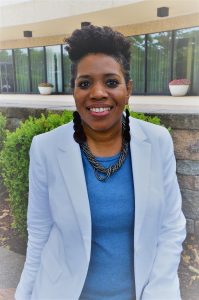
Tessa Comnick is serving in Washington D.C. as the Hunger Advocacy Fellow with ELCA Advocacy there. She comes from Cleveland, Ohio with a bachelor’s degree in English from Baldwin Wallace University in Berea, Ohio and a master’s degree in Global Environment, Politics, and Society from the University of Edinburgh in Scotland. The granddaughter of an ELCA pastor, Comnick has attended an ELCA church since she was born and is immensely touched by the support of her home congregation, Prince of Peace Lutheran Church in Westlake, Ohio. She is grateful for this opportunity to explore her passions for food security and waste reduction, along with the opportunity to expand her knowledge in other areas such as environmental economics and climate induced migration. Comnick is a staunch believer that good things will come in our future, in altruism as a society and in Cleveland sports.


Jasetyn Hatcher

Jasetyn “Jase” Hatcher is serving as the Welcoming All Program Coordinator for the Virginia Interfaith Center for Public Policy in Richmond, Virg. Hatcher earned her bachelor’s degree from Laidlaw College in New Zealand and master’s degree in Conflict Studies from the United Nations Institute for Training and Research, specializing in the effects of conflict on migration and displacement. Spending the last 13 years living in Korea, New Zealand and Ecuador, Hatcher developed an intimate look at several of the world’s many and varied communities. She has a passion for building awareness and recognition of systemic violence and its tangible effects on displaced persons.


Nicole Newell 

Nicole Newell, working at the Lutheran Office for Public Policy – California in Sacramento, joins this year’s ELCA Hunger Advocacy Fellows’ cohort with a background in non-profit work, advocacy and teaching, both domestically and abroad. Her focus on food justice has led her to work in kitchens and on small-scale farms to develop context for sustainable food practices. With a bachelor’s degree in Practicing Theology from St. Olaf College in Northfield, Minn., Newell has a love for Lutherans and served with Lutheran Volunteer Corps in Washington, D.C. from 2015-2016. She grew up in Des Moines, Iowa but was born in Sacramento. Newell is eager to use her passion for the intersection of faith and justice to effect policy-level change in California.

Share

Seeing Things Differently


From the story of Pentecost – the coming of the Holy Spirit – as told in Acts 2: 17:

“In the last days it will be, God declares, that I will pour out my Spirit upon all flesh, and your songs and daughters shall prophesy, and your young shall see visions, and your old shall dream dreams.”


The walk to Emmaus (Luke 24: 13-25) is a fairly “well-trodden” path for many Christians. It’s a story we hear once a year in the lectionary cycle – a story that comes together so well for me at the end when Jesus has vanished from the disciple’s sight – and yet, they “see” in a new and different way.

“Were not out hearts burning within us?” the disciples say to each other. Through the walking and talking, they caught a glimpse of God’s dream for a reconciled world – perhaps such a glimpse that the whole world might never look the same.

October 16, was World Food Day, a day that also occurs once a year to commemorate the founding of the Food and Agriculture Organization of the United Nations in 1945.

On World Food Day this year, ELCA World Hunger announced our upcoming Big Dream grant ministry partners – a group of four ministries that exemplify innovation and best practices in the pursuit of a just world where all are fed.

At the same time, 14 people gathered to discern and award the 2020 Domestic Hunger grants. Domestic Hunger Grants walk with congregations and their ministry partners as they seek to love and serve their communities in transformative, holistic and integrated ways. The awards are for up to 3 years and up to $10,000 per year, for a possible total award of $30,000. During this process, staff like me are notetakers. My role is to listen and record (a true gift!)

And on days like this, as we walk together in conversation, you hear many things. But the one that stays with me today is from one of our decision makers at the table who said, “I will need some help deciding on award amounts. I am 17 years old. It’s hard for me to imagine $30,000. I have never seen that much money in my life!”

The group gathered chuckled a bit, but then … we paused.

Think about it.

When was the first time you could conceptualize or understand what $30,000 really meant? When did you first “see” that kind of money? Or, have you ever??

Around the room, people said, “when I went to college,” “when we bought a house,” “when I got a car,” or “when I saw a medical bill.” For many, the first time we had “seen” $30,000 was as debt.

And yet, others reflected, “Living on $30,000 a year isn’t easy, either.”

Though it is can be difficult to live on $30,0000 in a context like the United States, an annual income of $30,000 (USD) puts a person in the top 1.23% of richest people in the world (Global Rich List). $30,000 is an amount that many or even most of our global neighbors may never actually see.

And for our high school senior-aged award table member, if all goes according to her plan and she completes college, she may join the ranks of the 45 million people in this country carrying a total of $1.5 trillion in student loan debt (more than what Americans owe in credit card and auto loan debt combined.)

And in that moment, through the community gathered, I saw things differently.

Faith formation and leadership development are intentional, experiential moments found and honed in and with community – like the one gathered together on October 16.

What would it be like if most youth and young people in this church, the ELCA, first “see” or try to conceptualize $30,000 represented by the hopes and dreams and plans of program budgets put forth by courageous, creative congregations seeking to love and serve their neighbors and neighborhoods through anti-hunger work? And not as debt— which is what the world will almost surely present without the alternative.

What type of leaders would be in our midst if more leaders – of all ages – can catch these glimpses that may essentially change the way we see the world around us? How might not only our expectations change, but our communities, relationships and stewardship change too?

At that table gathered, $30,000 looked like a ministry working with neighbors toward equitable access to food through community gardening and land ownership or like community-led advocacy and capacity building to improve access to safe water in a region dealing with lead pipe infrastructure issues.

God creates and gifts diversely and abundantly – and we are freed by grace through faith to boldly discover and wonder what God is up to and how we can be part of that in service with our neighbors and neighborhoods. Faith is a living daring confidence in God’s grace.

As people of faith, we are called to see things differently because of who God is – and to help others catch a glimpse of it too.

God’s gracious abundance opens our eyes to the presence of God among us, freeing us to see visions and dream dreams. And by being church together – through the Spirit – those visions and dreams set our hearts on fire.

“Were not our hearts burning within us while [Jesus] was talking to us on the road?” (Luke 24: 23)


Mikka McCracken is Director, Strategy and Engagement for ELCA World Hunger.

Photo Credit: Cheri Johnson

Share

“Big Dreams” on World Food Day


Announcing ELCA World Hunger’s Big Dream Grant Awards

This World Food Day, ELCA World Hunger is pleased to announce four ministries that have been awarded Big Dream Grants. ELCA World Hunger’s Big Dream Grants, one-time gifts of $10,000 to $75,000, support domestic ministries as they pursue innovative and sustainable approaches to ending hunger. As we reflect on the meaning behind World Food Day and our shared commitment to address hunger until all are fed, we celebrate the big dreams of these ministries and their commitment to excellence.

New this year, ELCA World Hunger’s Big Dream Grant recipients were identified in part based on the contributions of their work toward the United Nations’ Sustainable Development Goals, or SDGs. The SDGs are intended to focus sustainable development toward overcoming poverty, inequality and environmental degradation. ELCA World Hunger is pleased to partner with the Lutheran World Federation as part of its “Waking the Giant” initiative. “Waking the Giant” is a global ecumenical effort which aims to build the capacity of churches to contribute effectively to the SDGs. Churches and partners are focusing on five of the 17 UN Sustainable Development Goals (SDGs) – Goals 3, 4, 5, 10 and 16 – and the ELCA has an additional focus on Goal 2.

Ministries receiving ELCA World Hunger Big Dream Grants are:

IntegrArte, a ministry hosted in an ELCA congregation in Dorado, Puerto Rico, works with people of all ages to address mental health in a community where mental health services are otherwise inaccessible to many who need them, particularly in the aftermath of Hurricanes Irma and Maria. IntegrArte is building connections between church and community by expanding mental health services within the greater community. IntegrArte is preparing to realize its long-term dream of expanding into a community center that will host programming for older adults, a Montessori school and an emergency shelter.

Through its McClintock Partners In Education (McPIE) ministry, a partnership with the local middle school and community, Christ Lutheran Church in Charlotte, North Carolina fosters an environment where families have the opportunity to thrive through meals, clubs, camps and courses that open up pathways for both youth and parents. Christ Lutheran is increasing the ministry’s capacity to support the economic success of under-served populations in Charlotte through a commitment to bilingual support and the creation of the McClintock Innovation Lab & Library, which will focus on STEM programming.

The Table: A 1st Century Style Community in the 21st Century is a worshipping community in Milwaukee, Wisconsin, reducing barriers to food. The Table provides a place where families can learn to grow the food that they want to eat and fosters learning and entrepreneurial opportunities for community members. Looking ahead, The Table will further drive economic development and empowerment through expanding programming and a longer growing season made possible by new greenhouses.

End Hunger in Calvert County, based in a rural area in Maryland, is a coalition of local churches and other organizations working together to end hunger in the community. End Hunger Calvert County connects food-insecure communities with hunger relief options and works to reduce systemic poverty through a robust workforce program. Now, the organization is blazing new trails as it develops a mobile app to connect low-income families to comprehensive services.

We celebrate the work of these ministries and thank you for your support of ELCA World Hunger as we work together to fight hunger and poverty in the United States and 60 other countries around the world. To learn more about ELCA World Hunger’s approach, visit ELCA.org/hunger.

At the global level, the “Waking the Giant” initiative provides churches and church-related actors with tools and training to relate their on-going work to the SDGs. At the national level, churches and ecumenical partners set up implementation mechanisms for taking stock of their existing work in relation to the SDGs and engage in joint planning for direct action and advocacy. “Waking the Giant” is currently focused on four target countries: Colombia, Liberia, Tanzania and the United States. The ELCA is hosting and funding the initiative in the United States. To learn more, watch the video below or visit wakingthegiant.lutheranworld.org.


Share

October 20, 2019–Your Words Made Flesh

Tuhina Rasche, San Carlos, CA

Warm-up Question

  • How do you pray? 
  • Why do you pray?
  • What do you hope happens through your prayers?

Your Words Made Flesh

This parable makes me think about my parents, especially my mom. My parents moved to the United States from India in 1970. My mom was a newlywed and eighteen years old. Just a few months after marrying my dad, they packed up two suitcases, with $200 dollars to their names, and boarded a plane to travel halfway across the world. My parents were strangers in a strange land. My dad was super gregarious and could make friends easily. He grew up speaking English regularly, so he was pretty much at ease in public spaces. My mom, while she knew English, was incredibly shy and was uncomfortable speaking in public places. She didn’t make friends as easily, and kept mostly to her close-knit circle of friends who were also from India. Yet my dad was always around to protect her and to advocate for her. 

My parents were married for 45 years. My dad died a few years ago, leaving my mom to be a widow. Even though my mom has spent more of her life in the United States than India, she relied on my dad for a lot. Whether we want to admit it or not, men still have a lot of power in society; oftentimes men are taken more seriously than women. Our world is still bound by gendered expectations. My father was the head of the household in every way, and when he died, my mom was at a loss for what had to be done to manage the household she and my dad shared for so many years. 

After my dad died, a lot that had to be done. There were the big things, like planning his memorial. But then there were small things that we didn’t immediately anticipate, like canceling his credit cards, stopping his mail, and transferring accounts that were in his name to my mom’s name. My older brother and I helped my mom through this bizarre checklist of things that have to happen after a loved one dies. My brother and I have done everything humanly possible to look after our mom, to make sure she receives just and fair treatment from the institutions and organizations she had to deal with.  But we had to be persistent. If she didn’t have my brother and me, where would she be today? The thought is almost too much for me to handle. If she had to navigate this present climate on her own, having so much already that defines her as an outsider (like being an immigrant), she would be even more on the margins. I would be scared for her well-being. She would be a widow without an advocate. 

Prayers seriously helped my family after my dad died, and it wasn’t just my family praying for relief and release. There were people who were consistently naming us in their daily prayers, that we would find peace and comfort in the midst of so much loss and sadness. But prayers took other forms, like meals that appeared on our doorstep, a lovely bouquet of flowers delivered, having coffee with friends to gently remind us that we were not alone while we were cooped up in a house making phone calls, sending emails, and sorting through paperwork. 

I am forever grateful to those who heard the cries of my mom and my family when my dad died. I hoped that someone would hear our prayers, and not only were our prayers heard, they were embodied! The words became flesh! I also wonder what if no one heard our cries? Are we hearing the cries of the present-day widows around us? Are we not just hearing the cries and prayers, but are we also acting on them out of response to God’s love and grace? 

We are called into action, into persistence, into an active, lived, and embodied prayer. I do not know how this will look for you; that is a conversation you have to undertake with your siblings in Christ and with God. We are not called to give into who and what this world wants us to be. We are not called to give into giving into the ways of empire; that will kill us. We cannot look away from one another. We are intertwined with one another; we are accountable to one another. That was professed to us in our baptisms, that we belong to God and we belong to one another. We’re called to do something. We’re called into a form of action. We’re learning that people’s identities and their lives very much depend on how we act or how we do not act. Your prayer is your action; let your action be your prayer. 

Discussion Questions

  • What are ways that you can embody your prayers? 
  • Is there someone in our faith community who is currently struggling? How can you pray for that person, both spoken prayers and putting actions to those spoken prayers?
  • What keeps you going in tough times when you’re close to giving up?

Nineteenth Sunday after Pentecost

Genesis 32:22-31

2 Timothy 3:14-4:5

Luke 18:1-8

(Text links are to Oremus Bible Browser. Oremus Bible Browser is not affiliated with or supported by the Evangelical Lutheran Church in America. You can find the calendar of readings for Year C at Lectionary Readings

For lectionary humor and insight, check the weekly comic Agnus Day.

Gospel Reflection

The primary focal point of this Gospel lesson is a widow with no one to advocate for her but herself. What does this look like in the world of this Gospel lesson? This widow can be considered to be ultimate loser. When it comes to telling stories about marginalized people, she’s lowest of the low for many reasons:

  • she’s low because she’s just a she;
  • she doesn’t have a husband or a family to be her advocate and to be her voice; and
  • she has no property.

Theoretically, her community in this city is supposed to take care of her. That’s all good in theory, but there is something wrong. 

This woman repeatedly—over and over and over and over—confronts a judge to grant her justice against an opponent. We’re not given much information on this opponent. Time after time, the judge is unmoved. But then, the judge’s thoughts run away with him. He says to himself, “I will grant her justice, so that she may not wear me out by continually coming.” If we want to get to the nitty-gritty of the translation here, let’s rephrase it to the more honest and more brutal, “I shall avenge her, or she will give me a black eye.” 

Only when the judge thinks that violence will be inflicted upon him does he decide to finally act, because heaven forbid that violence be inflicted upon those in positions of power. Yet violence has already occurred with the judge; he should have moved to act without the threat of violence. The judge’s inaction in the face of obvious need is evidence of his own spiritual brokenness. This system of oppression has damaged the judge, too. 

It is important to name that both the widow and the judge are under God’s care. Because God’s grace is ultimately unfair, we cannot talk about one being outside God’s grace and the other being the sole recipient. What we must come to understand, especially in situations where we seem to be pitted against one another, where one has offended the other, where one has done damage to the other, is that the Gospel is still for both the widow AND the judge. What they may hear is different. The Gospel comforts, but if it only comforts, we would be a people of cheap grace. The Gospel both challenges and afflicts. We are a people of both/and, simultaneously saint and sinner, and we are to be both challenged and comforted. We cannot just receive grace and not respond to the Gospel message. We are called to respond. 

But there was something to the widow’s response in her persistence. She kept coming back to the judge. She kept using her voice to advocate for herself. She used the strength of her voice to advocate for her survival. She spoke out, she moved. This was her embodied and incarnational prayer. This prayer for her survival against her opponent was her life of prayer. In that prayer we need to be persistent. The lives of our neighbors depend upon it. Our prayer should be that of movement, that of action, that response. If our Lord and Savior was of flesh and blood, that can be the embodiment of our prayer life. 

Discussion Questions

  • Has God answered your prayers? Are there unexpected ways in which God has responded to your prayers? How do you feel when God hasn’t answered your prayers the way you wanted?
  • What are they ways in which the world has been unjust and unfair to those in need? How do you feel called to respond? How have those in Scripture (like Isaiah, who said, “Here I am, send me) responded? How do you think they felt?
  • Where have modern-day judges not acted justly to present-day widows? Have any of these present-day judges had a change of heart? How do you think that change came about?

Activity Suggestions

  • Is your faith community hearing the cries of present-day widows? If so, how is your faith community responding? If not, find a way for your faith community to pray for and engage with those who need our help. Is there participation in local, state, national, and international connections? Are there gaps where your faith community can participate? If so, how could your faith community further participate in being connected to the greater world in spoken and active prayer?
  • Have a conversation on how you can best pray for one another. Spend a few minutes each week praying in the way that you feel most comfortable, holding members in your faith community in prayer. Is there a way you can act on those prayers? Meditate on how such prayers can create an active response. 
  • Prayer can take many shapes and forms. Have you colored while you prayed? Sang? Danced? Explore and try out a form of prayer that is different from what you are used to.

Closing Prayer

Gracious and loving God, you are so wild and free in giving your grace and mercy. In receiving your grace and mercy, may we prayerfully be called to action. In these actions, may we be reminded of your beloved Son Jesus, who both prayed and acted on his prayers. In our prayers and actions, may you continue to guide us to act for justice. Amen.


Share