Lutherans are taking action across the country! Below you will find our monthly State Advocacy Newsletter. Share with your friends!
____________________
Washington, D.C. – Mary Minette, Interim Director of Advocacy
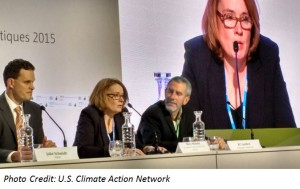
COP21 PARIS: In the beginning of this month, 150 heads of state are gathering in Paris to negotiate an international agreement that addresses the global issue of climate change. President Obama gave remarks at the first session of the United Nations Conference on Climate Change (#COP21), stating that, “the growing threat of climate change could define the contours of this century more dramatically than any other.” ELCA Advocacy Interim Director, Mary Minette, arrived in Paris on Saturday to participate in the summit on behalf of ACT Alliance. Mary is joined by a number of partners from ACT Alliance, World Council of Churches, Lutheran World Federation, as well as ecumenical partner church leaders. Visit the ELCA Advocacy blog to read the first update and keep up to date on the negotiations!
SYRIAN REFUGEES: In light of the tragic attacks in Paris, ELCA Advocacy joined our U.S. partner, Lutheran Immigration and Refugee Service (LIRS), to take action to support and protect Syrian refugees who are forced to flee violence in their communities. On November 18, the Rev. Elizabeth Eaton, Presiding Bishop of the ELCA, also called for support of refugee resettlement saying, “We are not naive about possible new threats of terrorism, but denying refuge to thousands of desperate people is not who we are as Christians, nor will it guarantee our security. Multiple ELCA bishops from across the country voiced their thoughts on resettlement as well. “The United States is a welcoming country with a religiously diverse society, and our refugee resettlement program should continue to reflect this.” Learn more and find out how you can take action at www.LIRS.org.
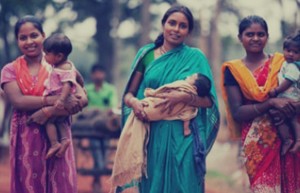
INTERNATIONAL HEALTH: As we prepare for the season of Christmas, ELCA Advocacy is supporting the Reach Every Mother and Child Act, an initiative in Congress that would improve strategies and access to healthcare for mothers and young children across the world. Lutheran social ministry organizations both here at home and abroad continue to provide health services—including child and maternal health, to those in need of it. You can share this message and offer your support at theELCA Action Center!
MONEY IN POLITICS: In the coming weeks, Congress will vote on a $1.15 trillion omnibus spending package that will likely include a campaign-finance policy rider. The proposed rider threatens to do away with spending limits set for political party expenditures in elections. This proposal in Congress comes in the wake of several narrow Supreme Court rulings, including Citizens United v. FEC, which greatly increased the role that money plays in our political process. Check out the ELCA Action Center and the Advocacy Fact Sheet on Money in Politics to find out how you can get involved and prevent more money from distorting our politics.
____________________
New York, NY – Dennis Frado, Lutheran Office for World Community
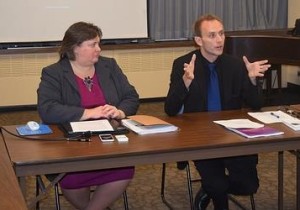
PRESENTATION ON CIVIL SOCIETY AND THE SDGs: On Nov. 5, Daniel Lenski (LOWC) together with Lynnaia Main (The Episcopal Church) gave a presentation on the participation of civil society in the development of the Sustainable Development Goals (SDGs) at a student seminar, organized by United Methodist Women. The students were from American University in Washington, D.C., and had a particular interest in the role of faith-based organizations within the U.N. system. Daniel also discussed the role of the LWF and the ELCA in the implementation of the goals.
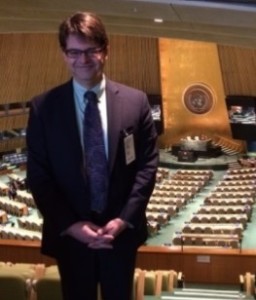
DAVID WUNCH VISITS LOWC: On Nov. 20, David Wunsch, director of Unit Operations and Programs, Global Mission, visited LOWC. He attended the International Peace Institute discussion on leadership and global partnerships in the face of today’s refugee crisis, which featured a conversation with U.N. High Commissioner for Refugees António Guterres, and State Secretary for Foreign Affairs of Sweden Annika Söder. Wunsch also attended a plenary session of the General Assembly on “global awareness of the tragedies of irregular migrants in the Mediterranean basin with specific emphasis on Syrian asylum seekers.”
FAREWELL TO DANIEL LENSKI: After completing a one-year internship with LOWC, we bid farewell to Daniel Lenski. He came from the Protestant Church in Hesse and Nassau/EKHN, Germany. Daniel followed several issues at the United Nations, including those related to gender justice, reform of the Security Council, freedom of religion and belief, the post-2015 process, and other thematic discussions, such as the process of debt restructuring and the situation of migrants, among others. LOWC is grateful to Daniel for his service and to EKHN for supporting him.
____________________
California – Mark Carlson, Lutheran Office of Public Policy
As California grieves the San Bernardino massacre, Solaris musicians who sang in the Capitol’s rotunda the day before continue their California appearances, comforting and gently challenging audiences with sounds of care, peace, community, joy and gratitude. LOPP-CA Director Mark Carlson heard them at the Parliament of World Religions and remarked how good they would sound in the rotunda. One thing led to another, and they were the first group in a daily holiday concert series that runs through Dec. 23. Prior to a concert in the St. John’s Lutheran sanctuary, they lifted the spirits of more than 100 homeless men and women camping overnight in St. John’s social hall, part of the intermittent Safeground hospitality at a few Midtown churches. At dinner with Carlson, they had brought up the “gun culture” they had experienced in New Mexico and Arizona, where they had just been, an experience that clashed with their Canadian roots.
As California prepared to send a strong delegation of public officials and advocates to Paris, a November highlight was the California Interfaith Power & Light (CIPL) Cool Climate Awards service at the Catholic Cathedral of Christ the Light in Oakland. Lutheran Church of the Incarnation in Davis received the top award in the energy efficiency category. Their choir sang “For the Beauty of the Earth,” among an eclectic mix of musicians and choirs. Carlson, who is a CIPL steering committee member, nominated them for the award. He also presented the water stewardship award to a Catholic girls middle school in Los Angeles County.
____________________
Colorado – Peter Severson, Lutheran Advocacy Ministry Colorado
LEGISLATIVE AGENDA FOR 2016: The Policy Committee of Lutheran Advocacy Ministry-Colorado met in early November to discuss the ministry’s 2016 legislative agenda. Items adopted included:
- A continuing commitment to anti-hunger work through the programs that were federally reauthorized this summer under the banner of child nutrition
- Support for poverty reduction measures like raising the minimum wage and supporting robust investment in social and human services programs
- Improving access to health care through effective implementation of Connect for Health Colorado and expanding Medicaid enrollment among especially vulnerable populations
- Calling for racial justice in the processes and structures of contemporary society and encouraging congregations to be a prophetic witness to that call
- Promoting the construction of more low-income housing by renewing the state Low-Income Housing Tax Credit
LOW-INCOME HOUSING: LAM-CO Director Peter Severson spoke at the Colorado Social Legislation Committee’s Fall Forum in November, addressing faith community responses to the housing crisis in Colorado, particularly in urban areas. The forum was titled, “Can We Afford to Live in Metro Denver Anymore?”
LOOKING AHEAD: The Colorado General Assembly will convene for its annual 120-day session on Jan.13.
____________________
Illinois – Jennifer DeLeon, Lutheran Advocacy Illinois
Although we are not hearing news stories about the unaccompanied migrant children, we know they are here and need our help. That is why we are collaborating with Mary Campbell, ELCA manager for relationships in Latin America and the Caribbean, ELCA Global Mission, as part of an outreach network to the three synods for educating, recruiting, and involving congregations in the AMPARO (Accompanying Migrant Minors with Protection, Advocacy, Representation and Opportunity) strategy. LA-I will offer workshops to educate, recruit and train individuals and congregations to participate in three areas: volunteer for the Guardian Angels program (immigration court visitation), become a welcoming congregation, and recruit advocates for immigration issues identified by the Washington office in partnership with Assistant Director of Migration Policy and Advocacy Alaide Vilchis Ibarra.
In November, we met with the Metropolitan Chicago Synod to begin the planning process of rolling this campaign out to the synod, and we went with Mary Campbell to the Chicago immigration court where many of the children have to make the trip to Chicago from Indiana and Wisconsin. Some have legal representation and others do not and need our help. As part of the Guardian Angels program, you can help guide these families in obtaining the resources they need for their next court date. If you live in Illinois, please consider becoming a volunteer for the Guardian Angels program. For more information, contact Jennifer.Deleon@lssi.org or Mary.Campbell@elca.org.
For a more in-depth look at the migrant children issue: Our Communities in Crisis Central America Report.
____________________
Minnesota – Tammy Walhof, Lutheran Advocacy Minnesota tammy@lcppm.org
November was a month filled with many coalition meetings and collaborative plans.
PAYDAY LENDING: Work continues on a joint summit to build a broader understanding of payday lending. The event, scheduled for Jan. 28, will include basic background on payday lending, faith perspectives on lending and usury, tips for countering payday lending industry arguments, prophetic messaging and preaching, and healthy alternatives.
AFFORDABLE HOUSING/HOMELESSNESS: After listening to weekly proposals, the Homes for All Policy Team moved into decision-making for the 2016 session. Previously, the coalition decided to support bonding for supportive housing development/rehab, existing housing preservation, homeownership support (land trusts), and public housing rehab (energy upgrades/conservation). In December, we’ll decide what else to support from the more than 14 programs and policy proposals.
CLEAN ENERGY/CLIMATE: LA-MN participated in a three-year proposal for Clean Energy & Climate Cluster work under Minnesota Environmental Partnership, including expansion of grassroots education and action. Lutheran Advocacy-MN has also been part of a multi-organization effort pulling together a Clean Energy State Table, beyond but interrelated to the Minnesota Environmental Partnership cluster effort.
IMMIGRATION: As anti-immigrant/refugee fervor increases, LA-MN has been consulting colleague groups to find appropriate ways to counter fear and misinformation. Given rhetoric, LA-MN’s work will primarily focus on changing the tone to create a welcoming environment.
NOVEMBER EVENTS AND PRESENTATIONS: Director Tammy Walhof presented LA-MN and effective advocacy to church forums, interns from a partner, and the Southwestern Minnesota Synod Council.
LA-MN helped sponsor several climate education events, and Tammy continued “clean energy/climate conversations.” Facebook Twitter: @LuthAdvocacyMN
The 2015 Lutheran Advocacy Ministry-NM annual Advocacy Conference took place on Saturday, Nov. 7, at St. Timothy Lutheran Church in Albuquerque. Approximately 75 advocates attended, including ELCA Lutherans from around the state and many of our ecumenical partners. Breakout session topics were hunger in New Mexico, predatory lending, solitary confinement, and the 2016 LAM-NM advocacy agenda.
During lunch, state Sen. Jerry Ortiz y Pino spoke about how his Roman Catholic faith informs his legislative work and about the upcoming legislative session.
____________________
Ohio – Nick Bates, The Faith Coalition for the Common Good nick@oneohionow.org
The Southern Ohio Synod Advocacy Taskforce partnered with synod hunger leaders in hosting “The World’s Largest Potluck” for an advocacy day on Nov. 18. Joined by partners with Lutheran Social Services and the Mid-Ohio Foodbank, advocates spoke with multiple legislative offices on the important role that public policy plays in ending hunger in our communities.
The day was grounded in the image of a potluck – where everyone contributes a little so that everyone can have a lot. Advocates explained to legislators and staff that we can end hunger in Ohio with small changes in public policies. Specifics regarding state imposed barriers to SNAP benefits were discussed. The group also spoke about the importance of improving Ohio’s Earned Income Tax Credit to help more hard working families struggling to get by.
The advocates reminded everyone that we need to remember that hunger is year round, and not just a problem during the holidays. “We are grateful to all of the generosity that pours out at this time of year, but we pray and challenge our state leaders to prioritize ending hunger in 2016,” Southern Ohio Synod Bishop Suzanne Dillahunt said. “Through public leadership, and our partnership, we can eradicate hunger in Ohio.”
For further information please contact Nick Bates, Southern Ohio Synod Advocacy Ministries at Batesyep@gmail.com.
____________________
Pennsylvania – Amy Reumann, Lutheran Advocacy Ministry in Pennsylvania
Tracey DePasquale, Associate Director
Lutheran Advocacy Ministry in Pennsylvania’s Policy Council and bishops met the first week of December to adopt a 2016 agenda. All expressed profound gratitude to the Rev. Amy Reumann as she departs to head ELCA Advocacy in Washington, D.C. Amy led Lutheran advocacy in Pennsylvania for more than six years equipping disciples to speak from their faith as well as bearing bold personal witness to the gospel in the public square. She will be deeply missed, but Pennsylvania is heartened and happy for the gifts she brings to the wider church. Associate Director Tracey DePasquale will serve as interim director.
LAMPa celebrated the passage of a bill to expand the state Housing Trust Fund, which will improve access to safe, affordable housing and eliminate blight. The payday lending industry has made its now annual appearance in the chaos of the close of a budget process. Staff visited lawmakers and continue to work with the broad statewide coalition in opposition to this new attack on the state’s excellent consumer protection laws.
Tracey attended the second meeting of the new State Food Security Partnership, offering perspectives of the experience of the ELCA World Hunger network. LAMPa also reached out to our congregational hunger ministries to join a letter to the governor seeking additional funding for hunger in his next budget proposal. Amy preached and taught an adult forum at Trinity in Reading and participated in an interfaith prayer service and march on climate change at the state capitol.
____________________
Virginia – Charles Swadley, Interim President and CEO
The Virginia Interfaith Center for Public Policy will hold its annual meeting Dec. 8 at St. Paul’s Episcopal Church in Richmond. The speaker will be Michael Cassidy, CEO of the Commonwealth Institute for Fiscal Analysis. The Center will recognize State Sen. John Watkins as the Legislator of the Year, and the Virginia Poverty Law Center for its work in health care, predatory lending and fighting hunger.
On Nov. 18, the center hosted a summit on childhood hunger, bringing together more than 50 leaders from multiple faiths across the commonwealth. Discussion centered around an agreement toward common advocacy for legislation to support universal breakfast in the classroom. And coming up on Jan. 20, VICPP will hold its annual Day for All People at the Virginia Union University in Richmond.
Mental health problems are particularly visible in the U.S. prison system, with a population of more than 2 million, 400,000 of whom have a mental health diagnosis, reports Karen Cameron of Virginia Consumer Voices. Among Virginia’s incarcerated population, 1 in 4 have had a mental health diagnosis. Virginia has had some unfortunate experience with this issue, with the deaths of Jamycheal Mitchell in the Hampton Roads Regional Jail as he waited for a bed to open up in the over-crowded Virginia state hospital system, and Natasha McKenna in the Fairfax County Jail. Both had been diagnosed with schizophrenia, but neither had access to mental health care while incarcerated.
____________________
Washington – Paul Benz, Faith Action Network
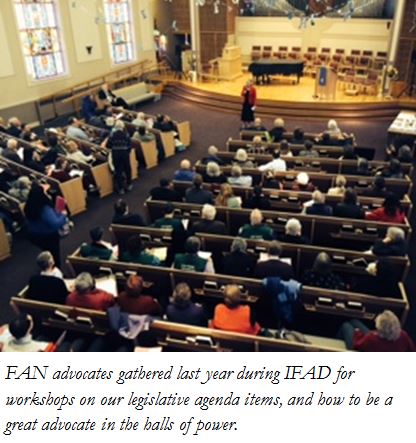
The state legislative “committee days” were held in the capitol before the week of Thanksgiving in preparation for the 2016 60-day session, which begins on Monday, Jan. 11. Faith Action Network (FAN) was there for meetings with legislators, coalition partners, and to prepare for our Interfaith Advocacy Day on Feb. 4. To view our 2016 legislative agenda click here. Our key issue remains reducing wealth inequality. FAN will be support a 2016 ballot initiative effort to increase our state’s minimum wage and fund our sick-leave policy. Other priorities will be criminal justice reforms, such as post-secondary education in our prisons, legal financial obligation reforms (debtor prison), and repealing our death penalty statute. Passing a state voting-rights act will also remain a key priority for FAN.
FAN is also in the midst of planning our second major event of the year – Interfaith Advocacy Day in Olympia on Thursday, Feb. 4. We also participate in and co-sponsor the Spokane Legislative Conference on Saturday, Jan. 30, and we are the sponsor and convener of our Yakima Advocacy Conference in central Washington on Sat., Feb. 6.
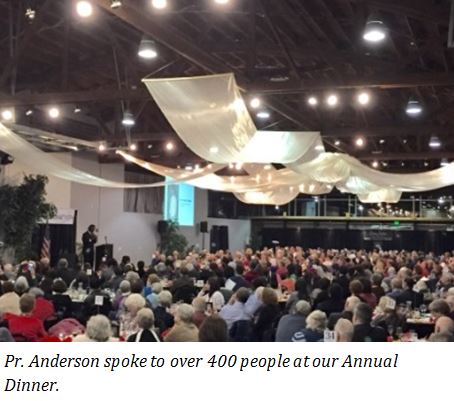
FAN’s signature event of the year, our annual dinner, was held on Sunday, Nov. 15, with the theme of “Yes We Can!” More than 400 advocates from more than 67 faith communities, community and labor partners, and elected officials and their representatives attended. Our featured speaker was the senior pastor of First African Methodist Episcopal Church in Seattle, the Rev. Dr. Carey Anderson, who addressed the racial injustices that are facing our communities and nation.
____________________
Wisconsin – Cindy Crane, Lutheran Office for Public Policy in Wisconsin
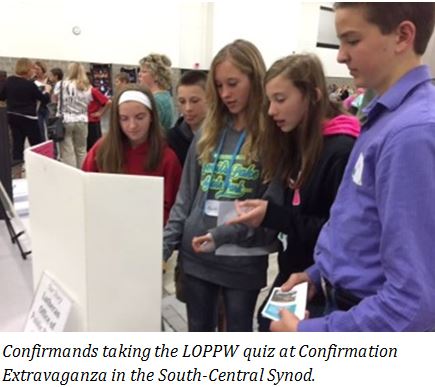
LOPPW is thankful for advocates who raised their voices in the midst of some troubling legislation that passed in Wisconsin this year. We have faith those voices will endure and multiply.
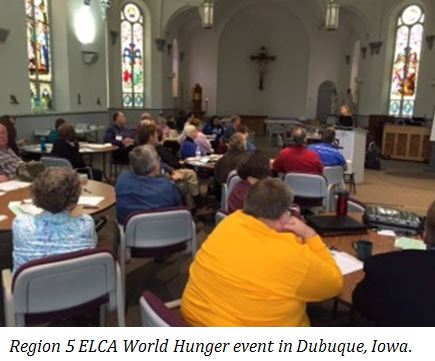
WORKSHOPS AND CONFERENCES: LOPPW led a workshop on children in poverty at Peace Lutheran Church in Waunakee. The director participated in a World Hunger event in Iowa, where she made contact with hunger leaders from the La Crosse Area, Northwest, East Central, Greater Milwaukee, and South-Central synods.
CARE FOR GOD’S CREATION: LOPPW’s director worked with a volunteer to prepare for the first Care for God’s Creation team in the South-Central Synod. The director and an LOPPW intern attended an all-day meeting with several faith-based and secular partners to discuss creating a statewide table to combine resources to advocate for cleaner air and address other environmental concerns in Wisconsin.
ANTI-TRAFFICKING: LOPPW/Cherish All Children’s team has decided on three locations in three synods for conferences and has created planning teams for each event. We are thankful for help from a Women of the ELCA grant. LOPPW submitted the grant proposal in the spring of this year. The director has met regularly with one of LOPPW’s interns to help shape a resource on trafficking that our intern is developing.
SYRIAN REFUGEES: LOPPW added educational and worship resources to the LOPPW website in response to e-mail exchanges between state public policy office and Washington, D.C., staffs.
____________________
What advocacy efforts are going on in your synod or state? We want to hear about it!







 Wealthy industrialized countries, which are responsible for the majority of the emissions that are causing climate change, have long resisted action to address loss and damage out of fear that doing so would create significant financial liability. However, in 2013, countries agreed to create the “Warsaw Mechanism on Loss and Damage” to study the issue and develop strategies and resources to manage.
 So how does it look?