Skip to content

ELCA Blogs

Advent Reflection: Hopeful for families and grateful for my own

Alaide Vilchis Ibarra, Assistant Director, ELCA Migration Policy and Advocacy

​”The two chief things are faith and love. Faith receives the good; love gives the good. Faith offers us God as our own; love gives us to our neighbor as his own.”  – Martin Luther

​Every year, as Christmas approaches, I begin to worry about budgeting both my time and money for presents while I’m home in Kansas to make sure that neither family members nor friends feel left out. It is a yearly ritual that leaves me feeling stressed. This year feels different. Working with unaccompanied children and their families, and closing a chapter on my own migration story, has given me a new perspective on Christmas and the precious time we spend together with the people we love.

A few months ago I traveled to Mexico with my parents and spent time with my extended family after 15 years of being unable to be together in the same country. As I sat in my grandmother’s dining room laughing with my cousins and aunts, it hit me how much I need those moments just sitting with my whole family. This experience also reminded me what a privilege it is to be able to have dinner with people you love, a privilege I’m well aware not everyone has and, until this year, my own family was denied.

Alaide fam

Alaide and her family in Washingon 

This year, when I visited Central America and Mexico and spoke with unaccompanied children and their families, I was reminded of the importance of family and neighborly love. I heard from many mothers who tearfully recounted why they had been forced to send their child on a dangerous journey or why they had chosen to make the journey themselves. Almost always, they spoke about the pain of separating from their families or communities.

After I returned from my own family trip to Mexico, I reflected on what those 15 years of separation had truly meant for me and my family. I found that the most painful loss was the sense of love and community we had in Mexico. Through family dinners at Christmas we were constantly reminded that we were loved and supported no matter what. Without realizing it, migrating to the United States meant losing that support. I never quite understood the importance of community, family and love until I allowed myself to feel the pain of the 15 years we had lost.

My own story and those I heard in Central America and Mexico makes me wonder if the national conversation on migration would be different if we spoke about family and love instead of border enforcement and security. Although Washington, D.C., can be a hard place to be hopeful, this Christmas season I am determined to concentrate on love, family and community and to remember all who are denied these important things.

Throughout the seemingly endless waves of violence and fear all over the world that force so many to leave their homes, I am still hopeful for positive change. I truly believe that love will conquer fear and violence, as long as we allow it to: “[Love] bears all things, believes all things, hopes all things, endures all things” (1 Corinthians 13:7).​

Alaide photoAlaide serves as Assistant Director for Migration Policy and Advocacy. 

She lives in Washington, D.C.

Share

La indefinida temporada de Adviento – por Elizabeth Eaton

En el Cristo hecho carne, Dios nos encuentra y proporciona descanso a los corazones inquietos.

Oh ven, oh ven Emanuel, y rescata a la cautiva Israel que llora en solitario exilio aquí hasta que aparezca el Hijo de Dios (ELW por sus siglas en inglés, 257).

Adviento. Es una temporada de preparación y anticipación. Puede llegar a ser agotadora e implacable. El periodo comercial que lleva a la Navidad sin duda se ha hecho más largo. A veces, justo después del Día del Trabajo ya aparecen los escaparates navideños en las tiendas; la publicidad salta en nuestras laptops y dispositivos electrónicos de mano, y los villancicos se convierten en música de fondo en todas partes. Y se librará la guerra anual por la adoración navideña entre los pastores y la gente para decidir si se cantan villancicos navideños en la iglesia durante el Adviento. Pero no voy a tratar ese debate épico en esta columna.

Más bien, lo que quiero es considerar el profundo y santo anhelo que forma parte de esta temporada. Es significativo que las palabras de los profetas y el anhelo de Israel en el exilio sean tan prominentes en las lecciones designadas para el Adviento. La gente anhelaba que viniera el Señor, que actuara, que los redimiera, que los llevara a casa. Su exilio en Babilonia ya no era difícil. Muchos habían conseguido una buena vida, habían tenido hijos y se habían establecido. Pero no estaba del todo bien. Estaban físicamente presentes en Babilonia, pero sus corazones no estaban allí.

Creo que el Adviento es así para nosotros. La tierra es la buena creación de Dios. Encontramos mucha alegría en esta vida. Como luteranos, no nos apartamos del mundo, sino que participamos del mismo creyendo que es un don. Pero también sabemos que no está del todo bien. Que existen la desolación y el dolor: el dolor que experimentamos, el dolor que otros causan, el dolor que les causamos a otros. Y, debido a nuestra desolación, nos volvemos hacia nosotros mismos intentando, en una autosuficiencia fútil, estar completos.

De alguna manera, el Adviento crea una cierta inquietud. Puede que sea una de las pocas temporadas del año en las que nos hacemos más conscientes de nuestro deseo de plenitud y en la que estamos más alerta a las señales de que algo se acerca. Es como oír un sonido en la distancia que anuncia algo, pero que no podemos identificar con claridad. Creo que el Adviento es un tiempo liminar, un umbral. Los celtas a esto lo llamaban un “lugar estrecho, fino”, un lugar y tiempo en el que la tierra y el cielo parecen tocarse. Está justo ahí, apenas más allá de lo que se puede ver, justo más allá de nuestro alcance. Y nos invade un santo anhelo. Isaías lo dijo: “¡Ojalá rasgaras los cielos, y descendieras! …” (Isaías 64:1).

¿Qué hay en nosotros que nos hace preocuparnos, que nos vuelve inquietos? Isaías también escribió: “A pesar de todo, Señor, tú eres nuestro Padre; nosotros somos el barro, y tú el alfarero. Todos somos obra de tu mano” (Isaías 64:8). Parece que este anhelo del Adviento es una conciencia de que no estamos completos apartados de Dios. En el Adviento nos encontramos en ese momento incierto e inquieto entre el fin del viejo año y el inicio del nuevo, un lugar estrecho y fino en el que nos acercamos a Dios dándonos cuenta, como escribió San Agustín: “Tú nos has formado para ti mismo, y nuestros corazones están inquietos hasta que encuentran su descanso en ti” (Confesiones).

Pero no podemos llegar ahí por nosotros mismos. Ésta no es nuestra obra, sino la de Dios. La espera confiada en el Señor es el propósito del Adviento: aguardar, anhelar, esperar, creer.

Y Dios es fiel. Escuchamos del profeta Sofonías que Dios promete: “En aquel tiempo yo los traeré, en aquel tiempo los reuniré…” (Sofonías 3:20).

Pero Aquél por el que esperamos no está contento con tan sólo acercarnos, sino que cumple esta promesa viniendo a nosotros como Emanuel, Dios con nosotros. En el Cristo hecho carne, Dios viene a nosotros, nos encuentra y da descanso a nuestro corazón inquieto.

Un amigo mío dijo: “El mundo ansía un sentido más profundo de la conexión espiritual, pero no hemos descubierto cómo encontrarnos con el mundo en esa conversación y anhelo. ¿Cómo puede ser el Adviento el inicio de esa nueva conversación? ¿Qué tan diferente sería el Adviento si pudiéramos empezar a pensar en ese profundo anhelo como parte de nuestra jornada de Adviento?”

Sentirnos inquietos en esta temporada podría ser bueno para nosotros. Dios no decepcionará.

¡Alégrense! ¡Alégrense! Emanuel vendrá a ti, oh Israel (ELW, 257).

Mensaje mensual de la obispa presidente de la Iglesia Evangélica Luterana en América. Esta columna apareció por primera vez en la edición de diciembre de 2015 de la revista en inglés The Lutheran. Reimpreso con permiso.

Share

Love Thy Neighbor: Our Moral Imperative to Support Those Living with HIV/AIDS

By: Nicholas Jaech, Lutheran Office for World Community

“Faith-based organizations are essential partners, particularly in the areas of health service delivery and addressing stigma and discrimination. The partnership with faith-based organizations is critical to ending the AIDS epidemic and making sure that no one is left behind.” – Luiz Loures, UNAIDS Deputy Executive Director, September 27, 2015.

Today we commemorate World AIDS Day – a day to unite in the fight against HIV, show solidarity with people living with HIV and remember those who have died.

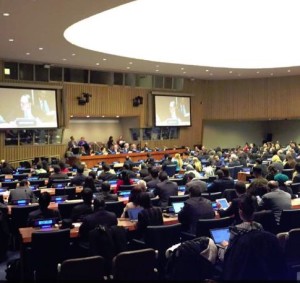
During the General Assembly of the United Nations, the Lutheran Office for World Community (LOWC) staff joined a small group of representatives from civil society, who gathered to have an assessment and planning discussion with UNAIDS regarding the next 15 years of combating the AIDS epidemic. In 2014, UNAIDS drafted and published its Fast-Track strategy, which details the pathway to ending AIDS by 2030. This strategy utilizes the 90-90-90 model, aiming for 90% of all people living with HIV knowing their HIV status, 90% of people who know their status having access to treatment and 90% of people on treatment having suppressed viral loads by 2020. Should this be successful, the strategy then calls for a 95-95-95 model by 2025. If successful by 2030, HIV/AIDS will be so contained that it no longer will be considered an “epidemic.”

However, during this meeting, UNAIDS admitted to a significant funding gap – a $10-15 billion shortfall in the implementation of this “Fast-Track” approach. This gap is largely due to the misconception that the AIDS epidemic is no longer as pressing or dangerous as it once was. This misconception then leads to the under-prioritization of HIV/AIDS, which often results in the unwillingness of governments to legitimately undertake measures to create new revenue specifically for combating the epidemic.

This isn’t to say that national governments are completely shying away from funding the response to the current AIDS epidemic. At a high-level event at the UN held later that day, the United States pledged to fund the life-saving treatment for 12.9 million people living with HIV in 2016-17, as well as funding efforts to reduce HIV among girls in 10 sub-Saharan countries by 40%.1 Additionally, Malawi pledged 14% of its GDP to HIV prevention, factoring out to $148 per HIV positive person per year. This funding comes in the form of the distribution of necessary anti-retroviral drugs .2

But despite these announcements, the $10-15 billion shortfall remains.

So what can we do, as followers of a loving and compassionate God, to bolster the efforts of UNAIDS to end the AIDS epidemic by 2030? First, we can make financial donations to the ELCA HIV and AIDS Ministry, which has established a commitment to support the efforts of ending the AIDS epidemic. This support manifests in the training of pastors for HIV/AIDS counseling, providing necessary anti-retroviral medication to rural communities, and free offerings of HIV testing. We can also support our family, friends, and neighbors living with HIV by providing food, clothes, toiletries, and other specified items to local HIV/AIDS clinics, shelters, and organizations. This can also include volunteering one’s time and energy as well. These two simple yet significant actions not only contribute to efforts to end the epidemic, but also illustrate our ability to manifest God’s love in our daily lives. As written in 1 John 3:17-18 – “How does God’s love abide in anyone who has the world’s goods and sees a brother or sister in need and yet refuses help? let us love, not in word or speech, but in truth and action.” – we are called to love and support those around us. This has to include those living with HIV and AIDS.

Yet, we are called not only to provide financial support or direct donations for local and international efforts to combat this epidemic, but also to combat the stigma that perpetuates and strengthens this epidemic every day. In fact, we cannot even begin to address the issue of HIV/AIDS without addressing the stigma and marginalization of those who are living with it.

Stigma and discrimination in education, health clinics, and general society against people living with HIV/AIDS, and especially against key populations with HIV/AIDS, continues to exacerbate the epidemic. For example, transgender women are 49 times more likely to acquire HIV than all adults of reproductive age.3 However, only 39% of countries have national AIDS strategies that specifically address transgender people (ibid). Additionally, gay men and other men who have sex with men worldwide are 19 times more likely to be living with HIV.4 Furthermore, adolescent girls are eight times more likely to be living with HIV than their male counterparts.5

Stigma and discrimination in societies around the world against these key populations above, as well against many others, are the largest contributors to the AIDS epidemic. It is then our responsibility as people of faith to work to systematically dismantle the oppression that continues to make these populations vulnerable. We are called to extend our love and support specifically to these groups of people. We are called not only to support them in their health, but also to support them in their own agency – bringing them into mainstream dialogue and decision-making regarding HIV/AIDS efforts (see also the ECLA Strategy on HIV and AIDS).6 The ELCA and the Episcopal Church reaffirmed their commitment to supporting these key populations in 2014.7 Also, religious leaders from 18 Eastern and Southern African countries with the Ecumenical Advocacy Alliance, an ecumenical initiative of the World Council of Churches, recently declared that “all human beings are equal before God and should be treated with dignity and respect regardless of age, gender and sexual orientation.”8

We, as church members with global relationships, have the potential to greatly contribute to the fight against the AIDS epidemic. If we are to truly live the message of 1 John 3:17-18, we must support people living with HIV/AIDS by addressing the core issue: stigma and discrimination. This is not simply an act of charity, but a moral calling of our Church by God. World AIDS Day reminds us that we can address this dangerous stigma only by showing unconditional love for all people, for I believe that only unconditional love, unconditional support, and a unified campaign for justice can combat stigma. If we truly want to end HIV/AIDS by 2030, this unconditional love has to continue to be at the forefront of our work, not only as a Church, but in our work as individuals. To echo a central message of the ELCA: “God’s work, our hands.”

For more on the ELCA’s HIV and AIDS Ministry, read here. You can also follow their efforts via Facebook.

For further reading on combating stigma against key populations, see UNAIDS publications here.

  1. http://www.pepfar.gov/press/247338.htm
  2. http://webtv.un.org/meetings-events/watch/action-implementation-ending-the-aids-epidemic-by-2030/4514846194001(7:00)
  3. http://www.unaids.org/en/resources/documents/2014/Transgenderpeople
  4. http://www.unaids.org/en/resources/documents/2014/Gaymenandothermenwhohavesexwithmen
  5. http://www.un.org/youthenvoy/hiv/
  6. http://download.elca.org/ELCA%20Resource%20Repository/ELCA_Strategy_on_HIV_and_AIDS.pdf?_ga=1.201502483.308726961.1447196323
  7. http://download.elca.org/ELCA%20Resource%20Repository/World_AIDS_Day_2014.pdf?_ga=1.206233553.391509662.1441291859
  8. http://www.ipetitions.com/petition/religious-leaders-call-fast-track-agenda
Share

November 29, 2015, Fear Factor

Jay McDivitt, Waukesha, WI

Warm-up Question

On a scale of 1 to 10, 1 being “Totally cool” and 10 being “I’m afraid to get out of bed” – how would you rate your Fear Factor these days? How afraid are you? Of what?

Fear Factor

Bombs and guns ripped through Paris. Suicide bombing attacks kill hundreds at a funeral in Baghdad and a street scene in Beirut. Governors are shutting down borders to keep Syrian refugees out. France is asking the world to join them in waging war on ISIS/ISIL/Daesh/Whatever. And Starbucks refuses to put snowflakes and reindeer on their coffee cups.

The world just seems totally messed up.

shutterstock_262033412edit

In the midst of it all, this lovely story made the rounds on Facebook:
Gate A-4 By Naomi Shihab Nye:

Wandering around the Albuquerque Airport Terminal, after learning my flight had been delayed four hours, I heard an announcement: “If anyone in the vicinity of Gate A-4 understands any Arabic, please come to the gate immediately.” Well— one pauses these days. Gate A-4 was my own gate. I went there.

An older woman in full traditional Palestinian embroidered dress, just like my grandma wore, was crumpled to the floor, wailing. “Help,” said the flight agent. “Talk to her . What is her problem? We told her the flight was going to be late and she did this.”

I stooped to put my arm around the woman and spoke haltingly. “Shu-dow-a, shu-bid-uck, habibti? Stani schway, min fadlick, shu-bit-se-wee?” The minute she heard any words she knew, however poorly used, she stopped crying. She thought the flight had been cancelled entirely. She needed to be in El Paso for major medical treatment the next day. I said, “No, we’re fine, you’ll get there, just late, who is picking you up? Let’s call him.”

We called her son, I spoke with him in English. I told him I would stay with his mother till we got on the plane. She talked to him. Then we called her other sons just for the fun of it. Then we called my dad and he and she spoke for a while in Arabic and found out of course they had ten shared friends. Then I thought just for the heck of it why not call some Palestinian poets I know and let them chat with her? This all took up two hours.

She was laughing a lot by then. Telling about her life, patting my knee, answering questions. She had pulled a sack of homemade mamool cookies— little powdered sugar crumbly mounds stuffed with dates and nuts— from her bag and was offering them to all the women at the gate. To my amazement, not a single traveler declined one. It was like a sacrament. The traveler from Argentina, the mom from California, the lovely woman from Laredo— we were all covered with the same powdered sugar. And smiling. There is no better cookie.

Then the airline broke out free apple juice and two little girls from our flight ran around serving it and they were covered with powdered sugar too. And I noticed my new best friend— by now we were holding hands— had a potted plant poking out of her bag, some medicinal thing, with green furry leaves. Such an old country traveling tradition. Always carry a plant. Always stay rooted to somewhere.

And I looked around that gate of late and weary ones and thought, This is the world I want to live in. The shared world. Not a single person in that gate— once the crying of confusion stopped— seemed apprehensive about any other person. They took the cookies. I wanted to hug all those other women too.

This can still happen anywhere. Not everything is lost.

Discussion Questions

  • Does fear help or hurt our ability to love each other and share moments like what happened in the airport?
  • Has fear made it difficult for you to do the right thing? When has fear been helpful to you?
  • Tell the story of finding joy or experiencing grace/love with someone who is very different from you.

First Sunday of Advent

Jeremiah 33:14-16

1 Thessalonians 3:9-13

Luke 21:25-36

(Text links are to Oremus Bible Browser. Oremus Bible Browser is not affiliated with or supported by the Evangelical Lutheran Church in America. You can find the calendar of readings for Year B at Lectionary Readings

For lectionary humor and insight, check the weekly comic Agnus Day.


Gospel Reflection

This is a creepy reading from the gospel of Luke. “Signs in the sun, the moon, and the stars…distress among nations…roaring of the sea…be on guard…be alert at all times…like a trap…” Yeesh.

Then again, it sounds kinda sorta exactly like the world in which we live. A world full of things and people to be afraid of. A world that is unpredictable and scary. A world that seems to get darker and darker every day.

So what are we to do as people of Jesus in this crazy world?

If you listen to some, the answer is, “Run and hide! Bury your head in the sand! Lock the doors and pretend it’s not happening! Be afraid – be very afraid!”

What does Jesus say, though? “Stand up and raise your heads, because your redemption is drawing near.”

Yup – when times get tough, when the world is scary, when you don’t know what to do, that is precisely when Jesus shows up. Jesus hangs in there with us when everyone else runs and hides. Jesus finds us in the scary places and gently lifts up our chins so we can look up and see the grace and goodness that God is still bringing into the world. The powdered sugar cookies shared among strangers who cannot speak one another’s languages. The patience to listen to fearful people and assure them that things will be okay. The sun that is rising in the east – the Light which no darkness can overcome.

Fear is natural and normal. Hope is countercultural. But fear won’t take away fear or make the world a more loving and living place. Hope can.

And Hope is totally in Jesus’ wheelhouse.

Discussion Questions

  •  Why is it easier to be afraid than hopeful?
  • When have you felt hopeful in the midst of fear?
  • When have you “closed your eyes” or “buried your head” out of fear? When have you opened your eyes, raised your head, and dared to be hopeful? When have other people helped you to be brave and hopeful rather than fearful?

Activity Suggestions

Materials: Blank paper, pens/pencils, colored pencils/crayons.

On one side of the paper, write “FEAR.” Draw or list/brainstorm things that you are afraid of – or things that others tell you to be afraid of. On the other side, write “HOPE.” Draw or list/brainstorm ways to be hopeful when you are tempted to be afraid.

Closing Prayer

: Light the first candle on the Advent wreath – or a candle, if you don’t have a wreath.

One: The light shines in the darkness.

Many: And the darkness cannot overcome it.

One: Let us pray. Holy One, we live in a scary world. Every day we see images and stories that make us want to bury our heads in the sand. Come to us in the Light of this flame. Help us to stand up and raise our heads and open our eyes to see Your Light. Remove our fear and give us Hope. In Jesus’ Name.

Many: Amen.

Share

Praying and working for an end to injustice in Minneapolis

ELCA Advocacy

​Today, we highlight reflections from Lutheran leaders in Minneapolis, where five people were shot near a demonstration outside the city’s 4th Precinct station on Monday, and additional shots were fired Wednesday morning. Marches, prayer vigils and rallies began Nov. 15 and continue to occur throughout Minneapolis. These protest actions are aimed at urging accountability in the justice system in response to the death of Jamar Clark, a 25-year-old black man who was shot by a police officer earlier this month.


The Rev. Ann Svennungsen is Bishop of the Minneapolis Area Synod. She reflected on the support provided by Lutheran leaders in Minneapolis and her experience participating in a candlelight vigil last Friday.

“[Earlier this week,] I awoke to news that shots had again been fired in north Minneapolis. Three young men, seeking to protect a system of white privilege, shot five of the citizens who were protesting at the 4th Precinct Police Station in response to the fatal shooting of Jamar Clark.

The protest is now in its 12th day – an encampment of folks keeping vigil both day and night. While some of the demands have been met by officials, the protesters continue to call for the release of tapes that could reveal what actually happened to Mr. Clark.

In addition to those keeping vigil, many more are delivering blankets and hot food and words of encouragement. And dozens upon dozens of Lutheran clergy have shown up – in solidarity with those who suffer and caring for those most traumatized and sorrowful. Our synod – and the ELCA – has seven congregations in the vicinity of the 4th precinct and we continue to pray for their ministries.”

prayer_vigil A candlelight vigil on Friday, Nov. 20, in Minneapolis

“Regardless of the tensions over the details, facts, and specific demands particular to the case; there is profound need for discussion of equity and racial disparities. Pain and frustration over unemployment, affordable housing, education, and basic city services – challenges felt especially in North Minneapolis – are all part of what compels the protesters to keep vigil.

This shared experience will strengthen us all for the long road of seeking justice together. We will pray for the family and community of Jamar Clark. And, we also pray for our mayor, public servants, police officers, the healing of the nation, for justice to be done. I believe we can do better as a city.

The vigil was a powerful experience. A unity of spirit and a sense of determination filled the gathered crowd. Out of this experience, your brothers and sisters in Minneapolis call on Lutherans around the country to enter into discussions about what would happen if a similar catalyzing event occurred in your community. How would your congregations engage those who were suffering? What message would protesters hear from your participation … or lack of participation?

Better yet, we encourage you not to wait for such a time – but to build relationships now, organize vigils now, read about systemic racism now, pray and work now for an end to injustice and the healing of our cities.”

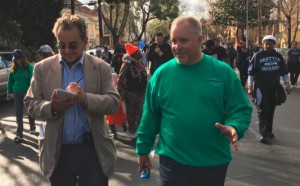
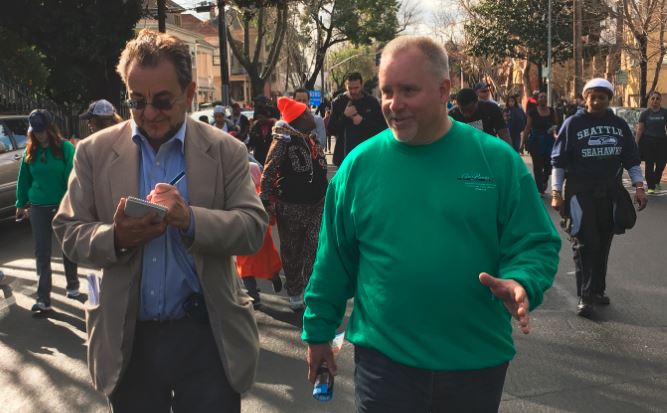
Ian_Louis_Kendrick Ian McConnelll, Louis Tillman and Kendrick Dwight at the demonstration outside Minneapolis’ 4th Precinct station

Louis Tillman, Ian McConnelll and Kendrick Dwight were present outside Minneapolis’ 4th Precinct throughout the week and participated in a number of peaceful demonstrations in the city. Tillman is a vicar, McConnell is a seminary intern, and Dwight is a Lutheran church leader in the Harrison neighborhood of Minneapolis.

Tillman was a few blocks from where five protesters were shot at the demonstration outside Minneapolis’ 4th Precinct station. “I was over on Knox and Plymouth … and I heard the gun shots rolling off. It sounded like the shooters emptied the entire clip! I kept telling myself ‘Lord have mercy!’ Then I called everyone from my church who [were] in the thick of things to ensure that they were all right.”

All three continue to show up at the ongoing demonstrations, with the goals of listening and community building in any way they can. “Even without all the particulars about Jamar Clark, his criminal history, or the release of video evidence from the night he was killed by a Minneapolis police officer, we as the ELCA have a voice that may be stronger than our silence,” McConnelll stated.

“We know something about grace and reconciliation. We pride ourselves on showing up after natural disasters and have the opportunity to show up after tragedies caused by human sin in our own neighborhoods. Our identity is rooted in the experience of being sinners and saints, all the time. And it’s time for us to leave what feels familiar and safe and show up.

We can’t change flawed systems ourselves, but we can listen to and support those who are grieving, struggling and afraid. We may not be able to topple oppressive systems (Jesus struggled with this too), but we can be allies with the oppressed.

We can both support police and hold them accountable, just like we can both confront racism and work for reconciliation.”


The ELCA social statement “Freed in Christ: Race, Ethnicity, and Culture” expresses our spiritual calling to confront racism, to engage in public leadership, and to advocate for justice and fairness for all people.

You can learn more about the ELCA’s commitment to challenging racial injustice at Racial Justice Ministries.

Share

Thanksgiving Reflection: Freedom from Want

John Johnson, ELCA Program Director for Domestic Policy

Thanksgiving is my favorite holiday. For my entire career in Washington, D.C., I have claimed Thanksgiving as the holiday that I would stay in Washington, since I fly home to south Georgia for weddings, funerals, births, baptisms, Christmas and pouting parents when they want me to come home.

As the quintessentially American time of celebration, it represents for me many things – not the least of which is that it has been an important part of my journey to adulthood. Thanksgiving, for me, has always been a time of deepening relationships that comes with sharing a holiday meal with friends, and often, strangers.

ThanksgivingUnfortunately, I think all too often assumed in this gathering of friends and family is the notion that we take a moment to actually be thankful … to take stock of what we are blessed with and how fortunate we are for so much abundance in our own lives – even at times when we live in scarcity. For me, Thanksgiving is a reminder that I may not have everything I want, but year after year, I have everything I need. I am also deeply mindful that my good fortune doesn’t belong to everyone.

I remember my first Thanksgiving in Washington, D.C.: I was a very young Hill staffer living paycheck-to-paycheck and shopping for my first Thanksgiving away from home, with a very tight budget. For whatever reason, I can still vividly see myself standing at one of those large freezer cases in the grocery store, pulling one turkey over another, checking the price of each trying to find the one budget-appropriate turkey with my name on it. After some considerable effort, I found, tucked away in the corner of the freezer case, a small turkey with the right price. Fighting back tears of both joy and humility, I took my humble haul to the checkout stand and paid for my bounty.

I remember the friends that joined me in the small apartment I shared with friends that Thanksgiving of 1993. Since then, I always look forward to Thanksgiving with great joy. This year, I join my goddaughter, her dads, and an abundant assortment of friends young and old. And that wonderful moment with the “guest of honor” is brought to the table with “oohs” and “ahhs.”

This warm and anticipated moment of turkey day was captured many years ago by one of my favorite artists, Norman Rockwell. Following the bombing of Pearl Harbor, President Franklin Roosevelt outlined his vision of the four freedoms in an address to Congress. Printed in four installments on the cover of the Saturday Evening Post was the renowned “Thanksgiving” painting. It is appropriately titled “Freedom from Want,” one of Roosevelt’s four freedoms, which also include freedom of speech, freedom of worship and freedom from fear.

Facing the storms

Sadly, when we turn on the TV, log onto Facebook or grab a newspaper, we see constant fear, want, probably way too much speech, and a lot of worship in response to it all. There are so many storms around us all over the world. There have been storms in the past, and I fear, sadly, there will be storms in the future.

For me, the only way to not be paralyzed by the shock and desperation is to advocate for those ideals Jesus modeled – feeding, healing, showing compassion, praying, suffering and challenging leaders to make difficult decisions. I have the great privilege to do this by representing the ELCA in advocating to our U.S. government and urging decision-makers to address domestic poverty and hunger and to protect vital social services for the most vulnerable among us.

The work we do in Washington is just one small part of a much larger picture of advocacy in the ELCA. Join us atwww.elca.org/advocacy to learn more about how we, as a church, strive for justice and peace throughout the world.

All of us with ELCA Advocacy wish you a wonderful Thanksgiving. We look forward to sharing more reflections during the upcoming Advent season. Thank you for being a part of the work of Advocacy.

God’s abundant blessings to you all,

John Johnson

Share

Lutherans and Refugees


“As we journey together through the time God has given us, may God give us

the grace of a welcoming heart and an overflowing love for the new neighbors

among us.”  – ELCA, A Social Message on Immigration, 1998.

Aware of the special challenges refugees, migrants, and displaced persons face, ELCA World Hunger has long supported companions and partners that work with people who have been forced to leave their homes for a variety of reasons.  Partners like Lutheran Immigration and Refugee Service (LIRS) and the Lutheran World Federation (LWF) are critical actors in this work.

Within days after the terrorist attacks in France, governors throughout the United States proclaimed that they would no longer accept Syrian refugees.  As of November 18, 26 governors had issued such statements.  Legally, of course, governors cannot stop refugees, but they can make it very hard on them, by withholding state funds to help them resettle, by refusing to issue state identification, or by increasing the already rigorous screening process for certain refugees or immigrants.  On November 20, the House of Representatives voted to suspend the program allowing Syrian and Iraqi refugees into the United States.

This presents a good occasion for recalling some of the reasons Lutherans support this important work.  The Lutheran Immigration and Refugee Service (LIRS) has issued a response to these developments, noting poignantly, “To close the door on resettling Syrian refugees would be nothing less than signing a death warrant for tens of thousands of families fleeing for their very lives.”  But there are other reasons Lutherans continue to accompany immigrants and refugees beyond the dire consequences many of them currently face.  (For some background to a Lutheran view on undocumented immigration, see this earlier post.)

#1 –Remembering who we were

Christian ethics, in general, and Lutheran ethics, in particular, begin with memory.  The Hebrew Scriptures tell a story of our ancient ancestors enslaved in Egypt.  They were strangers in a strange land, but God led them to freedom, and it is this action of God that lays the foundation of their own vocation toward strangers: “You shall also love the stranger, for you were strangers in the land of Egypt” (Deuteronomy 10:19). The special concern for widows, strangers, and orphans in the Hebrew Scriptures is rooted in God’s care of the people when they were helpless and landless.

It isn’t an overstatement to say that, for Lutherans, the whole of the moral life is memory.  From a religious perspective, good works aren’t done out of blind obedience or to earn a spot in Heaven; for Lutherans, good works are done out of gratitude for the grace of God that saved us when we could not save ourselves. They are done in memory of God’s ways of acting toward us.  We were wandering spiritually, and God welcomed us, comforted us, and saved us.

Lutherans, too, can look at more recent history of our own displacement.  After World War II, nearly one in six Lutherans in the world was a refugee or a displaced person.  Some found permanent homes in Europe; others languished in camps.  Thanks to advocacy in part on their behalf, Congress passed the Displaced Persons Act of 1948, which opened the doors to wandering peoples.  Many displaced Lutherans found homes in the United States because this country opened its doors, even accepting those German Lutherans whose country had been at war with the US.  Once here, the National Lutheran Council and other faith-based agencies were critical in helping the refugees resettle.

Spiritually and historically, we are a wandering people whose lives have often depended on the hospitality of others.

#2 – Seeing who we are

As a white, straight, cisgender male, I cannot once recall being asked to speak for all white people, all cisgender men, or all straight people.  But I can recall numerous times when I have heard other people asked to speak for their entire race, their entire ethnic community, or their entire gender.  This is perhaps one of the most complex and pernicious elements of privilege.  My privilege lets me assume I will always be treated as an individual, rather than as merely a representative of an entire group.

As social media exploded with invective calling for the banning of all Syrian refugees because of the nationality of an alleged Paris terrorist, it was no surprise that my suggestion of increasing surveillance of all men went unheeded.  After all, men represent the vast majority of terrorists both foreign and domestic, men are overwhelmingly responsible for mass shootings in the United States, and men are far and away the perpetrators of violence in the home.  If we are serious about protecting communities from violence, perhaps we should start with policies that circumscribe the freedom of men.

Of course, that won’t happen, because men are still privileged the world over, so their gender is not lifted up as problematic in the same way that ethnicity or nationality might be. Those in the center have the privilege of being treated as individuals, while those on the margins are viewed merely as a group.  We saw a similar dynamic at work in regards to anti-Asian racism during World War II.  While German Americans and Italian Americans had numerous exemptions from internment that kept their population in camps very low, Japanese Americans had virtually no exemption from internment and were imprisoned with little question, despite the fact that all three countries of origin were at war with the United States.  Those of European descent were treated as individuals and separately interrogated, whereas those of Japanese descent were treated as a group, with few individual considerations.

For Lutherans, this type of discrimination is not merely problematic; it’s heretical. It is a denial of the foundational belief that humans are created in the image of God.  This doesn’t mean that we naively assume everyone is a good person.  Created in God’s image doesn’t mean “nice.”  It means that each and every human being is a creature with dignity, worthy of our care.  This transcending identity – image of God – is expressed through a variety of penultimate identities – racial, ethnic, sexual, gender, and many more. But our foundational identity as images of God grounds each in dignity. What makes a person worthy of our care, our hospitality, our protection?  Their very creation in the image of God. This is privilege that is universal.

This doesn’t mean we have to like everyone.  Nor does it mean we cannot punish persons when they do wrong. But it does mean we must respect their dignity, and doing so demands that we see what lies beneath their other identities, particularly when they differ from our own.  It means a willingness to hear their story, to let them speak, to see them as more than just a Syrian or just a Muslim or just a Christian. It demands an openness to seeing God through them. “Do not neglect to show hospitality to strangers, for by doing that some have entertained angels without knowing it” (Hebrews 13:2).

#3 – Becoming whom we are called to be

It is natural to feel afraid after events like those of last week.  But, for Lutherans, fear cannot be what marks our behavior toward neighbors.  Lutherans believe that God has set us free from sin and death so that we can serve the neighbor confidently and boldly.  We have life so that we may serve our neighbors.  Presiding Bishop of the ELCA Elizabeth Eaton puts it well:

Even in the face of evil, we remain confident that the good news of Jesus Christ liberates us and gives us the freedom and courage to discover and boldly participate in what God is up to in this world…We are not naïve about possible new threats of terrorism, but denying refuge to thousands of desperate people is not who we are as Christians, nor will it guarantee our security.

Martin Luther was also clear on what courage in service of the neighbor means.  In 1527, Luther responded to the question of “whether one may flee from a deadly plague.” His response was straightforward:

A man who will not help or support others unless he can do so without affecting his safety or his property will never help his neighbor.

Life together involves calculated risk.  Lutherans are called to live in love of the neighbor, not in fear of the neighbor.  There is no truly “safe” service. Accompanying our neighbors means walking down dark roads, facing with them situations of violence and oppression and taking risks that things will not go as planned.  We do all this in awareness that a life lived in isolation and fear of one another is not a life worth living.

(Of course, it is necessary to point out here the rigorous screening process each refugee must go through before settling in the United States.  The process is lengthy and involves several agencies.  The recent fear of refugees is more reactionary than reasonable.)

So, faithful people will continue to accompany their displaced neighbors.  LIRS and other agencies will continue their important work, and ELCA World Hunger will continue to support it.  But this will get harder as irrational fear continues to snake through our communities.

You can help.  Be an advocate.  At the water cooler, in the classroom, during coffee hour, from the pulpit and around the table, remember who we are and whom we are called to be.  We Lutherans stand in a long line of people whose existence has depended on God continually loving them despite their failings, on a Messiah opening his arms to those who crucified him, and on a government extending welcome to fearful exiles displaced by tyranny.

We are a migrant people, saved by one whose first human experience was escaping violence with his mother and father (Matt. 2:13-15).


Ryan P. Cumming, Ph.D. is program director for Hunger Education with ELCA World Hunger.  He can be reached at Ryan.Cumming@ELCA.org.


Like ELCA World Hunger on Facebook – https://www.facebook.com/ELCAworldhunger/

And follow ELCA World Hunger on Twitter – @ELCAWorldHunger


Share

November 22, 2015, Who’s in charge?

Angie Larson, Clive, IA


Warm-up Question

What does it mean to be a leader?

Who’s in charge?

Jeb Bush, Bernie Sanders, Donald Trump, Ben Carson, Hillary Clinton and many others jostle for recognition to become their party’s candidate in the next presidential election. The election is just under a year away, yet the debates, character defamation, accusations, and campaigning began months ago.  Compare this to Canada’s recent election where Prime Minister Justin Trudeau campaigned for 78 days before winning.

shutterstock_309738911edit

At this point in the United States it seems you can’t turn on your television, look through Facebook, or listen to the radio without hearing opinions, perspectives, and commercials campaigning for one candidate or another. Because the next President will be the leader of the free world in our time, we should take this important decision seriously. Yet, at the same time, the discernment process can be overwhelming for an American citizen.


Discussion Questions

  • What are some characteristics you believe the next President of the United States should have?
  • How would you hope that the next POTUS would lead the United States?
  • What qualities do you think should not be in a president?
  • If you could vote in the next United States election, what criteria would you use to discern who would receive your vote?

Christ the King Sunday

Daniel 7:9-10, 13-14

Revelation 1:4b-8

John 18:33-37

(Text links are to Oremus Bible Browser. Oremus Bible Browser is not affiliated with or supported by the Evangelical Lutheran Church in America. You can find the calendar of readings for Year B at Lectionary Readings

For lectionary humor and insight, check the weekly comic Agnus Day.


Gospel Reflection

The text for Christ the King Sunday depicts an interesting event in Jesus’ life and ministry. It begs us to ask the question, “Who reigns?” Jesus is caught in a battle between the Jewish leaders and the Roman Pontius Pilate.  Prior to our assigned text, we find the backstory. The Jewish leaders don’t want to be accountable for Jesus’ death so they hand him over to Pilate, the Roman official responsible for the region. Pilate tries to pass Jesus back to the Jewish leaders saying, “Take him and judge him according to your laws.”   But they resist and demand Pilate’s judgment because they want Jesus put to death, something permitted under Roman but not Jewish law.

Here’s where we can look at the authorities of the time. Pilate asks Jesus an interesting question, “Are you the king of the Jews?”  He is questioning if Jesus has authority here on this earth over this minor group of people in the region for which Pilate is responsible. Jesus replies with a question and doesn’t really answer Pilate. Instead, Jesus explains how his kingdom is not from this world.  Jesus’ kingdom is brought through the truth.  His rule is a different kind of authority, made apparent through his coming crucifixion.

Today, as during Roman times, people often become kings or rulers by conquering and winning battles.  Yet, Jesus shows that his kingdom is one that acts very differently. It manifests itself in the crucifixion, in the taking away of our sins.  It provides us freedom and reconciliation with God, as opposed to resting on dominance.

Discussion Questions

  • How is God’s kingdom different from earthly kingdoms?
  • What questions do you have about those differences? What is hard to understand?
  • If we understood and imitated Jesus’ kingship, how might earthly leadership look different?

Activity Suggestions

Check out some of the candidates’ YouTube sites; look specifically at the ones created by the candidates.  Process with youth how the candidates say they will lead.  How does this compare with how Christ is king? Where are the paradoxes?

Closing Prayer

Blessed Savior, We are grateful today. Thank you for the reminder of where your kingdom is and who the ruler is. Help us to grow in our discernment of our earthly leaders and how we can serve those around us.  Give us the strength to listen to your calling in our lives.  In your name we pray.  Amen.

Share

Living Earth Reflection: Calling on world leaders to protect God’s creation

Mary Minette, Director of Environmental Policy

November, 2015

Let us hold fast to the confession of our hope without wavering, for he who has promised is faithful. And let us consider how to provoke one another to love and good deeds, not neglecting to meet together, as is the habit of some, but encouraging one another, and all the more as you see the Day approaching.

                                                                                                               Hebrews 10:23-25

In less than two weeks, world leaders will gather in Paris to negotiate a new global agreement to address climate change at the annual meeting of the United Nations Framework Convention on Climate Change. Despite the tragic events of this past weekend, the French government has announced that the core meeting will continue as planned, given the importance and urgency of the topic under discussion, although security will be paramount and non-essential events may be cancelled.

The national leaders meeting in Paris will bear not only the hopes and needs of their own people, but also those of the entire creation, suffering from the growing impacts of climate change. Representatives from businesses, environmental groups, relief and development organizations and labor unions will also be in Paris to support the negotiations in various ways. But there will also be hundreds of people of faith attending the meeting who will work and pray for an outcome that protects God’s creation from future harm and helps our global neighbors, particularly those made vulnerable by poverty, to manage the very real impacts of climate change that are already profoundly affecting their homes and livelihoods.

In his recent encyclical on care of creation, Pope Francis called on all of humanity to concern ourselves with the fate of our common home and to “cooperate as instruments of God for the care of creation, each according to his or her own culture, experience, involvements and talents.”

People of many faiths are embracing this common responsibility and calling on our leaders to negotiate an ambitious agreement in Paris that reduces greenhouse gas emissions, encourages development of low carbon technologies, and assists populations most vulnerable to the effects of a changing climate.

Specifically, we seek an outcome in Paris that:

  • requires all nations to work to phase out energy sources that contribute to climate change and phase in more sustainable, renewable sources of energy;
  • requires all nations to improve their nationally determined goals for emissions reductions at frequent intervals, in order to account publicly for their progress and to increase ambition as needed;
  • includes a strong commitment to help the most vulnerable countries adapt to climate change and support for mechanisms that help build resilience and minimize and manage risks and losses; and
  • includes concrete pledges from the wealthiest countries to increase necessary financial support, technology transfer and capacity building for the most vulnerable countries– such as small island states and Least Developed Nations.

You can help support those who are traveling to Paris by:

  • Sending a message to our leaders that you support a strong agreement in Paris.
  • Pledging to reduce your own carbon footprint.
  • Praying for a peaceful meeting, particularly in light of the tragic events of this past weekend in Paris, and for a strong outcome for the meeting.
Share

November 15, 2015, Diversity and Democracy

Jocelyn Breeland, Sunnyvale, CA

Warm-up Question

Is diversity important?

Diversity and Democracy

San Francisco’s Everett Middle School principal, Lena Van Haren, came under fire last month when she withheld the results of a school election because they did not reflect the school’s diversity. SFGate.com quotes Van Haren saying, “It’s not OK for a school that is really, really diverse to have the student representatives majority white.”

shutterstock_127202768edit

Eighty percent of Everett’s students are non-white, including 56% Hispanic students.

While some students and parents appreciated Van Haren’s concern, there was a strong negative reaction among many parents and students at the school and, thanks to the internet, across the country.

Some said the principal was allowing political correctness to trump democracy. Others said that, although Van Haren claimed to want all voices to be heard, she was ignoring the voices of the student voters.

Van Haren later released the results and she has said she will work with students to find another way – possibly by creating additional positions – to bring greater diversity into student government. She also expressed regret about the controversy and acknowledged she probably should have not withheld the election results. Even so, she believes the public discussion created a teachable moment.

Discussion Questions

  • Is it important that the student government reflect the diversity of the student body?
  • What might have been a better way for the principal to respond?
  • The current U.S. congress is 80 percent male, although the U.S. population is more than 50 percent female. It is also 80 percent white, while whites are only 63 percent of the population.
    • How do you account for these differences?
    • Is this a problem? If so, how might it be addressed?
  • What does your faith tell you about diversity?

Lectionary 33

Daniel 12:1-3

Hebrews 10:11-14 [15-18] 19-25

Mark 13:1-8

(Text links are to Oremus Bible Browser. Oremus Bible Browser is not affiliated with or supported by the Evangelical Lutheran Church in America. You can find the calendar of readings for Year B at Lectionary Readings

For lectionary humor and insight, check the weekly comic Agnus Day.


Gospel Reflection

This portion of Mark’s gospel could be titled, “Don’t Be Distracted.” Don’t be distracted by the size and beauty of the temple, for it will fall. Don’t be distracted by false messiahs; they are imposters. Don’t be distracted by war and strife, these things will happen.

The disciples of Jesus’ day had trouble comprehending his hints about the destruction of the temple and his second coming and they were eager for greater clarity about the events that would signal the “beginnings of sorrows.” Modern Christians can perhaps be forgiven if we look for meaning in these signs. After all, we’ve been taught that everything fits, somehow, into God’s plan. We see dramatic events, especially bad ones like war, and wonder where they fit in. And we are eager for a sign that God is still in control.

“Take heed,” Jesus says, “that no one deceives you.” We should not let anyone or anything fool us into doubting the reality of God’s covenant in Christ. The temple may fall, but God still stands with his people. Fake prophets and messiahs don’t offer the salvation we receive in Christ. And we must not let trouble in the world or in our lives make us miss the love, comfort and strength God offers when we need it most. We must take care not to overlook God’s daily blessings, or miss an opportunity to be a blessing to someone else.

There’s no point in our worrying about events we can’t control or (often) understand. Instead, we can be confident of God’s presence in our lives, and that confidence can reassure us and free our hearts and minds to focus on fulfilling his purpose for each of us.

Discussion Questions

  • Who or what might be deceiving Christians today?
  • How can you avoid being deceived?
  • Martin Luther is often quoted as saying, “If I knew the world would end tomorrow, I would plant a tree.” It’s not clear he actually said this, but how does this sentiment address today’s scripture?
  • If you knew the world would end tomorrow, what would you do?

Activity Suggestions

Grab a newspaper or go online and find news that matches the description in v. 8. Work together to make a list of TEN items.

Next, look for news of responses to these events that are consistent with your faith. Together, make a list of NINE.

Finally, discuss as a group a possible 10th item for the second list. How can you faithfully respond to the world around you?

Discuss, make plans and take action.

Closing Prayer

Heavenly Father, thank you for your constant comforting, guiding presence. Remind us, when we are distracted, of the salvation we are assured through the sacrifice of your son. Strengthen us, and help us to support each other. And bless us to shine your light wherever we go. In Jesus’ name we pray. Amen.

Share