Lutherans are taking action across the country! Below you will find our monthly State Advocacy Newsletter. Share with your friends!
____________________
ELCA Advocacy Office, Washington, D.C.
The Rev. Amy Reumann, director
ELCA.org/advocacy
“VOTE FAITHFULLY SUNDAY”: ELCA Advocacy has joined with our United Church of Christ and The Episcopal Church ecumenical advocacy partners in observing the Sunday before Election Day as “Vote Faithfully Sunday.” This is a wonderful opportunity to celebrate and raise up every voice in our community, reflect on our commitment to the common good and prepare to cast our ballots. In October, ELCA Advocacy will provide a #votefaithfully toolkit for congregations that includes our #ELCAvotes resources and jointly created worship resources.
NATIONAL VOTER REGISTRATION DAY: Sept. 29 marked National Voter Registration Day. ELCA Advocacy, in collaboration with ELCA Racial Justice Ministries, sent an action alert reminding Lutherans to register to vote and hosted an #ELCAvotes Twitter chat to commemorate the day of action. Part two of the #ELCAvotes Bible study series, “From the Margins,” was also released this month. The new resource focuses on Luke 3:1-6 and guides discussion on our calling to act by speaking out as advocates and engaging in local efforts to guarantee the right to vote to all citizens.
FLINT WATER AID MOVES IN CONGRESS: It has been nearly a year since Flint, Mich., declared a state of emergency over the lead contamination of its water supply. In late September, after a series of intense negotiations and hundreds of messages from Lutheran advocates, both the U.S. House and the Senate passed separate amendments to address the water needs of Flint. Both houses passed the GOP-sponsored Water Resources Development Act, a routine bill that authorizes dozens of water projects throughout the U.S., with funding for Flint included. Both versions of the bill must be reconciled when legislators return to Washington, D.C., in November, when it is expected to receive a speedy vote. ELCA Advocacy action alerts are planned for later this year to help push the bill to the president’s desk after Election Day.
HIV and AIDS: After support and calls from ELCA Advocacy and other partners, the U.S. government in September made a commitment of up to $4.3 billion for the Global Fund over the next three years. The Global Fund fights AIDS, tuberculosis and malaria and is projected to save roughly 2 million lives each year.
SHISHMAREF: Shishmaref, Alaska, is an island village that has gained national attention for its historic decision to relocate. Residents were driven to this decision because of the unique and challenging circumstances of their environment. Climate change has led to increased flooding and erosion. As a result, Shishmaref is one of the most dramatic examples of a population affected by climate change. Find out more by reading the full article.
____________________
Lutheran Office for World Community, United Nations, New York, N.Y.
Dennis Frado, director
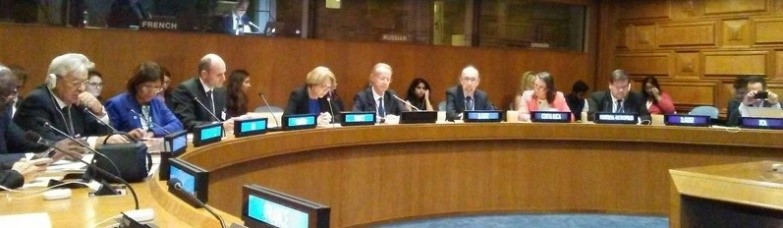
U.N. SUMMIT ON ADDRESSING LARGE MOVEMENTS OF REFUGEES AND MIGRANTS: In early August, U.N. members agreed on three texts related to the Sept. 19 Summit on Addressing Large Movements of Refugees and Migrants. The primary aim of the summit was better international response to the situations of both groups of people on the move. The final document was adopted by the General Assembly on Sept. 9, and government leaders endorsed it at the high-level summit. It starts a multi-year process to prepare a refugee response framework and a global agreement on migration. LOWC has been collaborating closely with The Lutheran World Federation (LWF) in advance of the summit as part of a civil society action committee. LWF endorsed the committee’s call for “A new deal for refugees, migrants and societies” and a subsequent Act Now statement and scorecard. LOWC staff attended the summit and will be engaged with LWF in post-summit activities in New 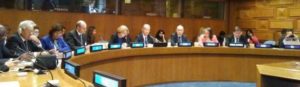 York and Geneva. LOWC is also coordinating follow-ups with the assistant director for migration policy and advocacy in the ELCA Advocacy office in Washington, D.C.
WHOLE OF SOCIETY APPROACH TO REFUGEES: On Sept. 20, Lia Hansen attended an event on “Mobilizing a ‘Whole of Society’ Approach to Refugees.” It was co-organized by the Permanent Missions of Canada and Ecuador and the U.N. High Commissioner for Refugees. The main topic was the effective engagement of all sectors of society in resettling refugees. The minister of migrants and refugees of Canada, John McCullum, began by outlining Canada’s “national project” aimed at creating public-private partnerships in refugee resettlement efforts. This project allows private groups to sponsor refugees. McCullum declared that private partnerships are essential for the national project, as private sponsorships engender the support of the national population. Fariborz Birjandian, CEO of Calgary Catholic Immigration Society and an Iranian refugee to Canada, advocated for increased partnerships between faith and cultural organizations in sponsoring refugees. The Canadian government, the U.N. High Commissioner for Refugees and the Open Society Foundation are collaborating on ways to export Canada’s public-private model globally.
KEEPING THE FAITH IN DEVELOPMENT: GENDER, RELIGION AND HEALTH: Last week during the U.N. General Assembly general debate week, Charlotte Mildenberger and Christine Mangale attended an event titled “Keeping the Faith in Development: Gender, Religion and Health.” It was co-hosted by UNAIDS, U.N. Women, U.N. Population Fund (UNFPA), the World Council of Churches-Ecumenical Advocacy Alliance, the Wijngaards Institute for Catholic Research and Islamic Relief USA. The event launched three reports examining the intersections and areas of contention between health, human rights and religious beliefs:
The reports address the taboo issues faith communities encounter when addressing sexual and reproductive health challenges, and propose theological and practical responses that respect the tenets of faith traditions. The event explored areas of conflict and the “faith-full” ways to resolve them. The participants were invited to recommend ways to help achieve the U.N. Sustainable Development Goals.
____________________
California
Mark Carlson, Lutheran Office of Public Policy
loppca.org
LEGISLATIVE SESSION CONCLUDES: The legislative session concluded with a push by the Lutheran Office of Public Policy–California on climate change, environmental justice, criminal justice reform and campaign finance reform bills. Director Mark Carlson joined Gov. Jerry Brown, legislators and community leaders for a bill signing in Fresno strengthening our state’s commitment to environmental justice and allocating greenhouse gas reduction funds from carbon cap-and-trade. Brown signed a bill allowing the option of public financing for state and local campaigns and a bill placing some restorative justice language in the Penal Code. He vetoed a bill to ensure in-person jail visitation, as a trend to video visitation con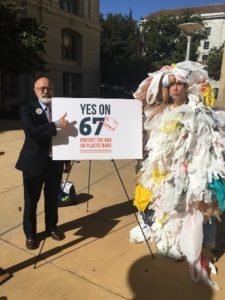 tinues.
BALLOT MEASURE WORK CONTINUES: LOPP-CA Policy Council recommendations on 17 measures are at loppca.org. Much effort has been directed toward ending the death penalty and retaining the plastic grocery bag ban. An Advocacy Sunday is being promoted for Oct. 16, including an ELCAvotes! emphasis. Mark will be attending the Southwest California Synod Women of the ELCA convention, synod professional leadership conferences, and a small, statewide Lutherans Restoring Creation planning retreat, sharing election materials.
9/11 REMEMBRANCE: It was a blessing to have Domestic Mission Director and former Metropolitan New York Synod Bishop Stephen Bouman in Sacramento. He met with congregational leaders, did site visits, and Mark accompanied him on the morning of 9/11 to the state Peace Officers Memorial by the Capitol (with a Lutheran California Highway Patrol officer), and the opening ceremony of the New York Fire Department firefighter memorial stair climb in a nearby high-rise.
____________________
Colorado
Peter Severson, Lutheran Advocacy Ministry–Colorado
lam-co.org
THEOLOGICAL CONFER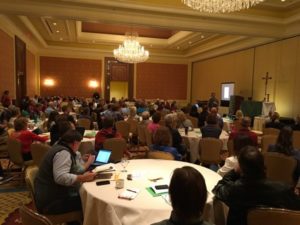 ENCE: The Rocky Mountain Synod Theological Conference took place in Cheyenne, Wyo., Sept. 19-22. Nearly 150 leaders from the synod gathered for worship, reflection, continuing education and fellowship. The synod is home to two advocacy ministries, Colorado and New Mexico, and both offices were present throughout the gathering to equip leaders for the busy election season.
VOTER GUIDES: Lutheran Advocacy Ministry–Colorado has prepared voter guides to help people of faith (and Lutherans in particular) consider the nine ballot issues that will be in front of Colorado voters in 2016. Each guide contains a summary of the ballot measures, resources for considering these issues, links to check voter registration and more. The guides are available digitally at lam-co.org or they can be ordered from the Rocky Mountain Synod office.
____________________
Minnesota
Tammy Walhof, Lutheran Advocacy–Minnesota
tammy@lcppm.org
ELECTIONS: The Minneapolis Area Synod hosted candidates from three West Metro legislative districts on clean energy and water, and Bethel Lutheran hosted candidates in Rochester. A Lindstrom congregation is interested in helping residents 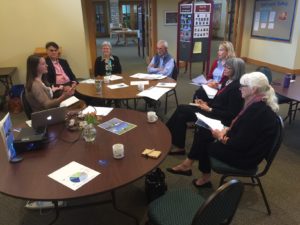 register to vote. Contact tammy@lcppm.org for election-related options for your congregation.
2017 PLANS: LA–MN’s Policy Council set general directions for the upcoming year at its September meeting. Payday lending was dropped but will continue to be a focus of action through 2016 in support of the Consumer Financial Protection Bureau proposed rules.
- Affordable housing: Even as new affordable units are added to rental stock, Minnesota is losing thousands of previously affordable units to investor buy-outs and luxury conversions. High housing costs remain a primary cause of instability and hunger. Affordable housing and related services will remain a high priority in 2017.
- Clean energy, clean water, climate, sustainable agriculture: Despite a renewable boom, Minnesota’s “80 percent carbon reduction by 2050” goal remains elusive. Gov. Mark Dayton supports increasing renewable energy to 50 percent by 2030 and also made clean water a priority last year. LA-MN and partners are evaluating the degree the administration might support differing proposals.
Some partners have asked LA-MN to participate in efforts on sustainable agriculture. The Policy Council sees agriculture, energy and water as interrelated and important to climate issues.
- Immigration, racism: LA-MN will continue to work on welcoming refugees and immigrants and hopes to find appropriate ways to address racism toward immigrants and Minnesotans of color.
____________________
New Mexico
Ruth Hoffman, Lutheran Advocacy Ministry–New Mexico
lutheranadvocacynm.org
Lutheran Advocacy Ministry–New Mexico is a partner with the Interfaith Hunger Coalition. The coalition recently sponsored a 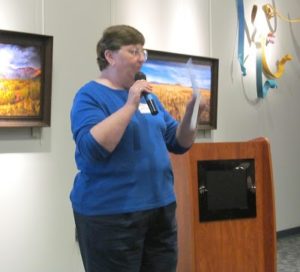 workshop called “Hunger 101.” The workshop drew more than 50 people who heard an in depth presentation by New Mexico Voices for Children on the state’s budget situation and included a number of possible public policies that could help deal with the current budget crisis. LAM–NM Director Ruth Hoffman talked about several state issues about which attendees cou
 ld contact their legislators. Ruth helped people identify their state legislators and provided contact information so that letters could be written to those lawmakers.
The state Legislature has been meeting in a special session to address the state’s severe revenue crisis. The last two fiscal years are underfunded by about $600 million. Because the state constitution mandates that state budgets be balanced, the governor has called the legislature to Santa Fe. Unfortunately, the governor also included several crime bills on her proclamation for the session. Included among those crime bills is one to reinstate the death penalty in New Mexico. LAM–NM was a leader in the coalition that successfully advocated to abolish capital punishment in 2009. LAM–NM is working on bills to protect social service programs from budget cuts, advocating for more state revenue, and fighting legislation that would reinstate the death penalty.
____________________
Pennsylvania
Tracey DePasquale, Lutheran Advocacy–Pennsylvania
lutheranadvocacypa.org
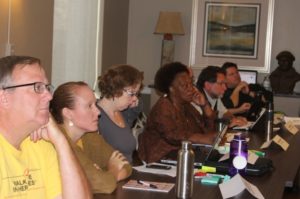 With the focus on “being church together for the sake of the world, in Pennsylvania,” LAMPa policy council and guests, including five Directors of Evangelical Mission, held our annual retreat in State College to re-imagine how we are called to live into this ministry together. Guests helped the policy council begin to discern what issues we might work on in the next legislative session by discussing what we are seeing in our congregations, communities and media. These helped the policy council identify areas around which to convene teams, as LAMPa moves forward in restructuring for mission. Hunger, racial justice, mental health and addiction, creation justice, education, immigration, and poverty, housing and jobs were the areas lifted up for the creation of issue teams to be convened by policy council members.
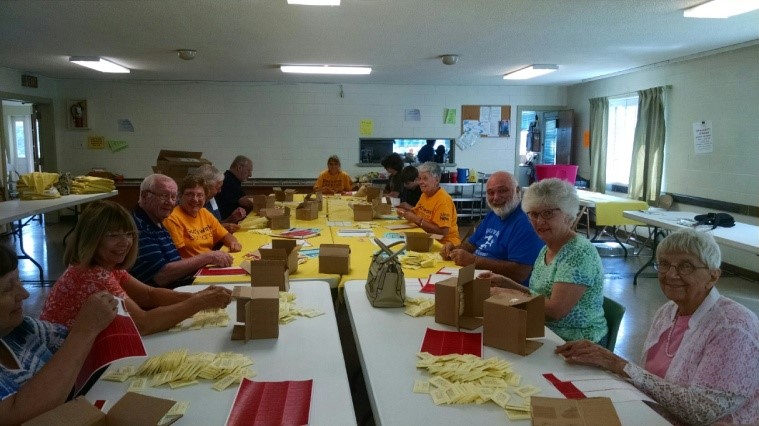
Senate Bill 851, a safe-harbor bill that would redirect youth victims of sex trafficking into services and away from the criminal justice system, was the focus of service and advocacy projects in Pennsylvania on Sept. 11. The Lower Susquehanna Synod’s 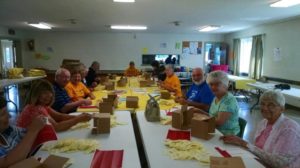 Women’s Organization passed a resolution supporting the bill, writing to the head of the Judiciary Committee and individual senators on its behalf. In addition to advocacy, members of First Lutheran in Chambersburg and Emmanuel Lutheran in Pittsburgh labeled bars of hotel soap with the phone number of the national human trafficking hotline. The soap will be distributed to hotels as a way to intervene where trafficking often occurs. Since the action, the bill has was voted out of committee.
____________________
Texas
Samuel D. Brannon, Texas Impact
texasimpact.org
REFUGEE RESETTLEMENT PROGRAM: Texas’ decision to withdraw from the federal refugee resettlement program does not reflect the values of Texans. Texans are courageous, hospitable and faithful. Texans should not tolerate this decision made on their behalf, which seeks to impede the process of meeting critical needs for some of the most beleaguered of God’s children.
The state’s decision will not end the resettlement of refugees in Texas. Instead, it will obstruct the delivery of life-sustaining support for the refugees already in Texas. It also will siphon precious nonprofit and faith-based resources intended for refugees into a crisis-driven effort to rebuild a system that was already working effectively and efficiently.
Finally, the state’s decision will not prevent Texas faith communities from aiding our sisters and brothers fleeing persecution in other parts of the world. Refugees come to Texas seeking shelter from religious intolerance, violence and failed states. They have already experienced immeasurable hardships, rejection, death and deprivation. Refugees see Texas as a place of freedom and safety for themselves and their families. The state’s decision notwithstanding, we will continue to work to ensure that their faith in our state is well founded.
____________________
Wisconsin
Cindy Crane, Lutheran Office for Public Policy in Wisconsin
loppw.org
ANNUAL LOPPW RETREAT AND UPDATED PRIORITIES: The advisory council and staff honed our priorities including: calling for an end to childhood hunger addressing the crisis of human trafficking; caring for God’s creation; confronting the impact of money on public policies and supporting immigration reform.
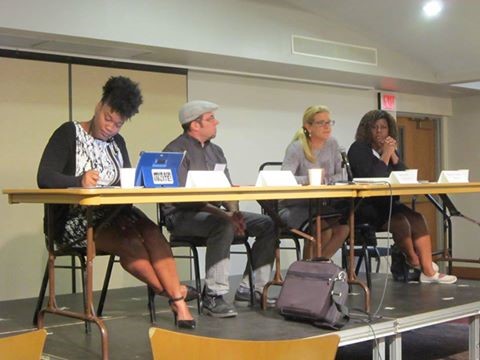
STATEWIDE CONFERENCE AND RALLY ON ANTI-HUMAN TRAFFICKING: Our panel included someone who had been trafficked, an outreach worker with homeless youth, and two assemblywomen from the Republican and Democratic parties. We also heard from La Crosse Area Synod Bishop Jim Arends, who spoke about why he wanted anti-human trafficking to be a priority for LOPPW in 2014, and from South-Central Synod of Wisconsin Bishop Mary Froiland on why it is improtant to be a public church.
HUNGER TEAM IN THE NORTHERN GREAT LAKES SYNOD: There was a discussion on the Child Nutrition Reauthorization, and we were updated on the landscape in the Northwoods.
CARE FOR GOD’S CREATION: LOPPW’s director was on a panel at the Wisconsin Power & Light conference in Appleton. She also co-led a workshop in which she spoke about the legislative landscape of Wisconsin in relationship climate change and water.
CANDIDATE FORUM FOR STATE SENATE SEAT HELD IN OSHKOSH: Council member Deb Martin moderated our candidate forum at All Saints Lutheran Church, Oshkosh. The Rev. Kim Krogstad opened us up with prayer and was the time keeper. The event made NBC news in Green Bay.

 In late September, billionaire Facebook founder Mark Zuckerberg and his wife, Dr. Priscilla Chan, announced a 3-billion dollar initiative for research aimed at eradicating chronic diseases, especially things like infectious disease, heart disease, cancer and neurological disorders like Alzheimer’s and autism. It may sound like a wildly irrational idea, but some influential scientists think that it’s not as unrealistic as it sounds at first, given how far the science of medicine has come in the last century. The goal would be to make the human species “disease-free” by the end of the current century.