Skip to content

ELCA Blogs

Hate Won’t Win: Commemorating the Emanuel Nine

To commemorate the 11th anniversary of the martyrdom of the Emanuel 9 – the Rev. Clementa C. Pinckney, Cynthia Graham Hurd, Susie J. Jackson, Ethel Lee Lance, the Rev. Depayne Middleton-Doctor, Tywanza Kibwe Diop Sanders, the Rev. Daniel Lee Simmons Sr., Sharonda Coleman-Singleton and Myra Singleton Quarles Thompson, our beloved siblings in Christ who were murdered by a self-professed white supremacist and ELCA parishioner while they were gathered for Bible study and prayer at the Emanuel African Methodist Episcopal Church (often referred to as Mother Emanuel) in Charleston, South Carolina on June 17, 2015 – we asked the Rev. Dr, Herman Yoos, former bishop of the South Carolina synod to share some thoughts about this day of repentance.

For more ELCA resources visit:  Commemoration of the Emanuel Nine — June 17 – Evangelical Lutheran Church in America (elca.org)


I was on vacation in the mountains of North Carolina in June 2015 when I received the call about the massacre at Emanuel African Methodist Episcopal Church in Charleston, S.C. I couldn’t believe it at first. Then, later that day, came the shocking news that the massacre had been committed by a young man whose family belonged to one of our ELCA congregations, who was a white supremacist and whose intention was to start a race war that would spread across the nation.

He might have succeeded except for the unexpected words of forgiveness spoken directly to him in court. When the family members of the nine shooting victims were invited by the judge to address the killer, no one was prepared for the words they spoke. Instead of condemning the shooter, each of the nine family representatives said things such as “We hate what you did to our loved one, but we won’t let sin and hate win the day. We forgive you, and we pray that God forgives you too.”

When their words were reported in the media, total strangers, both Black and white, embraced and prayed together on the streets of Charleston. Thousands of people held hands to form a human chain across the Arthur Ravenel Jr. Bridge between Mount Pleasant and Charleston, expressing their mutual humanity and support. Around the clock, people gathered in front of Mother Emanuel Church with wreaths of flowers, sharing their grief. Several months later, the state leaders of the Republican and Democratic parties appeared on TV, calling for the removal of the Confederate flag from the top of the Capitol, which overwhelmingly passed. It is hard to put into words, but I also felt something deep inside stirring and changing me as well.

A week later, I attended the funeral of the Rev. Clementa C. Pinckney, one of the victims. He was pastor of Mother Emmanuel, a South Carolina state senator and a graduate of Lutheran Theological Southern Seminary. There I sat, behind all the AME bishops and ELCA Presiding Bishop Elizabeth Eaton, listening to amazing tributes about his life and the deep faith he so freely shared with others. While listening, I focused on Mrs. Pinckney, her arms around her two daughters. Her dignity and grace were as powerful a witness as the words being preached about her husband.

As I watched her, I felt as if God were saying, “Herman, you see those two girls? You have two daughters also, don’t you? Yet these girls will never again have their daddy read them bedtime stories or pray with them as you did with yours. These girls will never have their daddy wait for them after their first prom, as you did. They will never have their dad proudly walk them down the aisle on their wedding day nor show up at the hospital with flowers when their first baby is born. All because of the sins of white supremacy and racism.” The scales fell from my eyes, scales of white southern privilege that I had never fully recognized until that day. Along with many tears, there came over me a deep sorrow and repentance that changed how I look at everyone.

Over the next four years, I worked with some synod leaders to host 35 screenings of the movie Selma. We began each session by dedicating our time to the families of the nine martyrs and asking God to help us honor them through our words and actions. Their names were read aloud as we prayed for each family. After the movie, in small groups, we asked, “What is God saying to us through this movie, and how can we build bridges of friendship and respect across our racial divides?” Racial reconciliation became the new lens through which I experienced my deepest call as bishop.

In retirement, I hoped that I would never again be faced with this kind of hatred. But here we are again, living in such a time. When the only immigrants admitted to our country legally are white South Africans, then we are facing that same old hate. When other immigrants are violently arrested, placed in unsanitary detention centers or flown to other countries and incarcerated there, then we are captives of that same old hate. When Black, Brown and women officers in the armed forces are fired or discriminated against for promotion, then we are living with that same old hate. When conservative justices of the Supreme Court vote to gut the Voting Rights Act in the name of being “colorblind” while permitting extreme partisan gerrymandering, then we are experiencing that same old hate and just calling it by another name.

My biggest fear for the church today is not declining worship attendance nor lack of financial resources for pursuing God’s mission in the world. No, it is the rising influence of white Christian nationalism in our culture and politics. This reality runs so much deeper than who currently holds office. Presidents come and go, and policies change. But these attitudes of racial hatred, exclusion and fear, reinforced by dominant white male leadership, is a soul sickness that infects not just our country but our congregations as well. Like stubborn weeds that are easy to grow but hard to uproot, these attitudes can be eliminated only by soul-searching, repentance, deep prayer and clinging to the forgiveness and grace of God in Jesus Christ.

My prayer is that we will never forget the martyrs of Mother Emanuel: the Rev. Clementa C. Pinckney, Cynthia Graham Hurd, Susie J. Jackson, Ethel Lee Lance, the Rev. Depayne Middleton-Doctor, Tywanza Kibwe Diop Sanders, the Rev. Daniel Lee Simmons Sr., Sharonda Coleman-Singleton and Myra Singleton Quarles Thompson. May we always remember their families’ forgiveness and join them in their commitment to not let hate win our day.
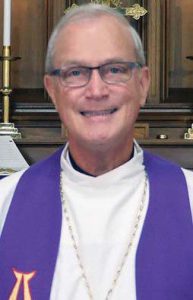

The Rev. Dr Herman Yoos served as Bishop of the SC Synod from 2008-2020. He is married to Cindy and they have three children and 7 grandchildren.  In retirement, he is a Spiritual Director who works as a group mentor with the Lutheran Theological Southern Seminary (LTSS) of Lenoir-Rhyne University Spiritual Direction program under Dr. Melanie Dobson and teaches Centering Prayer classes to Lutheran Congregations.
Share

Remembering the Emanuel Nine

June 17th is Emanuel Nine Commemoration and Day of Repentance. The following are shareable resources you can use within your local context for commemorations, services, and personal development. Further information and resources can be found on the ELCA’s Commemoration of the Emanuel Nine – June 17 webpage.


The following paragraph describing this commemoration could be provided for congregations in resources such as service folders.

Emanuel Nine, martyrs, 2015

On June 17, 2015, Clementa C. Pinckney, Cynthia Marie Graham Hurd, Susie Jackson, Ethel Lee Lance, DePayne Middleton-Doctor, Tywanza Sanders, Daniel Lee Simmons, Sharonda Coleman-Singleton, and Myra Thompson were murdered by a self-professed white supremacist while they were gathered for Bible study and prayer at the Emanuel African Methodist Episcopal Church (often referred to as Mother Emanuel) in Charleston, South Carolina. Pastors Pinckney and Simmons were both graduates of the Lutheran Theological Southern Seminary. A resolution to commemorate June 17 as a day of repentance for the martyrdom of the Emanuel Nine was adopted by the Churchwide Assembly of the Evangelical Lutheran Church in America on August 8, 2019. Congregations of the ELCA are encouraged to reaffirm their commitment to repenting the sins of racism and white supremacy which continue to plague this church, to venerate the martyrdom of the Emanuel Nine, and to mark this day of penitence with study and prayer.


In observance of the 10th anniversary of the tragic shooting of the nine martyr at Mother Emanuel African Methodist Episcopal Church in Charleston, SC, Bishop Eaton calls on us to “lament the wounds of the sin of racism that sow seeds of fear, division and hatred. Remembering the nine murders in Charleston is a commitment that our church must never forget.”


Additional Resources

Share

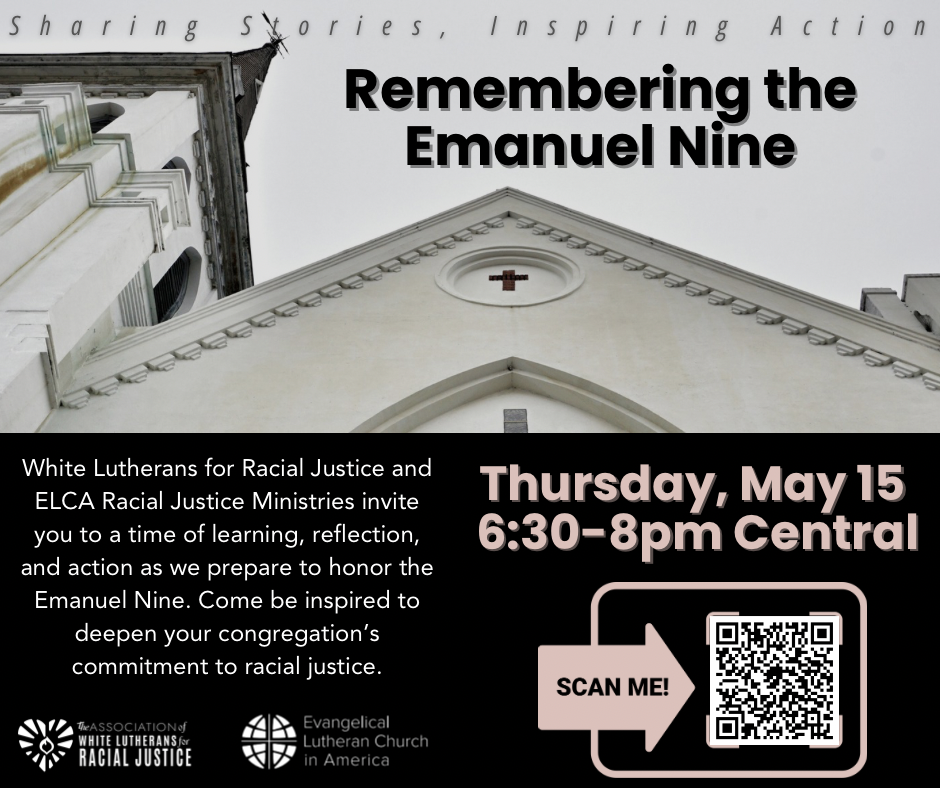
Remembering the Emanuel 9

White Lutherans for Racial Justice and ELCA Racial Justice Ministries invite you to a time of learning, reflection, and action as we prepare to honor the Emanuel Nine. Come be inspired to deepen your congregation’s commitment to racial justice.

Thursday, May 15, 2025 6:30-8 pm Central

To register, click: here

Remembering the Emanuel 9:  White Lutherans for Racial Justice and ELCA Racial Justice Ministries invite you to a time of learning, reflection, and action as we prepare to honor the Emanuel Nine. Come be inspired to deepen your congregation's commitment to racial justice.

Share

Commemoration of the Emanuel Nine: Guest blog writer Desta Goehner

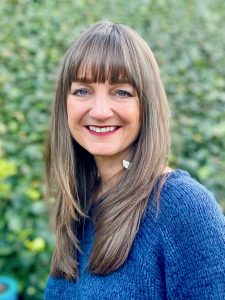
To commemorate the 9th anniversary of the martyrdom of the Emanuel 9 – Clementa C. Pinckney, Cynthia Marie Graham Hurd, Susie Jackson, Ethel Lee Lance, DePayne Middleton-Doctor, Tywanza Sanders, Daniel Lee Simmons, Sharonda Coleman-Singleton, and Myra Thompson, our beloved siblings in Christ who were murdered by a self-professed white supremacist and ELCA parishioner while they were gathered for Bible study and prayer at the Emanuel African Methodist Episcopal Church (often referred to as Mother Emanuel) in Charleston, South Carolina on June 17, 2015 – Desta Goehner, Board President of the ELCA Association of White Lutherans for Racial Justice to share some thoughts about this day of repentance.

For more ELCA resources visit:  Commemoration of the Emanuel Nine — June 17 – Evangelical Lutheran Church in America (elca.org)

See also:  Establishing_June_17th_as_Emanuel_9_Commemoration_and_Day_of_Repentance.pdf (elca.org)

Worship Resources:  Prayers_Litanies_Laments_Emanuel_Nine_Commemoration.pdf (elca.org)


As I gather with my congregation every Sunday for worship, my heart often turns to the Emanuel Nine. On June 17, 2015, nine faithful Black Christians were tragically shot and killed during Bible study at Emanuel African Methodist Episcopal Church in Charleston, S.C. This day stands as a somber reminder of the devastating consequences of racial hatred and violence.

What weighs heavily on my heart is the realization that the perpetrator, someone who grew up in a Lutheran congregation like mine, could commit such a heinous act. It compels me to confront uncomfortable questions about the environments and influences that shaped him — the people he interacted with at home, at school, at church and at work. He was one of us.

This is why White Lutherans for Racial Justice exists within the ELCA. We recognize our collective responsibility as white members of a predominantly white denomination to address the systemic racism that permeates our congregations, our synods, our institutions and our own hearts. The ELCA has issued resolutions, statements and apologies, but we have done very little to repair the ongoing harms caused by racism.

The burden of dismantling racial injustice cannot fall solely on the shoulders of people of color. As a white person, I must actively engage in the work of racial justice and equity. Yet I often shy away from relinquishing my power, my influence, my comfort. I’ve been conditioned to fear discomfort and confrontation, but I cannot allow that fear to paralyze me.

I have succumbed to this fear many times and certainly will again. I have also been the person to ask the hard questions and have felt the repercussions of that. Whiteness tells me to crawl back into my enclave, but my faith calls me out of that space. I trust that the Holy Spirit will lead and guide me as I lament and repent of my participation in white supremacy as a white, liberal, progressive Lutheran cis woman.

Whiteness exerts immense pressure, but I must not let it crush my resolve. I have witnessed how the weight of whiteness has led white leaders to falter, inflicting harm upon others without adequate accountability or restitution. We must acknowledge the risks inherent in naming injustice and asking hard questions that challenge harmful systems and processes.

We need each other in this journey toward racial justice. We need relationships that hold us accountable, that challenge us to confront our biases and privileges. Who are you building relationships with that offer different perspectives? It’s through these connections that our hearts change.

We must follow the leadership of people of color within our church, amplifying their voices and advocating for change. As we approach the 2024 United States presidential election, we cannot wait until after the fact to take action. Black and brown lives are at stake every day, not just during moments of political turmoil.

Commemorating June 17 as a day of repentance within the ELCA is a meaningful step toward acknowledging the legacy of racism within our church. But our work doesn’t end there. Racial justice is not an abstract concept; dismantling the structures of inequality that perpetuate racism requires tangible action. Join us in this ongoing journey toward racial justice. Together we can create a more just and equitable world where the lives of Black and brown people are valued and protected.

Reach out to your ministry leaders and ask them to include prayers of repentance in worship, and use resources on the ELCA Racial Justice website. Invite your congregation to use these resources in worship, in Bible study, on social media and in newsletters. And then notice whether your congregation commemorates June 17. If they do, express your support! If they don’t, gently inquire why not and advocate for change.

We believe in the power of community and the transformative potential of collective action. White Lutherans for Racial Justice welcomes people at all stages of their racial justice journey. Join us!


Bio: Desta Goehner is president of the Association of White Lutherans for Racial Justice and the Director of Thriving Leadership Formation, with 27-plus years of serving in different expressions of the ELCA. She is a trauma-informed spiritual director and a professional Enneagram coach for people and teams in ministry, specializing in conflict resolution, facilitation, leadership and spiritual formation. Desta’s work is dedicated to fostering racial justice, personal growth and healthy, anti-racist leadership in faith communities. For more about her visit linktr.ee/destag.

For more information on The Association of White Lutherans for Racial Justice visit: website|Facebook

Share