Skip to content

ELCA Blogs

Lessons From My History by Shari Seifert

As a Christian, I believe that we are all created in the image of God. Racism and white supremacy are heretical and demonic lies as they serve to say that some people are better than other people. The truth is that we are ALL one body in Christ and that body is hurt by white supremacy and racism. We are ALL hurt by these evils.

A big part of my faith journey as a European Descent Lutheran is to root racism and white supremacy out of myself and to do my part to move us towards the Kingdom of God.  A few years ago, a friend on a similar journey encouraged me to learn about the history of my hometown regarding race. Below is my reflection on a slice of history from my hometown of Rockdale–a small community in Central Texas. It involves the life and death of my Texas history teacher and serves as a stark example of how racism and white supremacy harm all of us.

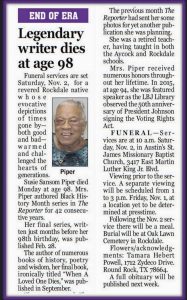
 Recently, Susie Piper, my middle school Texas history teacher died at the age of 98.  She led a remarkable life and was an amazing teacher. She is one of the reasons I learned early on that white supremacy is a lie and I am so thankful for that lesson.  I reached out to her a few years ago and to tell her she and Ms. Petty (a black woman who was my most excellent high school biology teacher) were the best teachers I had from Rockdale.  I had some exchanges with Ms. Piper and Emzy Jerome Hebert (her son).  We gave each other a few books and I got a history lesson that I sure don’t remember ever hearing in school.

I learned from Jerome and Ms. Piper that when school integration happened Ms. Piper had been the principal of the Aycock School.  The black school that was shut down.  I learned that teachers who were black women were required to have master’s degrees and teachers who were black men were required to have PhDs in order to teacher at the newly integrated school in Rockdale.  Ms. Piper was put in charge of “the hopeless kids” in study hall in the newly integrated school.  She said that they were put in “the black room” which had no windows.  I suspect that they wanted her to give up and quit – but that was not in her nature.  She told me “It was always my philosophy that everyone counted and everyone could learn.”  Somewhere along the way people wised up and put her in the classroom where I benefitted from her excellence in teaching and I am grateful for that.  She was a prolific writer and noted historian.  She was the keynote speaker at the Lyndon Baines Johnson presidential library on the 50th anniversary of the voting rights act.  I am so mad and sad about the injustices she went through.  I  don’t even have the words for this.   Mourn maybe the loss of the gifts and treasures we don’t have because other Susie Pipers were put in charge of study hall rather than the classroom. I’m angry about her and others’ mistreatments. Denying people’s gifts and not giving them a chance to shine really hurts all of us.  I don’t know what happened to move Ms. Piper from study hall to the classroom.   I would like to hear that story too.  I suspect it took some honest accounting of the situation and some bravery.  Let’s have more of that please.


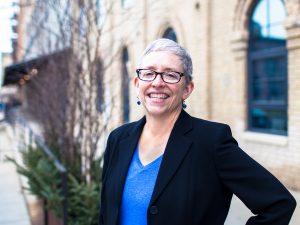
Shari is a European descent Lutheran living in Minneapolis with her wife and two sons. She sells houses and dismantles white supremacy in the Lutheran Church. She is on the board of the European Descent Lutheran Association for Racial Justice and the Minneapolis Synod anti-racism table.


Share

November 3, 2019–Homeless to Feeding the Homeless

Anne Williams, Ankeny, IA

Warm-up Question

What do you think it would take to turn a life around? To recover from addiction or homelessness?

Homeless to Feeding the Homeless

If you have the ability, watch the video interview on Now This: https://nowthisnews.com/videos/news/social-entrepreneur-mark-brand-helps-feed-the-hungry. You can also find it on Facebook by searching, “Now This Mark Brand.”

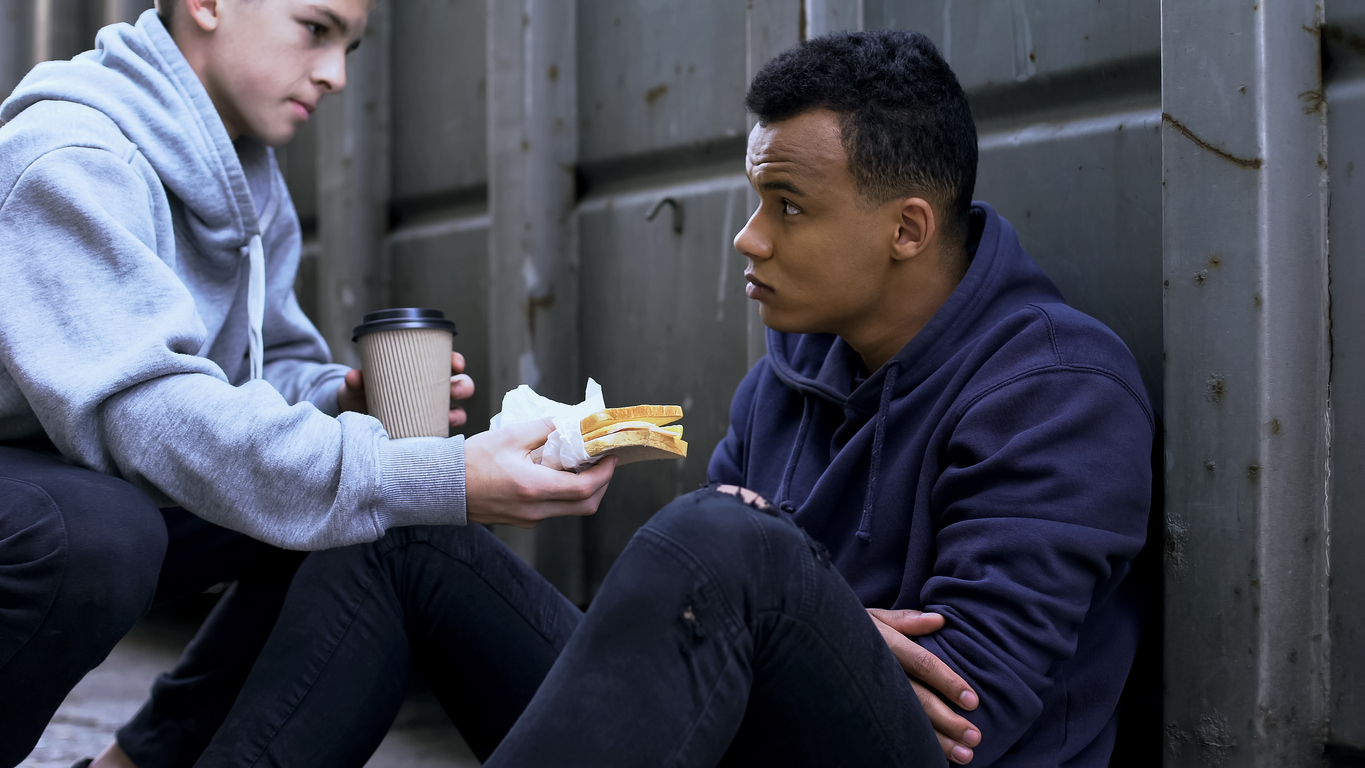
Mark Brand, of Vancouver, Canada works in what is called the poorest postal code (like a ZIP code) in all of Canada, where drugs are sold openly on the streets. Mark used to live there, use there, and was then homeless there. He shares a story of the one restaurant he felt comfortable going to and how a $3.50 burger plate would actually fill him up. Mark reflects on that time in his life: “When you live like that, even if it’s briefly, it affects you forever… cause when you are in that, it’s the loneliest place on the world.” 

After recovering from addiction and homelessness, Mark became a successful chef and business man, opening restaurants. Even as his businesses thrived, he realized he wanted to do more.  So he began exploring how to feed those in need. He did something ingenious.

He tackled the question of why people don’t give money to hungry street-entrenched people. The answer he got (which might be an answer we could give) is that folks are afraid their money will go to drugs or alcohol. So, working with the restaurant, he used to eat at when he was homeless, he created a token system. People can buy the tokens and give them to the hungry, who can redeem them for a sandwich. Mark’s comments about these tokens are really very interesting. He says, “What I was most excited about is that you would hand it to somebody. So yes, I’m excited that you’re gonna get a sandwich. Great. You’re hungry, you have a place of inclusion you can go to, that’s really cool… I’m way more excited that you’re going to talk to somebody who’s feeling super isolated and street entrenched.”

Mark seems much more interested in relationships, even quick ones like saying “Hi, here’s a token, go get a sandwich,” than just sandwiches. What homeless people need is food yes, but also someone to look at them and see them.

Discussion Questions

  • What do you think Mark knows about pain in life?
  • What do you think Mark knows about blessings?
  • What would you do if a token program like Mark’s came to your town? Would you buy them? Would you give them out?
  • What do you think about Mark’s statement: “I’m way more excited that you’re going to talk to somebody who’s feeling super isolated and street entrenched?” 
  • Which is more important: feeding people or connecting with people?

All Saints Sunday

Daniel 7:1-3, 15-18

Ephesians 1:11-23

Luke 6:20-31

(Text links are to Oremus Bible Browser. Oremus Bible Browser is not affiliated with or supported by the Evangelical Lutheran Church in America. You can find the calendar of readings for Year C at Lectionary Readings

For lectionary humor and insight, check the weekly comic Agnus Day.

Gospel Reflection

The blessings and the woes that Jesus describes in this passage (specifically verses 20 to 26), often called the Sermon on the Plain, speaks of reversal. Those who suffer now will be blessed in the coming Kingdom. And those who are currently feeling blessed will have to experience some suffering. 

I think there are (at least) two reasons why we find this passage uncomfortable.

First, we really don’t want anyone to suffer. We think it’s a punishment for something. Here’s the deal:  Suffering, whether because we are sick, or lonely, or grieving, or just plain different from others around us is part of life. It is not a punishment. Most of us never do anything to earn our suffering (kind of like we don’t earn our salvation)! God did not promise no suffering. God promised to be with us in the suffering.

Second, I think we think these reversals are somehow permanent. That in the kingdom, those who have been oppressed will have all the power and those who were gluttons will now starve… does that sound like the kingdom of God? Not to me! If the Kingdom of God is going to be what we think it will be, then everyone will have enough food, and no one will hoard it or be without it. 

I think that one of the ways we can read this passage is that Jesus is trying to get at the idea that there will be times when our lives will be good, and full of blessing, and times when our lives will be harder, where we will feel empty, and broken, and will cry out to God. Suffering and blessing can co-exist in one lifetime, sometimes one after the other, sometimes both at the same time. I think it is Jesus’ way of hinting that the Kingdom we experience now, the in-between, now-but-not-yet Kingdom that we only catch a glimpse of, is full of broken people who experience suffering and woe and who know fullness and richness and blessing too, at the same time. It’s a foretaste of the feast to come – the real Kingdom, where God will be all in all and all people will be whole and full.

Discussion Questions

  • Can you relate to the idea that blessing and wore can co-exist in one lifetime?  How do you think Mark Brand would answer this question?
  • If we’re going to experience both suffering and blessing, how do we make sense of them in our own lives?
  • Where are there examples of the now-but-not-yet Kingdom in your town? i.e. places and groups that bring hope and healing?

Activity Suggestions

  • Contact your local Ronald McDonald House and see if you can bring them a meal, or snacks or treats. Make the food during class. Gather a small number of them to transport and deliver it.
  • Call your local shelter and see what kind of meal you can bring them – casseroles are easy to make and freeze for easy transport.
  • If you’re being really bold, visit a homeless shelter.
  • Ask someone who is living sober with addiction to speak to the class, or even someone who’s cancer is in remission or been cured.
  • Make cards for the homebound and hospitalized. Give to your pastor to distribute.

Closing Prayer

Giver of all good gifts, grant that this day we may offer both our material goods and ourselves to those who need, that all may have a foretaste of the feast to come, when your will is perfectly done and all know the abundance of your love.

Share

boundless: God beyond measure

by: Molly Beck Dean, Gathering Director

In April, a group of creative youth, young adults and adults gathered in Minneapolis to discern the theme for the 2021 Gathering. After reading through 2018 evaluations, listening to locals share about their city and much discussion about the spiritual lives of young people, the theme “boundless: God beyond measure” was chosen.

As I have pondered our theme over the last few months, it speaks to me more and more. It challenges me to think about how big God really is – from creation of the universe to crucifixion for sins, from death defying resurrection to the Spirit that continues to guide us today. It reminds me of the wonders of creation – certainly the beautiful Boundary Waters in northern Minnesota, but also rolling plains, dusty deserts, crashing waves of lakes and oceans, lush forests and majestic mountains. God knows no bounds. God is all powerful and all knowing.

Our theme makes the almost incomprehensible hugeness of God personal. In our scripture verse, Paul writes “I want you to know all about Christ’s love, although it is too wonderful to be measured. Then your lives will be filled with all that God is.” Christ’s love for us is so abundant it can’t be calculated, quantified or even estimated. A love that couldn’t be contained in heaven so God came down and became human. A love so huge it was willing to suffer a gruesome death amongst taunts and jeers. A love so magnificent and glorious that death could not contain it and so Love was resurrected and changed everything humans knew about life, love and forgiveness.

To be honest, I don’t know all about Christ’s love or what it’s like to live a life filled with all that God is. I am bound daily by my sins and weighed down by the struggles of our world. But I have caught glimpses of it. I have stood on the beach and been brought to tears by the beauty and vastness of the ocean God created. I have held each of my new babies and cried because I have been entrusted with two of God’s miracles and in that moment knew a love greater than I could imagine. I have been in worship with a heart so full of the Spirit that my whole body danced in praise and my eyes glistened. I have been brought to my knees and cried the ugly cry over mistakes I’ve made and the wickedness that exists in the world, only to feel a calming in my heart and mind that could only be the forgiveness of God.

These brief moments of being filled with all that God is not only point me to the tissue box evidently, but give me hope for my life and our life together. God doesn’t hoard God’s boundless goodness, but rather shares it with God’s beloved – us – in real ways.

Paul’s words are my prayer for the young people of this Church.  As they prepare for this ministry and as they attend MYLE, the tAble and the Gathering, I hope they get closer to knowing all about Christ’s love and what it can look like and feel like to live a life filled with all that God is.

Molly first attended the Gathering in 1997 and has served at the Gathering in various capacities ever since. She’s worked at the congregational and synodical levels in youth ministry before transitioning to the Gathering Director in 2015. Molly enjoys beaches, spending time with her family and finding the best ice-cream shop in town.

Share

October 27, 2019–Who Belongs/ Who is Free?


Drew Tucker, Columbus, OH

Warm-up Question

Who is an authority in your life that you trust? What makes them trustworthy? 

Who Belongs/ Who is Free?

Topics of citizenship and migration remain front page news, not only in the United States, but across the globe. Many factors drive this discussion, such as the reasons for migration and the impacts on both the countries departed and the countries entered. Even more fundamental to this conversation is the question of belonging. Who belongs in what places? What are the factors that affect belonging? Who is the ultimate authority on affirming or denying belonging?

We must remember that this isn’t simply a theoretical topic. Questions of belonging, and who gets to affirm our belonging, affect the day-to-day lives of many migrants of various types across the globe. When I traveled to Europe with my wife this summer, customs agents checked passports every time we crossed a border to ensure we belonged to an acceptable country and had not overstayed our welcome in their land. However, for many migrants, their global travels aren’t simply for leisure. Many, like Miriam Vargas, seek a better, safer life for themselves and their families. Miriam and her young daughters have taken refuge in Columbus’s First English Lutheran Church because the church saw their need for safety after Miriam fled Honduras when gangs threatened her life. As First English declared their building a sanctuary for Miriam and her family, they became part of a wider network of organizations called the Sanctuary Movement, that promises belonging to migrants seeking safety and opportunity in the United States. This is not an isolated incident, either. Hundreds of congregations have stepped up to support the Sanctuary Movement, while the ELCA recently declared itself a sanctuary church body. 

To the question of “who belongs,” First English, the Sanctuary Movement, and a growing commitment across the ELCA boldly declare that, because God first welcomed us, all belong. The authority of belonging, then, does not ultimately lie with a particular law or a governmental entity, but with God 

To read more about becoming a sanctuary denomination, see this: https://elca.org/News-and-Events/8000. You can also learn more about the sanctuary movement here: https://www.wsj.com/articles/some-churches-offer-refuge-from-deportation-with-sacred-resisting-11564927200.

Discussion Questions

  • Share a story about your friends or relatives who are immigrants. 
  • What would if feel like to receive death threats from gangs, run for your life, and then face deportation after making a new life in another country?
  • How do we balance the authority we give to God and government?

Reformation Sunday

Jeremiah 31:31-34

Romans 3:19-28

John 8:31-36

(Text links are to Oremus Bible Browser. Oremus Bible Browser is not affiliated with or supported by the Evangelical Lutheran Church in America. You can find the calendar of readings for Year C at Lectionary Readings

For lectionary humor and insight, check the weekly comic Agnus Day.

Gospel Reflection

These verses, commonly used for Reformation commemorations, center on concepts of truth and freedom. Yet, before we considers those central themes, we must address the presence of slavery as an image Jesus employs. Jesus just throws the word slave around like it’s a normal and appropriate thing. And while, for 1st century Palestinians, slavery was a common occurrence and a very different thing than the slavery forced upon African natives by European and American powers for hundreds of years between the 14th and 19th centuries, we can’t read the word slave in the United States without acknowledging Jesus’s metaphor has been forever changed by the oppression white people forced on black people. Especially since this reading appears on a day when we celebrate a movement started by a white European and there’s explicit mention of slave’s not having a place in the household, we should focus our attention on how this imagery impacts people of African descent and make explicit that the freedom Christ promises is for all people, including black people.

Jesus’s first words help us see this importance, for he says “If you continue in my word, you are truly my disciples; and you will know the truth, and the truth will make you free.” Jesus, after all, is the way, the truth, and the life, so knowing the truth is knowing Jesus. This is beautifully complex. It means that when we know Jesus, we can comprehend the truth of the world more clearly. Yet, it also means that when we encounter anything that’s true, we’ve encountered a part of God. So when we encounter the Pythagorean Theorem, a2 + b2 = c2, we encounter something of God’s wisdom in creating the universe. When we realize the wonder of evolution, we realize the beauty of God’s creative process that brings to life new and wondrous things across the universe over billions of years. When we engage the equality of humanity, we engage something of God’s wisdom in giving every person the divine image. 

To continue in Jesus’s words isn’t simply to read scripture. It’s to live the life of love that Jesus teaches us. Knowing the truth who is Jesus means living the life that Jesus offers us. Despite the problematic imagery, his ultimate point is this: Jesus can offer us the fullness of God’s gifts eternally because he’s forever a part of God’s family. So the freedom we’re offered, the life that we’re offered, the truth that we’re offered, isn’t temporary or limited. When Jesus tells us that we belong, that we’re set free from sin and now a part of God’s household, he does so as one with authority. The authority of our belonging comes from God, who has desires that all people be truly free. Because God sets us free, we all belong with one another and with God.

Discussion Questions

  • What is something that you’ve learned outside of church – in school, on a team, in your family, or elsewhere – that’s helped you learn more about God? 
  • If Jesus is the ultimate authority in our lives, how should that change the ways that we make decisions? 
  • What’s another analogy that we could use, instead of slavery, to help highlight the point that Jesus is God’s Child?

Activity Suggestions

  • Imago Dei Game – Make a circle and the person in the middle says, “I am (insert name), the Image of God, and one way I see God is through (blank).” For the blank, insert things like, “people who like math,” “people who can draw,” “people who play an instrument,” and the like. Everyone who identifies with the last statement then has to move to a new spot in the circle, and the person without a spot becomes the next speaker. The goal is to help students see the various talents show perspectives on truth and then create more conversation around how people get to know God in dynamic ways. 
  • Red Light, Green Light – Gather your group on one side of a large room, gym, or playing area. One person acts as the traffic light. When they yell “Green light!” players move toward the other side of the space and “Red light!” to get them to stop. You can add complexity to the game by giving certain players disadvantages, like carrying cup full of water they can’t spill or egg on a spoon. The ones who reach the other side of the space first win. The traffic light can also remove those obstacles, if they so choose. Then, converse about the nature of the authority in the game and how people can use authority to set people free or bind them to unnecessary obstacles.
  • Read together the ELCA’s talking points regarding our status as a sanctuary church and watch videos related to AAMPARO, (found here: https://www.elca.org/sanctuarychurch). Then discuss how the kinds of freedom that Christ promises relates to the Sanctuary Movement.
  • If you’d like to donate to support Miriam and her family at First English (mentioned in the first section of this faith lens), visit here: https://www.gofundme.com/f/miriam-and-family-at-first-english?sharetype=teams&member=374504&rcid=r01-153063240238-9a96725777c14416&pc=ot_co_campmgmt_w

Closing Praye

Lord God, you release us from the cuff of sin and free us to live a life that belongs to you. Shape our lives to reflect your freedom. Form our hearts to embrace your liberation. Empower us to share this gift not only with ourselves, but with all people in all places. We pray this in the name of our liberator, Jesus: Amen. 


Share

Hunger Advocacy Fellows move past obstacles

By Tessa Comnick, ELCA Hunger Advocacy Fellow

In a world where 820 million people go hungry, there never seems to be a lack of opportunity to support our neighbors. However, sometimes there’s an obstacle discovering how to show that support in ways that provide effective and lasting solutions. Thanks to the generosity of ELCA World Hunger, the three of us are able to take part in a 12-month transformative journey that combines leadership development and faith formation with impactful advocacy that moves us toward an end to hunger and a just world where all are fed. We are elated to be part of the third cycle of the ELCA Hunger Advocacy Fellowship in 2019-2020 and to introduce ourselves in the ELCA. 

~ J, Nicole & Tessa


Tessa Comnick

Tessa Comnick is serving in Washington D.C. as the Hunger Advocacy Fellow with ELCA Advocacy there. She comes from Cleveland, Ohio with a bachelor’s degree in English from Baldwin Wallace University in Berea, Ohio and a master’s degree in Global Environment, Politics, and Society from the University of Edinburgh in Scotland. The granddaughter of an ELCA pastor, Comnick has attended an ELCA church since she was born and is immensely touched by the support of her home congregation, Prince of Peace Lutheran Church in Westlake, Ohio. She is grateful for this opportunity to explore her passions for food security and waste reduction, along with the opportunity to expand her knowledge in other areas such as environmental economics and climate induced migration. Comnick is a staunch believer that good things will come in our future, in altruism as a society and in Cleveland sports.


J Hatcher

J Hatcher is serving as the Welcoming All Program Coordinator for the Virginia Interfaith Center for Public Policy in Richmond, Virg. Hatcher earned her bachelor’s degree from Laidlaw College in New Zealand and master’s degree in Conflict Studies from the United Nations Institute for Training and Research, specializing in the effects of conflict on migration and displacement. Spending the last 13 years living in Korea, New Zealand and Ecuador, Hatcher developed an intimate look at several of the world’s many and varied communities. She has a passion for building awareness and recognition of systemic violence and its tangible effects on displaced persons.


Nicole Newell 

Nicole Newell, working at the Lutheran Office for Public Policy – California in Sacramento, joins this year’s ELCA Hunger Advocacy Fellows’ cohort with a background in non-profit work, advocacy and teaching, both domestically and abroad. Her focus on food justice has led her to work in kitchens and on small-scale farms to develop context for sustainable food practices. With a bachelor’s degree in Practicing Theology from St. Olaf College in Northfield, Minn., Newell has a love for Lutherans and served with Lutheran Volunteer Corps in Washington, D.C. from 2015-2016. She grew up in Des Moines, Iowa but was born in Sacramento. Newell is eager to use her passion for the intersection of faith and justice to effect policy-level change in California.

Share

Seeing Things Differently


From the story of Pentecost – the coming of the Holy Spirit – as told in Acts 2: 17:

“In the last days it will be, God declares, that I will pour out my Spirit upon all flesh, and your songs and daughters shall prophesy, and your young shall see visions, and your old shall dream dreams.”


The walk to Emmaus (Luke 24: 13-25) is a fairly “well-trodden” path for many Christians. It’s a story we hear once a year in the lectionary cycle – a story that comes together so well for me at the end when Jesus has vanished from the disciple’s sight – and yet, they “see” in a new and different way.

“Were not out hearts burning within us?” the disciples say to each other. Through the walking and talking, they caught a glimpse of God’s dream for a reconciled world – perhaps such a glimpse that the whole world might never look the same.

October 16, was World Food Day, a day that also occurs once a year to commemorate the founding of the Food and Agriculture Organization of the United Nations in 1945.

On World Food Day this year, ELCA World Hunger announced our upcoming Big Dream grant ministry partners – a group of four ministries that exemplify innovation and best practices in the pursuit of a just world where all are fed.

At the same time, 14 people gathered to discern and award the 2020 Domestic Hunger grants. Domestic Hunger Grants walk with congregations and their ministry partners as they seek to love and serve their communities in transformative, holistic and integrated ways. The awards are for up to 3 years and up to $10,000 per year, for a possible total award of $30,000. During this process, staff like me are notetakers. My role is to listen and record (a true gift!)

And on days like this, as we walk together in conversation, you hear many things. But the one that stays with me today is from one of our decision makers at the table who said, “I will need some help deciding on award amounts. I am 17 years old. It’s hard for me to imagine $30,000. I have never seen that much money in my life!”

The group gathered chuckled a bit, but then … we paused.

Think about it.

When was the first time you could conceptualize or understand what $30,000 really meant? When did you first “see” that kind of money? Or, have you ever??

Around the room, people said, “when I went to college,” “when we bought a house,” “when I got a car,” or “when I saw a medical bill.” For many, the first time we had “seen” $30,000 was as debt.

And yet, others reflected, “Living on $30,000 a year isn’t easy, either.”

Though it is can be difficult to live on $30,0000 in a context like the United States, an annual income of $30,000 (USD) puts a person in the top 1.23% of richest people in the world (Global Rich List). $30,000 is an amount that many or even most of our global neighbors may never actually see.

And for our high school senior-aged award table member, if all goes according to her plan and she completes college, she may join the ranks of the 45 million people in this country carrying a total of $1.5 trillion in student loan debt (more than what Americans owe in credit card and auto loan debt combined.)

And in that moment, through the community gathered, I saw things differently.

Faith formation and leadership development are intentional, experiential moments found and honed in and with community – like the one gathered together on October 16.

What would it be like if most youth and young people in this church, the ELCA, first “see” or try to conceptualize $30,000 represented by the hopes and dreams and plans of program budgets put forth by courageous, creative congregations seeking to love and serve their neighbors and neighborhoods through anti-hunger work? And not as debt— which is what the world will almost surely present without the alternative.

What type of leaders would be in our midst if more leaders – of all ages – can catch these glimpses that may essentially change the way we see the world around us? How might not only our expectations change, but our communities, relationships and stewardship change too?

At that table gathered, $30,000 looked like a ministry working with neighbors toward equitable access to food through community gardening and land ownership or like community-led advocacy and capacity building to improve access to safe water in a region dealing with lead pipe infrastructure issues.

God creates and gifts diversely and abundantly – and we are freed by grace through faith to boldly discover and wonder what God is up to and how we can be part of that in service with our neighbors and neighborhoods. Faith is a living daring confidence in God’s grace.

As people of faith, we are called to see things differently because of who God is – and to help others catch a glimpse of it too.

God’s gracious abundance opens our eyes to the presence of God among us, freeing us to see visions and dream dreams. And by being church together – through the Spirit – those visions and dreams set our hearts on fire.

“Were not our hearts burning within us while [Jesus] was talking to us on the road?” (Luke 24: 23)


Mikka McCracken is Director, Strategy and Engagement for ELCA World Hunger.

Photo Credit: Cheri Johnson

Share

Community

by: Elizabeth Hood

I spend months and months planning before we leave for a Gathering, after I have thought and prepared and over-planned, I lay awake at night…Will they all get along? Will we bond as a group? Will this be worth it?  

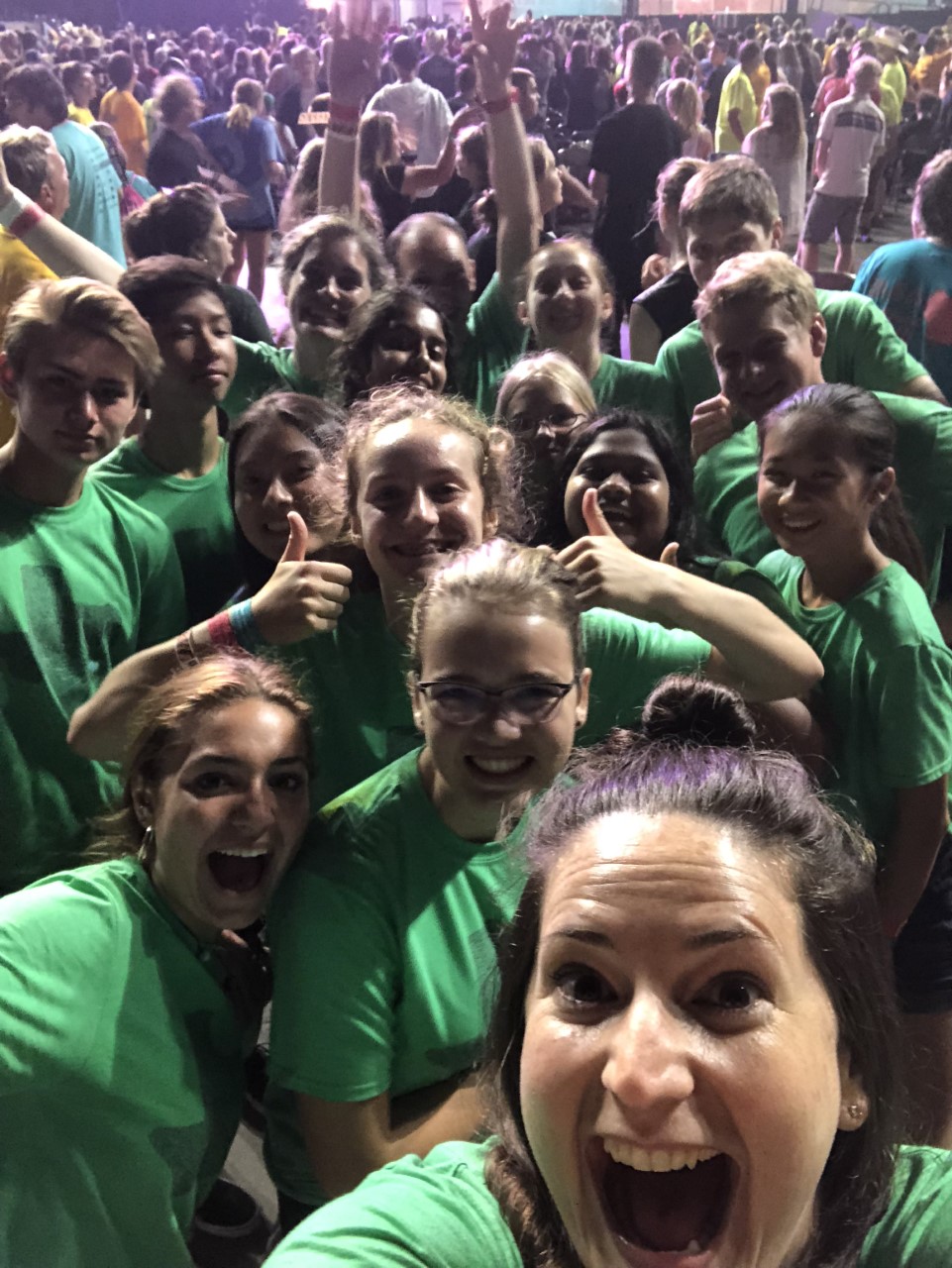
We start out nervous and excited but then at some point in the first few days there is this “magic moment.” It’s hard to describe and it always happens when I least expect it. That moment when we shift, the group finds a rhythm and we create community. My heart swells to even think about it.

I have this snapshot in my head of each time it has happened. It doesn’t just happen once, it happens over and over again. The first night we walk into Mass Gathering and the youth see thousands gathering, they realize that this is their community. When they are singing, arm over shoulder, swaying on the floor of the stadium with new friends: community. When they walk through the streets of an unfamiliar city and high five a youth from another state far away: community.

They are deeply impacted by this mass expansion of their circle of community and that word takes on a whole new meaning. They make new friends in an instant and connections that change the course of their lives forever! Life altering connectedness and community! 

These connections to each other and the larger community are priceless, the changes to the youth, profound. When we return home, we aren’t just people in a group, we are a community, connected to a much larger community than most of them had ever realized. They belong, maybe for the first time in their lives, forever woven into this community and it changes everything.

Elizabeth has served her congregation in California for over 10 years, loves camping and traveling around the world. She also leads the Hospitality Team for the Extravaganza and serves on the planning team for the Western States Youth Gathering.
Share

“Big Dreams” on World Food Day


Announcing ELCA World Hunger’s Big Dream Grant Awards

This World Food Day, ELCA World Hunger is pleased to announce four ministries that have been awarded Big Dream Grants. ELCA World Hunger’s Big Dream Grants, one-time gifts of $10,000 to $75,000, support domestic ministries as they pursue innovative and sustainable approaches to ending hunger. As we reflect on the meaning behind World Food Day and our shared commitment to address hunger until all are fed, we celebrate the big dreams of these ministries and their commitment to excellence.

New this year, ELCA World Hunger’s Big Dream Grant recipients were identified in part based on the contributions of their work toward the United Nations’ Sustainable Development Goals, or SDGs. The SDGs are intended to focus sustainable development toward overcoming poverty, inequality and environmental degradation. ELCA World Hunger is pleased to partner with the Lutheran World Federation as part of its “Waking the Giant” initiative. “Waking the Giant” is a global ecumenical effort which aims to build the capacity of churches to contribute effectively to the SDGs. Churches and partners are focusing on five of the 17 UN Sustainable Development Goals (SDGs) – Goals 3, 4, 5, 10 and 16 – and the ELCA has an additional focus on Goal 2.

Ministries receiving ELCA World Hunger Big Dream Grants are:

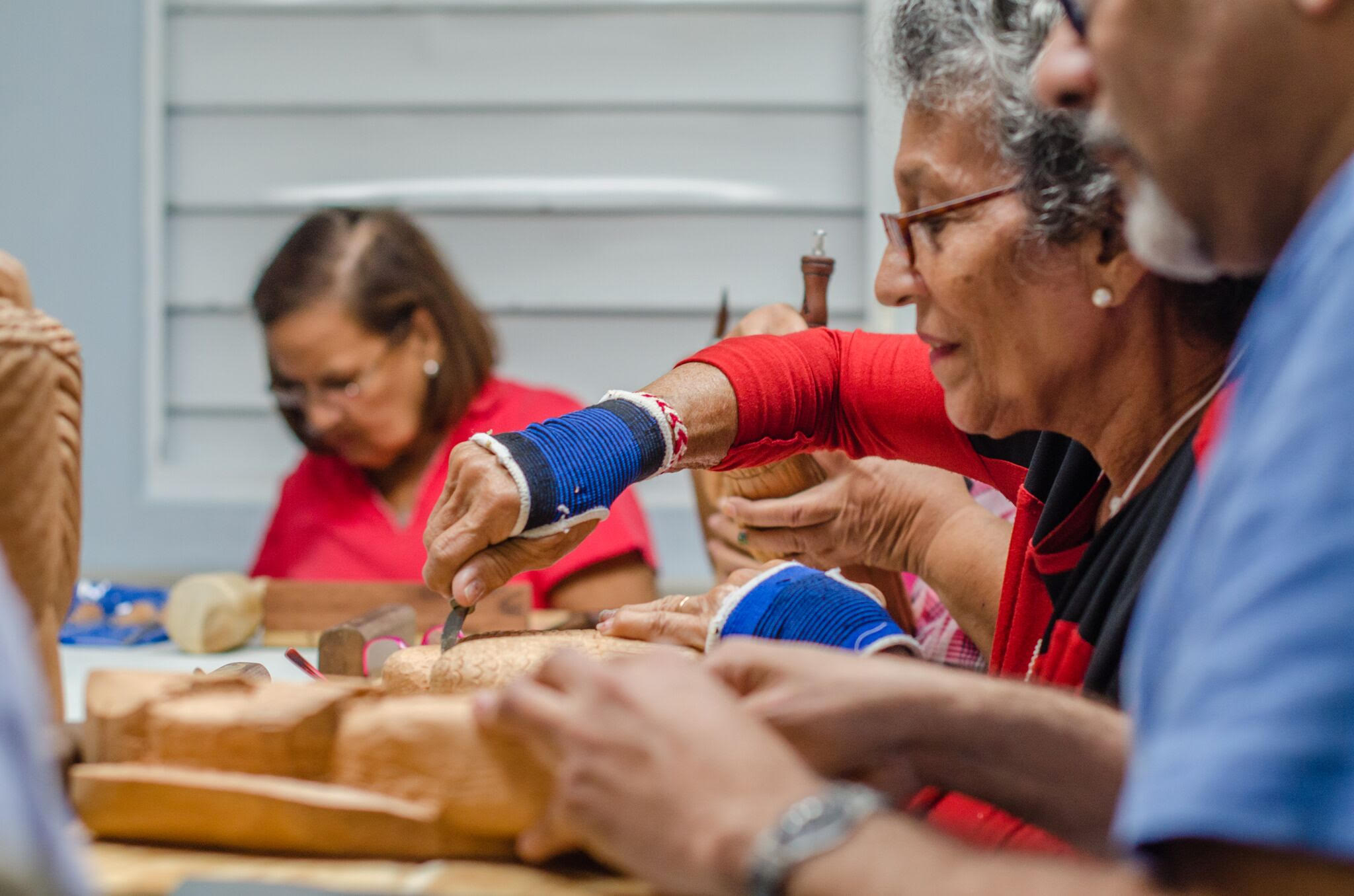
IntegrArte, a ministry hosted in an ELCA congregation in Dorado, Puerto Rico, works with people of all ages to address mental health in a community where mental health services are otherwise inaccessible to many who need them, particularly in the aftermath of Hurricanes Irma and Maria. IntegrArte is building connections between church and community by expanding mental health services within the greater community. IntegrArte is preparing to realize its long-term dream of expanding into a community center that will host programming for older adults, a Montessori school and an emergency shelter.

Through its McClintock Partners In Education (McPIE) ministry, a partnership with the local middle school and community, Christ Lutheran Church in Charlotte, North Carolina fosters an environment where families have the opportunity to thrive through meals, clubs, camps and courses that open up pathways for both youth and parents. Christ Lutheran is increasing the ministry’s capacity to support the economic success of under-served populations in Charlotte through a commitment to bilingual support and the creation of the McClintock Innovation Lab & Library, which will focus on STEM programming.

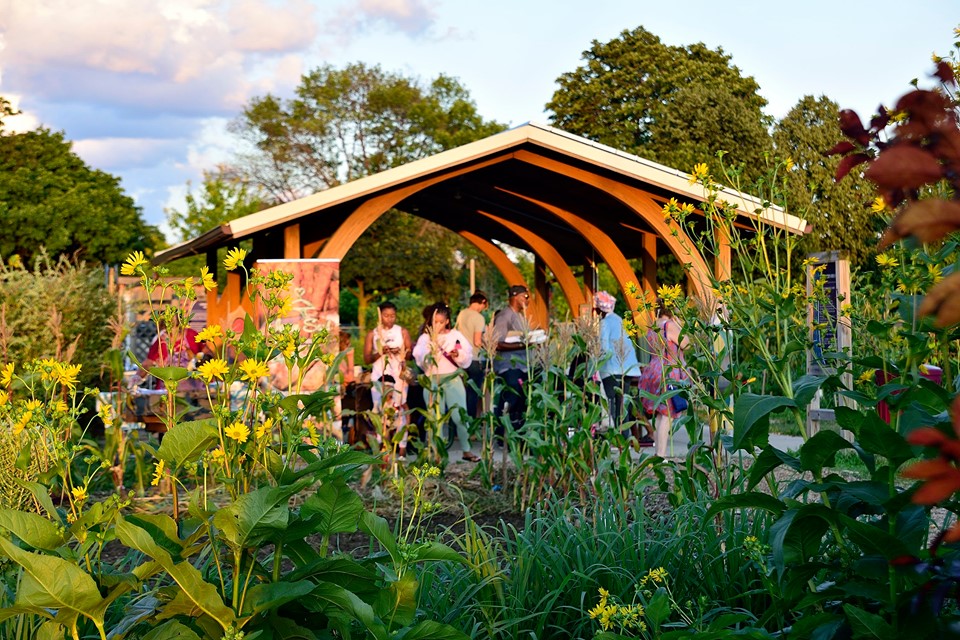
The Table: A 1st Century Style Community in the 21st Century is a worshipping community in Milwaukee, Wisconsin, reducing barriers to food. The Table provides a place where families can learn to grow the food that they want to eat and fosters learning and entrepreneurial opportunities for community members. Looking ahead, The Table will further drive economic development and empowerment through expanding programming and a longer growing season made possible by new greenhouses.

End Hunger in Calvert County, based in a rural area in Maryland, is a coalition of local churches and other organizations working together to end hunger in the community. End Hunger Calvert County connects food-insecure communities with hunger relief options and works to reduce systemic poverty through a robust workforce program. Now, the organization is blazing new trails as it develops a mobile app to connect low-income families to comprehensive services.

We celebrate the work of these ministries and thank you for your support of ELCA World Hunger as we work together to fight hunger and poverty in the United States and 60 other countries around the world. To learn more about ELCA World Hunger’s approach, visit ELCA.org/hunger.

At the global level, the “Waking the Giant” initiative provides churches and church-related actors with tools and training to relate their on-going work to the SDGs. At the national level, churches and ecumenical partners set up implementation mechanisms for taking stock of their existing work in relation to the SDGs and engage in joint planning for direct action and advocacy. “Waking the Giant” is currently focused on four target countries: Colombia, Liberia, Tanzania and the United States. The ELCA is hosting and funding the initiative in the United States. To learn more, watch the video below or visit wakingthegiant.lutheranworld.org.


Share

October 20, 2019–Your Words Made Flesh

Tuhina Rasche, San Carlos, CA

Warm-up Question

  • How do you pray? 
  • Why do you pray?
  • What do you hope happens through your prayers?

Your Words Made Flesh

This parable makes me think about my parents, especially my mom. My parents moved to the United States from India in 1970. My mom was a newlywed and eighteen years old. Just a few months after marrying my dad, they packed up two suitcases, with $200 dollars to their names, and boarded a plane to travel halfway across the world. My parents were strangers in a strange land. My dad was super gregarious and could make friends easily. He grew up speaking English regularly, so he was pretty much at ease in public spaces. My mom, while she knew English, was incredibly shy and was uncomfortable speaking in public places. She didn’t make friends as easily, and kept mostly to her close-knit circle of friends who were also from India. Yet my dad was always around to protect her and to advocate for her. 

My parents were married for 45 years. My dad died a few years ago, leaving my mom to be a widow. Even though my mom has spent more of her life in the United States than India, she relied on my dad for a lot. Whether we want to admit it or not, men still have a lot of power in society; oftentimes men are taken more seriously than women. Our world is still bound by gendered expectations. My father was the head of the household in every way, and when he died, my mom was at a loss for what had to be done to manage the household she and my dad shared for so many years. 

After my dad died, a lot that had to be done. There were the big things, like planning his memorial. But then there were small things that we didn’t immediately anticipate, like canceling his credit cards, stopping his mail, and transferring accounts that were in his name to my mom’s name. My older brother and I helped my mom through this bizarre checklist of things that have to happen after a loved one dies. My brother and I have done everything humanly possible to look after our mom, to make sure she receives just and fair treatment from the institutions and organizations she had to deal with.  But we had to be persistent. If she didn’t have my brother and me, where would she be today? The thought is almost too much for me to handle. If she had to navigate this present climate on her own, having so much already that defines her as an outsider (like being an immigrant), she would be even more on the margins. I would be scared for her well-being. She would be a widow without an advocate. 

Prayers seriously helped my family after my dad died, and it wasn’t just my family praying for relief and release. There were people who were consistently naming us in their daily prayers, that we would find peace and comfort in the midst of so much loss and sadness. But prayers took other forms, like meals that appeared on our doorstep, a lovely bouquet of flowers delivered, having coffee with friends to gently remind us that we were not alone while we were cooped up in a house making phone calls, sending emails, and sorting through paperwork. 

I am forever grateful to those who heard the cries of my mom and my family when my dad died. I hoped that someone would hear our prayers, and not only were our prayers heard, they were embodied! The words became flesh! I also wonder what if no one heard our cries? Are we hearing the cries of the present-day widows around us? Are we not just hearing the cries and prayers, but are we also acting on them out of response to God’s love and grace? 

We are called into action, into persistence, into an active, lived, and embodied prayer. I do not know how this will look for you; that is a conversation you have to undertake with your siblings in Christ and with God. We are not called to give into who and what this world wants us to be. We are not called to give into giving into the ways of empire; that will kill us. We cannot look away from one another. We are intertwined with one another; we are accountable to one another. That was professed to us in our baptisms, that we belong to God and we belong to one another. We’re called to do something. We’re called into a form of action. We’re learning that people’s identities and their lives very much depend on how we act or how we do not act. Your prayer is your action; let your action be your prayer. 

Discussion Questions

  • What are ways that you can embody your prayers? 
  • Is there someone in our faith community who is currently struggling? How can you pray for that person, both spoken prayers and putting actions to those spoken prayers?
  • What keeps you going in tough times when you’re close to giving up?

Nineteenth Sunday after Pentecost

Genesis 32:22-31

2 Timothy 3:14-4:5

Luke 18:1-8

(Text links are to Oremus Bible Browser. Oremus Bible Browser is not affiliated with or supported by the Evangelical Lutheran Church in America. You can find the calendar of readings for Year C at Lectionary Readings

For lectionary humor and insight, check the weekly comic Agnus Day.

Gospel Reflection

The primary focal point of this Gospel lesson is a widow with no one to advocate for her but herself. What does this look like in the world of this Gospel lesson? This widow can be considered to be ultimate loser. When it comes to telling stories about marginalized people, she’s lowest of the low for many reasons:

  • she’s low because she’s just a she;
  • she doesn’t have a husband or a family to be her advocate and to be her voice; and
  • she has no property.

Theoretically, her community in this city is supposed to take care of her. That’s all good in theory, but there is something wrong. 

This woman repeatedly—over and over and over and over—confronts a judge to grant her justice against an opponent. We’re not given much information on this opponent. Time after time, the judge is unmoved. But then, the judge’s thoughts run away with him. He says to himself, “I will grant her justice, so that she may not wear me out by continually coming.” If we want to get to the nitty-gritty of the translation here, let’s rephrase it to the more honest and more brutal, “I shall avenge her, or she will give me a black eye.” 

Only when the judge thinks that violence will be inflicted upon him does he decide to finally act, because heaven forbid that violence be inflicted upon those in positions of power. Yet violence has already occurred with the judge; he should have moved to act without the threat of violence. The judge’s inaction in the face of obvious need is evidence of his own spiritual brokenness. This system of oppression has damaged the judge, too. 

It is important to name that both the widow and the judge are under God’s care. Because God’s grace is ultimately unfair, we cannot talk about one being outside God’s grace and the other being the sole recipient. What we must come to understand, especially in situations where we seem to be pitted against one another, where one has offended the other, where one has done damage to the other, is that the Gospel is still for both the widow AND the judge. What they may hear is different. The Gospel comforts, but if it only comforts, we would be a people of cheap grace. The Gospel both challenges and afflicts. We are a people of both/and, simultaneously saint and sinner, and we are to be both challenged and comforted. We cannot just receive grace and not respond to the Gospel message. We are called to respond. 

But there was something to the widow’s response in her persistence. She kept coming back to the judge. She kept using her voice to advocate for herself. She used the strength of her voice to advocate for her survival. She spoke out, she moved. This was her embodied and incarnational prayer. This prayer for her survival against her opponent was her life of prayer. In that prayer we need to be persistent. The lives of our neighbors depend upon it. Our prayer should be that of movement, that of action, that response. If our Lord and Savior was of flesh and blood, that can be the embodiment of our prayer life. 

Discussion Questions

  • Has God answered your prayers? Are there unexpected ways in which God has responded to your prayers? How do you feel when God hasn’t answered your prayers the way you wanted?
  • What are they ways in which the world has been unjust and unfair to those in need? How do you feel called to respond? How have those in Scripture (like Isaiah, who said, “Here I am, send me) responded? How do you think they felt?
  • Where have modern-day judges not acted justly to present-day widows? Have any of these present-day judges had a change of heart? How do you think that change came about?

Activity Suggestions

  • Is your faith community hearing the cries of present-day widows? If so, how is your faith community responding? If not, find a way for your faith community to pray for and engage with those who need our help. Is there participation in local, state, national, and international connections? Are there gaps where your faith community can participate? If so, how could your faith community further participate in being connected to the greater world in spoken and active prayer?
  • Have a conversation on how you can best pray for one another. Spend a few minutes each week praying in the way that you feel most comfortable, holding members in your faith community in prayer. Is there a way you can act on those prayers? Meditate on how such prayers can create an active response. 
  • Prayer can take many shapes and forms. Have you colored while you prayed? Sang? Danced? Explore and try out a form of prayer that is different from what you are used to.

Closing Prayer

Gracious and loving God, you are so wild and free in giving your grace and mercy. In receiving your grace and mercy, may we prayerfully be called to action. In these actions, may we be reminded of your beloved Son Jesus, who both prayed and acted on his prayers. In our prayers and actions, may you continue to guide us to act for justice. Amen.

 

Share

Meet our Service Learning Project Manager

by: Kris Bjorke

Hi everyone! I’m Kris Bjorke and I am excited to serve as the Service Learning Project Manager for the 2021 ELCA Youth Gathering. The city of Minneapolis, known for its parks and lakes as well as culture through the arts and music, is both a place I know and love and where I have spent my youth ministry career.

The Gathering has been a formative thread throughout my career. I was able to attend two Gatherings as a high school student. From there I had the opportunity while working at Bible Camp to serve as a leader for a busload of small congregations who were attending. Whenever serving in a congregation either settled or in interim, the Gathering was always part of the summer ministry. I also worked as Synod Day Director for the Minneapolis Area Synod twice and in Houston served as the supplies manager for Service Learning. For the Gathering to be hosted in Minneapolis is amazing— to serve alongside this capable team is a dream.

Organization experiences include; being adjunct faculty at Luther Seminary, First Third Minneapolis Area Synod Staff, co-founding InterServe Ministries along with serving as interim Children Youth and Families minister in nine congregations, Youth Leadership and six years at one congregation.

My husband Scott and I recently downsized our house and currently enjoy apartment living. We have two daughters; Julia, who lives in St. Cloud and a manager at Scheels, and Emily, a music industry student at Minnesota State Mankato and member of a local band Last Import. I enjoy all sorts of things; drinking coffee with friends, being outdoors, pets, football and hockey games, travel (with a special affinity for National Parks), being with family and quilting.

I hope you continue to be part of the Gathering in 2021 if that has been your history and if you haven’t taken part in the past, consider dipping your toes into Minneapolis as together we will partner for a deepening faith experience for our young people and ourselves.

Share