Skip to content

ELCA Blogs

May 5, 2019–More Than Conquerors

Paul Baglyos, Baltimore, MD

Warm-up Question

A familiar Easter hymn calls Jesus the “risen conqu’ring Son.”  In Romans 8 Paul says we are “more than conquerors” through Christ.  In a world which has much tragedy and suffering, what does Paul mean? Are we really more than conquerors?  How?

More Than Conquerors

Two weeks ago, on Easter Sunday, terrorist explosions destroyed three churches as well as four hotels in Sri Lanka.  Less than one week earlier, a massive fire threatened to destroy the Notre Dame cathedral in Paris.  News accounts and images of those events and their aftermaths are widely available on the web.  Many noted how particularly painful these events were, coming as they did, in the season when Christians celebrate the Resurrection.

Discussion Questions

  • What were/are your reactions to the news about the Notre Dame fire and the Sri Lanka bombings?
  • Are those stories of any concern to you?  Why or why not?
  • How did other people you know react to those stories?  What did you hear or read from other people about the fire and the bombings?

Third Sunday of Easter

(Text links are to Oremus Bible Browser. Oremus Bible Browser is not affiliated with or supported by the Evangelical Lutheran Church in America. You can find the calendar of readings for Year C at Lectionary Readings

For lectionary humor and insight, check the weekly comic Agnus Day.

Gospel Reflection

We know that the church is people rather than buildings, but many people who belong to the church identify with the buildings in which they gather for worship, prayer, and devotion.  The burning of Notre Dame brought sorrow to many people around the world because of the religious and cultural heritage the building represents.  The churches in Sri Lanka were targeted because the bombers knew those buildings would be full of people on Easter Sunday morning.  The bombers wanted to kill people and the churches they targeted provided strategic opportunities for their gruesome intentions.

These recent events offer spectacular reminders that the church is not exempt from the hardship, suffering, and evil which afflict the world.  At Easter the church rejoices in the good news of Christ’s resurrection from the dead, often singing “Thine is the glory, risen, conqu’ring Son.”  But the risen Christ remains also and always the crucified Son, the one whose hands and side eternally bear the marks of his execution on a cross (see John 20:24-27).  Jesus conquered death, not by wielding its power as a retaliatory weapon, but by enduring its torment with an unshaken trust in God’s love and promise.  For Jesus, conquering death meant not evading its grasp, but acting upon the knowledge that God’s embrace of us is certain and secure.  So the “risen, conqu’ring Son” continues to act in our world and in our lives.

Jesus tells Peter – impulsive, impetuous Peter – that a time will come when he (Peter) will be led where he does not wish to go.  Perhaps in this puzzling statement Jesus seeks to remind Peter that the community of resurrection witnesses shares the same vocation as its resurrected Lord, to witness to God’s love in the midst pain.  As it is for Christ, so it must be also for the church.

On Easter Sunday, amid the news of the church bombings in Sri Lank, ELCA Presiding Bishop Elizabeth Eaton tweeted these words from Paul’s letter to the church in Rome: “Who will separate us from the love of Christ?  Will hardship or distress or persecution or peril or sword?  As it is written ‘For your sake we are being killed all day long’ . . .   No, in all these things we are more than conquerors through him who loved us.”

Christians are more than conquerors because Christ their Lord is conqueror.  For us as for him, however, we conquer not by evading the grasp of death, hardship, suffering and evil, but by facing such torments in the trust that God’s grasp is more certain and secure than any of those things, and that nothing can separate us from the love and the promise of God who holds us eternally.

Like Peter, we too will find ourselves at times being led where we do not wish to go.  Remember how Jesus prayed in Gethsemane before his arrest, “Father, if you are willing, remove this cup from me”? (Luke 22:42)  We go knowing that Christ himself is the one leading us, calling us to follow him into the places where the world’s sorrow, grief, terror, and pain call out for healing and renewal.  The good news of Christ’s resurrection from the dead does not put him—or us— above it all.  Rather it is our food for the journey, our strength for the mission, and our cause for rejoicing.

Discussion Questions

  • What do you think Jesus means by what he tells Peter in John 21:18?
  • In Luke’s Gospel, a story about a miraculous catch of fish occurs early, in chapter 5, well before the death and resurrection of Jesus.  Do you think that John’s Gospel relates a similar but different story, or that John has located the same story differently for a theological reason?
  • How do you understand Jesus’ command to Peter to “feed my sheep”?  What did that mean for Peter?  What does it mean for you?

Activity Suggestions

  • Read together the words of the hymn, “Thine Is the Glory.”  Discuss together whether and how you have experienced in your own life any of the affirmations in the words of that hymn.
  • Share with each other any favorite Easter hymns or songs and tell how and why those are meaningful to you.

Closing Prayer

Almighty God, you inspired Simon Peter to confess Jesus as the Messiah and Son of the living God.  Keep your church firm on the rock of this faith, so that in unity and peace it may proclaim one truth and follow one Lord, your Son, Jesus Christ our Savior, who lives and reigns with you and the Holy Spirit, one God, now and forever.  Amen  (Evangelical Lutheran Worship, page 55)

Share

Compromiso con la creación y l@s Vecin@ en este momento [en español]


-por la Rev. Amy E. Reumann, Directora de defensa de ELCA


Oh Dios, nuestra ayuda en épocas pasadas, nuestra esperanza en los años venideros,

Nuestro refugio en la ráfaga de tempestad, y nuestro hogar eterno.

ELW 632, stanza 1 [Adoración Evangélica Luterana 632, primera estrofa] 705pm


A mediados de 2018, el Grupo Defensor de la ELCA decidió enfocar la Convocatoria de Defensa, una reunión de defensa para los obispos y líderes clave de la comunidad y ELCA en la intensificación de los desastres como consecuencia del cambio climático. Sabíamos que este tema requería nuestra defensa urgente. Desde ese entonces, millones de personas más han sufrido a raíz del terremoto y el tsunami en Indonesia, los incendios forestales en California, el ciclón Idai en el sureste de África, y las inundaciones generalizadas en la zona central de los Estados Unidos. La tierra gime mientras el calentamiento del clima intensifica la sequía, las inundaciones, los incendios forestales, y aumentan los niveles del mar, y éstos, a su vez, aceleran el hambre, el conflicto, la migración, y afectan el bienestar de cada habitante de nuestro planeta.

Como respuesta a este sufrimiento masivo, nos volvemos a Dios, nuestra ayuda, pidiendo liberación para aquellos que están en peligro. Lamentamos que los impactos del clima golpean primero y en forma desproporcionada a los que menos han hecho para ocasionarlos. Confesamos que los esfuerzos de alivio y recuperación para los supervivientes de desastres naturales no son distribuidos justamente, lo cual refleja y agudiza las inigualdades raciales y de género que se encuentran entretejidas en nuestra sociedad.

Se requiere que el liderazgo de la comunidad de fe, en el corto lapso de tiempo que le queda a nuestro mundo, dé marcha atrás de los peores impactos climáticos. La solución de la crisis climática exige que reimaginemos nuestras relaciones con la creación y las de los unos con los otros. Esto incluye nuestras medidas de repudiar la doctrina del descubrimiento y denunciar la colonización de la creación, las cuales alimentan nuestro consumo interminable. También exige un despertar espiritual a formas nuevas y más vivificadoras de relacionarnos con el mundo creado y los unos con los otros.

Nuestro esta iglesia a la acción persistente y resuelta a favor de la creación y de nuestro prójimo está profundizando. Aprenderemos de la experiencia y del conocimiento experto en el clima y de la respuesta ante desastres de unos y otros, llevaremos importantes conversaciones sobre el clima y un discernimiento comunitario a lo largo de las fallas geológicas de nuestro país, y llamaremos a nuestros líderes a la acción. Estamos involucrados en un esfuerzo continuo por reducir las emisiones de gases de efecto invernadero, asegurar la transición justa de combustibles fósiles en nuestras comunidades, y abordar las pérdidas, daños, y el bienestar de los supervivientes de desastres naturales. Se necesitan urgentemente su voz y su presencia. Mientras nos reunimos, ponemos nuestra confianza en el Dios que nos formó, sopló aliento de vida en nuestro mundo, y nos sostiene ahora y siempre.


Antes de que los montes fuesen ordenados o la tierra recibiera su marco,

Desde la eternidad eres Dios, el mismo por siempre y para siempre.

ELW 632, stanza 1 [Adoración Evangélica Luterana 632, tercera estrofa]


Share

Commitment to creation and neighbor in this window of time [English version]


-by the Rev. Amy E. Reumann, ELCA Advocacy Director


O God, our help in ages past, our hope for years to come,

Our shelter from the stormy blast, and our eternal home.

ELW 632, stanza 1

In mid-2018, the ELCA Advocacy team decided to focus the 2019 ELCA Advocacy Convening, an advocacy gathering for bishops and key community and ELCA leaders, on disasters intensified by climate change. We knew then that this topic required our urgent advocacy. Since then, millions more have suffered in the wake of an earthquake and tsunami in Indonesia, wildfires in California, Cyclone Idai in southeast Africa and widespread flooding in the U.S. heartland. The earth is groaning as our warming climate intensifies drought, floods, wildfires and sea level rise, each in turn accelerating hunger, conflict, migration and the well-being of every inhabitant of our planet.

In response to such massive suffering, we turn to God, our help, asking for deliverance for those in harm’s way. We lament that climate impacts are visited first and most disproportionately on those who have done the least to cause them. We confess that relief and recovery for survivors of natural disasters is not justly distributed, reflecting and reinforcing the gender and racial inequities woven into our social fabric.

Faith community leadership is required in the small window of time our world has to pull back from the worst climate impacts. Solving the climate crisis requires us to reimagine our relationships to creation and one another. This includes our actions to repudiate the doctrine of discovery and denounce the colonization of creation that feeds our endless consumption. It demands a spiritual awakening toward new and more lifegiving ways of relating to the created world and one another.

Our church’s commitment to persistent and resolute action on behalf of creation and our neighbor is deepening. We learn from one another’s experience and expertise in climate and disaster response, practice leading climate conversations and communal discernment across the fault lines in our nation, and call our leaders to act. We are engaged in a sustained effort to reduce greenhouse gas emissions, ensure a just transition from fossil fuels in our communities, and address loss, damage and the wellbeing of survivors of natural disasters.

Your voice and presence are urgently needed. We place our trust and confidence in the God who formed us, breathed life into our world and sustains us now and always.

Before the hills in order stood or earth received its frame,

From everlasting you are God, to endless years the same.

ELW 632, stanza 3

Share

Easter messages from the Holy Land

The Patriarchs and Heads of Churches in Jerusalem shared an Easter message: read it here.

You can find the Easter message from Bishop Ibrahim Sani Azar, Evangelical Lutheran Church in Jordan and the Holy Land here.
Share

US Churches and Christian organizations reject President Trump’s recognition of Israeli annexation of the Golan Heights

On March 28, 2019 the ELCA joined other US churches and Christian organizations in a statement rejecting President Trump’s recognition of Israeli annexation of the Golan Heights. Read the full statement here.

Share

Letter on UNRWA and bilateral funding to West Bank and Gaza

On March 25, 2019 the ELCA joined other churches and church organizations in a letter to Congress advocating for the disbursement of funds appropriated for UNRWA and bilateral ESF assistance to the West Bank and Gaza and the inclusion of this funding in the Fiscal Year 2020 appropriations process. Read the full letter here.

Share

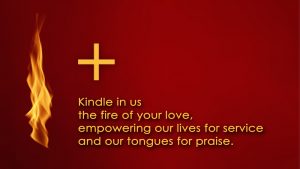
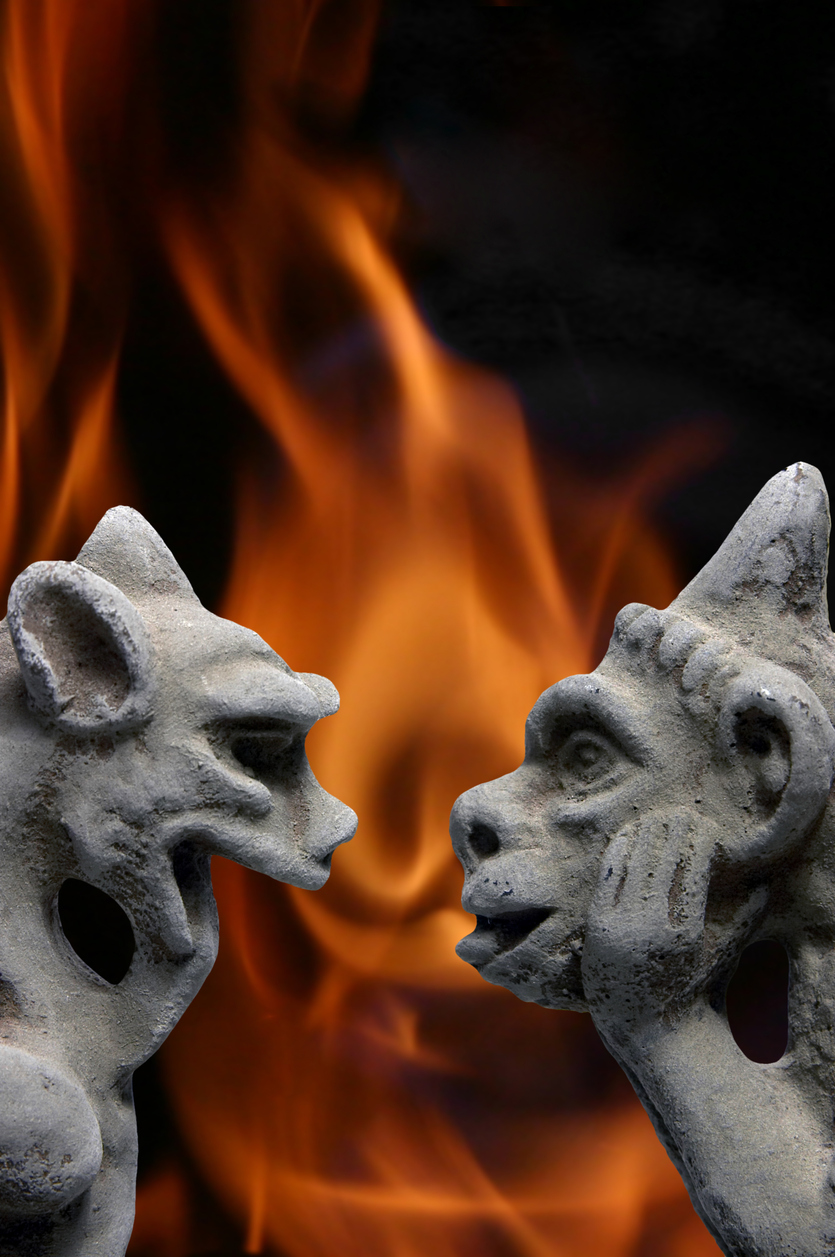
The Fire of Your Love: Worship Visuals for Pentecost

Today’s post is by Linda Witte Henke, an artist specializing in liturgically purposed art for congregation, synod, and churchwide settings (See three new collections of print-on-demand banner fabrics at www.lindahenke.com). This is Linda’s third post offering designs and templates for using visuals to enrich worship.

In anticipation of this post, I spent time during a recent 1,500-mile train trip ruminating on what visual might best convey the essence of the Holy Spirit’s appearance at Pentecost.

I recalled some of the biblical stories about fire and how those might inform our appreciation of the Holy Spirit’s appearance at Pentecost in fire and flameMoses’ encounter with God in the fiery bush (Exodus 3), God’s guiding presence made known to the Hebrew people in the pillars of cloud and fire (Exodus 13), the voice of God coming out of the fire (Deuteronomy 5), Shadrach, Meshach, and Abednego miraculously surviving the furnace of blazing fire (Daniel 1-3), and John the Baptizer’s warnings about the unquenchable fire (Matthew 3).

I also pondered human experiences of fire, both in ancient days and in our own. I reflected on how the Holy Spirit provides light for God’s people, generates warmth among God’s people, refines the visions and ministries of God’s people, and, yes, sometimes consumes or leaves a path of destruction among God’s people.

At some point, I was prompted to ask: In the Prayer of the Day for Pentecost, when we implore God to “by your Holy Spirit, kindle in us the fire of your love, empowering our lives for service and our tongues for praise,” for what are we praying? I suspect that, in many cases, we are praying that God’s Spirit would support and sustain whatever visions and ministries have already been conceived and put into place within our faith communities.

But what if we lifted our prayers with hearts wide open to receiving the fire of God’s Holy Spirit in whatever powerfully expressive ways the Spirit chooses to be made known?

  • Fire that illuminates paths in bold new directions
  • Fire that so warms our insular faith communities that we are compelled to convey God’s love and care to those beyond our doors and our neighborhoods
  • Fire that inflames our hearts, unleashes our imaginations, and sends us out to love and serve in ways that stretch our boundaries and challenge our comfort zones
  • Fire that opens our eyes to the possibility that some cherished programs, long-held practices, entrenched attitudes, and/or life-limiting perspectives may need to die in order for the Spirit to bring to life the “new thing” that God longs to cultivate within and among us

Here are some possibilities for using the fire visual as kindling for the Holy Spirit’s presence in your Day of Pentecost observances: (See the DropBox link below to access the underlined images)

  • Facilitate a gathering of staff members and key ministry leaders. Distribute 8-inch by 10-inch prints of the visual. Pray together the Prayer of the Day for Pentecost (ELW 36, Year C). Invite reflection around how the visual speaks to each person’s understanding of the Holy Spirit’s work within and beyond your faith community.  Where might the Holy Spirit be encouraging us to embrace new perspectives or explore new directions? Where might the Holy Spirit be counseling us to let go of programs or initiatives that have outlived their effectiveness?
  • Create a three-sided, free-standing, three-dimensional sculpture out of fabric printed with the visual and custom-sized to your worship context. Install the sculpture in a place central to the assembly. Explore safe ways to introduce a light source (battery-powered light, rope lights, etc.) to illuminate the sculpture. Or, if your space is conducive and you have local engineering expertise, create your sculpture to hang over the assembly as a mobile that responds to the air currents.
  • Create multiple long, “skinny” banners from fabrics or paper printed with the visual and custom-sized to your space. Display the banners so that they surround the assembly.
  • Customize for your use the projected graphic for worship. Explore the feasibility of using the visual as the background for all projection slides on this date.
  • Adapt one of the two bulletin-cover formats for your congregation’s use.
  • Adapt the social media visual for use in inviting broad participation in Pentecost worship.
  • Adapt the post card design for use in inviting broad participation in Pentecost worship. If the effort and/or cost of mailing postcards is prohibitive, invite members to use the printed postcards to personally invite neighbors, friends, classmates, co-workers, or extended family members to worship with them on Pentecost. Encourage members to share the social media visual on their Facebook pages or post it to appropriate community Facebook pages. Or consider doing all of the above.

We are mindful that we celebrate the Day of Pentecost 2019 in the aftermath of fire’s devastation – at Notre Dame Cathedral, in historic Louisiana churches, and through wildfires that have consumed millions of acres and thousands of residences. We are freshly aware that fire is fraught with danger.

So it is with the fire of the Holy Spirit. Acts 2 is a dangerous text to read and to hear. “Come, Oh Holy Spirit, Come,” is a dangerous hymn to sing. “By your Holy Spirit, kindle in us the fire of your love,” is a dangerous prayer to pray.  God wills that we submit ourselves to be shaped, formed, reformed, transformed, and empowered by the Holy Spirit in order that the fire of God’s love may be made known.

May the Day of Pentecost 2019 open our hearts to God’s Holy Spirit unleashed in our worship and in our lives!

DropBox direct link:

https://www.dropbox.com/sh/33jdq8xwv173wj5/AABIEMuyAZNhmZYZvK4wv7_Ta?dl=0

Share

World Malaria Day 2019


To most of us in the United States, mosquitoes are nothing more than a pest. But in many places around the world, just one bite from an infected mosquito could transmit malaria. Every two minutes, a child dies from malaria – a preventable and curable disease. In a recent report, the World Health Organization warned that progress against malaria has stalled. World Malaria Day is a special time to remember our neighbors at heightened risk for this disease – and the ways God is working through and with them to reduce risk and build resilience.

More research needs to be done to help describe the relationship between hunger and malaria, but what we do know is that ending hunger means helping communities find ways to stay healthy. When malaria affects young children, costs for medicine, doctor visits, and transportation to health facilities can quickly add up. If an adult contracts the disease, it can mean time away from work, which makes it harder for their families to meet their needs.

But even seemingly simple interventions can make a big difference. One study from Zambia found that providing farmers with bed nets to prevent mosquito bites contributed to an increased output from their farms of more than 14 percent. A bigger harvest means more crops, more money, and less risk of hunger or poverty for a family. The interconnections between hunger and malaria – and the intertwined solutions to both – are one reason ELCA World Hunger continues to support efforts to address malaria.

Strategies for preventing malaria are just some of the ways the ELCA’s companion churches are accompanying neighbors in their communities. Though the ELCA’s Malaria Campaign officially ended in 2015, this important work continues in several countries.

Incidences of malaria can affect a family’s income, but the reverse is true, too. Increases in household income can reduce the likelihood of contracting malaria and make it easier for a family to afford treatment if someone gets sick. Building resilience by increasing opportunities for income generation is at the heart of the Evangelical Lutheran Church in Zimbabwe’s (ELCZ) savings and lending projects in Zimbabwe. Here, the ELCZ helps community members form village savings and loan groups (VSLAs) and provides training to strengthen existing skills in tasks such as bookkeeping.

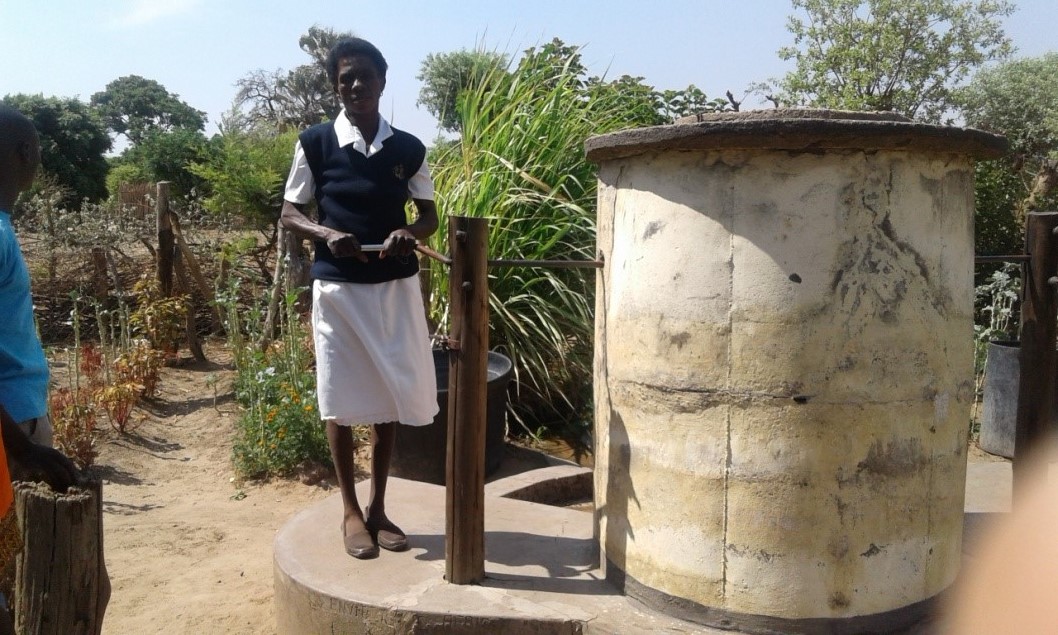
In the Hwange District, Bulowe Nyoni was responsible for getting a water well built that now serves as a source of drinking water for most of her neighbors. From her savings, she also started an organic garden near the well. As a volunteer in the project, Bulowe received two goats, which have now multiplied to over 30, thirteen of which she sold to buy a cart that allows her to fetch firewood and other items. In addition, Bulowe also works as a volunteer in health clinic where she conducts health talks for patients. Because of her efforts, her community has access to clean water, patients in the clinic receive the support and information they need, and Bulowe is able to earn and save the income that builds resilience to both malaria and hunger for her household.

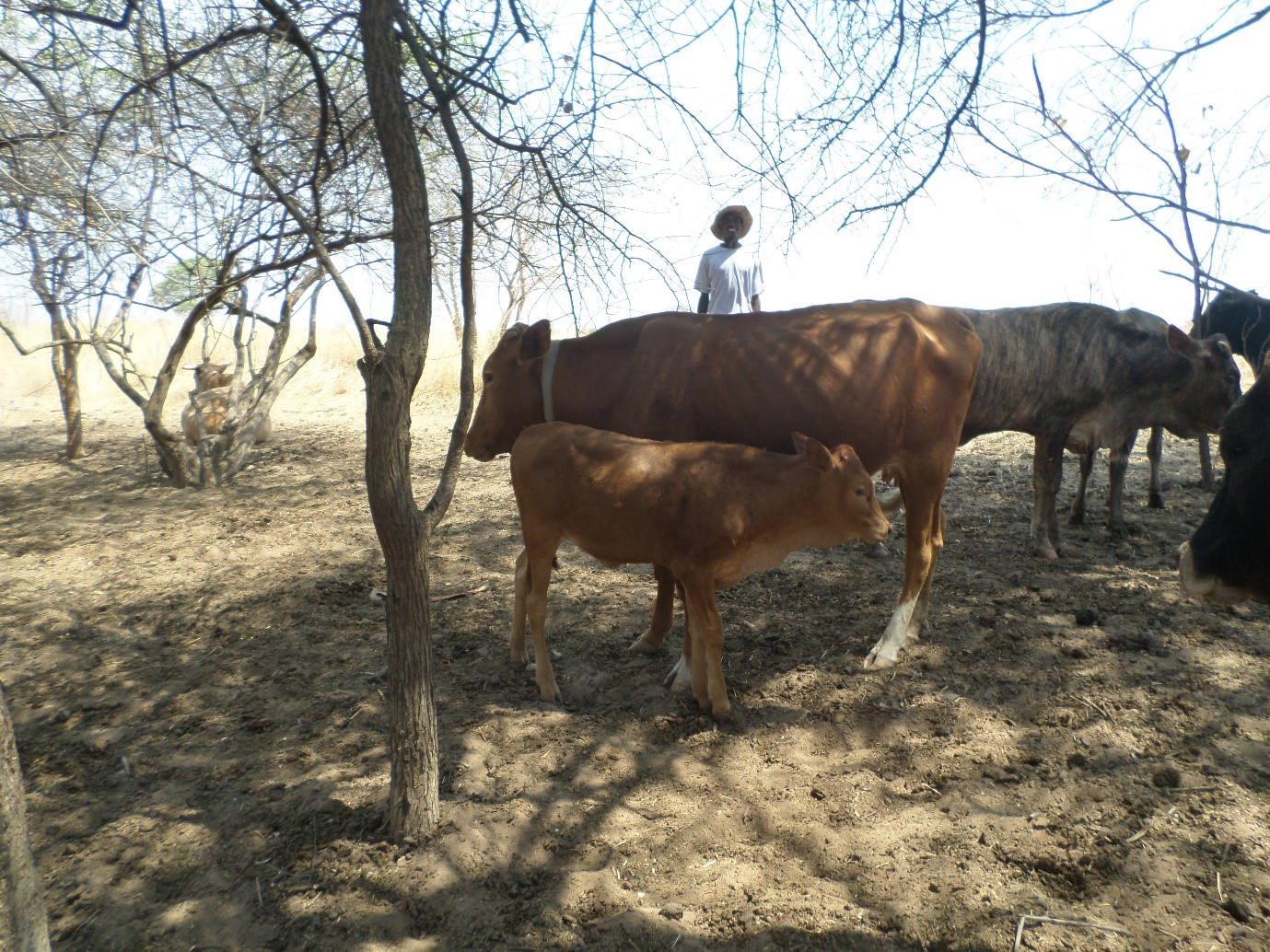
Memory Hove, popularly known as Mai Mdlungu, is a member of a savings and loan group in the district of Gokwe North. She and a group of 25 other women started the group in 2015. Initially, her husband was opposed to the idea. But Mai Mdlungu was determined, and she started raising money by baking and selling buns in her community and used part of the money to save with the other women. By the end of the first cycle of the savings and lending group, she received goats that she has been raising and breeding. These goats now help her pay for her children’s school fees. In 2016, she used her share of savings from the group to buy a cow, which has since given birth to a calf.

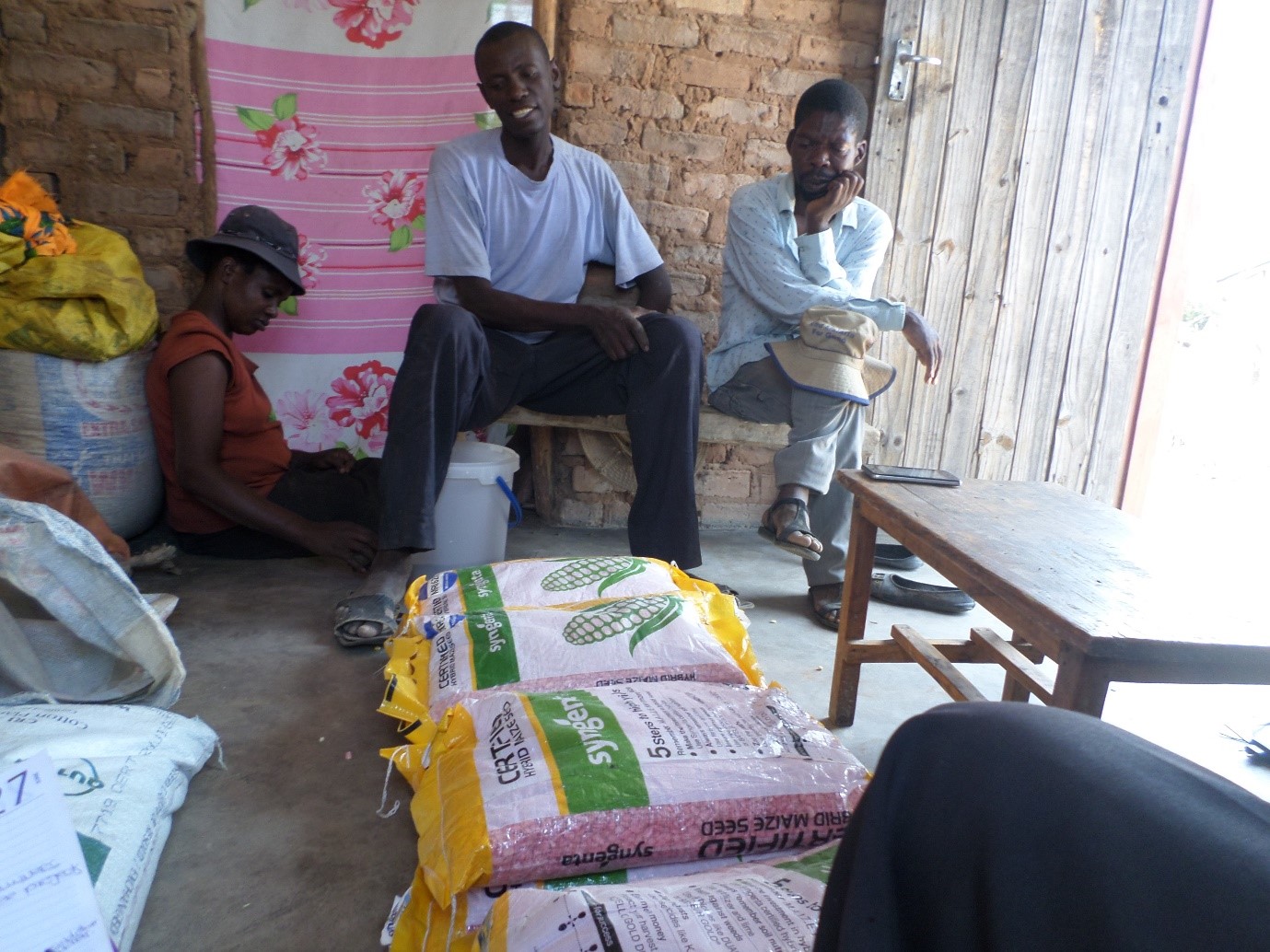
Seeing Mai Mdlungu succeed challenged her husband’s first impressions of the group. “I got married to an industrious woman,” he says, “and she has just woken me up from my deep slumber.” Mai Mdlungu’s husband joined the group and, at the end of the 2018 cycle, used his savings to purchase maize seed and fertilizer. Other couples are following their example, with men joining the savings and loan groups alongside women. This helps to strengthen the relationships within the family and, in Mai Mdlungu’s case, provide the opportunity for women to be part of the decision-making processes in their families.

These kinds of projects address the deep problem of malaria in holistic and transformative ways by building resilience and reducing risk. Because of the skills, talents, and hard work of community members like Bulowe and Mai Mdlungu, these projects are changing the lives of members of their communities and families. This work helps their families be less likely to contract malaria, less likely to face hunger and poverty, and more likely to be able to weather an illness if someone gets sick. And their efforts are helping to “wake up” others to the hope for a future free of malaria and hunger.

To support this ongoing work through ELCA World Hunger, please visit https://community.elca.org/good-gifts-2017/health.


Share

April 28, 2018–Hope in the Ruins

Jocelyn Breeland, Sunnyvale, CA

Warm-up Question

What is essential to sustain your faith?

Hope in the Ruins

As these words are written, the fire in Notre Dame, the historic cathedral in the heart of Paris, has finally been brought under control. Memorable scenes of the day include the silhouette of the church against the towering flames, the tall spire collapsing, and mourners praying as they watched in horror. French President Emmanuel Macron has promised to launch a national fundraising campaign so the church can be rebuilt. By the time you read this, we will likely know more about the cause of the fire, the extent of the damage, and what will be required to restore Notre Dame.

Notre Dame, one of the world’s most well-known churches, was completed in 1345 and over the centuries has played an important role in the life of the city and the history of France and Europe. The exterior of Notre Dame contains many scenes from the Bible, a sort of book to teach scripture to the parishioners who, at the time of construction, were mostly illiterate. The interior contains many priceless works of art, a magnificent organ, and the treasured relics of what is believed to be the crown of thorns Jesus wore before crucifixion and a piece of the cross. They were rescued from the flames.

This is not the first time the building was damaged. In 1548, Hugenots damaged statues that they believed to be idolatrous. In 1793, 28 statues of biblical kings were destroyed when they were mistaken for statues of French kings. A bombing attempt was foiled in 2016.

Within 24 hours, hundreds of millions of dollars had been pledged to the rebuilding effort.

Discussion Questions

  • Why do you think restoration of the church is so important to the French people that the president – a secular leader – would vow to restore it?
  • For people of faith what, if anything, has been lost?
  • If the church building where you worship were destroyed, what would be lost?
  • Would the loss of the building make you concerned about the congregation? Why or why not?

Second Sunday of Easter

Acts 5:27-32

Revelation 1:4-8

John 20:19-31

(Text links are to Oremus Bible Browser. Oremus Bible Browser is not affiliated with or supported by the Evangelical Lutheran Church in America. You can find the calendar of readings for Year C at Lectionary Readings

For lectionary humor and insight, check the weekly comic Agnus Day.

Gospel Reflection

Thomas had doubts. He had seen Jesus die and, despite witnessing Jesus’ previous miracles – including raising the dead – he could not believe that his master lived. If Thomas, who knew Jesus, had doubts, how are we, so many centuries removed, to sustain our faith?

We all have doubts. Like Thomas, we experience events that cause us to question what we believe. Even Mother Teresa, admired by many for her life of faith and charity, wrote about her serious doubts, her sense that her prayers were unheard and unanswered.

Jesus says, “Blessed are those who have not seen and who have believed.” But how are we to sustain this belief, our faith in Jesus, the son of God, sent for our salvation? One answer is in verse 30, “these are written that you might believe.” The Bible exists to support our faith – to teach us about God’s work in the world, about the life of Jesus and his victory over sin and death.

The Gospel writers risked, and sometimes lost, their lives to spread the good news of the gospel to all people. It’s hard to imagine this level of commitment if the events they recount in the New Testament were not true.

We are grateful for the gift of the Gospel and the stories and guidance that lead us to lives of faith. We have not seen but we believe. And we are blessed.

Discussion Questions

  • Have you, like Thomas, had doubts?
  • Do you share your doubts, as Thomas did, or do you keep it to yourself?
  • What has helped to restore your faith?

Activity Suggestions

[This activity can be done individually or in groups.]

Thinking of the warm-up question, the fire at Notre Dame and this week’s Gospel selection – and your experience as a Christian – make a list of everything you can think of that can support, nourish or restore a person’s faith.

  • Identify the items on this list that you would consider essential to Christian faith.
  • Now, discuss the ways you and your congregation offer or connect people to these essentials. Is there room for improvement?
  • Develop a plan to increase support in one of the essential areas, assign responsibility for the various tasks.

Establish a target date to implement your plan and schedule a group discussion on the results.

  • What worked well? What didn’t?
  • Did you notice any changes – in specific individuals or in the community as a whole – as a result of your work?

Closing Prayer

Gracious Lord, thank you for the gift of your son Jesus, and thank you for the gift of the Bible that teaches us and shows us the way to live lives of faith. When we doubt, or stray, draw us back to your holy word. As we are blessed, let us also be a blessing. Make us examples of your love that will bring others closer to you. In the blessed name of Jesus, Amen.

Share

CV Training Event Timeline of Events – Baltimore – August 2019

Congregational Vitality Training and DEM Gathering
August 16-23, 2019  |  Christ Lutheran Church, Baltimore, Maryland

Timeline of Events

FRIDAY (8/16)

9:00 am – 6:00 pm           Behavioral Interview Training – Day 1 (plan arrival for Thursday)


SATURDAY (8/17)

8:30 am – 4:00 pm           Behavioral Interview Training – Day 2


SUNDAY (8/18)

Travel day for DEMs (to attend DEM Gathering)


MONDAY (8/19)

8:00 am – 5:00 pm           Coach Launch – Day 1 (plan arrival for Sunday)

8:00 am – 5:00 pm           Homeless and Justice Network Gathering – Day 1 (plan arrival for Sunday)

8:30 am – 4:30 pm           DEM Gathering – Day 1 (plan arrival for Sunday)

               1:00-3:30 pm:    DEM Intensive Learning Experience with CV Team

1:00-5:00 pm                     Boundaries Training for Mission Developers – Day 1 (plan arrival for Monday AM)


TUESDAY (8/20)

8:00 am – 12:00 pm        Boundaries Training for Mission Developers – Day 2

8:00 am – 5:00 pm           Coach Launch – Day 2

8:00 am – 3:00 pm           Homeless and Justice Network Gathering – Day 2

8:30 am – 4:30 pm           DEM Gathering – Day 2

9:00 am – 12:00 pm        Latinx Coaching Meeting (plan arrival for Monday)

1:00-3:00 pm                     REDIL Meeting (plan arrival for Tuesday AM)

2:00-5:00 pm                     Intensive Learning Experience for New Mission Developers (plan arrival for Tuesday AM)

3:30-5:00 pm                     Congregational Vitality Training Event Facilitators’ Meeting (plan arrival for Tuesday AM)


WEDNESDAY AND THURSDAY (8/21-22)

8:00 am – 5:00 pm           Congregational Vitality Training Event (plan arrival for Tuesday)


FRIDAY (8/23)

8:00 am – 2:30 pm           Congregational Vitality Training Event

Friday evening flights home are strongly encouraged.


See you in Baltimore!


by Kris A. Mainellis, Program Director for Communication and Events, Congregational Vitality

Share